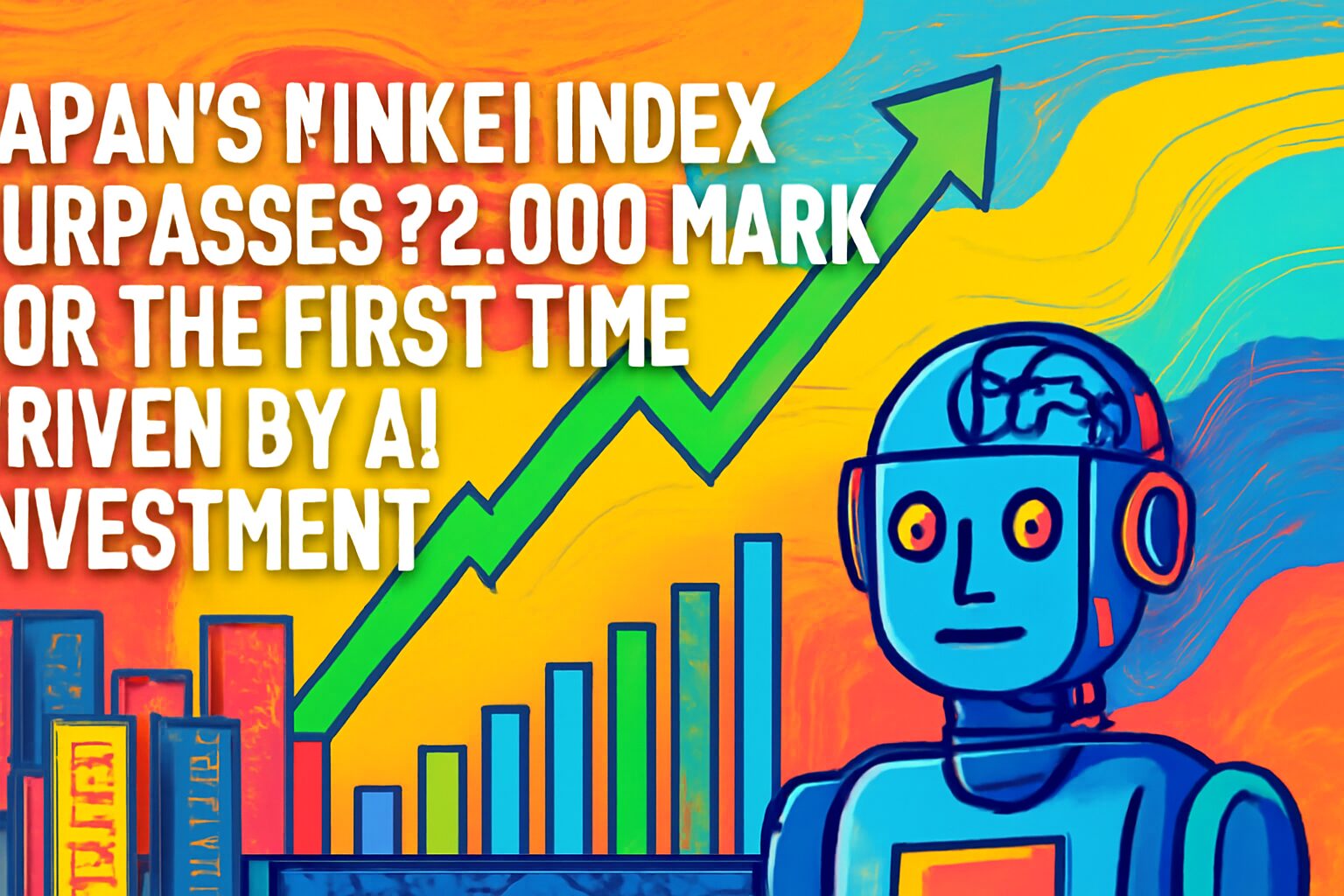
On June 22, 2026, Japan’s benchmark Nikkei 225 stock index reached a historic milestone, surging past the 72,000 level for the very first time. This unprecedented rally is largely fueled by robust investor optimism surrounding artificial intelligence and related technology sectors. While the surge makes financial headlines globally, the underlying economic momentum carries significant, positive implications for the Kansai region, particularly for Osaka’s thriving travel and hospitality industries.
The Catalyst: Massive Strategic Investments in AI
The primary driver behind this record-breaking market performance is a highly ambitious national economic strategy. The Japanese government has solidified a long-term plan targeting approximately 370 trillion yen in combined public and private investments by the year 2040. These funds are heavily earmarked for strategic high-tech areas, with a dominant focus on AI and advanced semiconductors.
This massive capital commitment has triggered a wave of investor confidence. Markets are reacting to the clear signal that Japan is aggressively positioning itself as a leader in the next generation of global technology. The immediate result has been a dramatic increase in corporate valuations, pushing the Nikkei index to heights previously unseen.
Economic Ripple Effects on the Kansai Region
For Osaka and the broader Kansai region, the national economic boom translates into a highly favorable local business environment. The strong market performance reflects deep-seated confidence in the fundamental strength of the Japanese economy. As corporate portfolios expand and capital becomes more accessible, businesses headquartered in or operating within Kansai are expected to significantly accelerate their capital expenditures.
This wave of corporate investment is a strong indicator of future job creation and wage growth in the region. When businesses invest heavily in their own infrastructure and workforce, the local economy experiences a multiplier effect, raising the overall standard of living and boosting consumer confidence.
Revitalizing Travel and Hospitality
The wealth effect generated by a 72,000-level Nikkei index has a direct and immediate impact on the travel sector. As consumer sentiment improves and disposable income rises, domestic travel spending is projected to see a substantial increase. Residents across Japan, feeling more financially secure, are more likely to book vacations, dine out, and spend on leisure activities in major tourist hubs like Osaka.
Furthermore, the surge in business investments directly benefits the corporate travel sector. Increased corporate activities, conferences, and regional expansions will drive up the demand for business accommodations, dining, and event spaces in Osaka. Hotels, restaurants, and local tour operators stand to gain immensely from this dual increase in both leisure and business foot traffic.
Looking Ahead: A Bright Future for Osaka
The long-term outlook for Osaka is exceptionally promising. The 370 trillion yen investment roadmap stretching to 2040 ensures that the current economic momentum is not a short-lived spike, but rather the beginning of a sustained growth period. As technological advancements fueled by these investments integrate into daily life, the travel and hospitality sectors will also evolve, potentially offering highly personalized, AI-driven visitor experiences in the near future.
For travelers planning a visit and businesses operating within the region, the soaring Nikkei index is more than just a financial metric. It is a strong indicator that Osaka will continue to flourish as a vibrant, economically robust destination, offering world-class experiences underpinned by a thriving local economy.