
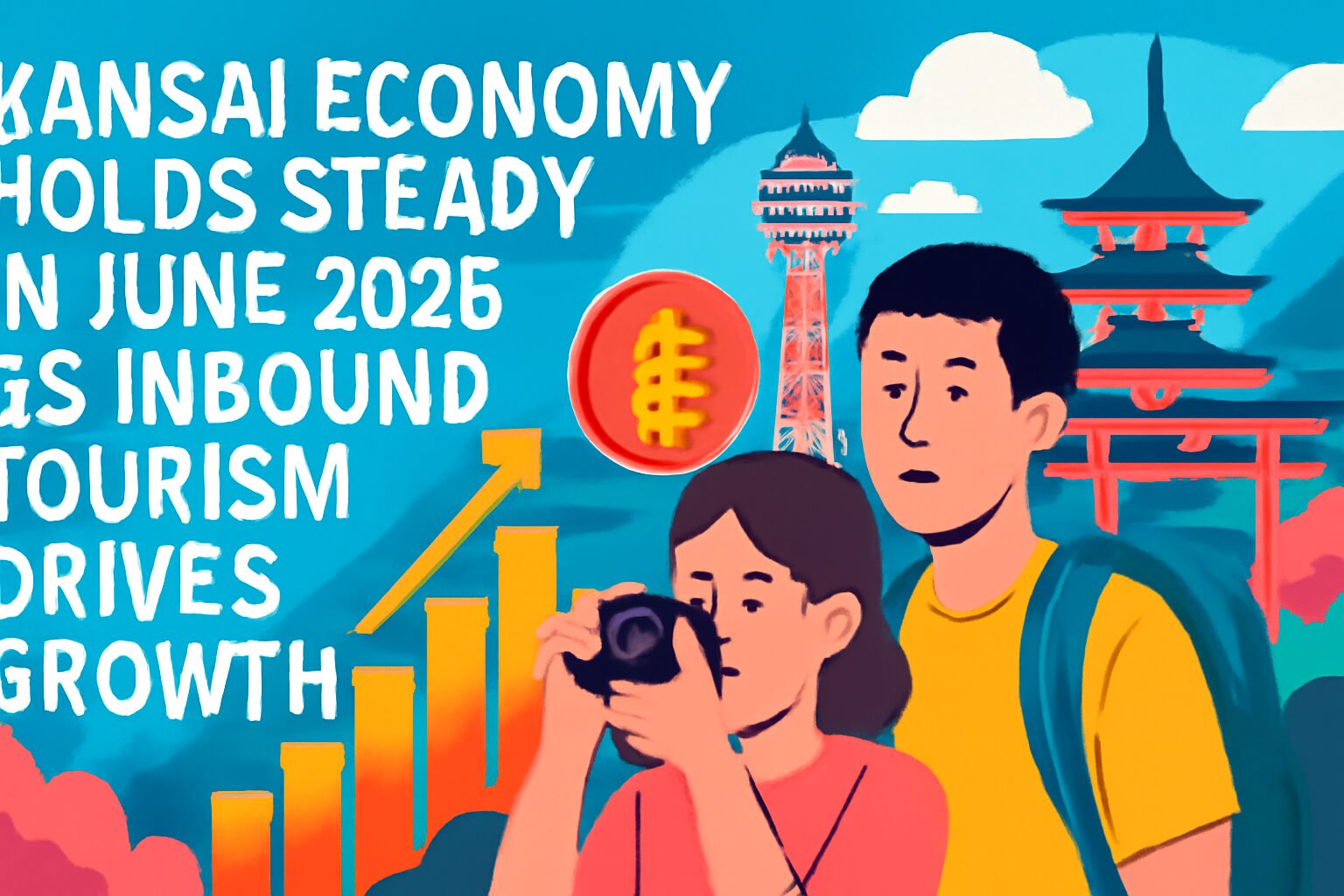
A Resilient Regional Economy Amid Global Uncertainty
According to a recent report released by Mitsubishi UFJ Research & Consulting on June 11, the Kansai economy is maintaining a steady pace of growth. While industrial production and exports have begun to level off due to broader global uncertainties, the region’s overall economic health remains robust. This stability is largely bolstered by solid domestic consumption and a powerful, continuous surge in inbound tourism.
For Osaka and the wider Kansai region, the travel and retail sectors are proving to be essential economic pillars. As traditional manufacturing and export sectors face headwinds, the growing influx of international visitors is bridging the gap, injecting vital capital directly into the local market.
The Inbound Tourism Boom and Department Store Success
The driving force behind this economic resilience is an unprecedented wave of international travelers. Following the momentum of the 2025 Osaka-Kansai Expo and supported by highly favorable yen exchange rates, visitors are flocking to Osaka. Recent data from the Japan National Tourism Organization highlights this trend, with nationwide inbound arrivals reaching approximately 3.55 million in May 2026 alone, and a significant portion of these tourists making Kansai their primary destination.
This boom is vividly reflected in the region’s retail sector. Department stores, particularly those in Osaka’s prime shopping districts like Umeda and Namba, have reported significant spikes in sales. Duty-free counters are seeing double-digit growth, with international visitors eager to purchase luxury goods, designer apparel, and high-quality Japanese cosmetics. Reflecting this success, Osaka’s regional department store sales recently crossed the monumental milestone of 1 trillion yen, underscoring the sheer purchasing power of the current tourism wave.
Evolving Tourist Behavior: The Shift to Experiences
The background of this economic trend reveals a notable shift in how visitors are spending their money. While retail shopping remains a major draw, there is a distinct evolution toward “koto-shohi,” or experience-based consumption. Tourists are increasingly allocating their budgets to high-value cultural activities, exclusive dining experiences featuring local delicacies, and stays at luxury accommodations.
This evolution means that the economic benefits of inbound tourism are no longer confined to major retail chains. The wealth is spreading to local restaurants, traditional craft workshops, and regional tour operators, creating a deeper and more widespread positive impact on the local Osaka economy.
Future Outlook and Strategic Impacts
Looking ahead, the Kansai region’s economic stability will become increasingly intertwined with the tourism sector. The findings from Mitsubishi UFJ Research & Consulting highlight the growing importance of travel as a primary growth engine.
With plans for Osaka’s Integrated Resort (IR) moving forward, the region is uniquely positioned to cement its status as a premier global entertainment and tourism hub. The sustained growth in inbound traffic is expected to attract further foreign and domestic real estate investments, particularly in commercial and hospitality developments around the greater Osaka area.
However, this growing reliance on tourism also presents future challenges. To ensure sustainable long-term growth, Osaka and neighboring Kansai municipalities will need to balance the rapid influx of tourists with the quality of life for local residents. Investing in smart tourism infrastructure, promoting travel to lesser-known districts outside of the main commercial hubs, and managing urban congestion will be critical steps. If local authorities and businesses can navigate these challenges, the tourism sector will undoubtedly continue to shield the Kansai economy from global manufacturing downturns, securing a prosperous and dynamic future for the region.








