
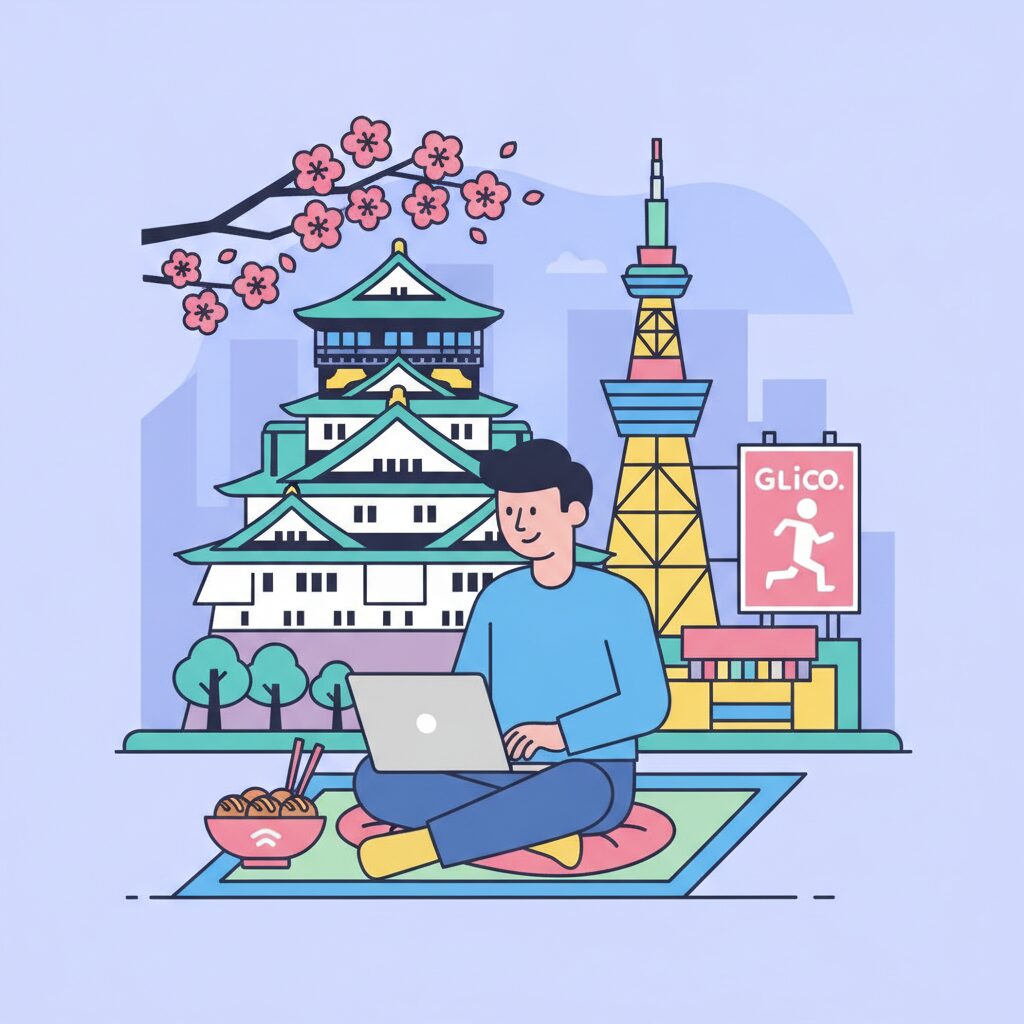
Walk through any residential neighborhood in Osaka, say, somewhere in Tennoji or a quiet pocket near the endless Tenjinbashisuji shotengai, and you’ll feel it. The rhythm is off. The old metronome of the city—the morning rush, the daytime quiet, the evening return—has been scrambled. Before, these streets were staging grounds for the daily commute, emptying out as everyone poured into the steel hearts of Umeda and Namba. The daytime belonged to retirees tending their tiny gardens, parents pushing strollers, and the singsong calls of the tofu seller’s truck. Now, the silence is gone. It’s been replaced by a low hum. The hum of a city that suddenly works from home. This isn’t just about changing work habits; it’s a seismic shift that’s shaking the very foundations of one of Osaka’s most defining cultural concepts: gokinjo-zukiai, the intricate, unwritten rules of being a neighbor. For foreigners trying to understand the soul of this city, this is ground zero. The old guidebooks about Osaka’s famous friendliness are becoming obsolete. The question isn’t whether Osaka is still friendly, but what ‘friendly’ even means when your neighbor is no longer just someone you greet at the garbage dump, but your unseen, unheard, yet ever-present office mate on the other side of a notoriously thin wall. We’re in the middle of a city-wide social experiment, and the results are redefining what it means to live here.
The evolving urban scene subtly uncovers the enduring Akindo spirit that continues to shape community bonds even as work and home merge in new and unexpected ways.
The Ghost of Neighborhoods Past
To understand what is changing, you first need to grasp what existed before. The pre-pandemic Osaka neighborhood operated on a precise schedule set by the train lines. Life was distinctly divided. There was the work world—a hectic, crowded, and competitive environment in the city center. Then there was the home world—the residential area, a refuge for rest and family. These two rarely overlapped. Your neighbors were people you encountered briefly: a quick ohayo gozaimasu in the morning elevator, a tired nod on the last train home. Community life, or gokinjo-zukiai, revolved around these shared moments of the day. It took place at the designated garbage collection spot, a surprisingly important hub of local gossip. It unfolded in the aisles of the local supermarket during the evening discount rush. It was institutionalized through the chonaikai, the neighborhood association that organized festivals, fire drills, and cleaning days. This system was tangible, physical. You recognized your neighbors by sight, maybe by name, but their daily lives between 9 AM and 6 PM remained a complete mystery. They disappeared into the urban machine.
This is where Osaka always felt distinct from Tokyo. In Tokyo, neighborly relations often come across as a polite, detached performance of respect. You acknowledge each other’s presence to keep harmony but don’t necessarily engage. There’s a psychological buffer zone. In Osaka, that buffer has always been thinner, more permeable. Gokinjo-zukiai here was traditionally more direct, more… meddlesome. People shared food, a practice called osusowake. An elderly woman might comment on your trash sorting skills, not to criticize but as her way of connecting. A shopkeeper in the local shotengai might ask why you looked tired. It’s a form of familiarity that can feel intrusive to outsiders, especially those used to Tokyo’s cool anonymity, but it’s grounded in a practical sense of shared existence. We’re all in this together, so let’s drop the formalities. This was the foundation—a community built on brief, regular, face-to-face encounters that framed a long day spent elsewhere.
The Great Indoors: When the Office Moves In
Then, almost overnight, the machine halted. The daily migration stopped. Suddenly, everyone was home all day long. The carefully maintained boundary between work life and home life crumbled. The daytime quiet of residential Osaka was disrupted by the staccato rhythm of a thousand Microsoft Teams meetings. The salaryman who once resembled a ghost in a suit, visible only at dawn and dusk, became a tangible presence, shuffling to the convenience store for lunch in sweatpants. The initial phase was pure awkwardness. The social script had no page for this. How do you interact with your neighbor at 2 PM on a Tuesday? Are they working? Taking a break? That casual greeting, once effortless, now felt fraught with unspoken questions. The physical space remained unchanged, but the social dimension had completely warped.
This shift revealed the very real, fragile nature of Japanese apartment living. The concept of privacy, already tenuous, was stretched to its limit. You began to learn things about your neighbors you never wanted to know. You discovered that the occupant of 3A was a very loud talker during conference calls. You found out the family in 4B had a child who practiced piano, poorly, every day at 3 PM. These sounds were no longer just background noise; they became intrusions into your new workspace. Home was no longer a sanctuary but a shared, open-plan office with invisible cubicles and very real noise pollution. For foreigners, this can be particularly confusing. Many arrive in Japan expecting a culture of quiet consideration. Yet, the reality of remote work in dense housing directly challenges that stereotype. The struggle to maintain focus and peace in buildings never designed for 24/7 occupancy became a new, universal source of neighborhood tension.
Finding the Third Place: Osaka’s New Daytime Hubs
Naturally, people began to escape. A one-room apartment can’t serve as office, café, and relaxation space all at once. This exodus from the home office ignited the rise of the “third place.” It’s not home, nor the corporate headquarters, but somewhere in between. In Osaka, this trend took on a distinctly local flavor. While Tokyo experienced a surge in sleek, hourly co-working spaces, Osaka’s response felt more organic and improvised. Local kissaten—those old-fashioned coffee shops with velvet chairs and siphon coffee—suddenly displayed “Free Wi-Fi” signs. Community centers started promoting quiet rooms. Even benches in parks like Utsubo and Nagai became prized daytime spots for those armed with laptops and portable hotspots.
Here, a new form of community began to emerge. The same faces would start appearing daily at the local Starbucks or Pronto. A quiet camaraderie formed. Everyone was part of the same tribe: neighborhood remote workers. A nod of recognition, a shared sigh over slow internet, a brief chat while waiting for lattes—small interactions that became the foundation of a new kind of gokinjo-zukiai. This was not based on apartment numbers or participation in neighborhood cleanup. It was built on shared, contemporary experience. This marks a crucial shift from the old way. It’s opt-in. You choose your third place and, in doing so, your new, informal community. For foreigners who may feel daunted by the rigid chonaikai structures, this fluid social landscape is far more approachable.
From Obligation to Affinity: The New Neighborly Contract
The very definition of a “good neighbor” is being rewritten. The old contract relied on duty and proximity. You were polite to neighbors because you had to be; you took part in community events because it was expected. It was a social obligation, essential to maintaining wa, or group harmony. The remote work revolution is shifting this dynamic from obligation to affinity. The meaningful connections are no longer with the person living just a few feet away behind the wall, but with those you actually interact with during your day. Your new “neighbors” might be fellow dog owners you meet at the park during a 4 PM break or a small group of freelance designers who have claimed a corner of a local café. Bonds form over shared interests, schedules, and lifestyles—not a shared address.
What does this mean for non-Japanese residents? It’s transformative. The old gokinjo-zukiai system was notoriously hard to penetrate, steeped in unspoken rules, cultural nuances, and history outsiders weren’t part of. Sorting garbage incorrectly might label you a bad neighbor for years. Forgetting the right gift at the right time could cause offense. The new system is more forgiving and intuitive. It’s based on the universal language of shared experience. You don’t need an in-depth knowledge of Japanese social etiquette to smile at someone you see daily at the library. The barrier to entry is lower. Ironically, as work becomes more remote and digital, neighborhood connections have grown more analog and interest-based, shifting away from the collective toward smaller, self-selected tribes.
Growing Pains: Noise, Nerves, and the New Rules of Engagement
This transition is accompanied by some friction. The most significant point of tension is noise. Japanese residential construction focuses on earthquake resistance rather than soundproofing. Previously, this was manageable since most people were away during the day. Now, your neighbor’s business calls become the background soundtrack to your own work. This has given rise to a delicate social negotiation. How can you address complaints without risking a permanent rift? In Tokyo, the approach is often very indirect—an anonymous note left in the mailbox or a discreet word with the building manager. In Osaka, the approach is somewhat more direct but still layered with politeness. It’s the classic Osaka style: frank yet gentle. A neighbor might stop you in the hallway with a strained smile and say, “Your meetings sound very important! So full of energy!” This is not praise—it’s a subtle warning. It is a deft way of saying, “I can hear everything; please lower your volume.”
There is also a new kind of social surveillance. When the neighborhood was empty during the day, there was a certain degree of anonymity. Now, your every move can be noticed. Mrs. Suzuki from the second floor observes you taking your third coffee break. Mr. Kato from across the hall sees that you haven’t left your apartment in two days. This constant, low-level scrutiny can be unsettling. It blurs the boundary between private and public life, creating the sensation of always being “on stage.” This feeling is intensified by a generational divide. Older residents, used to the previous rhythms, may be suspicious of this new daytime population. They might perceive remote workers as lazy or disruptive. They might resent crowded cafes and the frequent presence of people who “should be at the office.” This tension manifests subtly—a disapproving glance, a remark at a chonaikai meeting about daytime noise. Navigating these challenges demands a heightened degree of social awareness.
So, Is Osaka Still Friendly?
This is the million-yen question: Has the famous, in-your-face, candy-offering Osakan friendliness become a casualty of the remote work era? The answer is no. It’s not dead, but it is evolving. It’s transforming. The loud, all-encompassing community of the shotengai is giving way to smaller, more focused pockets of connection. The well-known Osakan trait of osekkai—being meddlesome in an endearing, helpful way—is still very much alive. It just looks different now. It’s less about a grandmother asking if you’re eating enough vegetables and more about a fellow remote worker in a café pointing you to a table with a better power outlet. It’s the pragmatic, problem-solving spirit of Osaka applied to the challenges of modern life. People here are fundamentally solution-oriented. If the old way of connecting doesn’t work, they improvise a new one.
Contrast this with Tokyo, where the typical response to social change is often to reinforce personal boundaries and retreat further into privacy. In Osaka, the instinct is usually to reach out and try to make the new situation work. There’s a collective understanding that this new reality affects everyone, so people are more willing to negotiate the new rules together—sometimes awkwardly, sometimes with a bit of grumbling, but always with a sense of shared destiny. The friendliness hasn’t disappeared; it has simply become more targeted. It’s less of a broadcast and more of a handshake. You have to be in the right places to find it, but when you do, you’ll realize that the core of Osaka’s character—its warmth, pragmatism, and refusal to stand on ceremony—is proving remarkably resilient.
A Practical Guide to the New Osaka Neighborhood
For any foreigner living here or planning to move, adjusting to this new environment is essential. Clinging to old habits will only leave you feeling isolated. Here’s how to navigate the new gokinjo-zukiai.
Find Your Hubs
Don’t let your apartment become your prison. The first and most important step is to get outside. Explore your neighborhood with a fresh purpose: find your “third place.” Is it a quiet spot in a local library? A lively café with communal tables? A sunny bench in a park? Actively seek out places where others are working or relaxing during the day. This is your new village square. Become a regular. Let your face become familiar. This is where all new connections begin.
Learn the New Language of Neighborliness
Greetings remain important, but they have evolved. A simple konnichiwa still works, but acknowledging the shared context of remote work can create a stronger bond. Spot a neighbor carrying a laptop bag? A simple nod and an otsukaresama desu—typically used among colleagues—creates an immediate connection. It says, “I see you. We’re in this together.” It’s a small gesture that bridges the gap between private resident and fellow professional.
The Preemptive Strike on Noise
Since noise is the top concern, get ahead of it. Whether you’ve just moved in or have lived there for a while, consider making a thoughtful gesture. A small gift (like some soap or a hand towel) for your closest neighbors, accompanied by a brief note, can work wonders. Something along the lines of: “Hello, I’m [Your Name] in room [Number]. I sometimes work from home and have online meetings. I’ll do my best to keep noise down, but please let me know if I’m ever too loud.” This single action achieves two things: it shows you’re considerate and gives your neighbor a calm way to raise an issue before it escalates. It’s a valuable investment in neighborhood harmony.
Embrace the Opt-In Community
Release the notion that you must conform to traditional community roles. While the chonaikai remains part of life, your involvement can be minimal if you prefer. Instead, direct your social energy toward new, interest-based groups. Join a local sports club, a language exchange, or a Facebook group for remote workers in your area. Follow local cafes and shops on social media to discover events. The new community is decentralized. You now have more freedom than ever to build a social life that suits your interests and personality, rather than one solely defined by your address. This is the unexpected gift of the remote work revolution: the chance to redefine your community on your own terms.








