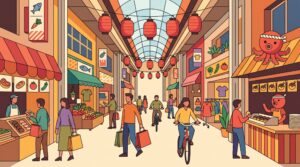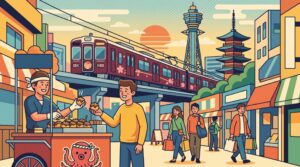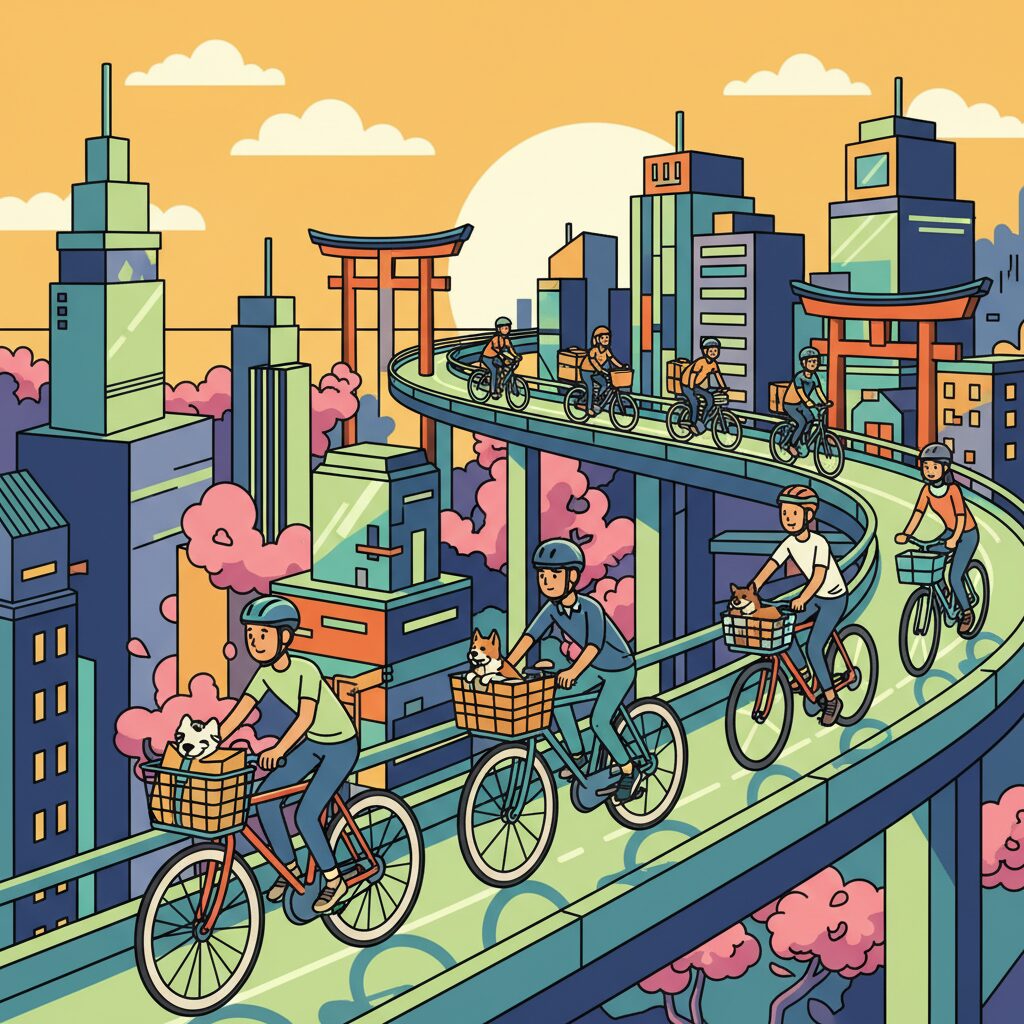
Forget the guidebooks for a minute. Let’s talk about the real Osaka. The first thing that hits you when you start living here isn’t the glowing Glico Man sign or the smell of takoyaki—it’s the bikes. They are everywhere. A silent, flowing, sometimes chaotic river of steel and rubber that forms the city’s true circulatory system. In Tokyo, you see sleek road bikes and foldable commuters moving in orderly lines. Here? It’s a different world entirely. It’s a world of sturdy, basket-equipped workhorses, piloted by everyone from toddlers in child seats to grandmothers who move with the unshakeable confidence of a freight train. To an outsider, it can look like pure anarchy. A free-for-all where sidewalks are interchangeable with streets and rules are merely gentle suggestions. But that’s the first mistake people make. It’s not chaos. It’s a complex, unspoken dance, and learning the steps is your real initiation into the rhythm of Osaka life. This isn’t just about transportation; it’s a rolling, ringing, weaving expression of the city’s soul: pragmatic, efficient, and fiercely independent.
Embracing life in Osaka means not only adapting to its spontaneous bicycle ballet but also picking up some key Osaka-ben phrases that reveal the local spirit in conversation.
The Mamachari Monarchy: More Than Just a Bike
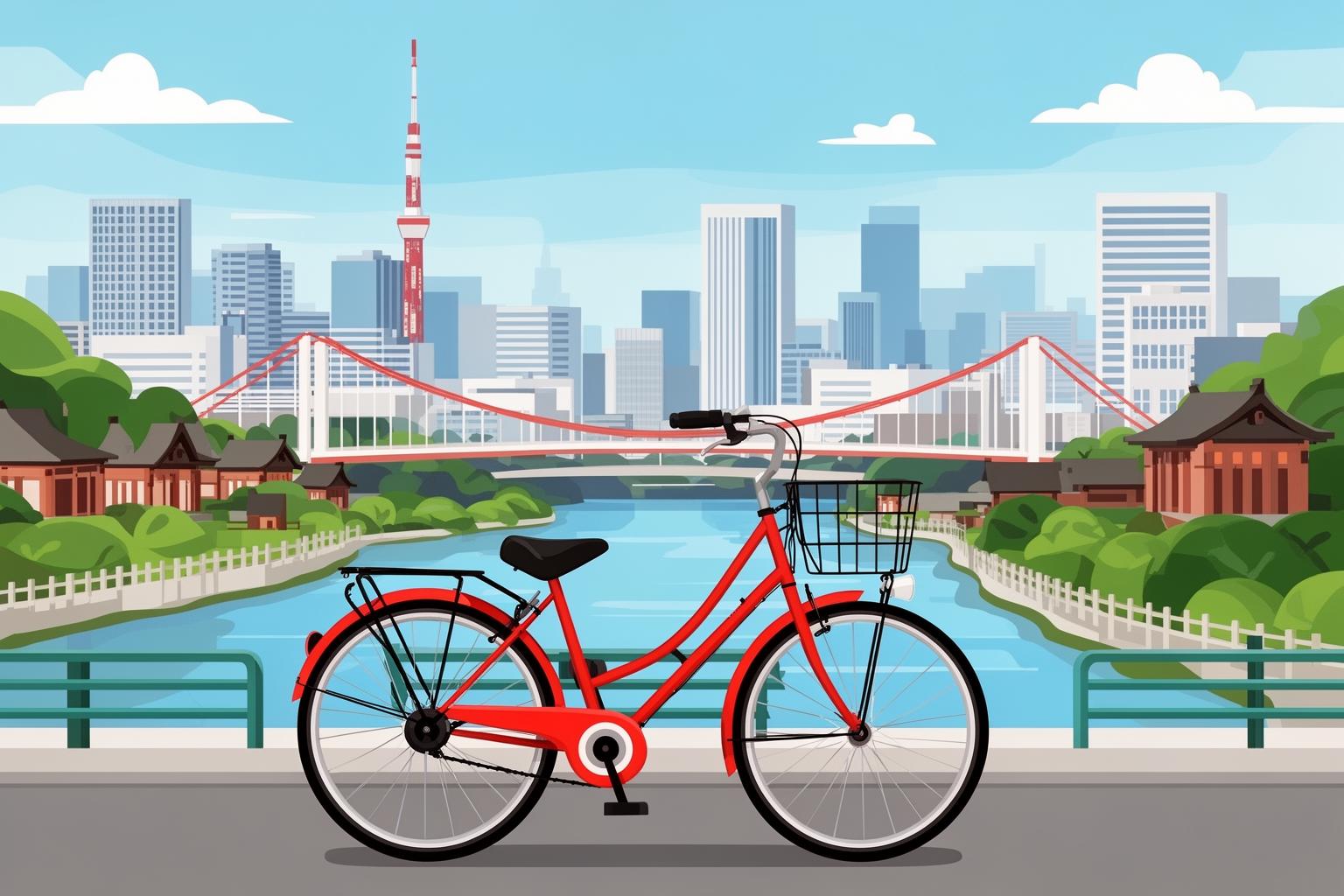
Before we proceed, you need to get to know the king of Osaka’s roads: the mamachari. The name literally means “mom’s chariot,” and that’s exactly what it is. This isn’t a bike designed for speed or sport. It’s a tank. A beautiful, practical, indestructible tank. Imagine this: a heavy, step-through frame you can mount without hesitation, even while wearing a long skirt. A large, wide basket at the front, perfect for carrying groceries, a work bag, or a small dog. A sturdy rack at the back, often equipped with a child seat that resembles a pilot’s cockpit. It has a built-in lock on the rear wheel, a kickstand that supports the bike like a tripod, and mudguards to keep you dry through Osaka’s sudden rain showers. The mamachari is the unofficial vehicle of Osaka. It’s the family minivan, the delivery truck, and the personal commuter all combined in one.
This deep attachment to the mamachari reveals something fundamental about the Osaka mindset. It’s about substance over style, function over flash. Someone decked out in sleek lycra on a carbon-fiber road bike often seems more out of place here than a mother skillfully navigating a bike loaded with two kids and a week’s worth of groceries. The bike isn’t a hobby; it’s an indispensable tool for everyday life. You see them everywhere, chained to railings, resting in entryways, and flowing through the covered shopping arcades, or shotengai. Their condition tells a story—a touch of rust here, a worn seat there, a basket slightly bent from a narrow escape. These bikes aren’t pampered possessions; they are cherished partners in the daily hustle. They embody the Osakan spirit of making things work with what you have, valuing practicality over appearance.
Sidewalk or Street? The Great Osaka Debate
Here it is. The single biggest source of confusion and anxiety for newcomers trying to cycle in Osaka: where exactly are you supposed to ride? Legally, the rule is clear: bicycles are classified as light vehicles and must ride on the street, keeping left with the flow of traffic. But take a look around. What do you notice? Nearly everyone—students, office workers, parents, pensioners—is cycling on the sidewalk. And not timidly along the edge, but confidently right down the center.
So, what’s happening? Is Osaka full of brazen lawbreakers? Not really. It’s a city of pragmatists. Many streets in Osaka, especially in dense residential areas, are extremely narrow. They’re clogged with cars, trucks, and buses, often without a shoulder or buffer zone. For someone on a mamachari, maybe with a child riding behind, cycling on these roads feels like a death wish. The sidewalk, in this sense, becomes the default safe zone. It’s an unspoken social agreement: the sidewalk is for pedestrians—and for cyclists moving at a cautious pace. This sharply contrasts with Tokyo, where cycling infrastructure is more developed and riding in the street is enforced more strictly. In Osaka, the official law is treated as an ideal that doesn’t fit the reality of the urban environment. Hence, people have created their own system—one based on shared risk and situational awareness. It’s not about disregarding rules; it’s about adapting them to navigate daily life safely.
The Unspoken Rules of the Sidewalk Cha-Cha
Because this system exists, a set of unwritten rules has emerged to prevent constant collisions. Riding on the sidewalk here isn’t a free-for-all; it’s a delicate dance. Mastering this sidewalk cha-cha is essential.
The Bell is a Question, Not a Command
That little bell on your handlebar? It’s not a horn to shoo people away. In Osaka, it’s used sparingly and politely. A quick, gentle chirin-chirin signals one of three things: “Pardon me, I’m coming up behind you on your left,” or “Just letting you know I’m here so you’re not startled,” or sometimes, “Hello!” to a neighbor. It’s an announcement of presence, not a demand to yield. Repeated, aggressive ringing is considered highly rude and will earn you serious glares. The proper way is a soft ring from a safe distance, giving pedestrians time to notice you and move aside slightly. They almost always do.
Master the Weave and Flow
Navigating a crowded place like the Tenjinbashisuji Shopping Street during peak hours is the ultimate test of cycling skill. You can’t just barrel through. You have to become part of the human flow. You learn to read subtle cues: watching shoulders, anticipating when someone will stop to peek in a shop window, finding natural gaps in the foot traffic. It’s a constant, slow negotiation of space. Your speed should match a brisk walk. You’re a guest in pedestrian territory. This demands heightened awareness that may be exhausting at first but soon becomes second nature. It’s less about asserting right of way and more about blending seamlessly into the rhythm.
The Umbrella Paradox
Prepare for one of Osaka’s most puzzling and impressive sights: cycling with an umbrella in hand. During the rainy season, countless people of all ages glide through the streets, one hand on the handlebar, the other holding a full-sized umbrella overhead to shield from the rain. Often, they’re also balancing bags and navigating skillfully. To be clear: this is technically illegal and not especially safe. Special umbrella holders that attach to handlebars do exist, but the classic Osaka method remains holding the umbrella with one hand. Why? Pragmatism again. It’s raining. You need to get home. Your bike is the fastest way. You need to stay dry. This is the solution. It’s a perfect example of the local mindset: find a straightforward, if somewhat risky, fix for an immediate problem. I’m not recommending you try it, but you need to understand it to understand Osaka.
Parking Pandemonium: The Art of Bicycle Jenga
If riding a bike is like a dance, parking it is a competitive puzzle. There are designated bicycle parking areas, many of which require payment, but the demand for free, convenient spots far exceeds the available supply. The result is what you encounter outside any supermarket, train station, or apartment building: a dense, chaotic cluster of bicycles. They’re locked to railings, signposts, and even to each other, creating an interlocking maze of metal.
This situation has given rise to the fine art of Bicycle Jenga. Imagine your bike is nestled in the middle of a cluster of twenty bikes. You can’t simply pull it out. Instead, you must carefully lift your bike’s front wheel, turn the handlebars just right, and slowly extract it from the tangle without knocking over the five bikes on either side. It’s a delicate task requiring patience and spatial awareness. You’ll often see people perform this maneuver with a resigned sigh, a shared experience among many. This is where the well-known Osaka frugality regarding money comes into play. Why pay 150 yen for parking for a few hours when there’s a perfectly good railing right there? That money could be better spent on a can of coffee. It’s not about being cheap; it’s about being economical and reconsidering the necessity of every expense. But of course, there’s a catch. Park in a clearly marked no-parking zone, and you’ll return to find a bright warning sticker on your seat. Ignore that, and the next day your bike will be gone, hauled away by the city. Retrieving it involves a trip to a distant impound lot and a fine. This is the city’s method of keeping the inevitable chaos under control. Most people quickly learn where the invisible lines between acceptable and unacceptable parking are drawn.
The ‘Obachan’ Factor: The True Queens of the Road
Now, let’s talk about the most powerful, respected, and feared figure in Osaka’s cycling scene: the obachan on her electric-assist mamachari. These middle-aged and elderly women reign supreme as the undisputed queens of the road. Their confidence is unwavering, and their skill is legendary. Never get in their way. Their electric-assist bikes provide surprising bursts of acceleration from a standstill, which they fully exploit. They skillfully maneuver through the narrowest alleys and busiest sidewalks with absolute authority. Having ridden these streets for decades, they have witnessed it all. They have groceries to buy, appointments to keep, and absolutely no time for hesitation.
Their riding style is a spectacle to behold—assertive without aggression. They seem to defy the usual physical constraints, gliding through spaces that appear impossibly tight. They embody the Osaka spirit of gan-gan iku, roughly meaning “just go for it.” They don’t hesitate. They identify their path and take it, trusting that others will make the small adjustments needed to give way. And we do. Because they have earned that right. Yielding to an oncoming obachan is an automatic, instinctive reaction for any local. It’s a mark of respect for elders and recognition of their superior skill and urgent purpose. They form the backbone of the community, and their relentless forward motion on their bikes symbolizes the city itself: always moving, always practical, and entirely unstoppable.
Navigating Law vs. Reality
So, as a foreigner living here, how do you fit into this ecosystem? You need to find a balance between adhering to official rules and adapting to local customs to stay safe. Here’s a practical breakdown.
Bicycle Registration (Bouhan Touroku): This is the one rule everyone follows without exception. When you buy a bike (new or used), you must register it with the police for a small fee. It’s an anti-theft measure. The police can and do stop cyclists to check their registration. This is pure Osaka pragmatism in action. The rule is simple, inexpensive, and directly benefits you by helping recover your bike if it’s stolen. As a result, everyone complies.
Helmets: The law was recently revised to make wearing a helmet a “duty of effort” for all cyclists. In practice, you will almost never see an adult on a mamachari wearing one. They are viewed as hot, bulky, and unnecessary for short, low-speed trips around the neighborhood. You are, of course, free to wear one—and it’s probably a good idea—but you will stand out.
Lights: You are legally required to have a working headlight at night. This is one rule increasingly followed and enforced, simply because it’s a major safety concern. Riding at night without a light—being a “ninja cyclist”—is genuinely dangerous and frowned upon.
Phones and Headphones: Using your phone or wearing headphones that block out ambient sound while riding is illegal and dangerous. Although some people do it, this is a major cause of accidents. This is one local custom you should definitely avoid.
My advice? Ride defensively. Assume that drivers can’t see you and that pedestrians might step out in front of you at any moment. Use the sidewalk for short distances on busy roads if you feel unsafe, but do so slowly and respectfully, always ready to yield immediately. Get a good lock, register your bike, and always use a light at night. Find the middle ground where you can move with the city’s flow without compromising your safety.
Ultimately, Osaka’s bicycle culture perfectly reflects the city itself. It might appear chaotic and unruly from the outside, but beneath that is a shared logic—a rhythm of mutual understanding that keeps everything moving. It’s about a community constantly negotiating space, balancing individual needs with the collective flow. When you finally stop worrying about the chaos and start feeling that rhythm—when you can smoothly play Bicycle Jenga, exchange a knowing nod with a passing obachan, and navigate a crowded shotengai accompanied by the gentle chirin-chirin of your bell—that’s when you know you’re no longer just living in Osaka. You’re part of its pulse.