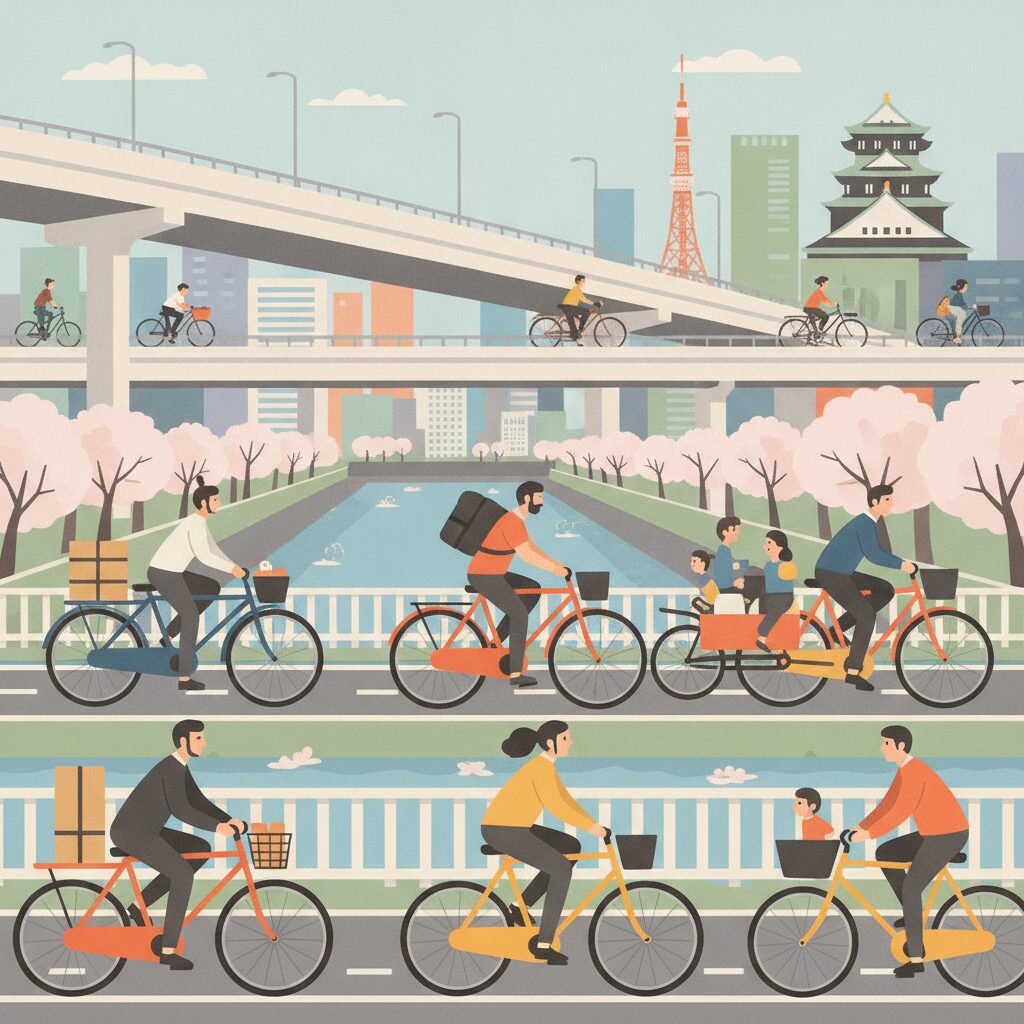
When I first moved to Osaka, I did what I thought you were supposed to do in a major Japanese city: I bought a commuter pass. I dutifully memorized the Midosuji Line map, learned the transfer dance at Umeda Station, and accepted the packed-in, subterranean life as my new normal. For weeks, I saw Osaka through the grimy windows of a train car, popping up from the ground at my destination like a whack-a-mole. But then I started to notice something strange. While I was underground, life—the real life of the city—was happening up above, on two wheels. I’d emerge from a station to see a river of bicycles flowing past. Moms with two, sometimes three, kids packed onto electric-assist mamachari. Grandpas in tweed caps coasting to the local sento. Office workers in suits, briefcases in their front baskets, gliding past traffic jams. It was a city in perpetual, silent motion, and I was completely missing it. Osaka doesn’t just use bikes; it runs on them. This isn’t a quaint weekend hobby or an eco-conscious choice for a select few. It’s the default setting. It’s a fundamental piece of the city’s operating system, a key that unlocks a more affordable, flexible, and deeply local way of life that my expensive train pass could never offer. Understanding Osaka’s bicycle obsession isn’t just about transportation; it’s about understanding the city’s very soul: pragmatic, a little chaotic, and fiercely independent. It’s how you stop commuting through Osaka and start actually living in it.
This dynamic urban environment is not only defined by its bicycle culture but also by a hard-edged practicality that you can explore further in Osaka’s no-nonsense approach.
The Mamachari Republic: More Than Just a Bike
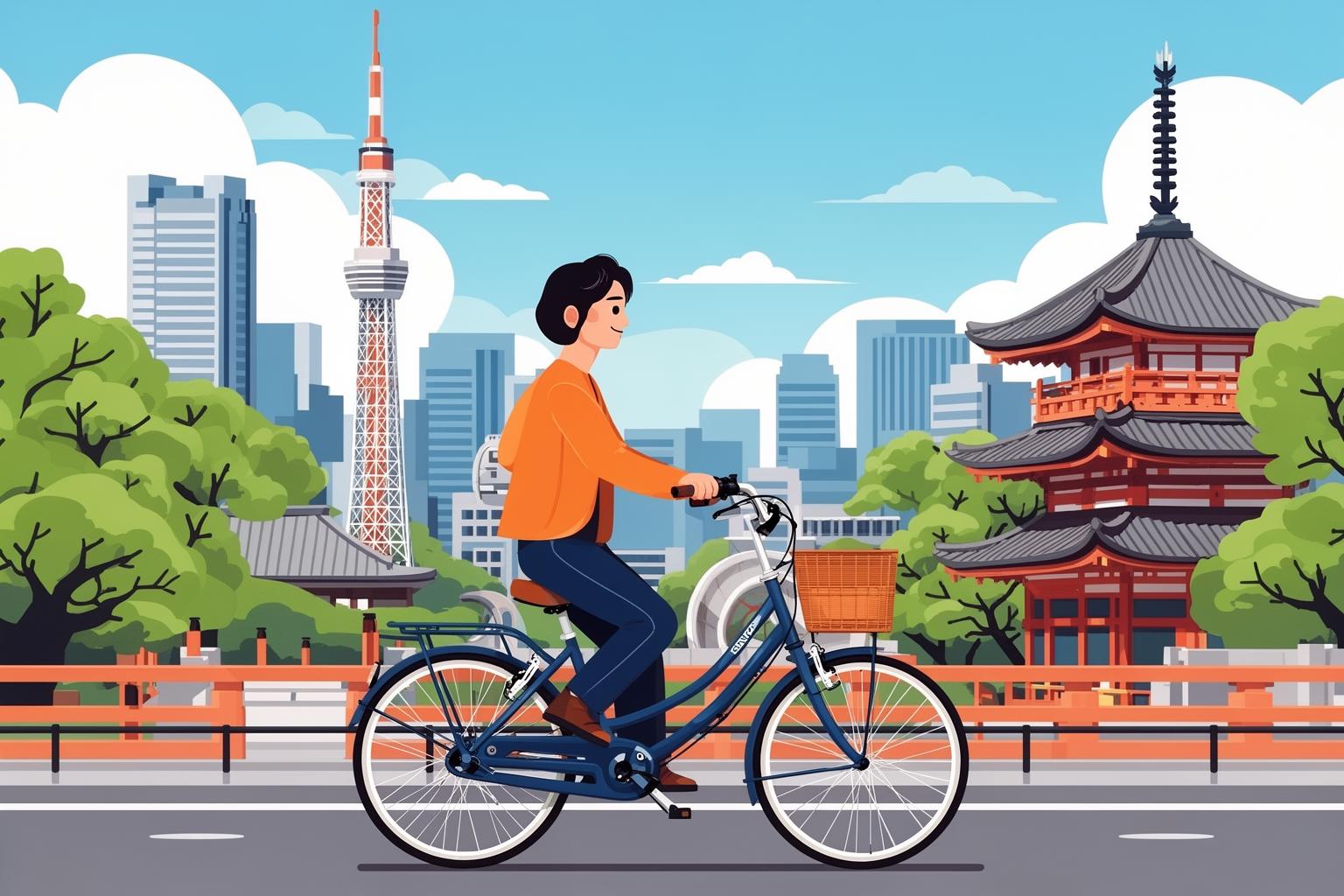
Step into any bicycle shop in Tokyo, and you’ll find a blend of sleek road bikes, stylish single-speeds, and folding models designed for the last-mile commute. Enter a shop in Osaka, and you’ll encounter an army of identical, utilitarian machines: the mamachari. The name literally means “mom’s chariot,” and it reigns supreme on Osaka’s streets. This is not a bike built for speed or sport. It’s a tool, akin to a minivan on two wheels, crafted solely to handle daily life.
The classic mamachari is a triumph of practical design. Its low, step-through frame allows for easy mounting and dismounting, even when wearing a skirt or carrying bags. The handlebars are high and swept back, putting you in an upright, un-aerodynamic posture ideal for navigating crowded sidewalks. A wide, sturdy kickstand prevents it from tipping over when fully loaded. But the true charm lies in its accessories. A spacious front basket is standard, ready to hold daikon radishes, toilet paper, and a two-liter bottle of inexpensive shochu. Most models include a built-in wheel lock that secures the rear tire with a simple key turn. And then there are the child seats—robust thrones attached to the front and back, often outfitted with windshields and blankets to create a small, mobile cocoon for the children.
This isn’t just a mode of transport; it’s a declaration of Osakan identity. Where a Tokyoite might see a bulky, unfashionable machine, an Osakan views a symbol of freedom and efficiency. It embodies the ability to do grocery shopping, drop one kid at daycare and another at elementary school, and still get to a part-time job without paying for train fare or checking a timetable. The electric-assist version, the denki-mamachari, has emerged as the ultimate status symbol for young families, its quiet whir the sound of domestic empowerment. Watching these parents maneuver through narrow alleys and busy shotengai (shopping arcades) resembles a finely choreographed ballet. They are captains of their own small vessels, steering their precious cargo through the urban sea with unspoken confidence. In Osaka, the bike isn’t just a means to reach the train; for many, the bike is the train.
The Economics of the Pedal: Why Trains Take a Backseat
One of the biggest culture shocks for foreigners relocating from Tokyo to Osaka is the different relationship with public transportation. In Tokyo, life is centered around the station—your rent, social life, and job all revolve around the JR and Metro lines. In Osaka, the dynamic changes, with the bicycle becoming the game-changer. The city’s flat geography combined with its residents’ famously practical mindset creates the perfect environment for a bike-centric culture.
The ‘One-Station Trap’ and the Osaka Calculation
Osaka is, for the most part, remarkably flat—a geographical advantage that cannot be overstated. Unlike hilly cities like Kobe or some parts of Yokohama, cycling here demands little physical exertion. This simple fact leads to what I call the Osaka Calculation. A newcomer sees their friend’s apartment two subway stops away and instinctively thinks to take the train. The fare might be around 230 yen—not much, but not free. The trip lasts three minutes. However, an Osakan performs a different calculation: they know those two stations are about one and a half kilometers apart. By bike, that’s an easy seven-minute ride. The cost? Zero. The time saved by avoiding walks to and from the stations? Significant. Multiply that 460-yen round trip a few times a week, and the savings quickly add up. Osakans are often labeled kechi (stingy), but a more accurate description is intensely value-conscious. Why pay for something you can get for free with just a little extra effort? This mindset applies across all aspects of life, from grocery shopping to social outings. The bike breaks the train system’s monopoly, returning hundreds of small choices—and thousands of yen—to your pockets each month.
The Freedom from the Last Train
Living according to the train schedule places a subtle curfew on your life. Everyone in Tokyo knows the stress of the shuden, the last train home. You’re out with friends, enjoying yourself, but always keeping an eye on the clock. Miss that last train around midnight, and you face either an expensive taxi ride or a long night at a karaoke box. Bicycle culture removes this deadline. In Osaka, the night doesn’t end when the trains stop running. You can linger at a favorite tachinomi bar, catch a late movie, or chat endlessly with friends, knowing your ride home is always available. This freedom encourages a more spontaneous and relaxed social life. It fundamentally alters your connection to the city—it becomes your city, on your schedule. The quiet, lamp-lit streets at 1 a.m., with nothing but the soft whir of your tires on the pavement, feel more personal and peaceful than any crowded last train ever could.
Unlocking the Neighborhood Grid
Trains are excellent for traveling between major hubs like Umeda, Namba, and Tennoji, but they create a mental map of the city as a series of isolated dots. Life between those dots remains elusive. The bicycle fills in these gaps. Suddenly, the four-kilometer radius around your apartment is not a void but a rich, explorable network of neighborhoods. You discover tiny family-run coffee shops with grumpy yet charming owners, hidden parks, and greengrocers with the best seasonal fruit. You learn shortcuts through quiet residential streets and canal pathways. This ground-level exploration cultivates a strong sense of place. You no longer live just “near Shinsaibashi station”; you live in an actual neighborhood with its own distinct character and rhythm. The bike transforms Osaka from a collection of destinations into a continuous, interconnected landscape. It’s how you experience the city’s texture, its scents, and its secrets, one pedal stroke at a time.
Navigating the Urban Jungle: The Unspoken Rules of the Road
For all its advantages, cycling in Osaka can be a daunting experience for newcomers. The city’s infrastructure hasn’t fully caught up with its passion for two-wheeled travel, resulting in an informal set of rules and organized chaos that can be confusing. Mastering this system is a rite of passage for any local.
Sidewalk or Street? The Great Osaka Debate
This is the first and most perplexing question every new cyclist encounters. Japanese law technically requires bicycles, as vehicles, to be ridden on the left side of the street with traffic. In Osaka, however, this rule is more of a gentle suggestion. Most cycling takes place on the sidewalk. This leads to a continuous, low-level negotiation between cyclists and pedestrians. It’s a subtle dance. You don’t rush through at full speed. You weave, anticipate, and use your bell sparingly—as a polite “excuse me,” not an aggressive “move aside.” Pedestrians are generally used to this and maintain a fairly predictable path. There’s a mutual understanding that the sidewalk serves multiple purposes. Visitors often find this alarming, but locals see it as a functional, if imperfect, system. The real hazards come from delivery scooters and assertive road cyclists who use the street, often zooming past unexpectedly. Ironically, the sidewalk often feels like the safer, more reasonable choice.
The ‘Chari-Stop’ Parking Problem
After arriving, you face the next major hurdle: where to park your bike. Large bicycle parking lots (churinjo) are available at major train stations and department stores, some offering free parking for the first few hours before charging a small fee (about 150 yen for 24 hours). These are the official options. Yet in residential neighborhoods and near smaller shops, bikes are parked everywhere: lined up against railings, squeezed into alleyways, and clustered outside convenience stores. This “creative parking” occupies a legal gray zone. Though often tolerated, it carries the risk of your bike being towed. The city frequently dispatches trucks to collect illegally parked bicycles, posting warnings in advance. If your bike is taken, you must retrieve it from a distant impound lot and pay a fine of several thousand yen. Every longtime resident has a story about their bike being impounded. It’s part of the cycle of being an Osaka cyclist.
Rain, Typhoons, and the Unstoppable Cyclist
A bit of rain doesn’t slow anyone down in Osaka. The city relies on specialized wet-weather cycling gear. The key item is the bicycle poncho, a large waterproof cape that covers the rider, handlebars, and front basket, creating a personal mobile shelter. This is often paired with a clear plastic visor attached to the handlebars or worn like a helmet, shielding the face from rain. It’s a humorous but highly effective setup. During typhoon season, it’s common to see people braving strong winds and sideways rain on their trusty mamachari. This isn’t due to recklessness; rather, the bike is so essential to their daily routine that not riding is more inconvenient than getting wet. The resolve of Osaka cyclists in a storm showcases the city’s practical, get-it-done spirit.
Bicycle Registration (Bohan Toroku): The Non-Negotiable First Step
When you get a bicycle in Japan—new or used—you’re legally required to register it with the police. This anti-theft registration, or bohan toroku, costs about 600 yen and links your bike’s serial number to your name, address, and phone number. The shop usually handles this during purchase, providing a small sticker to affix to the frame. Police can and do stop cyclists to check registration, especially if the bike looks new or the rider seems unfamiliar. The system is designed to prevent theft and works remarkably well. While you should always lock your bike, the registration adds an important layer of security and peace of mind. It’s a small bureaucratic step that helps keep Osaka’s freewheeling cycling culture running smoothly.
Osaka’s Mindset on Two Wheels: Pragmatism Over Polish
The way a city moves reveals much about its inhabitants. Tokyo’s intricate, hyper-punctual train system reflects a society that prioritizes precision, order, and collective harmony. In contrast, Osaka’s sprawling, chaotic, and highly individualistic bicycle culture embodies a distinct character: a fierce pragmatism that consistently favors function over form.
Function Over Form
In Osaka, a bicycle is viewed as a tool rather than a fashion statement. You’ll find bikes with rusty frames, squeaky chains, and baskets secured with zip ties. As long as the wheels turn and the brakes work, the bike is deemed perfectly acceptable. This sharply contrasts with other cities where bicycles are often status symbols. The notion of spending 100,000 yen on a lightweight, stylish bike when a 20,000-yen mamachari can carry more groceries strikes many Osakans as absurd. This isn’t due to a lack of appreciation for quality but stems from a deeply ingrained belief in value. The best tool is one that reliably performs the job at the lowest possible cost. This mindset goes far beyond bicycles — it’s reflected in the city’s passion for inexpensive yet tasty B-kyu gourume (B-grade gourmet) food, its straightforward shopping arcades, and its direct, unpretentious way of communicating.
Direct and to the Point
Observe how people ride their bikes in Osaka. They choose the most efficient route from A to B, even if it means bending the rules a little. They’ll cut corners, glide through red lights when there’s no traffic, and weave through pedestrians with an instinctive sense of timing and space. This riding style parallels the communication habits of Osakans. Compared to the more indirect and formal manner common in Tokyo, Osakans are known for being direct, straightforward, and concise. There’s less focus on rigid protocol and more emphasis on achieving the desired outcome with minimal fuss. Just as two cyclists negotiate a narrow sidewalk space with a quick nod or a muttered “sumimasen,” Osakans tend to get straight to the heart of the matter in conversation. This social efficiency, like their bicycles, keeps the city moving.
A Different Kind of Community
Bicycles foster a street-level connection with the city that’s simply not possible when life is confined to underground stations. On a bike, you become part of the scenery. You become a familiar face. The local fruit stand owner recognizes you. You nod to the same elderly woman walking her Shiba Inu every morning. You experience the changing seasons not by glancing at a calendar but through the decorations adorning the shops you pass daily. This constant, low-key social interaction helps break down the anonymity that can be overwhelming in a massive metropolis. It contributes to the sense that Osaka is more a collection of villages than a sprawling megalopolis. This is why people say Osaka feels friendlier; you’re far more likely to have small, unplanned interactions when you’re not enclosed inside a metal box, whether underground or on the road.
Getting Your Own Wheels: A Practical Guide
Convinced? Joining the ranks of cyclists in Osaka is both easy and affordable. Switching from a train pass to a bike is one of the best decisions you can make to enhance your quality of life and save money in this city.
Buying New vs. Used
Your first choice is whether to purchase a new or second-hand bike. Large chain stores like Don Quijote, AEON, or specialized bike retailers such as Cycle Base Asahi sell brand new mamachari starting at around 20,000 yen. The benefit here is that everything is brand new, you receive a warranty, and the staff will handle the bohan toroku registration immediately. Local neighborhood bike shops are another excellent option. They may be a bit pricier, but you develop a relationship with a mechanic who can assist you with flat tires and tune-ups in the future.
The World of Second-Hand Cycles
For those on a tight budget, recycled bicycle shops are the best choice. These shops take in abandoned or traded-in bikes, repair them, and sell them at a fraction of the price of new ones. You can often find a perfectly functional, though maybe less visually appealing, mamachari for under 10,000 yen. These shops are legitimate businesses that also manage the transfer of registration to your name, so there’s no need to worry about riding a “stolen” bike. This is the quintessential Osakan way to get around: practical, economical, and sustainable.
Essential Accessories
While your bike will include the basics, a few additional items can significantly improve your experience. First, invest in a second, more robust lock. The built-in wheel lock is a decent deterrent, but a strong cable or U-lock that secures your frame to a fixed object offers genuine protection. Second, consider adding a basket cover. These zippered, often waterproof covers shield your belongings from rain, deter opportunistic thefts, and keep them hidden from crows—who are notorious for stealing shiny items left in baskets. Finally, a simple phone holder that attaches to your handlebars is invaluable for using GPS until you become familiar with the city’s layout.
The True Currency of the City
Ultimately, the bicycle in Osaka is more than merely an affordable and convenient mode of transportation. It embodies a different mindset. It signifies a life free from strict schedules, a closer bond with your neighborhood, and an embrace of the city’s practical, unrefined spirit. Viewing Osaka from a bicycle seat reveals its true nature: a vibrant, ground-level city that prioritizes common sense over rigid rules and values community over anonymity. Giving up the commuter pass is not just a financial choice; it is a cultural statement. It declares a desire to experience the city’s genuine rhythm, rather than merely passing through it. It teaches you that the real currency of Osaka is not the yen saved on train fare, but the freedom and insight gained with every pedal stroke.