
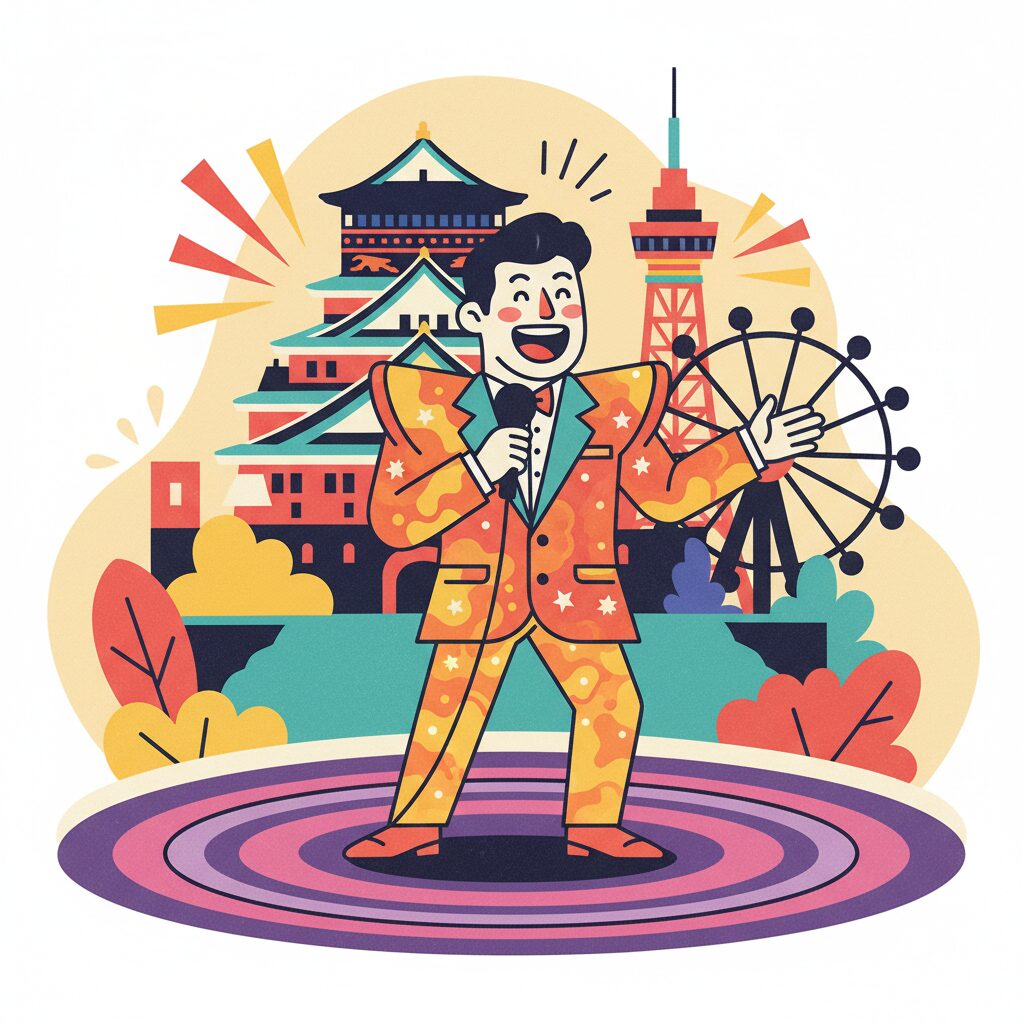
Ever had a conversation in Osaka and felt like you accidentally stumbled onto a stage? You were just trying to ask for directions, buy some groceries, or order a coffee, and suddenly you’re in the middle of a rapid-fire comedy routine. The shopkeeper teases you, a stranger next to you chimes in with a punchline, and everyone laughs. If you’re coming from Tokyo, or anywhere else for that matter, it can feel like the world has tilted on its axis. You might wonder, “Are they making fun of me? Is this normal? Am I supposed to say something funny back?” The short answer is: No, yes, and only if you want to. Welcome to the art of conversation in Osaka, where daily life is a performance, and the script is written in the language of humor. This isn’t just about being friendly; it’s a deep-seated cultural communication style that defines the city’s soul. Forget the stereotype of the reserved, indirect Japanese communicator. Here, conversation is a full-contact sport played with a wink and a smile. It’s a dance of wit, and to truly live here, you need to learn the steps. It’s the engine that powers the city, the sound that fills the streets, and the secret handshake that turns strangers into temporary partners in a shared, hilarious moment.
The city’s playful banter extends to colorful local legends, as seen in the fascinating stories of Osaka obachan that capture the spirit of everyday life.
The Foundation: Boke and Tsukkomi, the DNA of Dialogue
To grasp Osaka conversation, you first need to understand the essential components: boke and tsukkomi. You may have encountered these in Japanese manzai comedy duos, but in Osaka, these are not merely stage roles. They are flexible, dynamic roles that people naturally adopt in everyday situations, from the boardroom to the fish market. They establish a conversational rhythm, a call-and-response that keeps the energy lively and the connection strong.
The Boke: The Master of the Absurd
The boke (ボケ) is the funny one, the fool, the person who purposely says something absurd, silly, or simply incorrect. Their role is to create a slight tear in the fabric of reality. They might see a cat and say, “Wow, that’s a strange-looking dog.” Or they might pick up a giant daikon radish at the supermarket and ask their friend, “Do you think this will fit in the toaster?” The boke isn’t dumb; in fact, being a good boke takes intelligence and timing. You have to know your audience and deliver the absurd line with just the right amount of sincerity to make it funny. It’s a deliberate act of creating a humorous problem, a tension that begs to be resolved. This is the setup. Without the boke, there is no joke. It’s the offering, the conversational serve over the net, waiting to be returned.
The Tsukkomi: The Voice of Reason
The tsukkomi (ツッコミ) is the straight man. Their role is to recognize the absurdity created by the boke and immediately call it out, restoring order to the universe. The response is quick, sharp, and often accompanied by the quintessential Osaka phrase, “Nande ya nen!” which roughly means “Why the heck?!” or “What are you talking about?!” The tsukkomi points out the obvious flaw in the boke‘s logic. To the person holding the daikon radish, the tsukkomi would reply, “That’s a radish, you idiot! You’re going to break the toaster! Nande ya nen!” In a comedy routine, this might come with a light tap on the head using a paper fan. In real life, it’s a quick gesture, a wave of the hand, or just the force of the words. The tsukkomi’s role is vital. It delivers the punchline, the release of tension. The laughter arises from snapping back to reality. It validates the joke, acknowledging that everyone is part of the game. Together, the boke and tsukkomi create a complete, satisfying cycle of humor.
Mastering the Flow: The Art of Nori-Tsukkomi
Once you’ve understood the basic rhythm of boke and tsukkomi, you’ll begin to notice a more advanced, intricate move in the wild. This is the nori-tsukkomi, a conversational technique that showcases true mastery of the Osaka style. It’s a solo act that blends both roles into one smooth, hilarious monologue. It signals you’re dealing with a genuine conversational artist.
First, let’s unpack the term. Nori (ノリ) comes from the verb noru, meaning to get on board or go along with something. Here, it means playing along with an initial absurd premise. So, nori-tsukkomi is a two-step process: the speaker first becomes a boke, then embraces their own boke (nori), and finally turns into the tsukkomi, correcting themselves.
Imagine an example. You’re walking with an Osaka friend on a hot summer day, and they spot an ice cream shop. They might say:
- The Boke: “Ah, look! A gas station! I’m so thirsty, I could really use some gasoline.” (This is the initial absurd statement.)
- The Nori: Instead of correcting themselves right away, they double down. “Yeah, I think I’ll get the high-octane premium. It’s probably perfect for this heat.” (They’re now fully ‘on board’ with the ridiculous idea, creating a small fantasy around it.)
- The Tsukkomi: Then the sudden reversal. “…Wait a minute, what am I saying?! That’s an ice cream shop! You can’t drink gasoline! Nande ya nen!” (They snap back to reality, becoming their own tsukkomi and landing the punchline.)
This whole sequence happens in seconds, showing incredible wit and quick thinking. It’s a self-contained joke that invites the listener on a brief, bizarre journey before returning safely to reality. When you see this, you’re witnessing a high-level display of Osaka’s conversational culture. It’s a way of saying, “I’m so comfortable with this comedic rhythm that I can play all the parts myself.”
The Merchant City DNA: Why Is Osaka Like This?
This distinctive communication style is no accident. It has been shaped by Osaka’s history as Japan’s quintessential merchant city (shōnin no machi). While Edo (modern-day Tokyo) served as the center of the samurai government—a place of strict hierarchy, formality, and stoicism—Osaka was the nation’s kitchen, a lively commercial hub where rice and goods were traded. A merchant’s success didn’t rely on birthright or status; it depended on their skill in building relationships, negotiating, and ultimately closing sales.
In this setting, humor became a vital tool. It acted as a social lubricant. A quick joke could break the ice with a new customer, create instant rapport, and make you stand out among the many merchants selling the same goods. Being able to haggle with a smile and witty banter was a survival skill. The aim was to seal the deal, but in a way that left everyone feeling good. This approach values efficiency, directness, and human connection over rigid protocol. A formal, overly polite exchange wasted time, while a lively, engaging one forged relationships that could lead to future business.
This tradition remains strong today. In Osaka, being called omoi (serious) can be somewhat of an insult, whereas being called omoro (funny or interesting) is among the highest compliments. It’s not about being a clown; it’s about being an engaging, quick-witted person who adds positive energy to the conversation. This stands in sharp contrast to Tokyo, where the focus is often on preserving harmony (wa) through reserve, indirectness, and caution not to impose. In Osaka, harmony is created by sharing a laugh, even if it’s at each other’s expense. It reflects a distinct philosophy of human connection, rooted in the spirited, competitive, yet deeply human world of the marketplace.
Daily Banter in Action: Where You’ll See It
This isn’t a theoretical idea; it’s something you’ll encounter every day, often in the most ordinary moments. The entire city serves as a stage for these small acts of connection.
Shopping Arcades (Shotengai)
The shotengai are the vibrant heart of this culture. Stroll through Tenjinbashisuji or Kuromon Market, and listen closely. You’ll hear the fruit vendor playfully teasing a regular customer, who fires back with a quick retort. The butcher might notice you hesitating over a cut of meat and say, “Don’t think too hard, it’ll get tired of waiting!” This isn’t poor service; it’s the best kind of service. It’s an invitation to engage, to become part of the neighborhood’s daily unfolding drama. They’re not just selling goods; they’re offering an experience, a moment of genuine human connection.
The Legendary Osaka Oba-chan
No conversation about Osaka’s communication style is complete without acknowledging the oba-chan (middle-aged and older women). They are the unrivaled masters of this art. Often dressed in bright colors and leopard prints, they are a formidable presence. An Osaka oba-chan will have no hesitation in striking up a conversation with you on the train, in line, or on the street. It might start with a blunt comment: “Your bag is very bright!” or “You look lost!” They might even fish into their famous candy stash (ame-chan) and offer you one. Direct, humorous, and informal, they waste no time with formalities. They’ll tease you, offer unsolicited advice, and ask personal questions—all within the first thirty seconds. Don’t be startled. This is their way of showing friendliness—an expression of the open, confident spirit that defines the city.
On the Train and In the Restaurant
Public places that are often quiet elsewhere in Japan can be alive with energy in Osaka. You’ll overhear friends on the train loudly roasting each other, reenacting a funny story with animated gestures and loud laughter. It’s not seen as disruptive—it’s just life happening. In an izakaya or a family-run restaurant, the staff might join your table’s conversation, teasing you about your drink choice or your chopstick technique. This isn’t unprofessional; it’s a sign that they see you not just as a customer, but as a guest in their space. They’re cultivating a warm, lively atmosphere where everyone feels included.
Navigating the Comedy: A Survival Guide for Foreigners
So, you find yourself in the midst of one of these interactions. How do you respond? It can feel intimidating, especially if your Japanese isn’t fluent. Here are some practical tips to help you navigate the friendly chaos.
Rule #1: Don’t Take It Personally
This is the most important rule. The teasing, the direct questions, the playful jabs – they are almost never meant to be hurtful. In Osaka, teasing is a sign of affection. It shows that someone feels comfortable enough with you to break down the barriers of formality. They are treating you like a local, like one of their own. If they were being cold and overly polite, that would be a much worse indication.
A Laugh is Your Best Response
You’re not expected to deliver a perfect tsukkomi comeback. The easiest and best reaction is simply to laugh. A genuine, hearty laugh shows that you understand the spirit of the interaction, even if you don’t catch every word. It completes the comedic exchange. The boke has set up the joke, and your laughter is the acknowledgment, the punchline. A simple smile and a nod work just as well. It lets others know that you’re friendly and appreciate the humor.
If You’re Feeling Brave: Try a Simple Tsukkomi
If your confidence is high and the timing feels right, you can give a simple, classic tsukkomi a try. The universal phrase is “Nande ya nen!” You don’t need perfect pronunciation. In fact, hearing a foreigner say it with an accent often comes across as endearing and funny. It will get a big, positive reaction and instantly earn you points for trying. Another easy phrase is “Mō ee wa” (Alright, that’s enough). Said with a smile, it’s a gentle way to end a teasing routine.
Beware of Silence
In many cultures, remaining silent when unsure what to say can be a safe choice. In Osaka banter, however, it can be misunderstood. A flat, silent reaction might lead the other person to think they’ve offended you or made you uncomfortable. They may get flustered and try to apologize, which kills the lighthearted atmosphere. It’s always better to offer some positive non-verbal cues—like a smile, a chuckle, or a nod—to show you’re on the same wavelength.
The Deeper Meaning: More Than Just Jokes
It would be mistaken to disregard this communication style as merely lighthearted joking. Beneath the playful banter lies a refined and effective method of social interaction. It’s a system crafted to build connections and nurture a sense of community through shared laughter.
A Shortcut to Honesty
The ongoing exchange of boke and tsukkomi swiftly cuts through layers of formal politeness (tatemae) to reveal a person’s genuine feelings (honne). This method serves as a way to test the waters and establish an informal, honest relationship from the outset. Osakans generally tend to be more direct, whether giving praise or criticism. The humor functions as a social cushion, enabling them to be straightforward without appearing aggressive or rude. They may tell you your new business idea is terrible, but they’ll deliver it with a joke that softens the blow while still making the point clear.
Building Resilience and Community
This culture of humor fosters a distinctive form of social resilience. When you can recognize the absurdity in everyday situations and laugh about it with those around you, it creates a strong bond. It serves as a shared coping mechanism. The world can be a harsh place, but a quick, witty exchange with the guy at the takoyaki stand can lighten it a bit. This collective rhythm builds a deep sense of local identity. You’re not just someone living in a city; you’re part of a city-wide, ongoing conversation. By learning the rhythm, you become involved in the community. You’re in on the joke, and that joke is life in Osaka itself.
More Than a City, It’s a Conversation
Living in Osaka is a fully immersive experience, and the key to unlocking its richest rewards is understanding its distinctive conversational rhythm. It’s a city that talks, jokes, and laughs with an energy that’s contagious. That initial sensation of being on a comedy stage never completely fades, but gradually, it shifts from puzzling to reassuring. You come to see the banter as a gift—an open invitation to connect on a human level, to drop pretenses, and share a moment of genuine, unscripted joy.
It’s a world apart from the quiet efficiency of Tokyo and the refined subtlety of Kyoto. It’s loud, a bit chaotic, and unapologetically authentic. So, the next time the lady at the bakery tells you that you’re buying too much bread, just smile, laugh, and maybe even throw in a little “Nande ya nen!” You haven’t just purchased a loaf of bread; you’ve had a true Osaka experience. You’ve joined the rhythm, and in doing so, become a small part of the vibrant, hilarious, and wonderfully human performance that defines daily life in this city.








