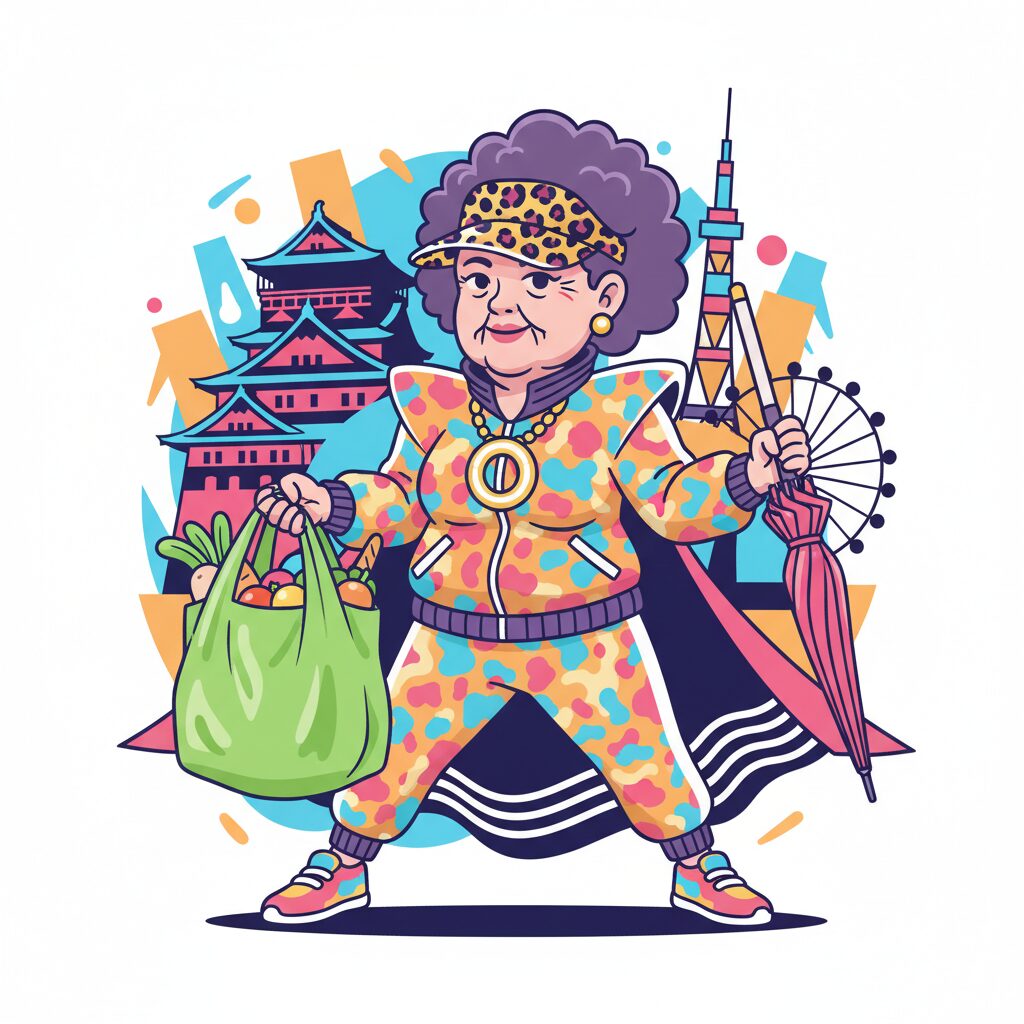
Step off the train at Umeda Station, wander into a Tenma shotengai, or just ride the Midosuji line during the day, and you might just feel it. A certain energy. A flash of animal print, the glint of a brightly colored visor, a voice that cuts through the station’s hum with the force of a friendly freight train. You’ve heard the stories, seen the TV caricatures. You’re in the natural habitat of the Osaka Obachan, that iconic, assertive, candy-dispensing auntie who has become a living symbol of this city. In the rest of Japan, she’s a punchline. In Osaka, she’s the backbone. But who is she, really? Is this stereotype a living, breathing reality, or just a lazy cartoon sketch of a complex culture? The truth, like most things in Osaka, is louder, funnier, and far more practical than you’d expect. Forget what you think you know. We’re going beyond the leopard spots and the loud laughter to understand what this figure truly represents about daily life in Osaka, a city that dances to its own, unapologetic beat. It’s a lesson in deciphering the city’s heart, one piece of hard candy at a time.
Delving further into Osaka’s vibrant character, our analysis of tsukkomi style reveals how playful jabs and direct humor continue to shape the city’s unmistakable cultural narrative.
The Anatomy of a Stereotype: Leopard Print, Perms, and “Ame-chan”
Before we can grasp the essence of the soul, we need to examine the uniform. The Osaka Obachan stereotype rests on several key pillars—visual and behavioral signals instantly identifiable across Japan. These aren’t mere random oddities; they are cultural artifacts, each carrying a story that reveals something fundamental about Osaka’s spirit. It’s a style guide crafted not by Vogue, but by decades of living in a city that prizes presence over politeness.
Fashion: The Leopard Print Phenomenon
Let’s begin with the most iconic feature: the leopard print. Yes, it’s definitely visible. Perhaps not on every woman over 50, but it’s much more common here than in the subdued navy-and-beige palette of Tokyo. Why animal print? It’s not about blending in; it’s about showcasing confidence. This trend dates back to Japan’s post-war economic surge. Osaka, a city of merchants and industry, rebounded fiercely. For the women who managed households and local economies, animal prints represented an accessible hint of the exotic, a touch of affordable glamour. It was daring, somewhat wild, and proclaimed a refusal to go unnoticed. Wearing leopard print in Osaka isn’t chasing a fad; it’s a heritage of bold self-expression. It’s a visual shorthand for a personality that demands attention. It’s a power suit, not merely a fashion choice. Often, it’s paired with other vibrant elements—a bright purple shirt, a glittery handbag, a tight perm defying humidity. The entire outfit embodies a belief: better to be unforgettable than just acceptable.
Communication: The “Ame-chan” Culture
Next in the Obachan’s toolkit is the “ame-chan,” or little candies, always tucked in a purse. Foreigners often see this as a charming quirk, but it’s a highly practical social tool. An ame-chan is more than just a sweet treat; it’s a small gesture of goodwill. It instantly breaks down barriers between strangers, creating a brief moment of shared humanity. Help her pick up a dropped orange? You’ll receive an ame-chan. Is a baby crying on the train? She might offer one to the overwhelmed mother. Sitting next to her on a long bus journey? She could just turn and say “Douzo” (“Here you go”) while handing you one. This gesture means, “I see you. We share this space. Let’s make it a bit friendlier.” It’s a pocket-sized peace offering, a conversation opener, and a sign of communal care. In an era of digital isolation, the ame-chan remains a deeply analog means of connection, with the Obachan as its expert practitioner.
Attitude: Direct, Loud, and No-Nonsense
Perhaps the most striking trait for newcomers, especially those used to Tokyo’s carefully calibrated indirectness, is the Obachan’s style of communication. It’s unapologetically straightforward. She doesn’t rely on subtle hints. Think the daikon is overpriced? She’ll tell the shopkeeper. Blocking the aisle? She’ll say, “Sumimasen, chotto torimasu yo!” (“Excuse me, comin’ through!”) with a firm tone that leaves no room for argument. This isn’t rudeness; it’s pragmatism. Osaka is a commercial city where clarity and speed are essential. Ambiguity wastes time and money. The Obachan’s way of speaking reflects this. She speaks from the chest, laughs heartily, and delivers opinions boldly. Whereas Tokyo culture often values harmony through unspoken cues (kuuki wo yomu, or “reading the air”), Osaka culture prefers laying everything out to avoid misunderstandings. It’s a different social operating system, and the Obachan is its most fluent user.
Beyond the Caricature: What the “Obachan” Really Represents
If you focus only on the leopard print and the loud voice, you completely miss the point. The Obachan is not a stereotype; she represents the core values of Osaka. She embodies the pragmatic, resilient, and community-centered spirit that has defined this merchant city for centuries. To understand her is to grasp the social engine that drives Osaka.
Community and Connection: The Unofficial Neighborhood Watch
In the winding shotengai (covered shopping arcades) and crowded residential areas, the Obachan acts as the unofficial mayor, sheriff, and social director all in one. She is the community’s human glue. She knows which child just started elementary school, which elderly neighbor hasn’t been seen outside for a few days, and which shop offers the best deals on mackerel. Her so-called “nosiness” is often a form of active, vigilant care. She might stop you, a foreign resident, asking where you’re from, what you do for work, and if you’re eating well. It can feel intrusive at first, but her intent is to place you within the local ecosystem, acknowledge your presence, and unofficially welcome you into the community. In a country with an aging population, this informal social safety net is incredibly important. The Obachan’s constant presence and steady stream of chatter form the neighborhood’s living, breathing social network, making sure no one is left behind.
Economic Pragmatism: The Art of the Bargain
Osaka’s identity is deeply tied to its history as the “nation’s kitchen,” a commercial hub where everything had a price and every price was negotiable. This spirit lives on in the Obachan. Watch her at a market. Her interaction with a vendor is not a simple transaction; it’s a performance, a friendly battle of wits. She’ll ask for a little extra (omake), playfully grumble about the price, and build rapport with the seller, all aimed at getting the best value. This isn’t about stinginess; it’s the difference between kechi and shibui. Kechi means plain cheapness, while shibui is being a discerning, savvy consumer who refuses to overpay. The Obachan is a master of shibui. She prioritizes cost-performance above all else—in her groceries, her clothes, and her time. This practical, no-nonsense attitude toward money and value defines Osaka life, standing in contrast to the brand-conscious consumerism often linked with Tokyo.
Resilience and Humor: Laughing Through Life’s Hardships
Beneath her boisterous exterior lies a deep reservoir of resilience. The Obachan has weathered economic booms and busts, raised families, and managed households with remarkable grit. Her assertiveness is a survival skill, sharpened in a competitive city where speaking up is essential to being heard. Her secret weapon, however, is humor. Osaka is famous for manzai comedy for good reason. People here know that laughter is the best way to ease tension, endure difficulties, and connect with others. The Obachan’s knack for joking at her own expense or finding absurdity in tough situations is a sign of great strength. Her loudness isn’t aggression; it’s a life force. It’s a vibrant, generative energy that says, “I am here, I have survived, and I can still find a reason to laugh.” This mix of toughness and humor forms the city’s psychological foundation.
The Modern “Obachan”: Is the Stereotype Fading?
So, what about the next generation? Walking through Shinsaibashi or Namba, you’ll notice young Osakan women who are just as fashionable and globally influenced as their Tokyo counterparts. The classic perm and purple-tinted hair have become less common. Does this suggest the era of the Obachan is ending? Not quite. While the form may be shifting, the function remains the same.
Generational Shifts: From Perms to Smartphones
The younger generation may have swapped the leopard-print blouse for a stylish jacket from a Korean brand, but the underlying mindset often endures. The spirit of the Obachan is less about a particular look and more about a general attitude. You’ll still encounter that trademark directness in a young professional negotiating a business deal, and the same pragmatic focus on value in a university student comparing lunch specials. The tools have changed—she might use a coupon app on her smartphone instead of bargaining face-to-face—but the objective is unchanged: to get the most out of life. The core values of community, practicality, and straightforward honesty are handed down, even if expressed differently. The modern Osaka woman might be quieter but still knows her own mind and isn’t afraid to voice it.
A Source of Pride, Not Shame: Embracing the Identity
Far from being an awkward relic, the Obachan has become a cherished icon and a point of local pride. In a country that often values conformity, she embodies Osaka’s rebellious, individualistic spirit. There are even popular merchandise lines and characters celebrating her. Osakans understand what she represents: strength, authenticity, and a refusal to bow to outside expectations, especially those from Tokyo. Embracing the Obachan image is a way of embracing Osaka’s distinctive cultural identity. It’s a statement that being different is not just acceptable—it’s a strength. Younger generations may not dress the part, but they respect the legacy. The Obachan gave them permission to be themselves, boldly and proudly.
Your Daily “Obachan” Encounter: A Guide for Residents
For someone who isn’t a Japanese resident, encountering a full-force Obachan can be quite confusing. However, with the right attitude, these moments can turn into some of the most rewarding experiences of living in Osaka. It’s your opportunity to witness the city’s authentic spirit, raw and unfiltered.
How to Interact: Don’t Be Intimidated
The first rule: Don’t flinch. When an Obachan shoots a string of straightforward questions your way—“Where are you from? Can you use chopsticks? Are you married?”—don’t see it as an interrogation but as an invitation. She’s trying to make a connection. Smile, give simple answers, and maybe ask something in return. Show her a photo of your cat on your phone. Compliment her bright scarf. A little open, friendly engagement will be returned many times over. If she offers you an ame-chan, accept it with a smile and a warm “Ookini!”—the local word for “Thank you.” That single word signals you’re more than just a tourist; you’re making an effort to be part of the community. They appreciate that. Jump in. The water is fine.
Understanding the Unspoken Rules: The Give-and-Take
Getting through daily life means understanding the Obachan’s unwritten rules. On public transport, personal space is a flexible idea. If she needs a seat, she’ll find a way to get it, moving with a kind of determined practicality that seems to pull everything toward her. It’s not rude; it’s a mission. In a crowded store, hesitation costs you your spot. You learn to move with purpose too. The culture values active participation over passive watching. It’s a give-and-take. Be friendly, be straightforward, and don’t get hung up on formalities. In return, you’ll discover a community that watches out for you, shares food with you, and makes you laugh every day.
The Final Verdict on Osaka’s Iconic Auntie
So, is the Osaka Obachan real? Absolutely. But she is far from the one-dimensional caricature portrayed on TV. The leopard print, the booming voice, the ever-present candy—these are merely surface details of a much richer cultural reality. She embodies Osaka’s history and spirit: a merchant’s pragmatism, a strong community bond, unwavering resilience, and a life-affirming sense of humor. She holds the city’s unwritten rules and drives its social life. While her fashion might seem outdated to some, her attitude remains timelessly strong. She is a woman who knows her worth, cherishes her community, and isn’t afraid to assert herself in the world. Living in Osaka and dismissing her as just a stereotype means missing the full picture. Look beyond the loud exterior, and you’ll discover the warm, beating heart of this remarkable city.