
Your train glides into Shin-Osaka Station, a smooth arrival from the rigid order of Tokyo. You step off, joining the river of people flowing towards the subway, and you approach the first escalator. Your body, programmed by habit from nearly anywhere else in the world, instinctively drifts to the left to stand. And then you freeze. The river has split around you. Everyone—every single salaryman, student, and grandmother with a shopping cart—is planted firmly on the right-hand side. The left lane is an open, rushing channel, a blur of motion for those in a hurry. You’ve been here less than five minutes, and you’ve already caused a minor traffic jam. This isn’t just a trivial local quirk; it’s a fundamental reordering of public space. It’s your first, unspoken lesson in a city that runs on its own distinct operating system. Welcome to Osaka. This simple, seemingly arbitrary choice of where to stand on a moving staircase is the key that unlocks the city’s entire character—a character built on relentless pragmatism, a fierce sense of identity, and a rhythm that refuses to march to anyone else’s drum. To understand why Osaka stands on the right is to begin to understand the soul of the city itself.
Osaka’s distinctive rhythm not only shapes everyday life but also encourages visitors to explore the region’s evolving style of experience-driven luxury in hospitality.
The Great Urban Escalator Divide
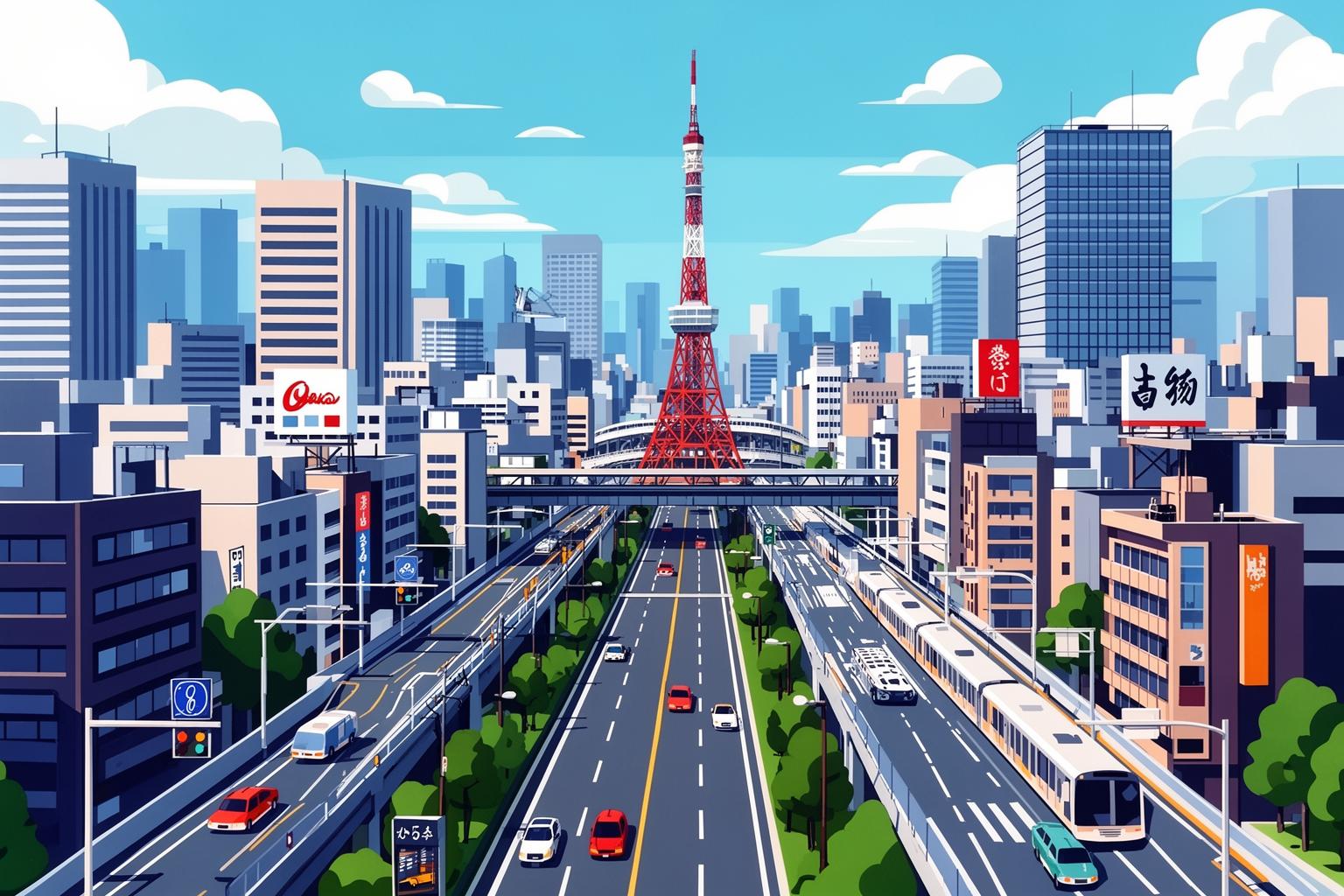
Throughout most of Japan, an unspoken social rule is as deeply ingrained as bowing or removing your shoes indoors. Tokyo’s enormous, world-class transit hubs like Shinjuku, Shibuya, and Tokyo Station operate on one simple principle: stand on the left, walk on the right. This silent, graceful choreography is carried out by millions every day. You blend in, become part of the system, and everything flows smoothly. It’s orderly, predictable, and highly courteous.
But when you arrive in the Kansai region, that system flips with a cultural shock. Step into the vast, multi-layered maze of Umeda Station—a place so immense it feels more like an underground city than a train station—and the change is immediate and total. The right side of every escalator forms a stationary wall of commuters, absorbed in their phones, reading manga, or gazing into space. The left side is a rushing stream of purposeful walkers, a fast lane for the impatient. For a newcomer, it feels wrong, almost rebellious, as if you’ve crossed into a parallel universe where the basic rules of social behavior are reversed.
This isn’t unique to Osaka alone, but it is where the rule is most strongly observed and fiercely defended. Travel to nearby Kyoto, and you’ll often encounter a confusing mix. Some escalators follow Osaka’s right-side custom, while others, especially in areas popular with international tourists or Tokyo residents, revert to the left-side norm. This perfectly symbolizes a city caught between its ancient, refined heritage and its proximity to the Kansai region’s economic powerhouse. Going west to Kobe, the right-side standing custom generally prevails but tends to be less strict, more relaxed. Yet in Osaka, from Yodoyabashi’s business districts to the neon-lit entertainment zones of Namba and Shinsaibashi, the rule is defiantly and consistently on the right. It’s more than a custom; it’s a statement.
Unpacking the “Why”: Theories and Local Legends
Ask a local why they stand on the right, and you might receive a shrug, a chuckle, and a simple, “That’s just how we do it here.” But look a little closer, and you’ll find a rich mix of historical theories and local legends, each shedding light on how Osaka views itself.
The Merchant City Theory
The most widely accepted and romantic explanation ties back to Osaka’s history as tenka no daidokoro—the “Nation’s Kitchen.” During the Edo period, while Tokyo (then Edo) served as Japan’s political and military center, Osaka was the undisputed commercial hub. It thrived as a city of merchants, warehouses, and busy ports, where trade and money were paramount. The theory suggests that right-handed merchants, carrying their abacus or a pouch of coins, naturally kept their dominant hand free. To steady themselves on a staircase, they would grasp the railing with their left hand, positioning their bodies and valuable goods on the right side. This instinct—to protect their livelihood and maintain balance—became embedded in the city’s physical and collective memory, passed down through generations. It’s a tale of commerce shaping everyday movement.
The Samurai Legacy vs. The Merchant’s Pragmatism
This theory gains emphasis when contrasted with Edo’s culture. The capital was a samurai city, with etiquette governed by the warrior class. Samurai wore their long swords (katana) on their left hip for a swift draw with the right hand. To avoid the serious offense of clashing scabbards, they passed each other on the left. This martial custom extended to public pathways and stairs, cementing the “keep left” rule as a matter of honor and safety. Osaka, ruled by the abacus instead of the sword, had no such restrictions. Its priorities were different. Efficiency, not sword etiquette, guided pedestrian traffic. This classic contrast is essential to grasping the deep rivalry and cultural differences between Japan’s two major cities.
The Expo ’70 Hypothesis
A more recent theory points to the 1970 World’s Fair, a landmark event that placed Osaka on the world stage. The idea is that, to handle the vast influx of international visitors—many from countries where the “stand right, walk left” norm prevailed—the city’s railways temporarily adopted this global standard. The convenience stuck. While plausible and indicative of Osaka’s international outlook, many locals find it overly simplistic. It lacks the historical depth of the merchant theory and feels more like a convenient excuse than the true cause. The reality is probably a combination of factors, but the theory an Osakan chooses to embrace reveals much about their pride in the city’s unique heritage.
The “Because We’re Not Tokyo” Principle
Perhaps the most straightforward and compelling reason is simply this: Osaka stands on the right because Tokyo stands on the left. Regardless of its origin, the rule endures as a powerful, daily symbol of Osaka’s distinct identity. In a nation that often prizes social harmony and conformity, Osaka has always celebrated its role as the loud, rebellious, and fiercely independent counterpart to the capital. The escalator rule is a small yet constant assertion of that spirit. It’s a collective, unspoken declaration that “we do things our way.” Changing it now would feel like a concession—a surrender of a piece of the city’s soul to the Tokyo norm. And that’s simply not the Osaka way.
More Than a Rule: What Right-Standing Reveals About Osaka’s Mindset
This isn’t only about escalators. This single behavioral habit perfectly encapsulates the city’s entire social philosophy, providing a quick insight into the Osaka mindset.
Pragmatism over Protocol and the Gospel of Sekkachi
To truly understand Osaka, you need to grasp the meaning of sekkachi. It roughly means “impatient” or “hurried,” but in Osaka, it is considered a virtue rather than a fault. Time is money, and wasting it is unacceptable. The open walking lane on the left side of the escalator is sacred because it supports this fundamental principle of efficiency. The city moves swiftly. The pace of pedestrians in the Umeda underground is a brisk, purposeful stride. People line up for trains with exactness, standing precisely where the doors will open to board immediately. The entire city is designed for maximum flow, and the escalator rule is its clearest expression. You stand on the right not just out of politeness, but from a shared commitment to keeping the system moving smoothly. Blocking the left lane is not only rude but inefficient, and in a merchant city, that is the bigger offense.
A Different Kind of Politeness
In Tokyo, public manners often stem from the concept of meiwaku, or not inconveniencing others. Rules are strictly observed to maintain a peaceful, frictionless public environment. The quiet, orderly queues reflect collective respect. In Osaka, the social contract is more fluid and outcome-focused. The aim is collective progress—getting everyone where they need to be as quickly as possible. The most thoughtful thing you can do is stay aware of your surroundings and move aside. If you accidentally stand on the left, you’re unlikely to face cold looks or passive-aggressive sighs as you might elsewhere. Instead, you’ll probably hear a quick, friendly “chotto, sumimasen” (“excuse me a sec”) as someone politely but directly slips past. The communication is straightforward because the goal is clear: I need to get by. It’s not hostility; it’s cooperation in motion.
The Escalator as a Microcosm of Osaka Life
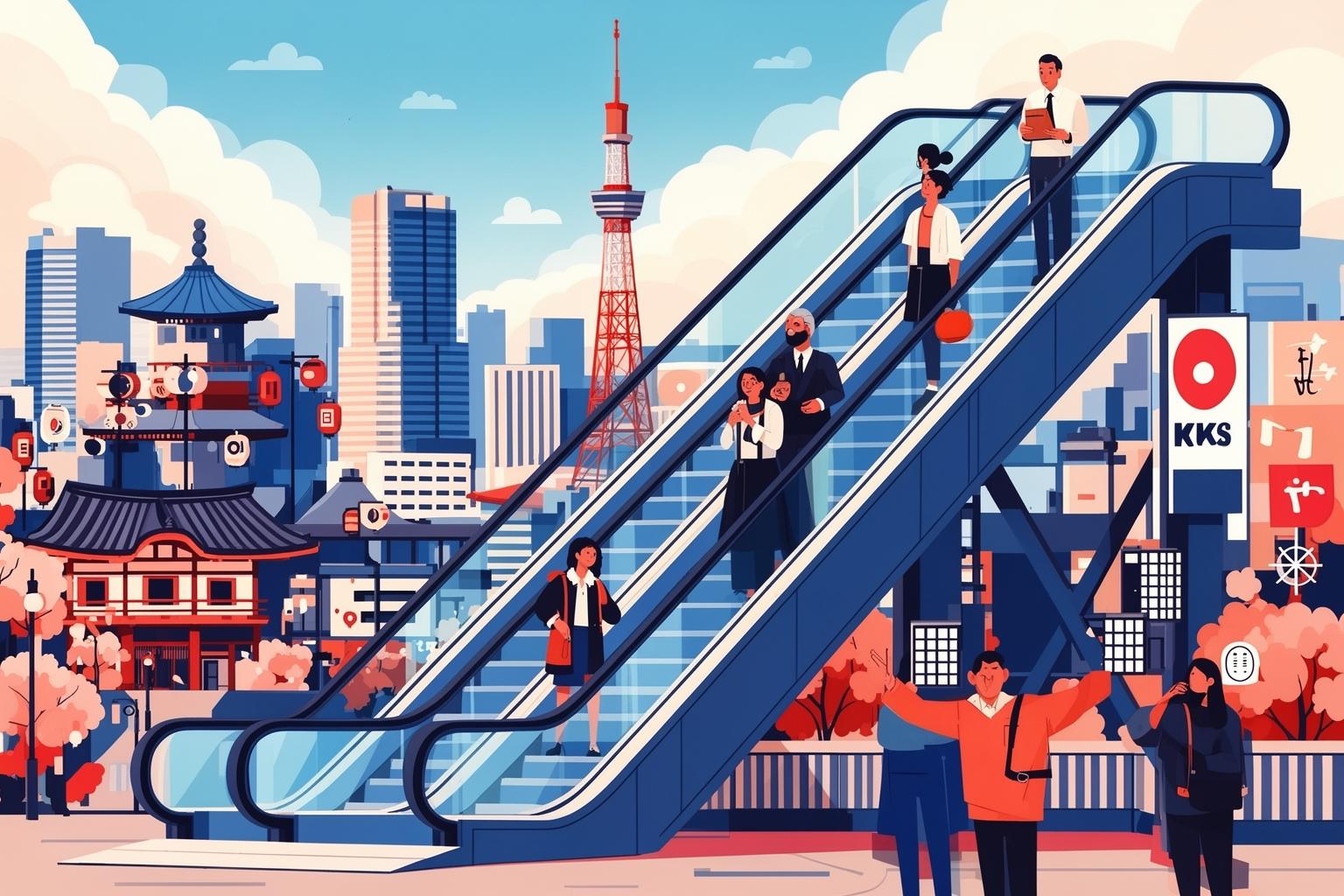
Once you grasp the logic of the escalator, you begin to notice it reflected throughout the city’s daily life, from communication styles to commercial interactions.
Direct Talk and Clear Paths
The straightforward request to move on an escalator perfectly reflects Osaka’s renowned communication style. People here, especially in the more traditional business and market districts, tend to be more direct, open, and less reliant on the subtlety and non-verbal cues common in other parts of Japan. The friendly, sometimes loud banter from a takoyaki vendor, the willingness of a shopkeeper in the Kuromon Market to haggle over prices, and the open curiosity of strangers—all stem from this culture of straightforward, unpretentious interaction. A clear path is valued, both on the escalator and in conversation.
Unwritten Rules Are the Real Rules
Nothing captures Osaka’s spirit quite like its response to official authority. Recently, railway companies across Japan have introduced safety campaigns with posters urging passengers to stop walking on escalators and to stand in two lines, holding the handrail. The official reasons are sound: it prevents falls and reduces uneven mechanical wear. The outcome in Osaka? Widespread, nearly universal disregard. The posters remain, but the left lane stays as clear and fast-moving as ever. The unwritten, culturally ingrained rule—the one that has worked for generations—is far more powerful than any top-down mandate. This perfectly illustrates Osaka’s character: a healthy skepticism toward bureaucracy and a strong, abiding trust in its own proven, practical systems.
Navigating the Flow: A Practical Guide for New Residents
So how do you adjust to this reversed world? It’s easier than you might expect. The secret is to watch closely and go with the flow.
The Rule of Thumb is Simple
When you arrive, keep this mantra in mind: “Osaka is Opposite.” Whatever reflexes you have from Tokyo or elsewhere, do the opposite here. Before stepping onto an escalator, take a moment to observe where the person ahead is going. It’ll quickly become second nature within a day or two. You’ll know you’re adapting when you visit Tokyo and accidentally stand on the right, briefly interrupting their perfect left-side flow.
Don’t Worry If You Make a Mistake
The consequences of slipping up are delightfully minor. You won’t be embarrassed or reprimanded. Instead, you’ll feel the gentle human current parting around you, a subtle but clear sign you’re an outsider in the stream. At worst, you might hear a quick “sumimasen” as someone passes by. The city’s energy is too focused on moving ahead to waste time correcting newcomers. The brief awkward moment is the only price you pay.
Conclusion: The Right Side of History
Learning to stand on the right is more than merely adopting a local traffic rule. It marks your first true immersion into the Osaka way of life. This simple physical act embodies the weight of economic history, regional pride, and a fiercely independent urban identity. It reveals the city’s relentless pulse—a constant, churning rhythm of pragmatism and forward momentum. It shows that in Osaka, politeness serves efficiency, formal rules are flexible suggestions overridden by common sense, and being distinct from the capital is not just geographical—it’s a badge of honor. The moment you step onto the right side of an escalator without hesitation, you do more than avoid a minor inconvenience; you take a small step away from being a visitor and a subtle step closer to grasping the brilliant, practical, and utterly unique soul of this city.