When I first moved to Osaka, I was a woman on a mission: find the best coffee. My mornings in Madrid were a fast-paced ballet of espresso shots and a quick pastry, a fuel-stop before diving into the day. I assumed Japan, especially a sprawling metropolis like Osaka, would be the same. I imagined sleek, minimalist cafes, people typing furiously on laptops, a silent and efficient caffeine exchange. What I found instead was something that stopped me in my tracks, something that felt like stepping back in time. I saw queues forming outside unassuming little shops with faded awnings, places called ‘kissaten’. The signboards, often in charmingly retro fonts, all advertised the same thing: ‘Morning Service’ or just ‘Morning’ (モーニング). For the price of a single cup of coffee, around 400 or 500 yen, you received a whole tray: a cup of dark, aromatic brew, a slice of impossibly thick toast, a perfectly boiled egg, and sometimes a tiny salad. My first thought? This is an incredible deal. My second thought, watching the diverse crowd of old men reading newspapers, business colleagues in deep conversation, and solo women quietly enjoying the calm, was much more profound: This isn’t just breakfast. This is a ritual. This is the real start to the Osaka workday, a crucial buffer between the private world of home and the public demands of the office. And understanding this ritual, I soon realized, was key to understanding the heart and soul of what makes living in Osaka so fundamentally different from life in any other city in Japan.
Osaka’s blend of nostalgic morning rituals finds a parallel in the immersive experience of its vibrant local shotengai shopping culture, where community ties and everyday life seamlessly intertwine.
The Kissaten: A Living Room for the City
To understand the ‘Morning’ phenomenon, you first need to familiarize yourself with its setting: the kissaten. This is not simply the Japanese term for a modern café. A Starbucks is a café. A Doutor is a café. A kissaten, however, is something entirely different—a cultural institution with its own distinct rules, atmosphere, and purpose. It serves as a portal to the Showa Era (1926-1989), a period marked by post-war economic growth and emerging urban culture.
What Exactly is a Kissaten?
Entering a classic kissaten, the difference from a bright, airy, modern coffee shop is immediately apparent. The lighting is usually dim, casting a warm, amber glow throughout the space. The furniture consists of heavy, dark wood with chairs and booths upholstered in worn velvet or vinyl, often in hues of burgundy, forest green, or deep brown. The air is filled with the rich, complex scent of dark-roast coffee, often brewed with great care using a siphon—a beautiful, scientific-looking device made of glass globes and open flames. You might hear the gentle clatter of ceramic cups on saucers, the rustling of newspaper pages, and the low murmur of conversation. In many traditional kissaten, the faint, sweet scent of tobacco still lingers, as they remain one of the few places where smoking is permitted. This is a multi-sensory experience meant to slow you down rather than rush you. At the center of this environment is the ‘Master’ (マスター), the owner-proprietor who is much more than a barista. The Master acts as the conductor of this quiet symphony, recognizing regular customers by name, recalling their usual orders, and offering a nod or brief word that fosters a sense of belonging.
A Community Hub, Not a Workspace
This is perhaps the key point foreigners, especially those familiar with Western or even Tokyo café culture, need to understand. The kissaten is not intended as a co-working space. While you might find a student studying quietly in a corner, it is rare to see a sea of laptops glowing in the dim light. The primary function of this space is not solitary work; it’s about connection, reflection, and community. It represents a ‘third space’ in the truest sense—a place that is neither home nor office, where you can shed the roles you assume in those settings. In Tokyo, cafés often feel like extensions of the workplace: efficient, anonymous, and transactional. You plug in, work, and leave. In Osaka, however, the kissaten operates more like a neighborhood living room. It’s where retirees gather to discuss the world’s problems over coffee, where a salesperson gently pitches an idea to a client in a neutral space, and where the local shop owner takes a fifteen-minute break to read the sports pages. The social fabric of the neighborhood is woven in these velvet booths, one cup of coffee at a time.
Cracking the Code of Osaka’s ‘Morning’
The ‘Morning Service’ is more than just a breakfast special; it’s a philosophy. It serves as a daily affirmation of the core values that shape Osaka’s distinctive culture. To an outsider, it may appear to be merely an inexpensive meal, but to an Osakan, it represents a complex interaction involving value, ritual, and a smart way to start the day.
The Unbeatable Logic of Value for Money
Osaka was founded by merchants, and the city’s identity is closely linked to commerce, fostering a highly refined appreciation for ‘kosupa’ (cost performance). This isn’t about being cheap, which suggests sacrificing quality for a lower price. Instead, ‘kosupa’ is about being savvy—maximizing quality and experience for what you pay. The Morning Service embodies this idea perfectly. For the cost of a single, expertly brewed cup of coffee, you get a full, satisfying breakfast. The toast isn’t a flimsy slice of white bread; it’s often a thick-cut piece of ‘shokupan’ (Japanese milk bread), toasted to a perfect golden brown outside while remaining soft and pillowy inside, served with butter or jam. The boiled egg is never an afterthought; it’s cooked just right, easy to peel, providing a simple protein boost. It’s a deal that almost seems too good to be true, and that’s intentional. It’s a gesture of goodwill from the Master, designed to build loyalty and maintain a steady flow of customers. For the customer, it’s a smart, economical, and satisfying way to begin the day. This mindset influences all parts of life in Osaka, from shopping in the ‘shotengai’ (shopping arcades) to striking business deals. People expect value, treasure a bargain, and reward businesses that offer it.
The Ritual Before the Rush
Beyond the financial aspect, the Morning Service is an essential daily ritual. It offers a structured, predictable, and calming start to what can often be a hectic day. Think of it as a mental runway. Instead of rushing out of bed, onto a crowded train, and straight to work, the kissaten provides a moment to pause. It’s a transitional space where you can mentally ready yourself for the day ahead. For the salaryman, it might be the last quiet moment to review notes before a big meeting, his tie neatly knotted, steam rising gently from his cup. For an elderly couple, it’s a beloved routine, a chance to connect and share the morning paper before going their separate ways. This ritual is a form of self-care, a small daily luxury that creates a sense of stability and order. It’s the deep breath before the dive. This intentional slowing down at the start of the day contrasts with the city’s fast-paced, high-energy reputation. It suggests that Osaka’s energy is not frantic, but focused, and it is rituals like this that allow its people to gather strength and sharpen their minds.
Osaka vs. Tokyo: A Tale of Two Mornings
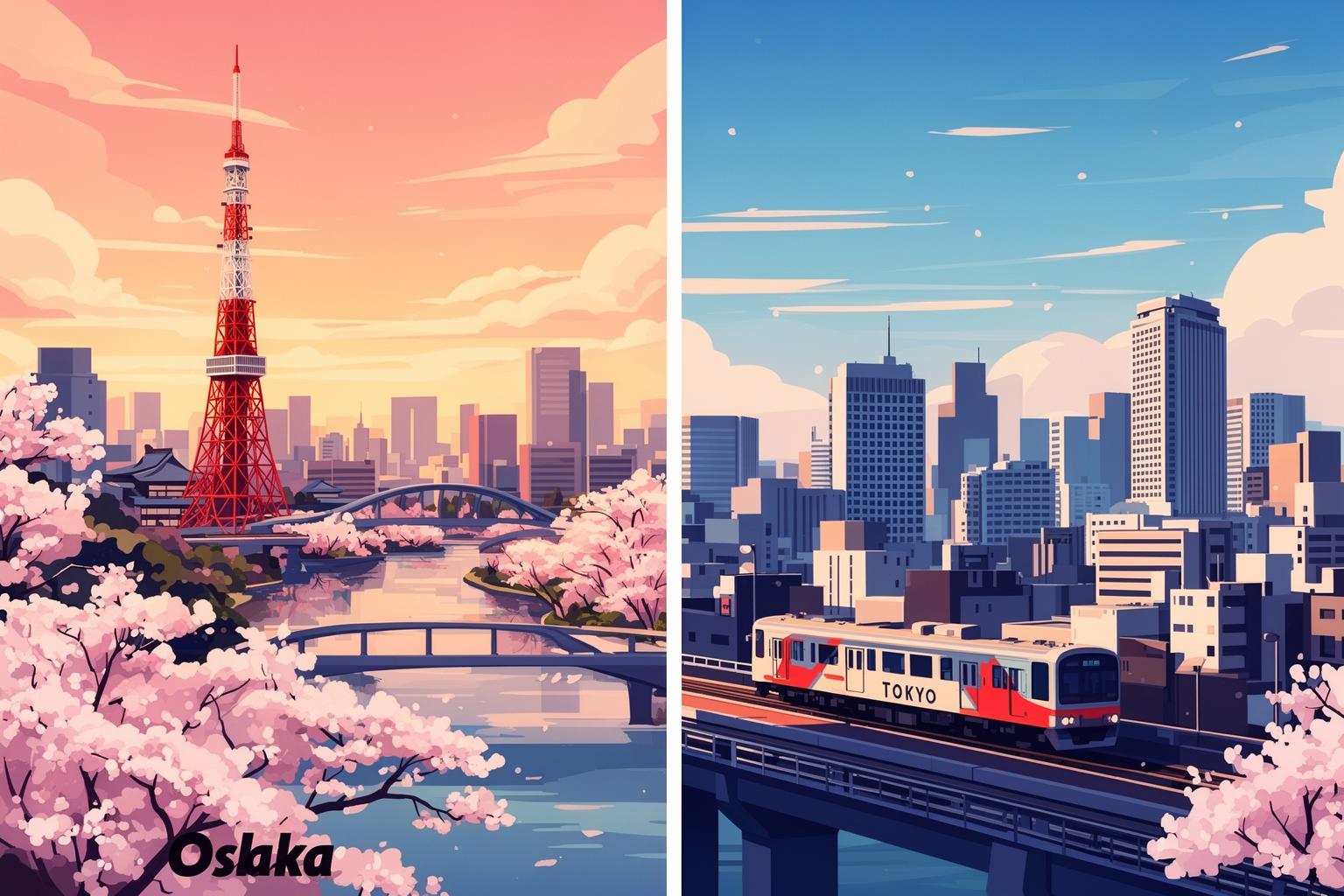
Nothing illustrates the cultural divide between Japan’s two largest cities more vividly than their contrasting approaches to the first meal of the day. The morning rituals in Tokyo and Osaka reveal two distinct priorities and two different ways of navigating urban life.
Efficiency vs. Experience
A typical morning in Tokyo exemplifies streamlined efficiency. The city’s vast, sprawling train stations teem with chain cafes, bakeries, and even soba noodle stands designed for speed. The aim is to refuel quickly and get to work with as little hassle as possible. People eat alone, hastily, often standing up. Coffee is grabbed in a paper cup, consumed on the move or at a desk. Time is the ultimate currency, and every minute saved commuting becomes a minute gained for work. The experience is individual and transactional. Conversely, in Osaka, mornings are an experience to be savored, not just endured. The kissaten culture invites you to sit down and linger. The purpose isn’t simply to consume calories and caffeine; it’s to ease into the day. The emphasis is on the experience itself: the comfortable chair, the familiar face of the Master, and the shared space with fellow community members. It’s a communal, collective start that values well-being over strict minute-by-minute efficiency.
Conversation as Currency
Step into a Tokyo cafe during the morning rush, and you’ll likely encounter a studious silence, broken only by the hum of the espresso machine and the clatter of keyboards. It’s a space for individual focus. In contrast, an Osaka kissaten buzzes with conversation. This is where information circulates. Two men in suits at the counter might be debating the latest Hanshin Tigers baseball game, their voices rising and falling with enthusiasm. A group of women in a corner booth might be exchanging neighborhood updates. The Master could be trading friendly remarks with a regular patron. This casual exchange isn’t idle chatter; it’s the community’s lifeblood. In a merchant city, information and relationships are paramount. Tips about a new client or local news that could impact business are shared over toast and coffee. This is why Osaka residents are often described as ‘friendly’ or ‘outgoing.’ It’s more than a personality trait; it’s a cultural strategy. Friendliness fosters relationships, relationships build trust, and trust underpins business and community life. The morning kissaten serves as the training ground for this vital Osaka skill.
What Foreigners Often Miss About the Morning Ritual
As a foreigner living in Osaka, it’s easy to view the ‘Morning Service’ purely from a practical perspective. It’s a clever travel trick, a way to enjoy a cheap and tasty breakfast. However, seeing it only this way misses the deeper cultural meaning—the subtle network of unspoken rules and social signals that make it much more than just a meal.
It’s More Than Just a Budget Breakfast
The most common misconception is to equate ‘value’ with ‘cheap’. While the Morning Service is certainly affordable, its goal is not to serve as a soup kitchen for budget travelers. For locals who visit these spots daily, price matters less than the experience. They’re not simply paying for coffee and toast; they’re paying for entry to their community space. It’s like a subscription for their ‘third place’. The meal itself represents ‘omotenashi’—the essence of Japanese hospitality. It’s a gift from the Master, a way of saying, ‘Thank you for starting your day with me. Please, make yourself at home.’ Understanding this changes the whole interaction. You’re not just a customer buying a product; you’re a guest being invited into a welcoming space. That’s why regulars often have a tab or settle their bill at the end of the week. The relationship is founded on trust, not a simple cash-for-goods transaction.
The Unspoken Etiquette of the Kissaten
Like many aspects of Japan, the kissaten experience comes with an unspoken etiquette. It’s not a place to set up for hours with your laptop over just one coffee. There’s a natural flow. Most people stay around 30 to 45 minutes—enough time to eat, read part of the paper, and finish their coffee. It involves occupying the space considerately, mindful that others are waiting to enjoy the same routine. A nod to the Master upon entering and a quiet ‘gochisousama deshita’ (thank you for the meal) when leaving are small but meaningful signs of respect. You acknowledge their role as the host of the space. It’s also important to recognize you’re entering an established community. Conversations around you are part of a continuing dialogue. While people in Osaka are generally friendly and open to chatting, it’s best to observe quietly at first, to grasp the room’s dynamics before joining in. This respectful approach is the first step in moving from stranger to familiar face.
Finding Your Own Morning Spot: A Guide to Daily Life in Osaka

For any foreigner eager to genuinely experience what living in Osaka feels like, discovering your own neighborhood kissaten is a rite of passage. It’s the way you transition from being a temporary visitor to becoming part of the local fabric. It’s how the vast, overwhelming city condenses into a warm, familiar neighborhood.
Beyond the City Center
Although there are renowned and wonderful kissaten in the lively districts of Umeda and Namba, the true spirit of this culture thrives in the city’s residential areas and their endless ‘shotengai.’ Stroll through these covered shopping streets, away from the tourist crowds, and you’ll find them: small, family-run cafés with handwritten signs and a loyal local clientele. These are the places where you experience the real Osaka. You might spot the owner of the neighborhood vegetable stand taking a coffee break, a group of grandmothers chuckling after their morning walk, or a young family treating their child to a special morning toast. These neighborhood kissaten serve as community anchors, and spending time in one offers a far more authentic glimpse into the everyday life of Osaka residents than any observation deck or famous landmark ever could.
How to Become a Regular
The thought of becoming a ‘jōren-san’ (a regular) might feel intimidating, but it’s actually quite straightforward. The secret is consistency. Try to visit the same spot a couple of times a week, preferably around the same time. The Master will begin to recognize you. Order something similar each visit. After a few visits, a simple nod of recognition will evolve into a small greeting. Eventually, the Master might ask where you’re from or remark on the weather. This is your opening. A simple, friendly reply is all that’s needed. Before long, your coffee will be ready the moment you walk in. You’ll have a place—a place where you are known, where your presence is expected and welcomed. This simple habit of establishing a routine and becoming a regular at a local kissaten is one of the most meaningful ways to feel at home in Osaka. It’s how you shift from being a mere observer of Osaka life to becoming an active participant. And it all begins with that simple, perfect, life-affirming tray of coffee, toast, and an egg.