

You’ve probably heard the whispers, the stereotypes that fly around Japan. Tokyo is polished, Kyoto is proud, and Osaka? Osaka is… thrifty. You see it in the old lady questioning the price of daikon radishes with the intensity of a courtroom lawyer. You hear it in the classic merchant greeting, “Mokkari makka?” which literally means, “Are you makin’ a profit?” It’s a city where the price tag isn’t just a number; it’s the start of a conversation, a puzzle to be solved. But to label this intricate dance with money as simply being ‘cheap’ is to miss the point entirely. You’d be reading the first page of a novel and thinking you know the ending. What you’re witnessing is a deeply ingrained cultural philosophy, a way of life born from centuries of trade and pragmatism. It’s called ‘shimaritsu’ (始末). And understanding it is your key to unlocking the real, beating heart of this city. Shimaritsu isn’t about hoarding yen; it’s about respecting it. It’s a calculated, almost spiritual dedication to extracting the absolute maximum value from every single coin. It’s about knowing the difference between cost and worth, and it dictates everything from where you buy your groceries to how you make friends. This isn’t a guide to finding bargains. This is a map to the Osakan mind, a place where a good deal is more satisfying than a luxury brand, and where financial savvy is the ultimate status symbol.
Osaka’s unique financial savvy not only dictates daily spending habits but also strengthens local bonds, as illustrated in the Ame-chan community spirit article.
The Merchant’s DNA: Deconstructing ‘Shimaritsu’
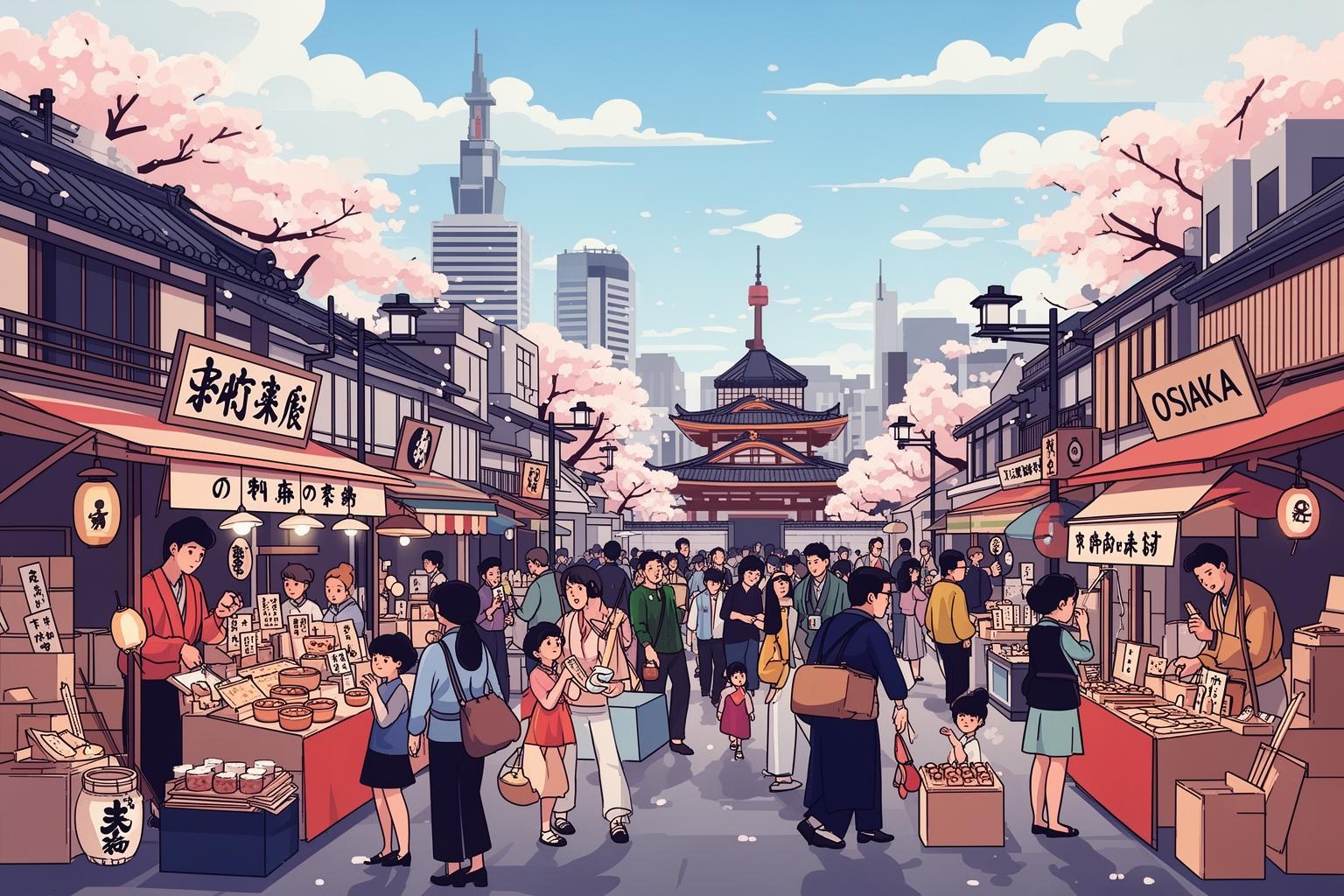
To understand Osaka, you need to realize it was never the center of political power like Edo, today’s Tokyo, nor the imperial court like Kyoto. Osaka was the kitchen, the warehouse, and the national treasury of Japan, managed not by samurai lords but by rice merchants and financiers. Power here wasn’t inherited; it was earned, calculated, and reinvested. This commercial spirit is deeply embedded in the city’s DNA. Shimaritsu is its modern-day embodiment—a philosophy that values shrewdness and efficiency in all matters, especially when it comes to money.
More Than ‘Cheap’: The Gospel of ‘Kospa’
The first misconception to unlearn is that shimaritsu means buying the cheapest option available. That’s beginner’s thinking. The true aim is to maximize ‘kospa’, a Japanese blend of ‘cost performance’. An Osakan will happily pay more for a product—but only if its quality, durability, or usefulness justifies the price. This evaluation is constant and nearly automatic. Is this 800-yen ramen really twice as good as the 400-yen bowl down the street? Do these expensive running shoes offer features that genuinely enhance my jogging, or am I just paying for the swoosh logo? This mindset creates a city of discerning consumers who aren’t swayed by flashy packaging or brand prestige, but by real value. A true Osakan connoisseur won’t boast about the pricey sushi they ate—they’ll proudly share finding exceptional, high-quality sushi at a tiny, unknown spot for half the price. The excitement lies not in spending money, but in outsmarting the market. It’s a game, and everyone is playing.
“Mokkari-makka?”: The Greeting That’s All Business
While less common among younger generations, the traditional Osakan greeting, “Mokkari makka?” (“Are you making a profit?”) with the typical reply, “Bochi bochi denna” (“So-so, bit by bit”), says a lot. Imagine that in Tokyo—it would be seen as extremely rude, an intrusive question about one’s finances. But in Osaka, it’s a gesture of friendship. It acknowledges a shared truth: we’re all working hard, trying to make a living and be savvy about it. It frames life in commercial terms—not as a crude pursuit of wealth, but as a practical, collective effort. This outlook encourages a grounded, straightforward approach to life. There’s less room for pretension. Your worth isn’t tied to your family name or your fashionable clothes, but to your cleverness, your humor, and your talent for spotting a great deal.
The Shimaritsu Shopping Gauntlet: Where Value is King
Nowhere is the shimaritsu spirit more evident than in the city’s retail scenes. Osaka presents a captivating range of shopping experiences, each appealing to different facets of the value-conscious mindset. It’s a city designed for the strategic shopper, where the very atmosphere encourages comparison, inquiry, and engagement.
The Shotengai vs. The Department Store
Tokyo boasts sleek, minimalist boutiques in Omotesando, while Osaka is known for its shotengai—long, covered shopping arcades that serve as the heart of local neighborhoods. Stepping into Tenjinbashisuji Shotengai, the longest in Japan, immerses you completely in shimaritsu culture. It’s a lively, chaotic blend of sounds and scents. Shopkeepers announce daily specials over crackling speakers. The aroma of grilled eel mingles with fresh-brewed tea and strong, budget coffee. Prices are handwritten on cardboard signs, often crossed out and rewritten to reflect a better deal. Here, browsing is expected; you compare the price of mackerel at three different fishmongers and exchange a few words with the lady selling pickles. It’s a dynamic, personal experience. This contrasts sharply with the quiet, reverent atmosphere of a department store like Hankyu Umeda, where prices are fixed, lighting is soft, and interactions are formal. While Osakans do shop at department stores, especially for gifts or luxury items, everyday life unfolds in the shotengai. It’s where relationships with vendors develop, who might toss in an extra potato (“omake”) for a loyal customer. The department store represents a transaction; the shotengai embodies community.
Super Tamade: A Psychedelic Temple of Thrift
You can’t claim to truly understand Osaka’s spending habits without experiencing the dazzling, eye-popping chaos of Super Tamade. This discount supermarket chain is a local icon, notorious for its gaudy neon lights that make the stores resemble pachinko parlors. Inside, shopping is a treasure hunt. The music is loud and fast-paced, aisles are narrow, and the bargains are legendary. They’re renowned for their ‘1-yen sales,’ where you can buy a carton of eggs or block of tofu for just one yen, provided you meet a minimum purchase. Everything about Tamade screams ‘NO FRILLS.’ Produce may be oddly shaped, packaging basic, but the prices undeniably low. For many foreigners, it’s a bizarre spectacle; for Osakans, it’s the ultimate in practicality. Why pay twice as much for the same soy sauce in a fancier store? Tamade is shimaritsu at its purest and most unapologetic—an outright rejection of aesthetics in favor of sheer value.
The Art of the (Implied) Haggle
Let’s be clear: haggling in Osaka isn’t like bargaining in a Southeast Asian market. Directly asking for a lower price is still seen as impolite. Instead, there’s a subtle skill involved, a kind of negotiation through conversation. It’s about showing genuine interest, asking questions, and building rapport with the seller, especially in small independent shops or market stalls. You might admire an item, chat with the owner about where it came from, and then pause, creating a moment for them to offer a ‘service price.’ A common phrase you’ll hear is “Chotto makete?”—a soft, almost playful way of saying, “Can you give me a little discount?” Often, the best outcome isn’t a price cut but an ‘omake’—a small free extra added on. This turns a simple purchase into a human exchange, a negotiation that leaves both buyer and seller satisfied. It’s another small triumph in the ongoing game of securing good value.
Spending Where It Counts: The Other Side of Shimaritsu
Here lies the greatest misconception about the shimaritsu ethos: it does not mean being stingy, especially when it comes to people and pleasure. In fact, it means the opposite. The money carefully saved on groceries and everyday essentials is gladly and generously spent on what truly matters: food, drink, and shared experiences. This is the vital second half of the shimaritsu equation: save where you can so that you can spend where you want.
‘Kuidaore’: Eating Until You Drop on a Budget
Osaka’s most famous motto, ‘Kuidaore,’ translates to ‘eat until you drop’ or ‘eat yourself into bankruptcy.’ Although it seems contrary to the shimaritsu mindset, it is actually its ultimate embodiment. Osakans are passionate about food, but they are equally passionate about obtaining it at a fair price. The city is a haven for ‘B-kyu gourmet’ (B-class gourmet)—affordable, unpretentious, yet incredibly delicious street food like takoyaki, okonomiyaki, and kushikatsu. Fierce competition among vendors keeps both quality high and prices low. An Osakan won’t hesitate to wait in a long line for a renowned takoyaki stall, not because of its fame, but because they know that eight octopus balls for 500 yen offer perfect ‘kospa.’ They will splurge on a beautiful piece of fugu (pufferfish) or a marbled slab of Kobe beef—but only after thorough research ensures the restaurant delivers true value for its premium price. The spirit of ‘kuidaore’ is not about mindless indulgence; it is about the passionate, discerning pursuit of the best possible flavor at the best possible price.
Investing in People, Not Prestige
Strolling through the backstreets of Namba or Tenma on any weeknight, you’ll see where the money saved at Super Tamade goes. Izakayas, tachinomi (standing bars), and small restaurants overflow with people laughing, drinking, and sharing dishes. This forms the social fabric of the city. An Osakan who carefully counts every yen at the supermarket will often be the first to pick up the bill at dinner with friends or buy a round of drinks for colleagues. Socializing is viewed not as an expense but as an investment in relationships, community, and personal well-being. There is a genuine generosity in social settings that may surprise outsiders. This is the origin of Osaka’s ‘friendly’ stereotype—it’s more than just a personality trait; it’s an economic choice. People prioritize human connection over material possessions. A fun night out with friends creates memories and strengthens bonds, which is seen as a far better return on investment than a designer handbag that will be out of fashion next season.
The Tokyo-Osaka Divide: A Tale of Two Wallets
Comparing Osaka and Tokyo is a popular pastime in Japan, and the contrasts are most pronounced in their consumer cultures. Each city is guided by fundamentally different value systems shaped by their distinct histories. Tokyo, as the seat of the shogunate and now the center of government and corporate power, emphasizes prestige, hierarchy, and appearances. In contrast, Osaka, known as the merchant city, values pragmatism, affordability, and substance.
Brand Status vs. Bragging Rights on Bargains
In Tokyo, status is often expressed through consumption. People might mention the exclusive new restaurant they visited in Ginza or the limited-edition sneakers they bought in Harajuku. The high price adds to the appeal, signaling success and refinement. In Osaka, bragging rights work in the opposite way. The hero of the story isn’t the person who spends the most, but the one who scores the best deal. An Osakan will proudly share how they found a high-quality leather jacket at a second-hand store for a fraction of its original price or how their local favorite eatery offers Michelin-star-level food at chain restaurant prices. Their thriftiness is worn as a badge of honor, demonstrating intelligence, resourcefulness, and a resistance to marketing hype. This core difference in what counts as a ‘win’ in consumption defines the distinct energy of each city.
Rent and Real Estate: Practicality Over Postcode
This philosophical divide also influences major life choices, such as where to live. In Tokyo, certain neighborhoods hold significant social prestige. Living in a sought-after area like Minato or Shibuya is itself a status symbol, and people often pay a steep premium for a smaller apartment just to claim the right address. Meanwhile, in Osaka, the approach is much more pragmatic. The key questions when selecting an apartment are: How much is the rent? How many minutes to the station? Which train lines are accessible? Is there an affordable supermarket and a shotengai nearby? The neighborhood’s name matters less than its practical benefits. Osakans prioritize convenience and cost, choosing locations that enhance their daily commute and lifestyle efficiency over places that sound impressive. This practical mindset helps keep the city grounded and, for many, more livable.
Advice for New Residents: Navigating the Shimaritsu Mindset
For someone new, especially from a culture where brand and price directly signify quality, Osaka’s economic landscape can be perplexing. However, learning to view the city through a shimaritsu perspective will not only save you money but also help you integrate into and truly appreciate the local culture.
Learn the Language of Value
Be proactive. When shopping, pay attention to prices. Compare them. Ask questions. Notice the price differences between the department store basement and the local market. Compliment shopkeepers on their products. Show that you are an engaged, thoughtful consumer—not just a tourist with an open wallet. Osakans respect this and see it as a sign of intelligence. When you buy something, feel satisfied with the value you’re receiving, not just the item itself.
Embrace the Local Shop
Discover your local shotengai and make it your own. Don’t just rush through it. Become a regular at the fruit stand, the butcher, the tofu shop. Greet the owners. Let them get to know you. This is how you transition from being an anonymous customer to a part of the community. It’s in these small, local shops where the spirit of ‘omake’ thrives and where you’ll find the best quality and advice. These relationships are more valuable than any loyalty program at a major chain store.
Understand the Social Currency
Lastly, keep in mind the two sides of the shimaritsu coin. Manage your daily budget wisely, but be generous in social situations. If an Osakan colleague or friend treats you to a drink or meal, accept it graciously. Make sure to reciprocate in the future. This flow of casual generosity acts as the city’s social currency. Trying to split the bill down to the last yen or refusing a kind offer may come across as cold or distant. Taking part in this exchange shows you understand the most important lesson of shimaritsu: money is merely a tool. The true gain lies in a life filled with good food, good laughs, and good company.








