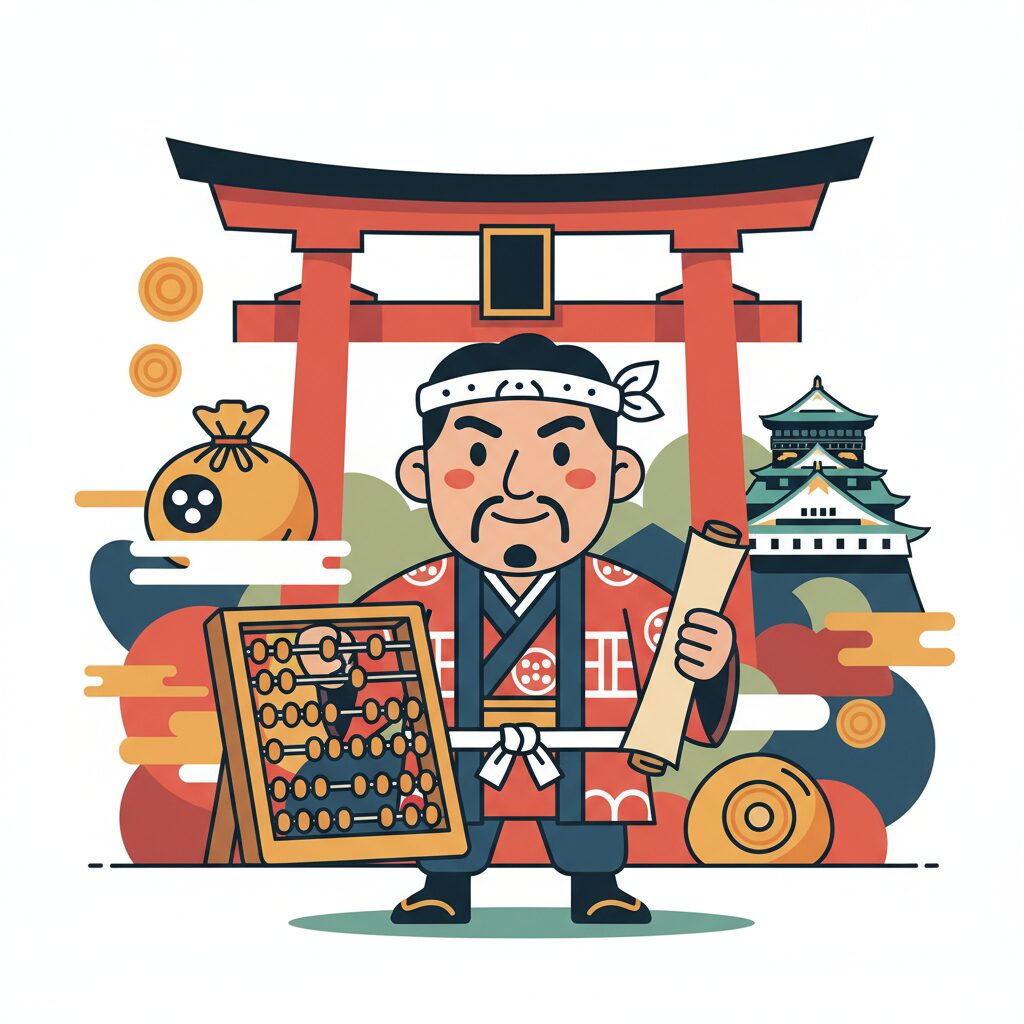
You’ve felt it, haven’t you? That electric buzz in the air, a certain rhythm to the way people talk and trade. You step into a shop in a bustling shotengai, a covered shopping arcade, and the interaction feels different. It’s not the quiet, reverent exchange you might find elsewhere in Japan. Here, there’s a performance, a rapid-fire conversation, a joke, a negotiation that feels more like a sport than a transaction. You’re not just a customer; you’re a participant in a daily ritual that defines this city. This is the heart of Osaka’s Akindo Damashii—the Merchant Spirit. It’s a term you’ll hear thrown around, but what does it actually mean for your daily life here? It’s far more than just haggling over prices. It’s an entire worldview, a social operating system that shapes everything from how people greet each other to their definition of a good meal. Forget the tourist brochures for a moment. To truly live in Osaka, to understand why it feels so vibrant and distinct from the polished formality of Tokyo, you need to understand the soul of the akindo, the merchant. It’s the key to unlocking the city’s logic, its humor, and its unshakeable pragmatism. Let’s dive into the unwritten rules of this commercial culture that hums beneath the surface of everyday interactions.
Dive deeper into the everyday commerce that defines this vibrant city by exploring local spending habits in Osaka and uncovering how these practices reflect its enduring merchant spirit.
The Price is a Conversation Starter, Not a Conclusion
In many parts of the world, particularly in much of Japan, a price tag is a statement of fact—an unchanging, fixed number. In Osaka, however, it can sometimes serve as an opening gambit. This doesn’t mean you can haggle for groceries at the local supermarket—don’t try, or you’ll just receive confused looks. But in the right setting, the price marks the start of a dance, a friendly exchange of wit and charm. The essence isn’t about being stingy; it’s about engagement. The interaction itself adds value to the purchase, transforming a sterile transaction into a memorable human connection. For an Osakan merchant, a memorable customer is a returning customer.
The When and Where of the Haggle
Context is everything. Attempting to negotiate in a sleek department store in Umeda is a social misstep. The system is rigid, and staff are trained in a standardized, nationwide politeness. But step into the bustling, sprawling electronics haven of Den Den Town or a family-run stall in the Tenjinbashisuji Shopping Street, and the rules shift. Here, the atmosphere is more relaxed and personal. The person you’re speaking to is often the owner, someone both empowered and eager to engage in the game.
How does it work? It’s seldom a direct, forceful demand for a lower price. It’s more nuanced. You might ask, “Can you do a little something for me?” (Chotto dake makete kureru?). Or, if buying several items, you might bundle them and request a set price. The key is to remain cheerful, respectful, and ready for a bit of theatrics. The shopkeeper might sigh heavily, tap away on a calculator with flair, and explain how they’re barely breaking even. You smile, express appreciation, and meet halfway. The few hundred yen saved is less important than the triumph of the interaction. Both parties leave with a good story. Foreigners often misinterpret this as adversarial, but it’s fundamentally cooperative. It’s a shared performance affirming that both parties recognize the value of a fair deal and a mutually respectful relationship.
The Art of the ‘Omake’: The Gift Economy
Even more common than haggling is the culture of omake—the small, unexpected bonus included with your purchase. This is a foundation of Akindo Damashii. It’s the merchant’s way of saying, “I see you, I appreciate you, and I want you to return.” This gesture of goodwill fosters loyalty far more effectively than any points card.
You’ll notice it everywhere once you start paying attention. Buy a bag of apples from a street vendor, and they might slip in a slightly bruised one for free. Order takoyaki, and the vendor may casually add a ninth ball to your usual eight. After a meal in a small izakaya, the owner might pour you a complimentary small glass of sake. The monetary value of the omake is almost always minimal. That’s not the point. The point is the feeling it creates—a sense of personal appreciation. It turns a simple purchase into a gift exchange, deepening the bond between buyer and seller. In Tokyo, service focuses on flawless execution and politeness; in Osaka, it emphasizes generosity and personality. The omake embodies this philosophy physically—a small token of a much larger commitment to nurturing lasting relationships.
‘Mokkari-makka?’: The Greeting That Powers the City
Nowhere is the blend of business and everyday life more evident than in the city’s informal greeting. While the rest of Japan asks, “How are you?” (Ogenki desu ka?), Osaka residents often greet each other with a lively, “Mokkari-makka?” which literally means, “Are you making a profit?”
To outsiders, this may sound intrusive or even rude. A Tokyo resident might be surprised, wondering why a neighbor suddenly wants to know about their financial situation. But in Osaka, this question is completely detached from its literal sense. It serves as a social lubricant, a routine check-in as casual as discussing the weather. It’s the Osakan equivalent of “How’s it going?” or “What’s up?”
The usual response is just as crucial: “Bochi bochi denna.” This roughly translates to, “So-so, can’t complain.” It’s a clever form of social engineering—humble, avoiding any hint of arrogance; non-committal, safeguarding personal privacy; and lightly humorous, reflecting the local tendency to not take things too seriously. This linguistic nuance reveals a profound truth about the city: business is not a separate, formal domain. It’s the very language of the community. Asking about someone’s business is asking about their overall well-being, health, and family’s prosperity. It reflects a holistic view of life, filtered through the practical perspective of a merchant.
More Than Money: Unpacking Osaka’s ‘Cost Performance’
People in Osaka are famously value-conscious. The term you’ll hear repeatedly is kosupa, a shorthand for “cost performance.” However, the Osakan interpretation of kosupa goes far beyond just meaning “cheap.” It reflects a relentless, city-wide quest for the absolute best quality, quantity, and satisfaction at the lowest possible price. This isn’t about cutting corners; it’s a source of pride for both consumers and providers.
The ‘Good, Cheap, and Plentiful’ Doctrine
An Osakan is willing to pay extra for something truly outstanding. But when it comes to everyday goods and services, the expectations are incredibly high. A 500-yen lunch set isn’t a bargain unless it’s tasty and filling. Clothing isn’t a good deal if it falls apart after two washes. This demand for quality-to-price ratio fuels the city’s renowned food culture. Dishes like takoyaki and okonomiyaki may be inexpensive, but they’re also made with great care and intense competition. Each takoyaki stand engages in a silent, ongoing battle to offer the crispiest outside, creamiest inside, and best-tasting octopus.
This mindset originates from centuries of Osaka being the “nation’s kitchen” (tenka no daidokoro), a commercial center where goods from across Japan were gathered, priced, and distributed. Merchants and customers became expert judges of quality and value, a discerning tradition passed down through generations. Living here, you quickly adopt this perspective, instinctively assessing everything through the lens of kosupa. You’ll find yourself boasting to friends, not about an expensive dinner, but about an incredible, mind-blowing ramen discovered for only 700 yen. In Osaka, that’s the true status symbol.
Personality as Part of the Price
The final, essential aspect of Osakan value is the human element. A transaction is never simply a transaction. It’s an interaction. In Tokyo, excellent service is often seen as seamless, invisible, and perfectly polite. The staff are models of professionalism, but can sometimes feel distant. In Osaka, great service often involves a chatty shopkeeper asking where you’re from, a waitress telling a joke, or a bartender offering a strong opinion.
This can be surprising for newcomers, especially those used to more formal service styles. It might be misunderstood as nosy or unprofessional. But it’s quite the opposite. It’s a purposeful attempt to create a personal connection, to make you feel like a person, not just a walking wallet. That friendly banter, the shared laughter, the sense of being recognized—these are part of the product. You aren’t only buying a cup of coffee; you’re buying a brief reprieve from your day with a friendly face. This embodies the merchant spirit: the understanding that human connection is the most valuable commodity, building loyalty that no discount or marketing effort can ever match.
Living the Akindo Life: A Practical Guide
So how do you, as a foreign resident, navigate this distinctive cultural environment? You don’t need to become an expert haggler instantly, but by adopting the local mindset, you can enrich and enjoy your life here much more.
Lean into the Conversation
Don’t hesitate. When the owner of your neighborhood vegetable stand remarks on the weather, respond. Ask about what’s in season. Compliment their produce. This isn’t merely small talk; it’s the foundation of building a relationship. Soon, you’ll transition from being just another anonymous customer to a familiar face. That’s when the magic begins—a few extra onions in your bag, advice on how to cook something, or a warm greeting that makes you feel at home. In Osaka, silence feels unusual; conversation is currency.
Develop Your ‘Value Goggles’
Start noticing the little things. Watch where the locals gather. A long queue of office workers outside a plain, unassuming eatery at noon is a far better indicator than any online review. Learn the city’s rhythms, such as the “time service” sales when supermarkets mark down perishables in the late evening. Cultivating this sense of opportunism and discernment is essential to living here. It becomes an enjoyable daily challenge to find the best value and a true source of satisfaction.
Become a Regular, Reap the Rewards
Find your favorite places. Your local coffee shop, your neighborhood butcher, your preferred izakaya. In a city that cherishes relationships deeply, loyalty is a real advantage. The Akindo spirit is all about playing the long game. A merchant isn’t aiming to make a big profit from you just once—they want a fair profit from you for the next twenty years. Once you become a regular, you’re no longer just a customer. You become part of their community. They’ll watch out for you, keep your favorite items in stock, and treat you with a warmth and familiarity that is among the greatest rewards of living in this city.
The Unchanging Soul of the Nation’s Kitchen
The sleek skyscrapers of Umeda and the neon-lit streets of Namba may appear hyper-modern, but the city’s ancient mercantile spirit remains strong. The Akindo Damashii was born centuries ago, when this city drove Japan’s economy—built on pragmatism, wit, and the art of the deal. That heritage isn’t just found in history books; it thrives in every cheerful “Mokkari-makka?“, every extra piece of takoyaki, and every lively bargaining exchange.
Living in Osaka means being part of this ongoing tradition. It means realizing that value isn’t measured solely in yen, but also in laughter, generosity, and human connection. This is a place that rewards involvement, where a straightforward attitude and a sharp sense of humor are your most important assets. The merchant spirit goes beyond business—it’s always been about life itself. And once you catch its rhythm, you won’t just understand Osaka—you’ll feel right at home.