You push through the automatic doors, the day’s work still clinging to you like the humid summer air. The thought of chopping, frying, and cleaning a mountain of dishes feels like an impossible task. You could go out, sure. This is Osaka, the city of kuidaore, where you can eat until you drop. But tonight, you don’t want the performance of a restaurant. You want the comfort of home, the quiet satisfaction of a meal at your own table, without any of the effort. This is the moment, the crossroads where so many non-Japanese residents find themselves, that you discover the true heart of daily Osaka cuisine. It isn’t in the Michelin-starred temples of gastronomy or the steaming stalls of Dotonbori. It’s right here, under the unflinching fluorescent lights of the supermarket, in the sprawling, magnificent section known as the sozai aisle.
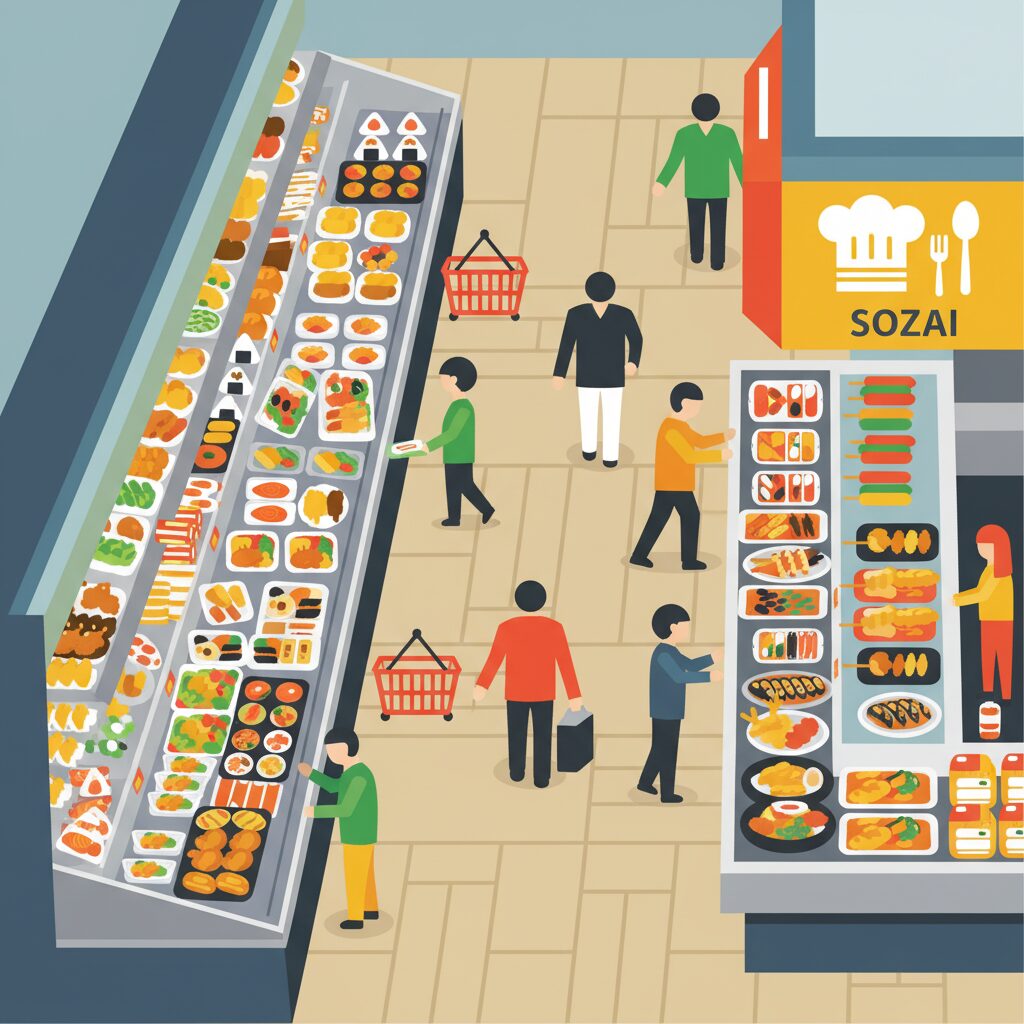
Forget your notions of sad, pre-packaged sandwiches or greasy, lukewarm deli food from back home. The sozai section is a different universe entirely. It’s a vibrant, competitive, and delicious world of prepared dishes that form the backbone of weeknight dinners for millions. From glistening piles of golden-fried chicken to deep, earthy bowls of simmered root vegetables and perfectly grilled mackerel, this is where the theory of Osaka’s food obsession becomes practice. It’s where the city’s core principles—pragmatism, value, and an uncompromising demand for deliciousness—are plated up in convenient plastic trays. To understand the sozai aisle is to understand how Osaka works. It’s a daily ritual, a silent conversation about taste and tradition, and your secret weapon for living, and eating, like a local. This isn’t just about grabbing a quick bite; it’s about curating a real, balanced, and authentically Japanese meal, one delicious, discounted dish at a time. Let’s start our journey at a place that represents the heart of this daily food culture, a typical supermarket where these choices unfold every evening.
The practical ingenuity you experience here is mirrored in the innovative work-life balance strategies of local entrepreneurs, as detailed in this insightful guide to Osaka’s merchant spirit.
What Exactly is ‘Sozai’? The Unsung Hero of Japanese Home Cooking

First, let’s clarify the terminology. ‘Sozai’ (惣菜) is a term you’ll encounter frequently, but its meaning is broader and deeper than a simple translation like ‘deli food’ or ‘side dish’ can convey. At its essence, sozai refers to any prepared dish meant to be eaten as part of a main meal, typically alongside rice. This sets it apart from a bento box, which is a complete, self-contained meal, or a sandwich, which stands alone as a meal. Sozai are the components, the building blocks, the supporting players that enable you to direct your own dinner. Think of it as home cooking, just without the cooking.
This idea is deeply embedded in the Japanese ideal of a balanced meal, known as ichiju-sansai (一汁三菜), which means ‘one soup, three dishes’. A typical meal includes a bowl of rice (the staple), a bowl of soup (such as miso soup), a main protein dish (like grilled fish), and two smaller vegetable or side dishes. For a traditional household, preparing these multiple dishes from scratch every day is a major commitment. In today’s fast-paced world, this is nearly impossible for many. Sozai steps in as the solution. It allows a busy office worker, a student living alone, or a parent balancing work and childcare to quickly put together a nutritious, varied, and culturally authentic meal in minutes. You pick up a main, a couple of sides, heat some rice, prepare instant miso soup, and voilà—a perfect ichiju-sansai dinner is ready.
This fundamentally differs from the Western approach to ready-made food. Takeout in the US or UK often consists of a single, self-contained meal—a pizza, a curry, a burrito. It’s one item that makes up the entire dinner. Sozai, by contrast, focuses on variety and composition. It’s meant for sharing and complementing. You might buy a small portion of simmered pumpkin, another of spinach with sesame dressing, and a piece of fried chicken. Each element contributes to a greater whole. This modular approach is crucial to understanding its significance. It’s not a shortcut born of laziness; it’s a practical, modern method to maintain a traditional style of eating. It’s the unseen engine that keeps the Japanese home-style meal alive and thriving in the 21st century, offering flavor and nourishment without demanding hours of your valuable time.
The Osaka Sozai Mindset: ‘Umaimon, Yasuimon, Hayaimon’
While sozai is common throughout Japan, in Osaka it goes beyond mere convenience to become a powerful expression of the city’s identity. The unwritten motto guiding life in Osaka is often summed up as ‘Umaimon, Yasuimon, Hayaimon’—Delicious, Cheap, and Fast. This philosophy applies not only to street food and restaurants but is also the very essence of the supermarket sozai section. Here, Osaka’s renowned culinary standards meet its legendary practicality.
Umaimon (Delicious)
Let’s be clear: people from Osaka will not accept poor-quality food. There is a strong civic pride tied to their taste buds. This city, known as ‘the nation’s kitchen,’ holds standards that can seem intimidating. This pressure drives supermarkets to fiercely compete on the quality and flavor of their sozai offerings. The food isn’t mass-produced in distant factories; most large supermarkets have expansive, bustling kitchens right behind the sales floor. You can smell the frying oil, see steam rising from fresh simmered daikon, and watch staff carefully arranging grilled fish. It’s fresh, made that day, and crafted to taste like something an Osaka obachan (grandma) would prepare.
This commitment to flavor shows in the incredible variety and regional distinctiveness. You won’t just find generic fried chicken; you’ll find chicken nanban with tangy tartar sauce, salt-and-pepper tebasaki wings, and karaage marinated in a special soy-ginger sauce unique to each supermarket chain. The potato salad isn’t just mayo and potatoes; it contains crunchy cucumber, ham slivers, and the perfect touch of Japanese karashi mustard. There’s a clear sense these recipes have been refined over time. In Tokyo, you might find more delicate, sophisticated flavors in a high-end depachika. In Osaka, the focus is on bold, satisfying, undeniably umai (delicious) tastes that hit the spot after a long day. The seasoning tends to be a bit bolder, sweeter, and richer to suit local preferences. Visitors are often amazed that food from a plastic tray can taste so complex and homemade.
Yasuimon (Cheap)
If deliciousness is Osaka’s soul, value is its beating heart. Osakans love good food but love a great deal even more. The idea of ‘value for money’ is ingrained in the city’s DNA, reflecting its history as a merchant hub where sharp minds and better bargains were essential for survival. This is best seen in the nightly ritual of the hangaku (半額) sticker.
As evening nears, tension builds in the sozai aisle. Shoppers who were previously wandering begin moving with quiet purpose. They circle the displays, eyes searching for the telltale sign: a staff member wielding a sticker gun. This signals discounts. First come the 20% off tags, then 30%. But the real prize, the holy grail, is the hangaku—50% off. When that sticker gun appears, a silent, polite yet fiercely competitive dance starts. People don’t shove or shout; this isn’t Black Friday. It’s a strategic game of timing and positioning, a shared cultural moment. Securing a premium pork cutlet or a family-sized pack of karaage at half price is a triumph, affirming your savvy and patience.
This is more than frugality; it’s cunning. Why pay full price when you can get the exact same, perfectly good food for less simply by waiting an hour? It’s a daily hunt and a form of entertainment. For first-time foreigners, witnessing this is eye-opening. It breaks the stereotype of Japan as uniformly expensive. In Osaka, living well on a budget isn’t just possible; it’s an art, and the sozai aisle is the canvas.
Hayaimon (Fast)
Lastly, there’s the aspect of speed and efficiency. Osaka is a city that means business. People work hard and value their time. The entire sozai setup is designed around this idea—it’s the ultimate life hack for busy urbanites. The aisle layout is logical. Packaging is secure yet easy to open. The checkout process is lightning-fast. The whole experience is built to get you from the store entrance to your dinner table with minimal hassle.
This practicality contrasts with the more leisurely, experience-focused shopping found elsewhere. An Osakan shopper knows exactly what they want. They can scan fifty different bento boxes and pick the best one in seconds. This speed reflects the city’s character—direct, no-nonsense, and goal-oriented. The sozai aisle isn’t a place for lingering; it’s a quick stop to refuel and recharge for the next day. It perfectly matches the rhythm of a city that is always on the move, one that believes a great meal shouldn’t take all night to prepare.
Navigating the Supermarket Sozai Aisle: A Practical Guide

The vastness of a fully stocked sozai section can feel overwhelming. It presents a vibrant scene filled with a variety of colors, textures, and unfamiliar Japanese names. However, don’t worry. Most sections are arranged into clear categories. Understanding these categories is the first step to becoming a true sozai expert.
H3: The Fried Kingdom: Agemono (揚げ物)
Often the most eye-catching and fragrant area, this section is a golden-brown beacon for the hungry and tired. Agemono, or deep-fried dishes, form a core part of Japanese comfort food, and Osaka excels at them.
What to look for:
- Karaage (唐揚げ): Japanese fried chicken consisting mainly of boneless thigh meat marinated in soy sauce, ginger, and garlic, then coated in potato starch and fried until crispy. Each supermarket has its unique recipe, and locals commonly have strong preferences.
- Korokke (コロッケ): The Japanese version of a croquette. The classic potato korokke features a fluffy, savory mashed potato filling encased in a crunchy panko crust. Variations include kabocha (pumpkin) for a hint of sweetness, or cream korokke filled with crab or corn in a rich béchamel sauce.
- Tonkatsu (豚カツ): A breaded and deep-fried pork cutlet, a timeless favorite. You can find whole cutlets for a dinner centerpiece or smaller, pre-sliced pieces. Look for both loin (rosu), which is juicier with a strip of fat, and fillet (hire), which is leaner.
- Ebi Fry (エビフライ): Large, straight, panko-coated fried shrimp, a nostalgic, almost Western-style favorite adored in Japan.
- Tempura (天ぷら): While tempura in restaurants is a delicate art, supermarket tempura tends to be heartier and more casual. Individual pieces often include shrimp, squid, various fish, sweet potato, eggplant, and lotus root. The highlight is frequently kakiage, a mixed fritter of julienned vegetables and sometimes small shrimp.
H3: Simmered and Savory: Nimono (煮物)
This category represents the essence of Japanese home cooking—the taste of mom’s kitchen. Nimono, or simmered dishes, are gently cooked in a broth usually made from dashi, soy sauce, mirin, and sake. They provide vital vegetables and fiber for a balanced meal.
What to look for:
- Nikujaga (肉じゃが): A classic Japanese stew of thinly sliced meat (typically beef or pork), potatoes, carrots, and onions simmered in a sweet, savory broth. It’s pure comfort on a plate.
- Chikuzenni (筑前煮): A traditional New Year’s dish available year-round as sozai. It features a hearty blend of chicken and root vegetables like burdock root (gobo), lotus root (renkon), carrots, and shiitake mushrooms, all simmered together for a rich, complex flavor.
- Hijiki no Nimono (ひじきの煮物): A modest yet very common side dish. Hijiki, a black stringy seaweed, is typically simmered with shredded carrots, fried tofu (aburaage), and soybeans. It is nutrient-dense and has a distinctive, slightly oceanic taste.
- Kabocha no Nimono (かぼちゃの煮物): Simmered kabocha squash cooked until tender in a sweet soy broth, soaking up all the flavor. It’s soft, sweet, and fulfilling.
H3: Fresh and Green: Salads and Aemono (和え物)
This section provides a refreshing contrast to the fried and simmered foods. It goes beyond simple lettuce and tomato, featuring a variety of dressed vegetables and other chilled preparations.
What to look for:
- Potato Salad (ポテトサラダ): The Japanese take on this salad is a national favorite. It’s typically creamier and richer than Western versions, with potatoes partially mashed and mixed with Japanese mayonnaise, sliced cucumber, carrots, onion, and often ham or boiled egg.
- Goma-ae (胡麻和え): A traditional dish where blanched vegetables, usually spinach (hourensou) or green beans (ingen), are dressed with a sweet, nutty blend of ground sesame seeds and soy sauce.
- Harusame Salad (春雨サラダ): A refreshing salad featuring chewy glass noodles (harusame), julienned cucumber, carrots, ham, and often thin omelet strips, all tossed in a light, vinegary soy dressing.
- Daikon Salad (大根サラダ): A simple yet popular salad made from shredded daikon radish, often topped with crispy bacon bits, small dried fish, or umeboshi (pickled plum), and served with a ponzu-based dressing.
H3: Grilled and Baked: Yakimono (焼き物)
For many living in compact Japanese apartments, cooking fish can be troublesome due to lingering odors. The yakimono section offers perfectly grilled fish and other items without the hassle or smell.
What to look for:
- Saba no Shioyaki (鯖の塩焼き): Salt-grilled mackerel, a true staple with oily, rich, and flavorful fish, featuring crispy skin and tender flesh. A squeeze of lemon or some grated daikon on the side balances out the richness beautifully.
- Sake no Shioyaki (鮭の塩焼き): Salt-grilled salmon, another popular classic. The salmon is flaky and savory, making a perfect main dish alongside rice.
- Yakitori (焼き鳥): While best enjoyed fresh from specialty stalls, supermarkets sell packs of grilled chicken skewers. Common varieties include momo (thigh meat) and tsukune (chicken meatballs), seasoned with either simple salt (shio) or a sweet soy glaze (tare).
- Teriyaki Chicken (鶏の照り焼き): Pan-fried chicken thigh glazed in a sweet-savory teriyaki sauce that caramelizes to a shiny coating, making it an irresistible, popular choice.
H3: The Main Event: Bento (弁当) and Donburi (丼)
Though the focus here is on foods beyond the bento, this section is hard to overlook since it’s often the largest part of the sozai aisle. It features complete, ready-to-eat meals.
What to look for:
- Variety Bento: These range from simple Nori Bento (rice topped with a sheet of nori seaweed, a piece of fried fish, and pickles) to elaborate Makunouchi Bento, which contains small portions of many items like grilled fish, tamagoyaki (rolled omelet), nimono, and tempura, offering a little bit of everything.
- Katsudon (カツ丼): A bowl of rice topped with a deep-fried pork cutlet (tonkatsu) simmered with onions in a sweet dashi and soy broth, bound together with a silky, half-cooked egg.
- Oyakodon (親子丼): Literally meaning ‘parent-and-child bowl,’ this comforting dish consists of chicken and onions simmered in the same dashi broth as katsudon and finished with egg over rice.
- Onigiri (おにぎり): Rice balls, a world unto themselves, available with dozens of fillings ranging from simple salted salmon (shiozake) and pickled plum (umeboshi) to modern variations like tuna mayonnaise or grilled pork.
The Unspoken Rules and Local Etiquette of the Sozai Hunt
To someone unfamiliar, the sozai aisle might appear chaotic, but like many things in Japan, there is a subtle etiquette and a set of unwritten rules that guide behavior. Knowing these will help you navigate the aisles like an experienced local and avoid any unintended faux pas.
The Sticker Timing and the Circling Vultures
We’ve mentioned the magic of the discount sticker, but there’s a method to it. There isn’t a single, fixed time. It varies depending on the store’s closing hour and the manager’s discretion. Typically, the first wave of modest discounts (10-20% off) begins around 4 or 5 PM. Larger discounts of 30-50% usually appear one to two hours before closing. The key is to observe. You’ll notice a clear change in the crowd’s makeup and behavior. This is when the ‘vultures’—a term used affectionately—start to gather. These are the savvy shoppers: retirees, students, and office workers heading home. They don’t form a line but instead move slowly and patiently around the sozai displays. They might pretend to examine a pack of korokke while keeping a sharp eye on the staff member with the sticker gun. The rule is: don’t be pushy. Avoid hovering directly over the staff’s shoulder. Give them space, but signal your presence and intention by keeping close. When the stickers start going on, you step in decisively but courteously. It’s a dance, and mastering the moves is part of the fun.
Tongs and Personal Space
Many sozai items, especially fried foods, are offered in open displays where customers pick their own pieces and place them in containers. Several pairs of tongs are always provided. The rules here are simple but non-negotiable. First: always use the tongs—never touch the food with your hands. Second: don’t use the same tongs for different types of food if separate ones are available (for example, tempura vs. karaage). Third: after use, return the tongs to their designated tray, never on the food itself. Also, be considerate of personal space. If someone is selecting items, wait for them to finish before you reach in. The Japanese sense of personal space is somewhat larger than in some other cultures, so allow plenty of room.
The ‘Kore Kyou no?’ Question
People from Osaka are straightforward and value honesty, especially when it comes to food. It is perfectly fine—and quite common—to politely ask a nearby staff member, “Sumimasen, kore kyou no desu ka?” (“Excuse me, was this made today?”). This won’t cause offense. In fact, it shows you care about quality, something any food-loving Osaka native will appreciate. Staff will almost always answer honestly. This directness can sometimes be mistaken for rudeness by foreigners used to more indirect communication, but in Osaka, it’s simply practical. You’re a customer paying for a product and have the right to know what you’re buying. This small exchange reveals a lot about the local mindset: practical, unafraid to ask questions, and always focused on getting the best.
Osaka Supermarket Tiers: Where to Find the Best Sozai
Not all supermarkets are created equal. Just as Osaka boasts a variety of neighborhoods, it also features a hierarchy of grocery stores, each with its own unique character, price range, and sozai offerings. Understanding where to shop for what you need is essential to navigating your local food landscape.
H3: The Everyday Heroes (LIFE, Mandai, Gyomu Super)
These are the staples of the Osaka supermarket scene, the places where most residents do their everyday shopping. They provide the best mix of quality, variety, and, most importantly, value.
- LIFE: Possibly the most widespread and dependable supermarket chain in the Kansai region. LIFE stores are generally clean, well-organized, and have an extensive sozai section. Their in-store kitchens constantly produce fresh items. They excel in classic bento boxes, a broad array of korokke, and solid nimono options. Their evening discount deals are famous, making it a favored spot for hangaku hunters.
- Mandai: A strong competitor to LIFE and another Kansai staple. Mandai often feels more local and less corporate. They emphasize fresh produce and frequently offer excellent fish-based sozai, such as grilled saba and salmon. Their prices remain competitive, and their prepared foods carry a distinctly homemade quality. The atmosphere is lively and straightforward, truly reflecting Osaka’s merchant spirit.
- Gyomu Super (業務スーパー): Meaning ‘Business Supermarket,’ its primary business model centers on selling bulk and frozen goods to restaurants. However, most locations feature a small but potent sozai section that is remarkably affordable. This is the go-to spot for genuine value. You might find enormous packs of fried chicken or giant onigiri at prices that seem unbelievably low. While quality can be more variable than LIFE or Mandai, Gyomu Super is an indispensable resource for budget-conscious shoppers.
H3: The Premium Players (Ikari, Hankyu Oasis, Seijo Ishii)
When you want to upgrade your weeknight dinner from simple sustenance to something special, these upscale chains are the destinations. Prices are higher, but so are the ingredients’ quality and the dishes’ creativity.
- Ikari: The undisputed leader among high-end supermarkets in the Kansai region, often located in more affluent residential areas. Shopping at Ikari is an experience: wide aisles, soft lighting, and carefully curated product selections. Their sozai section focuses less on everyday staples and more on gourmet creations. Items include roast beef with red wine reduction, elaborate seafood salads featuring fresh scallops, and artisanal quiches alongside impeccably prepared traditional Japanese dishes. An Ikari sozai is what you choose to impress guests or to indulge yourself.
- Hankyu Oasis: The supermarket division of the influential Hankyu corporation, which also operates a department store and railway line. Hankyu Oasis balances everyday convenience with premium appeal. It offers higher quality and presentation than LIFE, featuring a broader selection of wine, cheese, and imported goods. The sozai section mirrors this with both reliable classics and more adventurous dishes, often highlighting seasonal ingredients.
- Seijo Ishii: Although originally a Tokyo-based chain, Seijo Ishii maintains a strong presence in Osaka’s major transport hubs and upscale neighborhoods. It specializes in high-quality domestic and imported products. Its sozai is renowned for uniqueness and often incorporates international flavors. You might discover Thai green curry alongside Japanese nikujaga or classic French pâté next to yakitori. It’s the perfect spot when craving something different.
H3: The Depachika Experience (Hankyu, Hanshin, Takashimaya)
The Depachika—the expansive food halls found in the basements of major department stores—represent the pinnacle of prepared food culture. This is not merely a supermarket; it’s a culinary wonderland. Each department store—such as Hankyu in Umeda, a true food paradise, or Takashimaya in Namba—devotes massive B1 and/or B2 floors entirely to food. The sozai here is sold not by the supermarket itself but by dozens of individual stalls, many operated by renowned restaurants or specialty shops. Presentation is flawless, quality impeccable, and variety overwhelming. You can buy salads from an RF1 stall, tonkatsu from Maisen, and traditional Kyoto-style obanzai from another. Evening discounts here are legendary, with well-dressed shoppers politely competing for marked-down gourmet meals. Visiting a depachika is less about routine shopping and more about indulgence and exploration.
Building Your Perfect Osaka Meal: A Sozai Masterclass
Now that you’re familiar with the players and the pieces, it’s time to bring it all together. The art of sozai lies in curation—mixing and matching textures, flavors, and food groups to craft a satisfying and balanced meal. Here are a few templates to help you get started.
The Classic Weeknight Dinner
This is your reliable, go-to meal that will carry you through the workweek. It’s a perfect example of ichiju-sansai put together in under five minutes.
- Main (Protein): One piece of Sake no Shioyaki (grilled salmon). Healthy, flavorful, and reheats well.
- Side 1 (Vegetable): A small pack of Hourensou no Goma-ae (spinach with sesame dressing). Provides greens with a nutty, savory taste.
- Side 2 (Root/Starch): A scoop of Kinpira Gobo (braised burdock root and carrot). Fibrous with a satisfying crunch, glazed in a sweet and savory soy sauce.
- Foundation: A bowl of freshly cooked rice plus a packet of instant miso soup with tofu and wakame.
This combination offers a fantastic balance of salty, sweet, and nutty flavors—and textures too—all for a fraction of the cost and time of cooking from scratch.
The ‘I’m Too Tired to Think’ Fried Food Fiesta
Some days, you just crave something greasy, crispy, and comforting. This is Osaka soul food at its most straightforward. No shame in this game—embrace the agemono.
- Main (Protein): Three or four pieces of store-specialty Karaage. Crispy, juicy chicken is the star here.
- Side 1 (Starch/Creaminess): One large Cream Korokke. The crunchy exterior gives way to a rich, molten interior that’s pure indulgence.
- Side 2 (The Illusion of Health): A small container of shredded cabbage salad or a simple potato salad. The freshness and acidity cut through the richness of the fried food. You can even pick up a small bottle of tonkatsu sauce and Japanese mayonnaise for dipping.
This meal is a flavor explosion. It’s not the healthiest choice but deeply satisfying and an integral part of the local diet.
The Healthy-ish and Sophisticated Choice
You want something quick and easy but still mindful of your health. The sozai aisle offers plenty of light yet flavorful options.
- Main (Protein): A piece of grilled chicken breast seasoned with herbs or just salt and pepper. Lean and clean-tasting.
- Side 1 (Fiber/Minerals): A generous portion of Hijiki no Nimono. Low in calories but rich in nutrients, with a wonderful savory sea flavor.
- Side 2 (Vegetable): A pack of Nasu no Agebitashi (fried eggplant soaked in a light dashi broth). Silky and tender, having absorbed all the umami from the broth. Decadent yet mostly vegetable.
This meal is light on the stomach without compromising flavor, proving convenience food doesn’t have to mean junk food.
Ultimately, the sozai section is more than just a place to buy dinner. It’s a living museum of Japanese home cooking and a vibrant reflection of Osaka’s culture. It’s where the city’s passion for delicious food (umaimon), savvy pursuit of a good deal (yasuimon), and pragmatic need for efficiency (hayaimon) all come together in a humble plastic tray. It’s a culinary democracy where everyone—from construction workers to company presidents—can enjoy a hot, satisfying, and well-balanced meal. To bypass the sozai aisle is to miss out on the heartbeat of daily life in this city. So next time you’re tired and hungry, skip the restaurant, walk past the instant noodles, and head straight to that glowing corner of the supermarket. Your perfect Osaka dinner is waiting there for you to assemble.