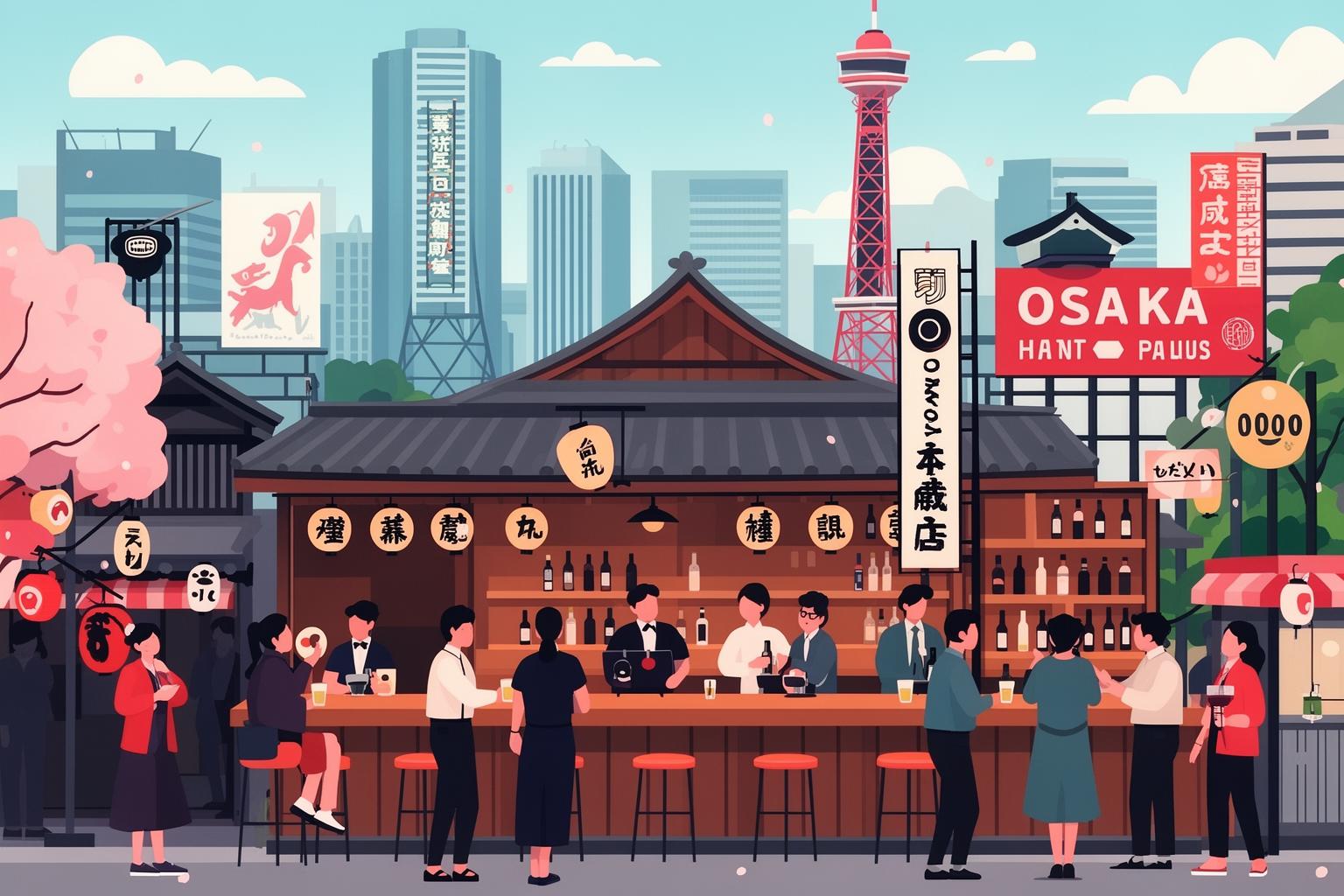
Step off the train at Kyobashi or Tenma after five in the evening, and you’ll feel it. A current of humanity pulls you past the gleaming department stores and into the narrow, lantern-lit shotengai alleyways. The air grows thick with the scent of grilled offal, savory dashi, and cheap, cold beer. Here, under the railway tracks and tucked into spaces barely wider than a doorway, you’ll find the beating heart of Osaka’s after-work culture: the tachinomi, or standing bar. To the uninitiated, these places look like pure, joyous chaos. A crush of bodies, a roar of conversation, plates and glasses changing hands with dizzying speed. It seems like a world with no rules, an open invitation to dive in and join the party. But that’s the first, and most common, mistake. These establishments are not chaotic. They are hyper-organized social ecosystems governed by a strict, unspoken grammar that every regular understands implicitly. For the foreign resident, cracking this code is more than just learning bar manners; it’s a lesson in the very essence of the Osaka mindset—pragmatic, efficient, and deeply communal in its own unique way. This isn’t a guide to the best tachinomi in Osaka. It is a field guide to the people inside them, a manual for navigating the invisible lines of social conduct that define these remarkable spaces.
To delve further into the subtle etiquette that defines Osaka’s tachinomi scene, check out our after-work tachinomi guide for a deeper understanding of this dynamic social ecosystem.
The Tachinomi Trinity: Speed, Space, and Social Cues

Before even considering what to order, you need to grasp the three fundamental principles that uphold the entire tachinomi experience. These principles aren’t displayed on any wall, yet they are as unyielding as the steel counters on which they are practiced. The first is speed. A standing bar is not a lounge; it is a high-turnover setting, a brief pit stop for a quick social recharge before the final commute home. Lingering is a cardinal sin. The second is space. This is the establishment’s most valuable resource. Your presence is merely the rental of a small vertical column of air and a tiny section of countertop, nothing beyond that. Third, and most importantly, are the social cues. The entire bar operates through a silent language of glances, gestures, and shifts in position that govern the flow of people and conversation. Mastering these principles is what distinguishes a smooth, enjoyable visit from a clumsy, uncomfortable intrusion.
The Art of the Squeeze: Claiming Your Territory
Securing a spot in a packed tachinomi is your first challenge. You don’t wait to be seated; you must actively but politely insert yourself into the crowd. The key is to spot subtle gaps, the small spaces between shoulders. The right approach is to come to the counter at an angle, make eye contact with those on either side of the possible opening, and offer a slight nod or a soft, “Sumimasen.” This is more than just “excuse me”; it’s a question: “Is there room for one more soul in this narrow space?” The reply will be a gentle compression, a collective shuffle as everyone pulls in to make space. Once you’re in, your territory is defined by the width of your shoulders. Your bag belongs on the hook beneath the counter or on the floor between your feet. Never, under any circumstance, place it on the counter itself—that space is sacred, reserved solely for food and drink. Your coat stays on. You exist vertically. This compact use of space reflects a culture that has perfected urban density. Unlike a Western pub, where patrons might claim an entire corner, personal space here is a shared, constantly renegotiated resource. You are a temporary piece in a human puzzle, and your role is to fit without unsettling those around you.
Ordering with Intent: The Unspoken Rules of the Counter
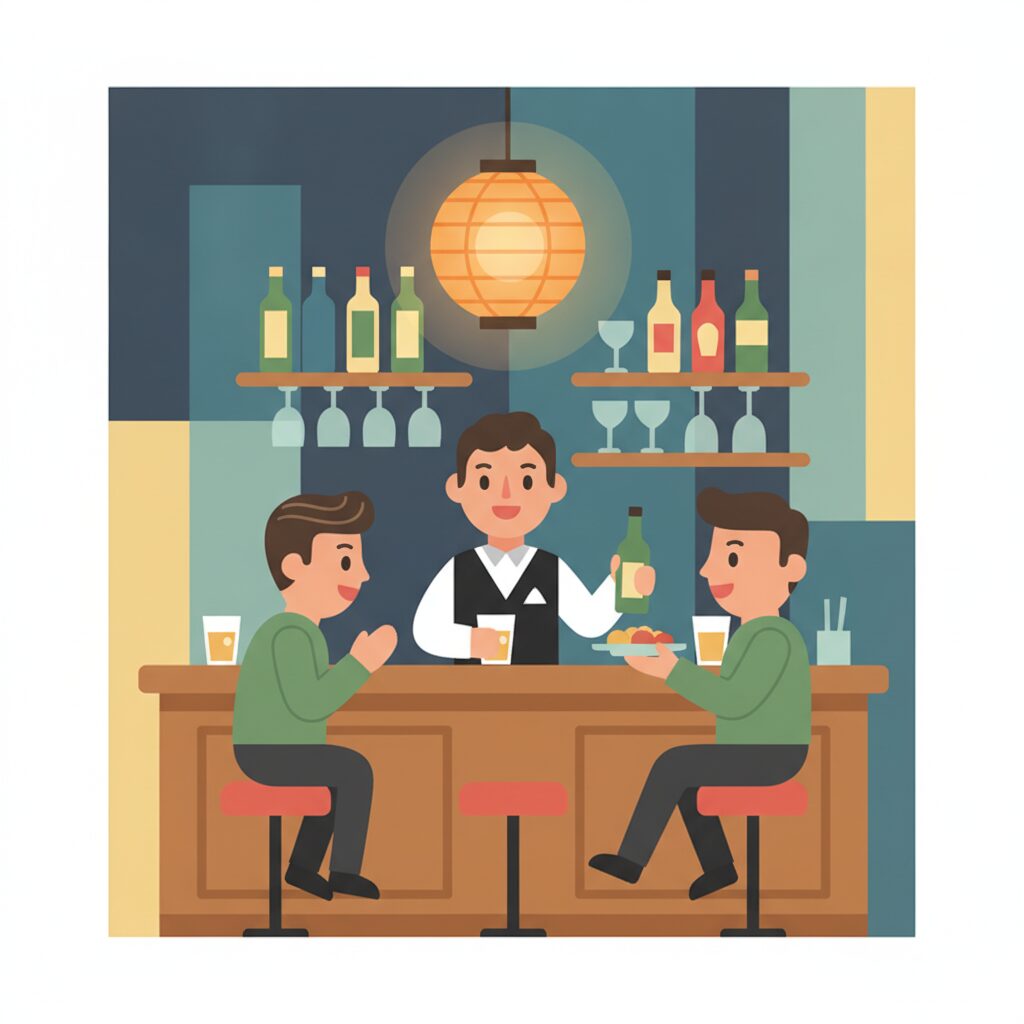
Once you’ve claimed your slice of real estate, the next challenge begins: ordering. The bartender or owner, the `taishō`, is likely juggling a dozen orders at once, keeping a mental tally of every drink poured and every dish served. They don’t have time for hesitation. Know what you want before catching their eye. A classic, straightforward opening line is: “Nama hitotsu!” (One draft beer!). From there, you can check the handwritten menu on the wall or the dishes displayed on the counter. Pointing is both acceptable and often encouraged. “Kore to, are, onegai shimasu” (This one and that one, please). Many tachinomi follow a `kyasshu on` (cash on delivery) system. A small tray or bowl will be set in front of you. You place a 1,000 or 5,000 yen note inside, and the staff returns change with each order. This is efficiency at its peak; there’s no waiting for a bill at the end. It reinforces the transitory nature of your visit. This entire procedure reflects a core Osaka trait often called `sekkachi`—a kind of restless impatience rooted in a desire for efficiency rather than rudeness. The aim is to keep things moving, serving the maximum number of customers in the shortest possible time. Your ability to keep pace demonstrates your understanding and respect for the local rhythm of life.
The Myth of Instant Friendship: Decoding Osaka’s Social Code
The most common cliché about Osaka is that its people are universally friendly and that visiting a tachinomi will quickly gain you a dozen new best friends. However, the reality is much more complex and intriguing. While Osakans are indeed more direct and expressive than their Tokyo counterparts, this doesn’t mean every stranger is inviting you to engage in deep, personal conversations. The tachinomi is a social space, but it operates under certain conditions. Friendships don’t form by force; they occur naturally, sparked by a shared observation or moment of camaraderie. Trying too hard to initiate interaction is the fastest way to build a barrier around yourself. The warmth of a tachinomi is ambient, like the heat from a grill—you can enjoy it, but you can’t grasp it.
Reading the Room: To Talk or Not to Talk?
So, how should you engage? The first step is to observe. Watch the `taishō`, the sun around which the bar’s social orbit revolves. They often serve as social facilitators, introducing regulars or gently steering conversations. Pay attention to the `jōren-san`, the regulars, who act as the bar’s atmosphere gatekeepers. They’ll have their own favored spot, their usual drink arriving without a word. Don’t intrude on their space or discussions; instead, blend into the background. A safe way to enter the social scene is by complimenting the food. A simple “Kore, oishii desu ne!” (This is delicious!) directed at the `taishō` can sometimes open a door. If a nearby regular comments on your choice of sake, consider it an invitation. Respond with a smile and a brief remark. Conversations tend to be light and situational: the Hanshin Tigers baseball game on the small TV, the changing weather, or the quality of that day’s tuna. It’s about sharing a moment, not exchanging life stories. You’re there to add to the room’s pleasant buzz, not to perform a solo.
Osaka Directness vs. Tokyo Ambiguity
This is where the difference between Osaka and Tokyo stands out most clearly. At a Tokyo standing bar, it’s entirely normal to drink in silence, surrounded by others doing the same. The unspoken rule often favours mutual, respectful anonymity. In Osaka, silence can feel noticeable. You’re more likely to be addressed directly, perhaps with a friendly tease or a curious question. A neighboring patron might notice you enjoying `doteyaki` (stewed beef tendon) and say, “That’s the best thing here! Good choice!” This isn’t an intrusion; it’s a form of validation. It’s Osaka’s way of forging a temporary bond through shared experience. The right response isn’t a polite, reserved nod but an equally enthusiastic agreement: “Hontō ni! Saikō desu!” (Really! It’s the best!). This directness can be surprising for those used to more indirect communication, but it represents a kind of social honesty. There’s little room for ambiguity in the close quarters of a tachinomi. This interaction mirrors Osaka’s broader business and social culture, which values straightforwardness and getting to the point, in contrast to the more nuanced, layered politeness often found in Tokyo.
A Transaction in Time: The Tachinomi Lifespan
Understanding the temporal aspect of a tachinomi visit is arguably the most crucial part of the etiquette. You are not merely taking up space; you are occupying time, and that time is limited. The entire system operates on the expectation that you will drink, eat, and then leave, making room for the next guest. The idea of `nagai o suru`, or overstaying one’s welcome, is a significant social misstep. It disrupts the flow and the unwritten schedule that maintains the business’s viability and the lively atmosphere. A typical, socially acceptable visit lasts about thirty minutes to an hour—enough time for two or three drinks and a few small dishes. This isn’t a place to nurse a single beer for hours while scrolling on your phone.
The Graceful Exit: Knowing When Your Time is Up
Knowing when to leave is an intuitive skill. You sense the rhythm of the bar, notice new people peeking in at the doorway searching for a spot, and feel your own meal come to a natural end. When that moment arrives, the exit should be as quick and smooth as your entrance. There’s no drawn-out goodbye. The process is straightforward. First, gather your empty plates and glasses, possibly moving them to the counter’s upper tier if one exists, signaling to the staff you are finished. If you have a tab, catch the `taishō`’s eye and say “Okanjō, onegai shimasu” (The bill, please). After paying, offer a clear, audible “Gochisōsama deshita!”—more than a simple “thank you for the meal,” this shows respect for the staff’s efforts and formally closes your visit. Then, turn and slip out, making yourself small to weave through the crowd. The entire process, from deciding to leave to departure, should take less than a minute. This final act demonstrates your understanding of the rules: you’ve enjoyed your time, and now you’re making space for the next customer to do the same.
What it Says About Osaka Work Culture
The tachinomi is deeply connected to the rhythms of Japanese urban work life. It serves as a `decompression chamber` between the strict office routine and home responsibilities. It is a place where a `salaryman` can briefly shed workplace formalities, enjoy an affordable and satisfying reward after a hard day, and engage in casual, low-pressure socializing before catching the last train. The focus on speed and value directly reflects the economic realities faced by many workers. This isn’t about lavish spending; it’s about maximizing social and culinary rewards within a modest budget. The well-known Osaka concept of `senbero`—getting tipsy for 1,000 yen (a `sen` yen coin)—originated in these venues. It stands as a testament to the city’s practical mindset and its appreciation for accessible, everyday pleasures. The tachinomi is not a luxury; it is a necessity, a vital part of the city’s social fabric.
Beyond the Beer: What Standing Bars Reveal About the Osaka Mindset
To dismiss the tachinomi as simply a cheap place to drink overlooks its true significance. It serves as a living museum of Osaka’s social history and as a daily reflection of its cultural values. This microcosm showcases the city’s most admired qualities: pragmatism, a keen focus on value-for-money, straightforward communication, and a distinctive form of temporary, situational community. Here, politeness isn’t shown through bows or honorifics, but through spatial awareness, efficiency, and a shared effort to avoid inconveniencing others. It is a space of `functional intimacy`, where strangers can stand side-by-side, share a laugh over a spilled drink, and then part ways without a second thought. This is the unfiltered Osaka, experienced as it truly is, not as it is marketed. The standing bar is where you can sense the city’s pulse, raw and unvarnished. Don’t be daunted by the crowd or the noise. Approach it not as a tourist seeking entertainment, but as a student of urban life. Enter with awareness, respect for the unspoken rules, and a readiness to observe. If you do, you’ll gain more than just a cheap beer and a plate of grilled chicken skin—you’ll receive a genuine, fleeting insight into the very soul of this complex and captivating city.