
When you first land in Osaka, the city hits you with a wall of vibrant, chaotic energy. The concrete canyons of Umeda, the pulsing neon veins of Namba, the sheer density of it all. It’s intoxicating, a city that wears its heart on its sleeve, loud and proud. For many of us who choose to build a life here, this is the Osaka we know. It’s a place of commerce, of speed, of relentless forward motion. But after a while, a question starts to bubble up, a quiet whisper in the back of your mind: is this all there is? You see pictures of serene, rural Japan—of rolling hills and quiet farmhouses—and assume it requires a costly Shinkansen ticket and a meticulously planned vacation. You assume you have to leave Osaka to find peace. The common misconception is that Osaka is a monolith of urban sprawl, a city that traded its green spaces for pachinko parlors and office towers long ago. That, to find the ‘real’ Japan, you have to escape its gravitational pull entirely.
That’s what I thought, too. I had resigned myself to the idea that my life here would be lived between the concrete and the train tracks, with weekend escapes being major logistical operations. Then, I discovered the Noseden Line. It’s not famous. It won’t appear on any tourist hotlists. It’s a tiny, unassuming railway line that branches off the main Hankyu artery just north of the city center. And riding it feels like unlocking a secret level of Osaka. It’s the city’s attic, a nostalgic, dusty, and beautiful space that holds a different version of its identity. This isn’t a trip away from Osaka; it’s a journey deeper into it, into its backyard where the scenery of satoyama—the traditional, sustainable landscape nestled between mountains and villages—still defines the rhythm of daily life. It’s a place that fundamentally rewired my understanding of what it means to live in this metropolis.
For those seeking to unravel Osaka’s rich tapestry of urban dynamism and local heritage, diving into the nuanced traditions of neighborhood kissaten offers a captivating glimpse into the city’s hidden cultural corners.
The Noseden Line: Osaka’s Time Machine on Rails
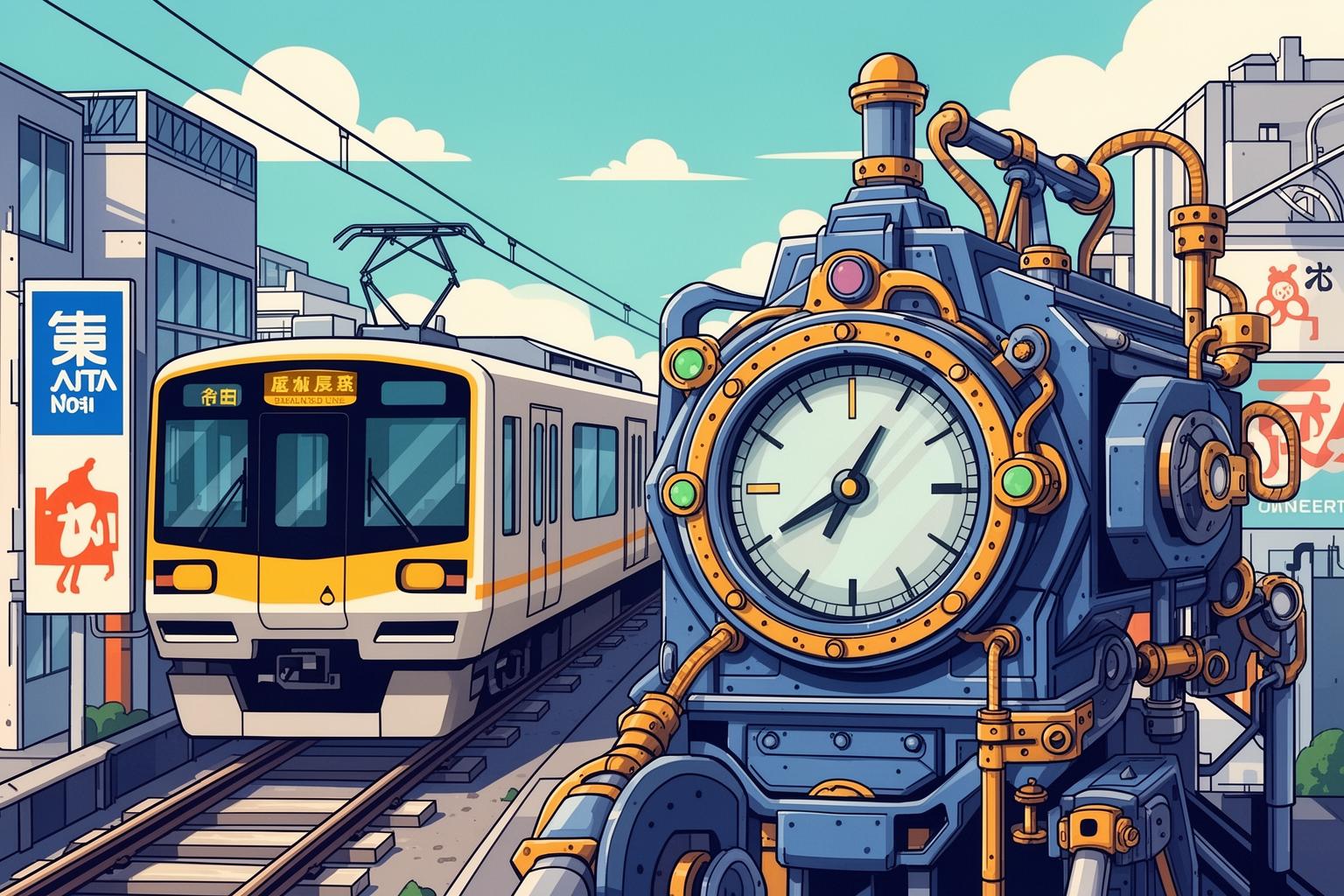
The shift happens almost instantly. At Kawanishi-Noseguchi Station, you step off a sleek, crowded Hankyu train and onto a quaint, often two-car Noseden carriage. Known as the “Nose Railway,” it carries a charmingly humble, almost storybook quality. The train itself feels like a character. Its seats are upholstered in velvet, the interior often clad in wood-grain laminate, and occasionally it’s a wanman train, operated by a single driver who also manages tickets and announcements. The atmosphere inside immediately softens. The frantic pace of the city commute dissipates. Passengers no longer resemble anonymous figures lost in their phones; they become neighbors. An elderly woman might offer a candy to my child. People exchange slight nods as they board. It’s a shared space, not merely a means of transport.
This marks a subtle yet profound contrast to the main city lines. In Tokyo, the Yamanote Line is a marvel of efficiency—an orderly, silent loop of personal space bubbles. In Osaka, the Midosuji Line flows like a river of humanity, efficient but charged with a current of impatience. On the Noseden Line, time seems to stretch. The journey becomes part of the experience. As the train pulls away, the landscape transforms with cinematic speed. Dense clusters of apartment buildings give way to sprawling single-family homes with terracotta roofs, then suddenly, bamboo groves so thick they seem to swallow the light flank the tracks. Small, meticulously tended vegetable gardens appear in the most unexpected places—tucked between two houses, on a steep embankment, or a tiny front yard. Within fifteen minutes, the city hasn’t just faded; it has disappeared. You’re in a different world, one that moves to a different rhythm, yet remains within Osaka’s orbit—a testament to the surprising and abrupt way Japanese cities yield to the countryside.
Satoyama Defined: More Than Just “Countryside”
The term people use for this landscape is satoyama. It’s a word without an exact English counterpart. “Countryside” feels too broad, while “wilderness” is completely inaccurate. Satoyama refers to the managed borderlands—a patchwork of forests, farmlands, irrigation ponds, and grasslands shaped by human hands over centuries. It’s nature as a collaborator, not a pristine, untouched display. This concept reveals something profound about the Japanese, especially the Osakan, mindset.
Reading the Landscape
Stepping out of a station like Myokenguchi, the last stop, you are instantly surrounded by this living example of satoyama. You see terraced rice paddies climbing the hills, not as mere tourist attractions but as functioning farmland. The forests aren’t wild thickets; they’re managed, with trees planted for timber and clearings made for gathering mountain vegetables. This isn’t nature for visual enjoyment alone, like a meticulously designed garden in a Tokyo temple. It’s nature as a resource, a pantry, and a workplace. This directly reflects Osaka’s identity as a city of merchants and artisans, embodying a deeply practical outlook. While beauty is valued, utility is essential. An Osakan looks at a mountain and sees not just a scenic view, but also a source of bamboo shoots in spring, mushrooms in fall, and fresh water throughout the year. Everything serves a purpose and holds value. This pragmatic bond with the environment contrasts sharply with the more abstract, aesthetic appreciation found elsewhere. The small, unfenced vegetable gardens scattered about are a perfect example—they blur the distinction between private property and communal space, existing not as a hobbyist’s curated patch but as an integral part of the household food supply, an open-air pantry visible to all.
The Sound of Silence, Osaka-Style
What strikes you next is the sound—or rather, the shift in sound. The constant, low hum of the city disappears. But it’s not silent. This isn’t the staged, reverent silence of a Kyoto rock garden where even a cough feels intrusive. Instead, it’s a living quiet, filled with the rustling wind through bamboo, the distant caw of a crow, the cheerful chime of a train crossing, and the rhythmic scrape of a hoe as a farmer tends crops. This quiet is punctuated by the sounds of life and labor. It highlights a key difference in spatial perception. In Tokyo, there’s often a push to create perfect, curated bubbles of experience—the serene temple, the trendy café, the quiet park—each sealed off from the others. Osaka, true to its nature, blends it all together. The country’s calm intertwines with the rhythms of work and community. It’s a more natural, less self-conscious form of tranquility. You’re not entering a designated “quiet zone”; you’re simply stepping into a different pace of life that has endured here for generations.
The Rise of the Satoyama Cafe: A New Take on an Old Space
Amidst this traditional landscape, a new type of establishment is emerging: the satoyama cafe. These are far from your typical Starbucks or Doutor. Often passionate endeavors, they are run by individuals who have deliberately chosen a slower pace of life. Discovering one feels like finding a hidden treasure—a reward for stepping off the beaten path. These cafes are becoming fresh centers of community life, blending the old satoyama lifestyle with a contemporary sensibility.
Not a Chain, But a Story
Many of these cafes are located in kominka, traditional farmhouses that have been carefully restored. Upon entering, you leave the 21st century behind. The air is filled with the earthy scent of aged timber beams and tatami mats, mingled with the rich aroma of freshly ground coffee. The owner often takes your order, prepares your drink, and may even bake the cake you’re about to enjoy. Frequently, these owners are former city dwellers—people who left careers in Osaka or Tokyo to create something uniquely their own. The interaction here is different. In a city cafe, service is characterized by brisk efficiency. Here, it becomes a conversation. The owner might ask where you’re from, what brought you to Nose, and share stories about the building or the ingredients. This goes beyond good customer service; it’s a genuine connection. It embodies the Osaka merchant spirit in a new way: business built on relationships, not just transactions. They’re not merely selling coffee; they’re inviting you into their world, their story. This personal approach sharply contrasts with the polite but often impersonal service common in larger cities.
The Menu as a Map
The food and drink in these cafes narrate the story of the region. The menu acts as a highly localized map of the satoyama. Coffee might be roasted nearby, but a lunch set includes rice from a farm visible through the window, pickles made by an elderly neighbor, and a salad composed of vegetables picked fresh from the garden that very morning. A slice of cake might be flavored with yuzu or chestnuts grown just down the road. This is more than a marketing phrase about being “farm-to-table.” It represents a deeply rooted philosophy based on practicality and community. Why bring ingredients from across the country when the best produce is right here? This mindset is distinctly Osakan, reflecting quiet pride in local resources paired with sharp business acumen. It creates a web of interdependence: the cafe supports local farmers, the farmers frequent the cafe, and visitors experience something authentic and genuine. It stands as a rejection of the Tokyo-centric model, where value often depends on famous brands or imported luxury. Here, value is found in freshness, locality, and the strength of community ties.
What This Teaches You About Living in Osaka
A weekend trip along the Noseden Line is more than just a pleasant getaway. It serves as an education. It fundamentally shifts your perception of Osaka and provides a clearer insight into the lives of the people who call it home.
Beyond the Concrete: Redefining “Urban Living”
The most important takeaway is that Osaka is not the urban monolith it seems to be. The city has a backyard, a green lung that is easily reachable. This represents a huge, often overlooked advantage of living here compared to Tokyo. In central Tokyo, experiencing similar nature often requires planning a full day trip to places like Hakone or Mount Takao, which feels like a major expedition. Here, it feels more like visiting a neighboring district. This close coexistence of ultra-urban and deeply rural areas defines the Osaka metropolitan experience. It challenges the foreigner’s misconception that Osaka is just a smaller, rougher version of Tokyo. It is not a scaled-down replica; it operates on a different logic. It’s a city that has preserved its connection to the land, offering a more balanced approach to urban life. You can work in a skyscraper in Umeda and, less than an hour later, be hiking a mountain trail surrounded entirely by cedar trees.
The Practicality of Community
The satoyama lifestyle underscores the Osakan focus on practical, reciprocal relationships. The community here is not just about festivals and social events; it is an economic ecosystem. People rely on each other in concrete ways. This spirit, rooted in centuries of trade and commerce in the city, finds its rural expression here. It explains why Osaka people can sometimes come across as nosy or overly direct. They are often trying to understand how you fit in, to find a connection, to build a relationship. It’s less about maintaining a strict social hierarchy and more about creating a functional network. In the satoyama, this network is seen in its purest form: the farmer, the cafe owner, the local artisan, all contributing to and benefiting from a shared local economy. It’s a reminder that in Osaka, community is not an abstract concept; it’s a survival strategy, a business model, and a way of life, all combined.
A Weekend, A New Perspective
Returning to the city after spending a day or two in Nose always feels unusual. The noise of the Hankyu train at Umeda Station seems louder, the crowds denser, and the pace more hectic. Yet, it no longer feels overwhelming. Instead, it feels like part of a much larger, more intricate picture. You carry the quiet of the satoyama with you, aware that this urban intensity is only part of the story. You know that just a short train ride away lies a different Osaka, one that follows the rhythm of the seasons instead of the train schedule.
This duality is the key to what makes living in Osaka so endlessly fascinating. It’s a city that offers both: the vibrant, creative chaos of a world-class metropolis and the soul-soothing tranquility of a traditional rural landscape. It’s a city of striking contrasts, where the modern and the ancient, the commercial and the communal, the concrete and the green, not only coexist but enhance one another. And to truly understand it, all you need to do is buy a ticket, board a small train, and ride it to the end of the line.