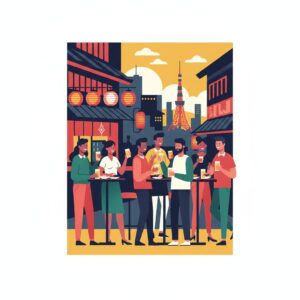
We talk a lot about work-life balance, that delicate dance between the office and the home. But we often forget the third pin on the map, the place that’s neither one nor the other. Sociologists call it the ‘third place’—a public setting that hosts the regular, voluntary, and informal gatherings of a community. It’s the neighborhood pub, the local library, the town square. In a city like Osaka, a sprawling metropolis of concrete and neon where private space is a premium, you have to ask: where do people go? Where do they find their anchor, their communal living room? The answer isn’t in a sleek, minimalist café with free Wi-Fi and globally standardized lattes. It’s in the quiet, smoke-hazed, time-worn institutions known as kissaten.
These traditional coffee shops are more than just places to get a caffeine fix. They are living archives, extensions of the neighborhood’s own memory and character. Stepping into one is like stepping through a soft veil in time, back to an era when life moved at the speed of a dripping siphon and a conversation wasn’t measured in minutes. For someone like me, who grew up surrounded by the rapidly changing social landscapes of modern China, the sheer permanence of Osaka’s kissaten is a source of endless fascination. They represent a kind of social infrastructure that is built not on efficiency, but on consistency. It’s here, in these velvet booths and under the warm glow of amber lamps, that you can truly begin to understand the rhythm and soul of daily life in Osaka. This is where the city breathes.
Osaka’s unique urban tapestry is further enriched by local sentō that provide a daily decompression routine, mirroring the warm community spirit of kissaten, as explored in local sentō insights.
More Than Coffee: Decoding the Kissaten Experience
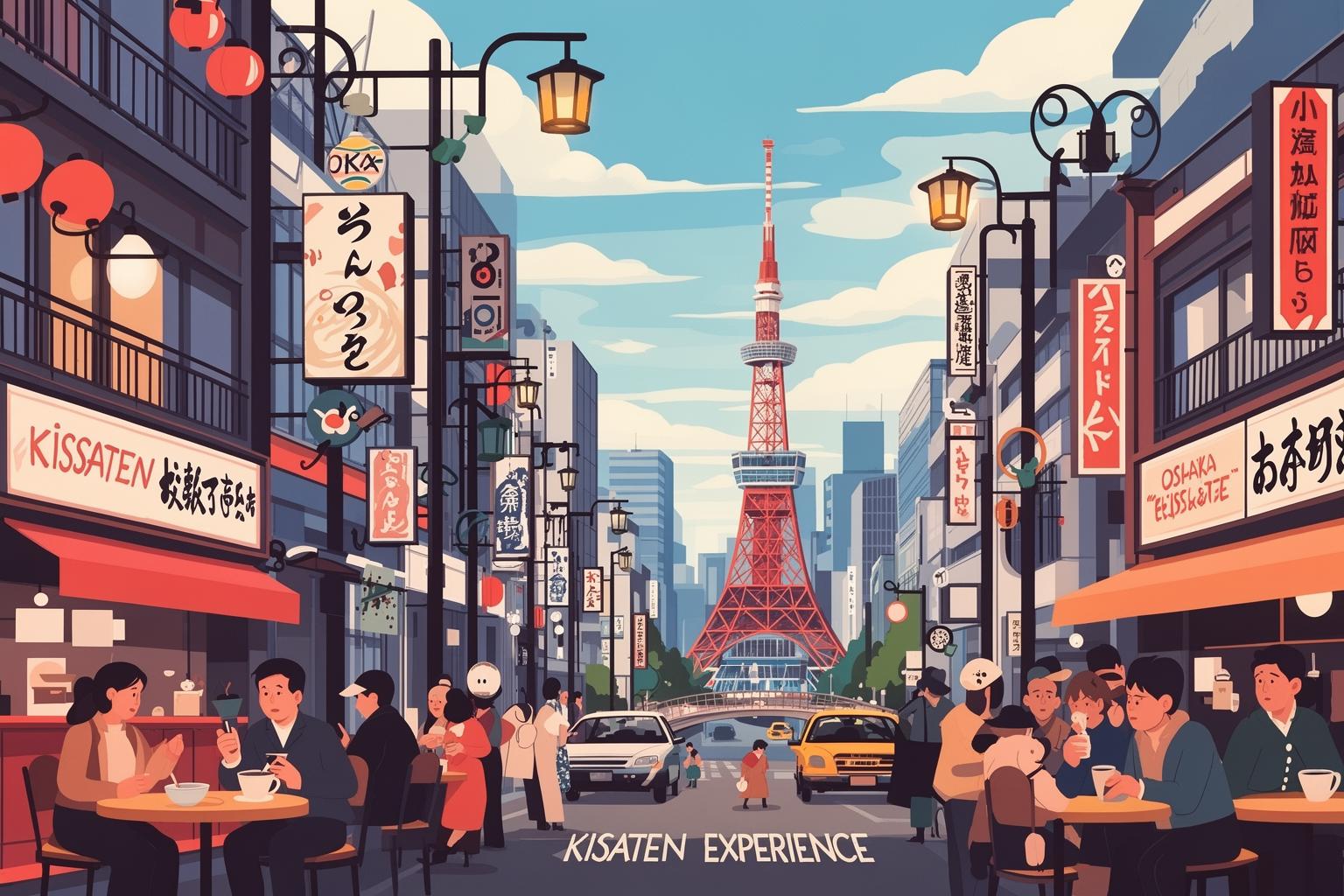
To understand the kissaten is to realize that you’re paying for more than just the contents of your cup. You’re paying for time. You’re renting a small slice of tranquility, an island of calm in a city that never stops moving. The experience represents a conscious break from the modern transactional model of grabbing coffee to go. Here, the whole point is to stay.
A Sensory Time Capsule
Your first hint comes from the atmosphere. It envelops you the instant you slide open the door and a small bell rings your arrival. The air is thick with the rich, earthy aroma of dark-roast coffee, often brewed with the quiet ritual of a siphon. A faint, sweet trace of old tobacco smoke clings to the dark wood paneling and the plush, often slightly worn, velvet or leather seats. The lighting is low and warm, casting long shadows. Rather than the high-energy pop music typical of a chain café, you’ll hear the mellow, reflective tones of a jazz piano trio or the sweeping strings of a classical symphony softly playing from an old stereo system.
This is more than just aesthetics; it’s a philosophy. A modern café is built for flow, for movement, to get people in and out quickly. A kissaten is designed for stillness. The menu itself is a throwback, a catalog of Showa-era comforts. You won’t find a flat white or a cold brew. Instead, there’s ‘blend coffee,’ ‘cream soda’ served in a tall, elegant glass topped with a bright red cherry, and hearty dishes like ‘Napolitan’ spaghetti or a ‘mix sando’ (mixed sandwich) with crusts carefully removed. And then there’s the ‘Morning Service,’ a cultural institution in Osaka. For a small additional charge on your coffee, you receive a thick slice of toast, a hard-boiled egg, and perhaps a tiny salad. It’s a ritual, a slow start to the day that feels both indulgent and genuinely practical.
The ‘Master’: Guardian of the Space
The person who brings this whole environment to life is the owner, respectfully called the ‘Master.’ This is not a ‘barista’ trained over a weekend course. The Master is the very soul of the kissaten. Often clad in a crisp white shirt and black waistcoat, they move with quiet, practiced economy. They curate the music, safeguard the recipes, and serve as the silent anchor of the community that forms there.
Your interaction with the Master teaches you about Japanese communication. There’s no forced cheerfulness, no scripted ‘Have a great day!’ Instead, there’s a nod of recognition as you enter, a quiet ‘irasshaimase’ that means ‘welcome’ but feels more like ‘you’ve arrived.’ For regulars, the jōren, the Master knows their order before they even sit down. A glance and a nod are sufficient. This isn’t cold service; it’s a profound, unspoken relationship built over years of shared quiet moments. The Master is a guardian of peace, a silent observer who ensures the kissaten remains a sanctuary. They might not ask about your day, but their steady presence creates a space where you can finally reflect on it yourself.
The Osaka Twist: Kissaten as a Stage for Local Character
While kissaten can be found throughout Japan, those in Osaka possess a unique character, a subtle vibrancy that mirrors the city’s distinct personality. They emphasize comfort and a lived-in community atmosphere rather than quiet reverence. These spaces showcase the practical, straightforward, and warm-hearted spirit of Osaka’s residents.
Where ‘Akan’ Meets ‘Ee-nen’: The Unspoken Code of Conduct
The social dynamic inside an Osaka kissaten feels more relaxed compared to its Tokyo equivalent. Patron conversations might be slightly louder, marked by the characteristic rise and fall of the Kansai dialect. The Master may even engage in light, dry banter—a quick joke or a wry remark about the weather. There’s a clear sense that this isn’t a sanctuary for silent coffee devotion; it’s a functional local gathering spot.
At the heart of this social fabric is the network of jōren. These regular customers form the foundation of the establishment. They might be the retired couple visiting every morning for toast and the newspaper, the nearby shop owner taking a break, or the freelance writer using a specific booth as their office. As a newcomer, you’re a guest in their space, but a welcoming one. The unspoken rule is simple: be respectful, keep to yourself unless invited into conversation, and appreciate that you’re part of a quiet, unhurried ecosystem.
This is where Osaka’s value system truly stands out. Having bought your coffee, you effectively own that seat for a reasonable amount of time. Feeling rushed out would seem unfair, a breach of that understanding. In a city focused on good value, a kissaten offers the ultimate bargain: a comfortable seat, a peaceful atmosphere, and unlimited time to think, read, or simply be, all for the cost of one drink. This isn’t about being cheap; it’s about being wise and valuing the intangible benefit of a place that allows you to linger.
Business, Banter, and a Place to Breathe
Spend an hour in any kissaten and you’ll witness a cross-section of Osaka life. In one corner, a salaryman in a slightly rumpled suit holds a quiet yet intense meeting, using the table as an impromptu desk. Across the room, two older women engage in a gentle but heartfelt conversation. A university student quietly highlights a textbook, accompanied only by a cup of coffee through a long study session. Someone else gazes out the window, lost in thought as the world passes by.
Each person uses the kissaten differently, yet all contribute to the shared sense of calm. It’s the ultimate multi-purpose space: an office without rent, a meeting room without booking fees, a library without enforced silence. This practical approach is quintessentially Osaka. The space fulfills a real, tangible role in daily life. While a Tokyo kissaten might feel like a deliberate, almost theatrical retreat from the city’s overwhelming energy, an Osaka kissaten often feels like a natural extension of its neighborhood—more grounded, more genuine, and more attuned to the rhythm of the street outside.
What Foreigners Often Misunderstand

For those of us not raised in this culture, the subtle cues and unwritten rules of the kissaten can cause anxiety. We worry about making mistakes, misreading the silence, or inadvertently breaking unknown rules. Understanding these common sources of confusion is essential to truly appreciating these wonderful spaces.
‘Is it okay to just sit here?’ – The Anxiety of the Unwritten Rule
This is perhaps the biggest concern for newcomers. After finishing your coffee, a small voice in your head, shaped by Western café culture, might scream, ‘You should leave or order something else!’ In a kissaten, you can silence that voice. Lingering is not only accepted; it is expected. The business model relies on loyalty rather than quick customer turnover. The Master would prefer a regular who stays two hours drinking one coffee over a stream of tourists who come and go within fifteen minutes.
Of course, there are limits. Setting up a full office with a loud conference call would be a serious breach of etiquette. But reading a book, writing in a journal, or simply resting your feet for an hour or two after ordering a single item is completely normal. The evidence is all around you, in the other patrons who have clearly been there a while. Relax. You’re part of the atmosphere, not just a customer.
The Silence Isn’t Hostility
The reserved manner of the Master and the quiet focus of the other customers can sometimes be misunderstood by foreigners as coldness or unfriendliness. We often associate warmth with lively conversation and big smiles. The warmth of a kissaten is different. It’s ambient. It’s in the comfortable chair, the carefully selected music, and the fact that you are left utterly alone with your thoughts. This respect for personal space and quiet contemplation is a form of social generosity.
This reflects certain aspects of traditional East Asian culture, where community is expressed through shared presence rather than constant interaction. The connection is subtle, founded on mutual recognition and respect for the shared space. It’s a quiet understanding that everyone is there for a similar purpose: to find a small pocket of peace. The lack of overt friendliness is not rejection; it’s a gift.
Navigating the Smoking Culture
Let’s be honest: many of the most authentic, old-school kissaten still allow smoking. For non-smokers, entering a cloud of cigarette smoke can be a jarring and unpleasant shock. This is a crucial part of the reality of these places. They are time capsules, preserving social norms from when indoor smoking was common. Recent laws have altered things for many new businesses, but older, smaller shops often have exemptions.
There’s no way around this except to be prepared. Before entering, peek inside or look for a sign. If the smell of smoke is a deal-breaker, you may have to find a more modern or explicitly non-smoking café. But if you can tolerate it, you’ll gain access to some of the most historic and atmospheric spots in the city. It’s an unfiltered part of the experience, a reminder that these places aren’t curated for tourists but preserved for those who have frequented them for decades.
Finding Your Own Third Place in Osaka
Once you grasp the culture of the kissaten, the next step is to find one that suits you personally. This is a journey of self-discovery, a way to uncover a place that aligns with your pace and character. The search itself offers a wonderful opportunity to explore the authentic, residential side of Osaka.
Beyond the Famous Chains: Exploring the Shotengai
The most well-known kissaten tend to be found in busy commercial areas like Namba or Umeda. While some are excellent, the true spirit of kissaten culture thrives in the city’s endless shotengai (covered shopping arcades) and quiet neighborhood backstreets. Take a stroll along Tenjinbashisuji Shotengai, Japan’s longest shopping street, or wander through the retro-chic alleys of Nakazakicho. Here, nestled between a tofu shop and a local hardware store, you’ll discover the neighborhood treasures.
These are the places where the customers are other shopkeepers on their breaks, or elderly residents catching up on daily conversations. The discussions you overhear aren’t about international business, but local festivals, vegetable prices, or news about a neighbor. This is where the kissaten truly acts as a community living room, serving as a vital hub of neighborhood social life.
A Litmus Test for Neighborhoods
If you’re thinking about moving to Osaka, or even just relocating within the city, here’s a practical tip: find the local kissaten and spend an hour there. It’s the best litmus test for understanding a neighborhood’s character. Observe the people who come and go. Are they students? Artists? Families? Retirees? Notice the ambient noise—is it lively and bustling, or calm and subdued?
Watch the interaction between the Master and the regulars. Is it formal or friendly? A neighborhood’s kissaten is a microcosm. It mirrors the area’s demographics, rhythm of life, and overall atmosphere more accurately than any real estate brochure. Before committing to a ‘first place’—your home—spend time in a potential ‘third place.’ It will reveal everything you need to know about whether you’ll truly feel at home there.
The First Step: The ‘Morning Service’ Ritual
For those hesitant to jump in, the easiest and most rewarding introduction is the ‘Morning Service,’ or simply ‘Morning.’ This isn’t just an affordable breakfast; it’s a cultural gateway. It invites you to join a daily ritual cherished by Osakans. Arriving in the morning, when the kissaten is often most lively and filled with locals starting their day, you become part of the rhythm.
Ordering ‘Morning’ allows you to participate rather than just observe. It provides a simple, low-pressure reason to be there. As you savor your perfectly toasted bread and carefully brewed coffee, you can watch the neighborhood’s life unfold. It’s a small, simple act, but it’s the first step in transitioning from a visiting foreigner to an engaged local. It’s how you stop merely visiting the city and start living in it—one quiet, deliberate sip of coffee at a time.