
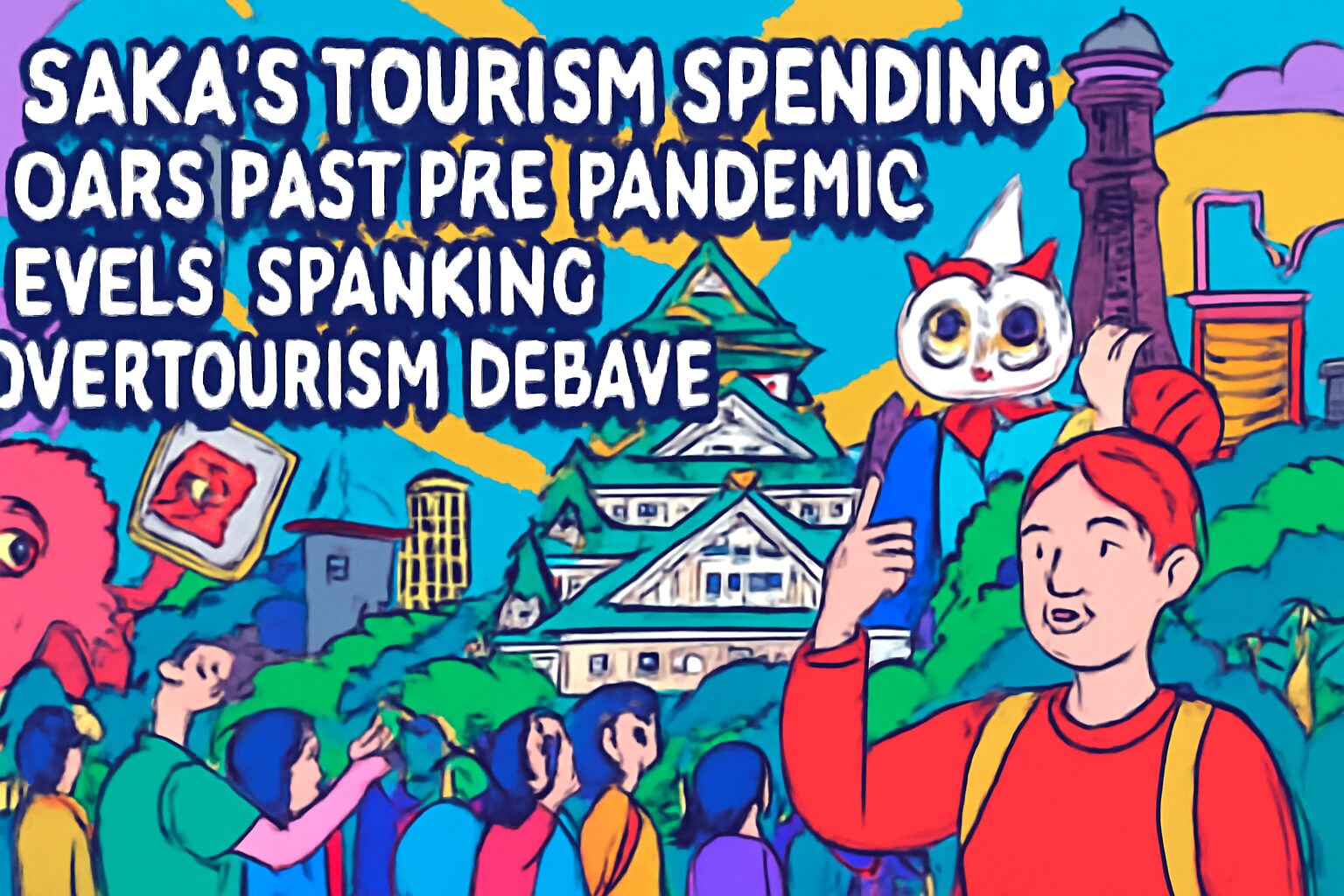
A new report reveals that international tourist spending in Osaka and the wider Kansai region has not only recovered but has now surpassed pre-pandemic highs. While this surge provides a much-needed boost to the local economy, it also brings the pressing issue of overtourism back into the spotlight, forcing a difficult conversation about the city’s future.
An Unprecedented Economic Windfall
According to a recent report from the Kansai Economic Federation concerning the first quarter of 2024, inbound tourism consumption has reached a record-breaking level. This boom is injecting significant revenue into local businesses, particularly in the retail and hospitality sectors. Department stores in Umeda and Shinsaibashi are bustling with international shoppers, and hotels are reporting high occupancy rates, a welcome change after years of pandemic-induced struggle.
This regional trend reflects the national picture. Data from the Japan National Tourism Organization (JNTO) shows that nationwide spending by foreign visitors from January to March 2024 hit a record ¥1.75 trillion. The influx of tourists, especially from East and Southeast Asia, is a clear sign that Japan, and Osaka in particular, remains a top-tier travel destination.
The Growing Pains of Popularity
However, this economic success comes at a cost. The sharp increase in visitor numbers is placing a visible strain on the city’s infrastructure and the daily lives of its residents. Popular districts like Dotonbori and Kuromon Market are experiencing near-constant crowding, leading to congested public transport and long queues at famous eateries.
Local communities are raising concerns about noise pollution, waste management, and the general disruption to their peaceful neighborhoods. The debate is intensifying around how to balance the clear economic benefits of tourism with the preservation of cultural heritage and the quality of life for the people who call Osaka home. The challenge is no longer about attracting tourists, but about managing their impact.
Behind the Boom: Key Driving Factors
Several key factors are fueling this unprecedented tourism surge:
The Power of the Weak Yen
The Japanese yen has remained historically weak against major currencies like the US dollar. For international visitors, this translates into incredible purchasing power, making Japan an exceptionally affordable destination for shopping, dining, and accommodation.
A Post-Pandemic Travel Surge
The complete removal of border restrictions has unleashed a wave of pent-up travel demand. The return of large group tours, which had been absent during the pandemic, has significantly contributed to the rise in visitor numbers and overall spending.
Osaka’s Enduring Appeal
Often called “Japan’s Kitchen,” Osaka’s world-renowned food scene, vibrant nightlife, and unique, friendly culture continue to captivate travelers. Its strategic location as a hub for exploring nearby Kyoto, Nara, and Kobe further solidifies its position as a must-visit city in the Kansai region.
Looking Ahead: The 2025 World Expo and the Path Forward
The pressure on Osaka is set to increase with the upcoming 2025 World Expo. The event is projected to attract millions of additional visitors from around the globe, promising an even greater economic impact but also threatening to exacerbate the problems of overtourism.
In response, local governments and tourism officials are being urged to develop and implement new, sustainable tourism management strategies. Potential measures being discussed include:
- Visitor Dispersal: Promoting less-crowded, alternative attractions outside the central tourist “golden route” to better distribute the flow of people.
- Smart Tourism: Utilizing technology to manage crowds, such as providing real-time congestion information for popular spots.
- Enhanced Infrastructure: Investing in public transportation and waste management systems to cope with the increased demand.
- Promoting Sustainable Practices: Encouraging tourists to engage in more culturally and environmentally respectful travel.
Osaka now stands at a critical juncture. The city must navigate the path forward by capitalizing on its popularity without sacrificing the very charm and livability that make it so attractive. Finding this delicate balance will be the key to ensuring a prosperous and sustainable future for both its residents and its welcome visitors.








