The first time I sat in on a remote team meeting with my Osaka-based colleagues, I thought the video call had been hijacked. The project manager was outlining a serious deadline, his face a pixelated mask of concentration, when suddenly the lead developer interrupted. He didn’t raise a virtual hand. He didn’t wait for a pause. He just unmuted and declared, with a completely straight face, that his cat had just provided a superior marketing strategy and we should all pivot to a fish-based economy. For a split second, there was silence. I braced for the awkward fallout. Then, the project manager, without missing a beat, shot back, “Is your cat a shareholder? If not, tell him to get back to napping. We’ve got work to do.” The entire virtual room erupted in laughter. The tension of the deadline vanished, replaced by a wave of collaborative energy. This wasn’t chaos; it was communication. This was Osaka.
Living and working remotely here has been an education in the profound difference between simply working from home and being part of a team that feels connected, even across miles of fiber optic cable. The secret isn’t some fancy software or a revolutionary management theory. It’s something far more ingrained, a cultural bedrock that informs every interaction, from a negotiation over Zoom to a casual chat on Slack. It’s the culture of ‘Waarai’—laughter. But this isn’t just about telling jokes. It’s a complex, powerful social tool that, when applied to the modern remote workplace, fosters a dynamic of honesty, efficiency, and surprising resilience that stands in stark contrast to the buttoned-up formality you might find in Tokyo or even in many Western companies. It’s about using humor to be more direct, not less; to build trust, not to deflect; and to solve problems with a shared smile rather than a stressed-out sigh. Understanding this is key to understanding not just how to work in Osaka, but how to truly live here.
This direct, results-oriented communication style is also evident in how the city tackles broader challenges, such as its innovative data-driven approach to reshaping tourism.
The Bedrock of Osaka Communication: What is ‘Waarai’ Anyway?
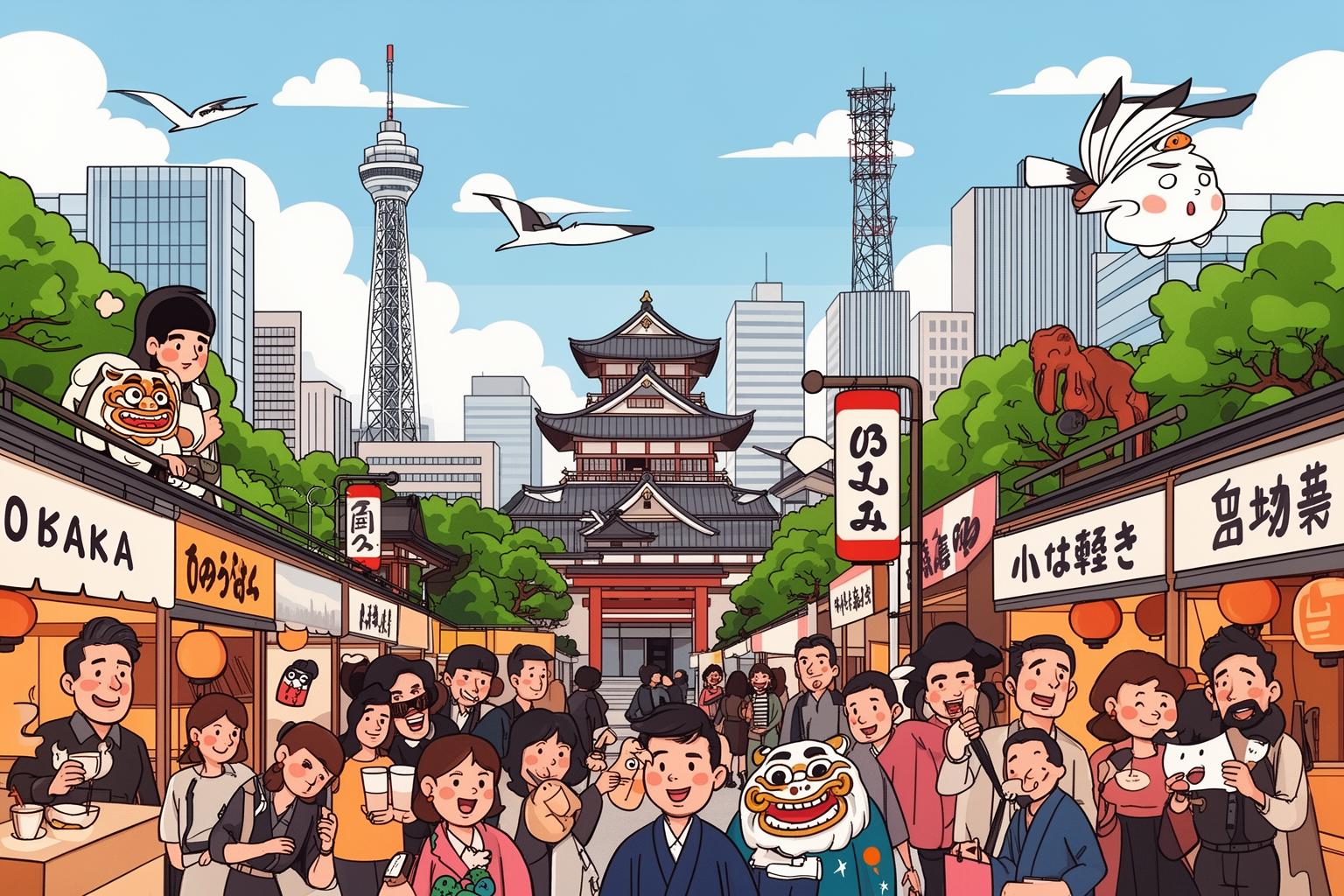
Before you can truly understand how a team in Osaka operates online, you first need to grasp the concept of ‘Waarai’ as it exists in everyday life—on the streets and in the shops. It’s not a special event or a staged performance; it’s as natural as the air you breathe. It’s the grandmother at Kuromon Ichiba Market who, when asked for the price of her enormous radishes, exclaims, “For you, one million yen!” before laughing and offering a more reasonable price. It’s the ramen shop owner who notices you struggling with chopsticks and announces loudly, “Ah, a new weapon master is born!” This goes beyond mere friendliness; it’s a unique style of interaction meant to instantly bridge the gap between strangers.
More Than Just Jokes: ‘Waarai’ as a Social Lubricant
Throughout much of Japan, especially in business settings, the ideas of ‘tatemae’ (the public façade) and ‘honne’ (one’s true feelings) shape a culture of polite, often indirect communication. One must read the atmosphere, interpret subtle signals, and navigate layers of formality. Osaka hasn’t rejected this entirely, but it has added a powerful shortcut: humor. ‘Waarai’ acts as a social lubricant, gently smoothing the edges of formality to reach the ‘honne’ faster and with less friction. A self-deprecating joke by a boss about their terrible taste in neckties isn’t just a joke; it’s an invitation for the team to relax and open up. A witty retort to a colleague’s suggestion isn’t disrespect; it’s engagement, a sign that you’re paying attention and comfortable enough to join the playful exchange. This cultural trait emerged from centuries of commerce in a busy port city where quickly building trust was vital for survival. There was no time for weeks of polite niceties; you needed to know immediately whether you could trust the person across the table. Sharing a laugh was—and remains—the quickest way to build that connection.
The ‘Tsukkomi’ and ‘Boke’ Dynamic in Everyday Life
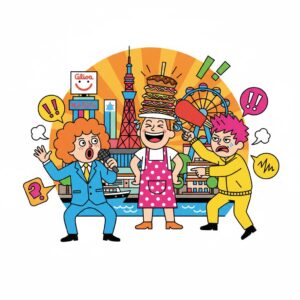
To fully appreciate ‘Waarai’, you need to understand the basic comedic framework of ‘manzai’ comedy, which influences everyday conversation here: the ‘boke’ and the ‘tsukkomi’. The ‘boke’ plays the fool, saying something absurd, silly, or slightly offbeat. The ‘tsukkomi’ is the straight man who promptly corrects the ‘boke’, often with a light verbal jab or even a physical tap. This isn’t a stage act exclusive to Namba; it’s a conversational dance you’ll find everywhere. For example, someone might complain about the heat, saying, “I’m melting, I’ll be a puddle by the time I get to the station.” That’s the ‘boke’. Their friend’s ‘tsukkomi’ responds deadpan, “Don’t drip on my shoes when you do.” This rhythm signals closeness and rapport. The ‘boke’ sets up a playful opening, and the ‘tsukkomi’ closes the loop with a sharp comeback. It’s a call-and-response proving both parties share the same mindset. Failing to deliver a ‘tsukkomi’ can sometimes come across as cold or disengaged. This very dynamic, when transferred into a remote work environment, helps Osaka teams feel lively and connected, transforming ordinary status updates into chances for meaningful interaction.
Translating Laughter to Laptops: ‘Waarai’ in the Remote Workspace
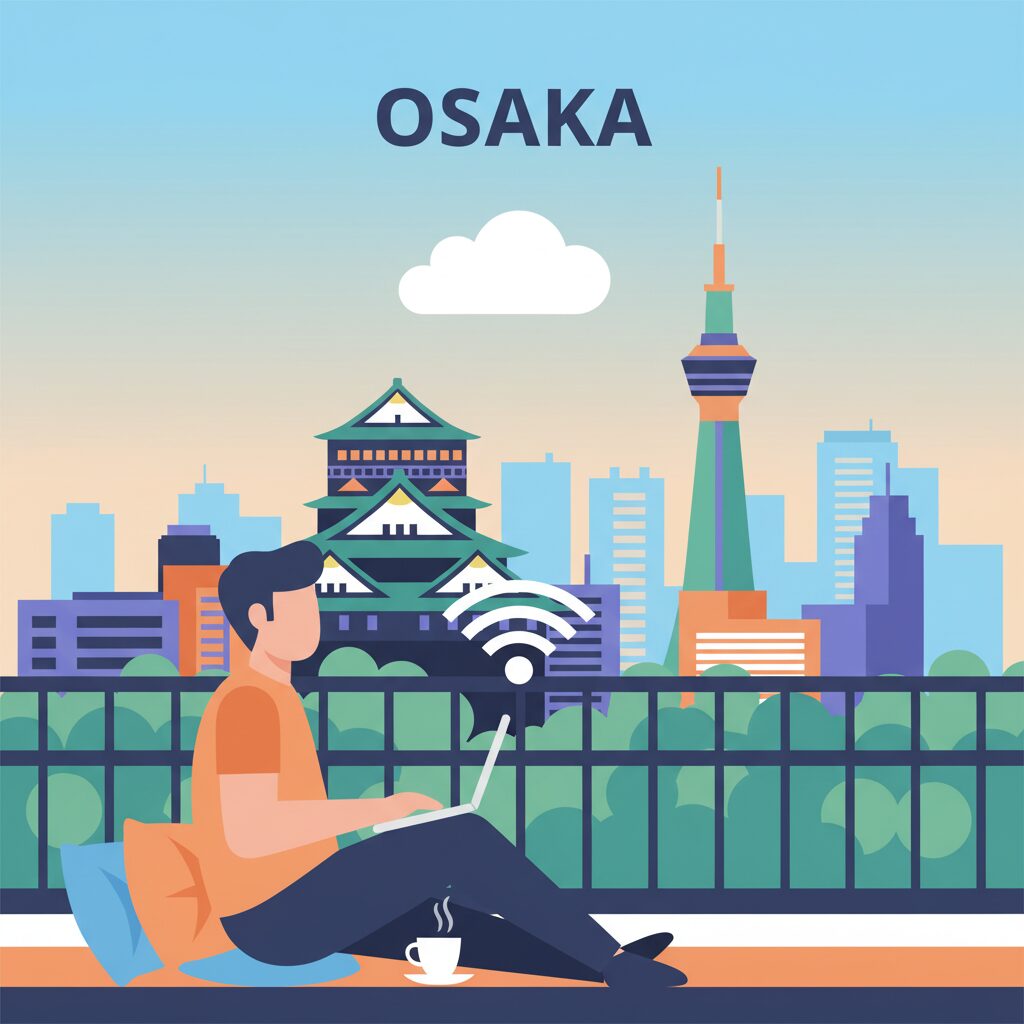
How does this deeply rooted, face-to-face culture of quick-witted banter endure the shift to the sterile and often isolating environment of remote work? Surprisingly well. In fact, the need for this type of social glue becomes even greater when you can’t rely on body language or after-work drinks to foster team unity. Teams in Osaka have naturally adapted their ‘Waarai’ culture to digital platforms, turning tools like Slack and Zoom from mere productivity apps into lively virtual communities where the company’s heartbeat is authentically felt.
The Virtual ‘Izakaya’: Rebuilding Rapport on Slack and Zoom
In a typical corporate remote setting, a Slack channel might appear as a dry, utilitarian stream of project updates and file links. In an Osaka-based company, however, it frequently resembles a lively group chat among long-time friends. The channel for a major project, of course, contains essential work-related information, but it’s interspersed with witty remarks, custom emojis of the boss’s face, a cascade of GIFs reacting to a tight deadline, and plenty of self-deprecating humor. When someone announces they’ve fixed a challenging bug, the response isn’t just a thumbs-up emoji; it’s more likely a string of replies like, “The wizard has spoken!” or “Did you have to sacrifice a rubber chicken to the code gods again?” This isn’t wasted time; it’s an investment in social capital. It’s the digital counterpart of the friendly chats you’d overhear across office desks, the small exchanges that help colleagues feel connected as a team. It creates psychological safety. Admitting a mistake becomes less intimidating when you know the reply will be a humorous, “Welcome to the club! I did that twice last week,” followed by a sincere offer to help, rather than a cold, formal inquiry. These channels become a virtual ‘izakaya’—a Japanese-style pub where coworkers traditionally bond. It’s where genuine team-building unfolds, one laughing emoji at a time.
“Chau Chau!” — The Strength of Direct, Playful Feedback
Osaka’s people are renowned for their directness, which often surprises newcomers. This trait carries over into remote work but is almost always softened by humor. The phrase ‘Chau chau!’—a rapid-fire ‘No, no!’ in the local dialect—is a prime example. It clearly rejects an idea, yet its playful, almost sing-song tone prevents it from sounding harsh. In a Zoom meeting, you’re less likely to hear lengthy, indirect feedback typical of more formal Japanese business culture, such as, “That is a very interesting perspective, and perhaps we could consider some alternative synergies moving forward…” Instead, you might hear a cheerful, “Ah, chau chau chau! That’ll take forever. What if we just did it this way?” Initially, it can feel jarring. A foreigner might perceive this bluntness as rude or dismissive. But the key is to interpret the tone and context. The intent isn’t to offend; it’s about speed, clarity, and collective focus on the best, most practical solution. The humor acts as the spoonful of sugar that helps the medicine of direct feedback go down. It says, “I respect you enough to be honest with you, and I trust our relationship is strong enough to handle this straightforwardness without offense. Now let’s solve this problem together.”
Reading the Digital Room: When Is a Joke More Than Just a Joke?
Navigating this environment demands a new kind of digital literacy. The essential point is that humor is a channel, not the message. The expectation of high-quality work and professional responsibility remains as strong, if not stronger, than in any other Japanese company. The ‘Waarai’ culture is about the how, not the what. A team that jokes constantly about deadlines still takes those deadlines very seriously. Humor serves as a coping strategy, a way to manage stress and nurture the collaborative spirit needed to meet those deadlines. For a foreigner joining such a team, the learning curve involves grasping this balance. The banter invites participation but not laxity. The best approach is to listen and observe first. Identify the main ‘boke’ and ‘tsukkomi’ players. Start with self-deprecating humor—it’s a safe, universally appreciated way to show you don’t take yourself too seriously. Use emojis and GIFs to communicate your tone, making sure your directness is perceived as efficient rather than aggressive. Often, the joke tests social intelligence; the real message lies in how you respond.
The Merchant’s Mindset: Efficiency, Pragmatism, and the Bottom Line
To fully grasp why Osaka’s work culture—whether remote or not—emphasizes directness and humor, you need to consider its historical background. Tokyo emerged as Japan’s political and bureaucratic heart, a city of samurai and officials where hierarchy, procedure, and preserving face were crucial. Osaka, in contrast, was known as the ‘shonin no machi,’ the city of merchants. It was the nation’s kitchen, a commercial center where success was determined not by family name or status, but by skill in negotiation, innovation, and, most importantly, turning a profit. This deeply pragmatic, results-driven spirit remains embedded in the city’s identity today and aligns perfectly with the demands of remote work.
From Shonin to Spreadsheets: A History of Getting Things Done
The Osaka merchant ethos was all about cutting through the noise. Time was money, and lengthy, polite formalities were a luxury they could not afford. They had to build trust swiftly, evaluate deals accurately, and make decisions promptly. This mindset naturally counters the worst tendencies of remote work. The Osakan approach inherently rejects ‘performative work’—the practice of appearing busy purely for show. There is much less focus on ‘presenteeism,’ the often unspoken rule in many traditional workplaces that you must be visibly active online for long hours regardless of actual productivity. The attention is firmly on outcomes. Did you complete the task excellently? Did you fulfill the client’s requirements? Is the project progressing? If yes, then the job is done. This practicality fosters a much healthier and more efficient remote environment. There are fewer unnecessary meetings better suited for a Slack message. There is less pressure to reply to emails at 10 PM merely to demonstrate ‘hard work.’ The merchant mindset values results over hours logged, cultivating a culture of autonomy and trust vital for any thriving remote team.
“Moukarimakka?” – The Unspoken Question in Every Project
Among older business owners in Osaka, there is still a traditional greeting: “Moukarimakka?” which means “Are you making a profit?” The typical, slightly modest response is “Bochi bochi denna,” meaning “So-so” or “Bit by bit.” Although this exchange is unlikely to appear on a corporate Zoom call, its underlying sentiment represents the unspoken question that drives every project: Is this creating value? Is this the best use of our time and resources? This persistent focus on the bottom line—whether financial gain or project success—fuels the culture’s directness. The playful ‘tsukkomi’ that dismisses a convoluted idea is essentially asking, “Will this help us efficiently achieve our goal?” The humorous back-and-forth helps speed the process of finding the most practical solution. In a remote setting, where projects can easily lose direction due to weak communication, this cultural anchor is extremely valuable. It demands clarity and purpose. The team is almost instinctively asking “Moukarimakka?” about their own efforts, ensuring every task and conversation pushes toward a tangible, worthwhile result.
Navigating the Osaka Remote Dynamic: A Foreigner’s Field Guide
For an outsider, entering this distinctive digital environment can feel like trying to join a rapid conversation in a language you hardly know. The pace is fast, the references are local, and the boundary between friendly teasing and sharp criticism can initially appear unclear. It’s a culture that encourages participation but demands careful observation to navigate well. The greatest challenge—and reward—is learning to interpret the real meaning behind the laughter.
The Misunderstanding: Is This Banter or Bullying?
A common stumbling block for foreigners is misreading the local style of teasing, called ‘ijiri.’ In a remote setting, this might look like a colleague playfully mocking your choice of virtual background on Zoom or joking about a typo in your Slack message in a public channel. In many cultures, public calling-out would be seen as rude, unprofessional, or even bullying. In Osaka, however, it often means the opposite: it signals acceptance. It shows that your colleagues feel comfortable enough with you to drop formal barriers. Silence and excessive politeness can actually indicate distance—meaning your colleagues haven’t quite figured you out yet and are keeping you at arm’s length. The ‘ijiri’ is an invitation into the inner circle. The key is understanding it’s rarely personal—it’s about the situation, not your competence. The best response isn’t defensiveness, but joining in. A self-deprecating comeback (“I know, my design sense screams for help”) or a playful ‘tsukkomi’ of your own (“At least I didn’t use my cat’s photo as a shareholder!”) will earn immediate respect. It shows you get the joke and are part of the team.
Speaking Osaka-ben (Digitally): How to Adapt Your Communication Style
Joining an Osaka remote team doesn’t require you to become a stand-up comedian right away. It’s about making small, deliberate adjustments to your communication style to align with the local rhythm. Here are some practical tips:
- Do Embrace Emojis and GIFs: They aren’t unprofessional here; they’re vital for conveying tone. A laughing emoji can soften a direct comment from potentially harsh to refreshingly frank. A well-chosen GIF can express camaraderie more clearly than a long paragraph.
- Don’t Be Overly Formal: While initial messages should be polite, sticking to stiff formal language too long can create distance. Mirror the level of formality your colleagues use. If they use casual language and first names, take that as your cue.
- Do Use Self-Deprecating Humor: This is the universal key to unlocking Osaka’s social dynamic. Being the first to lightly joke about a small mistake you made shows humility and confidence. It makes you relatable and signals you’re comfortable with being human.
- Don’t Mistake Directness for Aggression: Train yourself to separate the message from its delivery. When a colleague says, “That won’t work,” try to hear the unspoken message: “…and I want to figure out a solution with you right now.” Focus on the collaborative intent behind blunt words.
- Do Ask Questions: If you don’t get a joke or local reference, it’s perfectly fine to ask! A simple, “Sorry, my Osaka-ben is still a work in progress; what does that mean?” is always better than staying silent and confused. It shows you’re engaged and eager to learn.
The Tokyo Comparison: Why What Works Here Might Not Work There
To fully appreciate Osaka’s style, it helps to contrast it with Tokyo’s. Imagine a remote team at a major Tokyo corporation. Slack communications would probably be more structured and formal. Major feedback would almost always come in private messages or scheduled one-on-ones, not publicly in channels. The ‘nemawashi’—behind-the-scenes consensus building—would still happen, but via DMs and separate video calls before main meetings. Hierarchy would be more noticeable even online; junior employees teasing senior managers, even playfully, would be rare. Humor would exist, but be more contained—reserved for special moments or designated ‘fun’ channels. In Osaka’s remote environment, communication hierarchy is flattened. Public channels serve as the main forum for discussion and decision-making. ‘Nemawashi’ happens openly through rapid exchanges of ideas, jokes, and direct challenges. It’s a culture of transparent, sometimes chaotic collaboration, founded on the belief that the quickest path to the best idea is a straight line.
Beyond the Laughter: The Deep Trust It Builds
It can be tempting to dismiss the culture of ‘Waarai’ as merely a regional peculiarity—a fun but ultimately superficial element of working with people from Osaka. However, doing so overlooks the profound influence it has on a team’s effectiveness and well-being, particularly in a remote setting. The laughter itself is not the objective; rather, it forms the foundation for something far more significant: authentic, enduring trust.
Vulnerability as a Superpower
In a corporate environment dominated by fear of failure, admitting a mistake is often risky, potentially resulting in blame, punishment, or a diminished status. Within the humor-driven culture of an Osaka team, vulnerability is redefined as a strength. By announcing an error with a self-deprecating joke—”Good news, everyone! I’ve found a new way to break the login page”—one instantly eases tension and diffuses blame. This admission does not demonstrate incompetence; instead, it serves as a plea for assistance, inviting collaboration rather than criticism. Colleagues respond promptly with support, advice, and their own experiences of failure. This fosters a virtuous cycle: openness about mistakes is met with help, encouraging others to do the same, ultimately enhancing the team’s capacity to solve problems swiftly. Such psychological safety is the holy grail for any high-performing team and, in Osaka, it is often cultivated not through formal workshops but through the simple, daily habit of not taking oneself too seriously.
The Payoff: Agility, Resilience, and a Truly Enjoyable Work Environment
The overall result of this distinctive dynamic is a remote team that is notably agile and resilient. Problems are resolved more quickly because they are identified earlier and addressed more honestly. The team can adapt rapidly because ideas are challenged openly and directly, free from the constraints of formal procedures or fear of offending others. When faced with stressful situations or significant setbacks, the team draws on a deep well of shared laughter and social capital. This bond, built through countless ‘tsukkomi’ retorts and shared jokes, makes them stronger than a group connected solely by project management tools. Perhaps most importantly, it makes work genuinely enjoyable. When I first joined this job, I expected the efficiency and politeness Japan is known for—I was unprepared for how much I would laugh each day. I have learned that in Osaka, humor is not the opposite of serious work; it is a vital tool for doing that work better. It fuels a direct, pragmatic, and profoundly human style of collaboration that transforms a collection of individuals facing screens into a truly connected team.