Step out of the sleek, subterranean world of Osaka’s Tanimachi subway line at Nakazakicho station, and you surface into a different dimension. The air itself seems to shift. The chrome and glass towers of Umeda, just a ten-minute walk away, feel a world apart, their futuristic gleam replaced by the soft, weathered patina of time. This is Nakazakicho, a pocket of Showa-era Japan that miraculously survived the tempests of history, a living, breathing labyrinth of narrow alleys, rickety wooden houses, and a creative spirit that hums just beneath the quiet surface. For the digital nomad, the remote worker, the creative soul tethered to a laptop, Nakazakicho is more than just a neighborhood; it’s a sanctuary. It’s a place where the frantic pace of modern work culture can be exchanged for a more mindful, atmospheric, and deeply inspiring rhythm. Here, the search for a good Wi-Fi signal is intrinsically linked to a search for authenticity, for a workspace with a soul, a story etched into its very walls. In this guide, we won’t just list cafes; we will wander through the winding lanes together, exploring the nooks and crannies where productivity and poetry coexist, where your next big idea might be sparked by the scent of hand-drip coffee mixing with the faint, sweet smell of old wood and tatami mats. This is your invitation to unplug from the matrix of the megacity and plug into the heart of old Osaka.
To further explore the unique character of Osaka’s distinct neighborhoods, consider a culinary journey through the chic Kitahama district.
The Soul of the City: Why Nakazakicho Captivates the Remote Worker
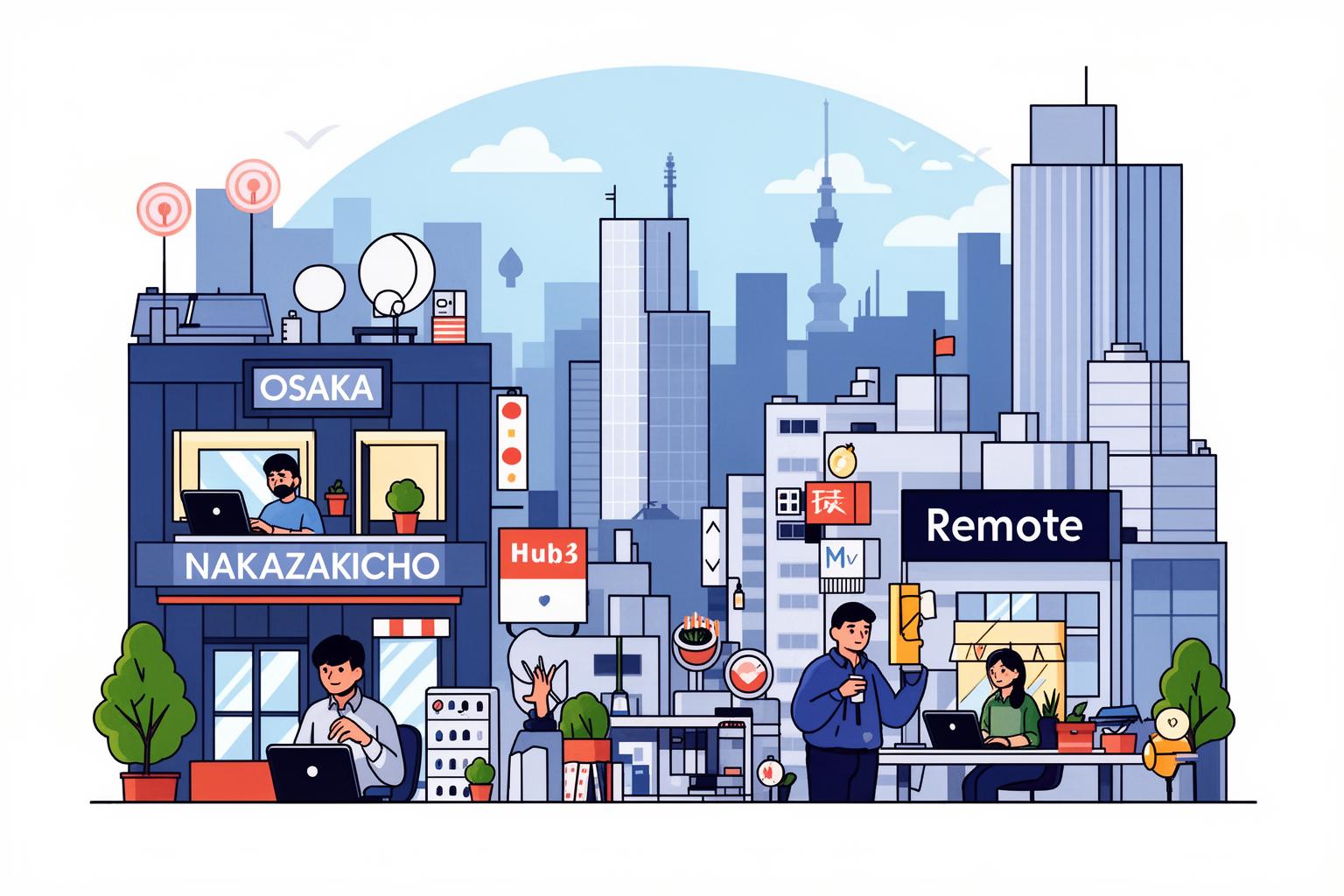
In a city as vibrant and expansive as Osaka, a digital nomad is truly spoiled for options. The sleek co-working spaces in Umeda provide ergonomic chairs and blazing-fast internet. The hip cafes of Shinsaibashi buzz with youthful energy and international charm. The quiet, residential nooks of Tenma offer a glimpse into local life. So, what is it about Nakazakicho that exerts such a strong attraction on those who earn their living through a keyboard and an internet connection? The answer lies not in any single characteristic, but in a subtle and powerful blend of atmosphere, history, and community. In essence, it serves as an antidote to the sterile, cookie-cutter settings that often characterize remote work.
First and foremost is the palpable sense of history. To work in Nakazakicho is to be surrounded by a story of resilience. As we will delve into later, this area was largely spared the devastating World War II firebombings that destroyed much of central Osaka. The result is a cityscape that feels organic and deeply human. The buildings are not monuments; they are homes, shops, and workshops that have housed generations. The crooked alleys, too narrow for cars, encourage a slower, more mindful pace of life. For a remote worker, this environment serves as a strong grounding force. The stress of an impending deadline or a challenging client seems to fade when you’re sitting in a converted 80-year-old wooden house, the dark grain of its pillars telling a story far older than your own. This setting fosters a unique kind of focus, less about frantic productivity and more about deliberate, meaningful creation.
This historical backdrop has nurtured a vibrant, independent, and artistic spirit. Nakazakicho is a refuge for artisans, vintage collectors, gallery owners, and independent thinkers. This creative energy is subtle, not loud or showy; it flows quietly through the streets. You sense it in the carefully curated displays of a tiny zakka (sundries) shop, in the hand-painted sign of a tucked-away cafe, and in the eclectic style of the locals. For a writer, designer, programmer, or any professional who depends on inspiration, immersion in this environment is like plugging into a creative power source. The visual and atmospheric stimulation is steady yet gentle, offering a stream of fresh perspectives that can shatter any mental block. The community here prizes originality and craftsmanship over mass-produced convenience—a philosophy that naturally influences your own work.
Lastly, tranquility plays a crucial role. Despite being close to one of Japan’s busiest transport hubs, Nakazakicho maintains an extraordinary sense of calm. The absence of car traffic, the residential character of its core, and the enclosed, intimate feeling of its alleys create pockets of deep quiet. This isn’t the dead silence of a library but a living stillness punctuated by the distant rumble of a train, the chime of a shopkeeper’s bell, or the murmur of conversation from a nearby porch. It forms the perfect soundscape for focus, enabling deep work sessions free from the jarring noise of a typical urban center. This rare combination—a profound sense of place, a steady pulse of creative energy, and a foundation of restorative quiet—is what makes Nakazakicho not merely a place to work, but a place to truly thrive.
The Nakazakicho Cafe Codex: A Deep Dive into Your Next Office
Exploring Nakazakicho’s cafe scene is an adventure in itself. Each venue represents a distinct world, reflecting its owner’s passion, all nestled within the area’s unique architecture. Forget uniform chains; here, every coffee shop offers a singular experience. Below is a detailed look at several archetypal spaces designed to meet the diverse needs and moods of today’s remote worker. Consider this your guide to discovering the ideal atmospheric workspace.
For the Deep Thinker: The Weaver’s Nook (Oriya no Sumikko)
Step through a sliding wooden door that emits a gentle, welcoming creak into a space where time seems to slow. This is The Weaver’s Nook, a cafe lovingly crafted inside a beautifully preserved ‘kominka,’ a traditional Japanese house. The air is cool, carrying subtle notes of tatami and aged wood. Light doesn’t flood in; instead, it filters softly through delicate shoji paper screens, casting an ethereal glow perfect for focused screen work, reducing glare and eye strain. The color scheme draws from nature: dark polished wood beams, earthy clay walls, and the soft green of woven tatami mats.
Here, productivity is a quiet, meditative process. The unspoken expectation is one of tranquil concentration. Loud conversations or jarring pop music are absent; instead, the gentle clinks of ceramic on wood, the whisper of turning pages, and a faint instrumental jazz track play quietly in the background. For the digital nomad, this cafe is a sanctuary for deep focus. Power outlets are discreetly positioned but limited, so it’s best to arrive with a fully charged device. The Wi-Fi is reliable, suited for research and writing rather than heavy streaming. Seating options include traditional ‘zaisu’ (legless chairs) around low ‘chabudai’ tables on the tatami platform, as well as several Western-style wooden tables and chairs for those who prefer. The tatami setup, while perhaps challenging for an entire eight-hour day, suits a few hours of intense concentration and encourages mindful posture.
The menu is as thoughtful as the decor. Specialty hand-drip coffee is treated as a ceremony by the quiet owner, who moves with practiced grace. You can select from a rotating range of single-origin beans, and watching the careful pour-over process is a calming ritual. To accompany the coffee, they serve a small selection of ‘wagashi’ (traditional Japanese sweets) like perfectly balanced ‘yokan’ (sweet bean jelly) or seasonal ‘nerikiri’. This is no place for a heavy lunch but rather a temple for coffee and contemplation. The Weaver’s Nook is perfect for writers finishing a chapter, programmers debugging code, or anyone needing refuge from digital distractions to focus intently on one important task.
For the Visual Creative: Gallery & Grind
In stark contrast to the cozy intimacy of a kominka cafe, Gallery & Grind is a celebration of light, space, and modern design. Situated in what was likely an old warehouse or workshop, its interior has been stripped down to essentials, creating a bright, airy, industrial-chic setting that also serves as a contemporary art gallery. Stark white walls showcase rotating exhibits by local Osakan artists—from abstract paintings to striking photography and minimalist sculptures. Polished concrete floors reflect the abundant natural light streaming through large factory-style windows. The atmosphere here hums with creative energy, fueled by quiet collaboration and inspiration.
This cafe caters to the modern creative professional. Its tables are a standout feature: large communal slabs of light wood and smaller brushed steel tables, all offering ample room for laptops, sketchbooks, Wacom tablets, and more. Power outlets are ubiquitous—along walls, built into tables, and even in floor boxes. Wi-Fi is exceptionally fast and robust, accommodating large file uploads and video meetings without interruption. The music is typically a curated playlist of ambient electronic or indie pop, played loudly enough to energize but not distract. It fosters a shared creative spirit where you might find yourself working alongside graphic designers, fashion students, or photographers editing their latest projects.
The menu mirrors the clean, modern aesthetic. Their espresso, drawn from a shiny Italian machine at the counter, is a point of pride. Renowned for intricate latte art, they also offer a variety of alternative milks. The food menu focuses on stylish, healthy options: avocado toast sprinkled with shichimi togarashi, vibrant quinoa salads, and artfully crafted open-faced sandwiches. A tempting selection of pastries and cakes, sourced from a local patisserie, matches the artistic vibe of the gallery. Gallery & Grind is an ideal workspace for graphic designers seeking visual inspiration, marketers brainstorming campaigns, architects sketching plans, or any remote worker energized by a bright, clean, creatively charged environment. It’s a place to see and be seen, work, and be inspired by others.
For the Nostalgic Novelist: Showa Signal Kissaten
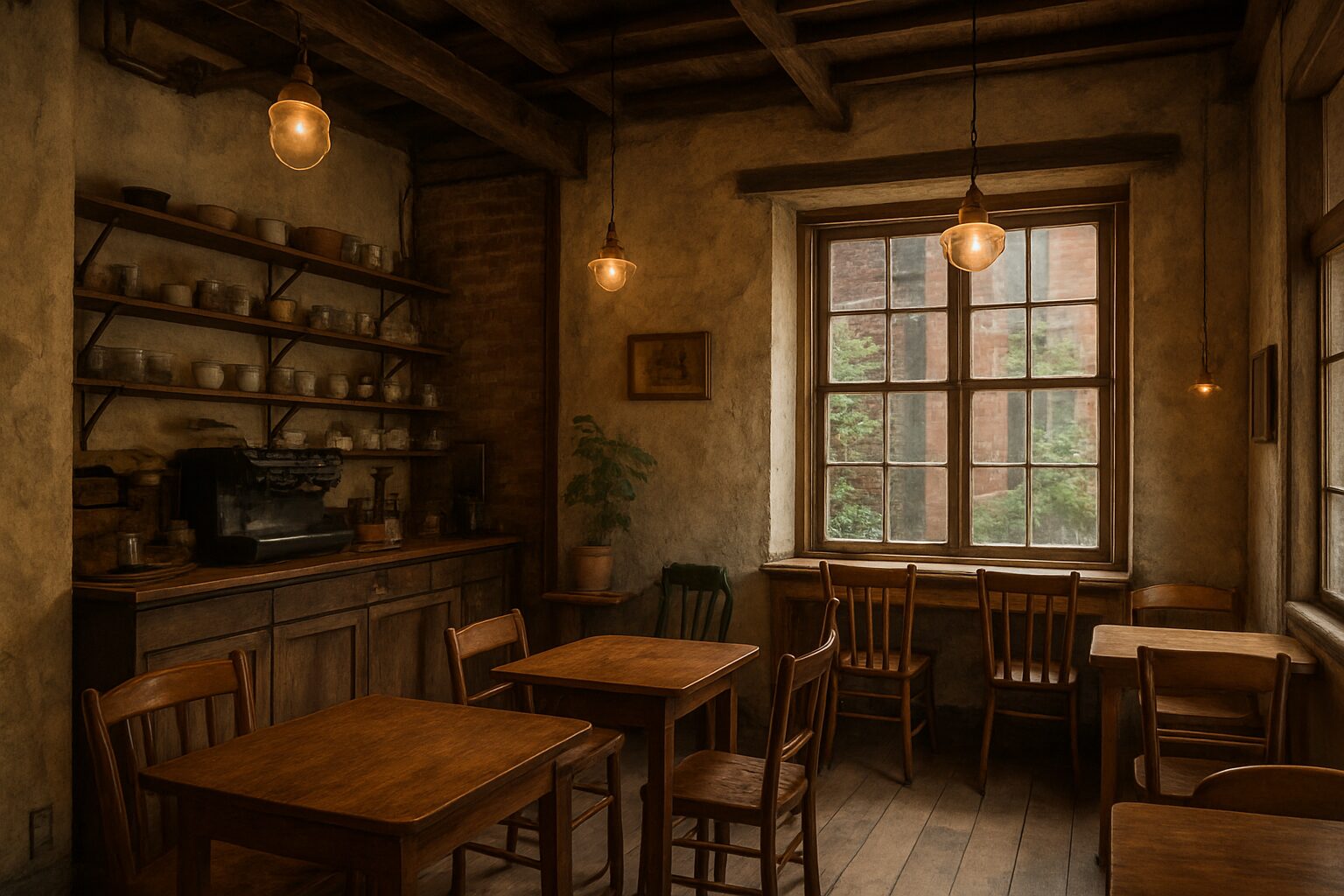
Push open the heavy door, marked by a small brass bell, and you’re instantly transported to the Showa 40s (mid-1960s to mid-1970s). Showa Signal isn’t a modern cafe imitating retro style; it’s an authentic ‘kissaten’ (traditional Japanese coffee house) lovingly preserved for over fifty years. The dim light filters through amber lampshades and a soft haze that seems ever-present. Decor features rich dark wood paneling, deep burgundy velvet booths that have welcomed patrons for decades, and patterned tile floors. The air hums with the scent of dark-roast coffee, a hint of tobacco from days gone by, and old books.
A vinyl record player sits behind the counter, where the owner, often an older gentleman in crisp white shirt and black vest, carefully selects LPs from a vast collection of ‘kayokyoku’ (Showa-era pop) and jazz. Music is central here—a warm, crackling soundtrack evoking nostalgia, even for those who never experienced the era. The focus isn’t on hyper-productivity but on settling comfortably into a booth, absorbing the mood, and letting thoughts drift. Wi-Fi is serviceable but not exceptional—suitable for emails and writing but likely to struggle with heavier tasks. Power outlets are scarce, relics of a pre-laptop era, making this spot best for focused writing sessions or brainstorming on a fully charged device.
The menu reflects classic kissaten culture. They serve a robust, bitter dark-roast coffee, often brewed via a syphon method that adds theatrical flair. No flat whites or cortados here—the choices are ‘blend coffee’ or ‘American coffee’. The true highlight may be the non-coffee drinks: the melon cream soda is iconic—a vibrant green soda crowned with a perfect scoop of vanilla ice cream and a maraschino cherry. Other classics include coffee floats, lemon squash, and ‘mix juice,’ a local Osakan specialty. Food offerings include thick-cut toast (‘bata-tosuto’), pizza toast, and classic Neapolitan spaghetti served on a hot iron plate. Showa Signal is the ideal retreat for novelists, poets, journalists, or anyone engaged in storytelling. It’s less an office and more a muse, where the echoes of countless conversations and tales linger, providing a rich backdrop for weaving your own narratives.
For the All-Day Hauler: The Courtyard Collective
Some days, a digital nomad needs more than a table for a few hours—they need a base, a dependable hub for an entire day’s diverse tasks, from morning deep focus to afternoon video calls and a proper meal in between. The Courtyard Collective is Nakazakicho’s solution to this demand. As its name suggests, the cafe centers around a charming ‘nakaniwa,’ or inner courtyard garden, creating a spacious, versatile environment. Its architecture cleverly blends old and new—retaining an original wooden structure expanded with glass and steel, offering a variety of zones fitted to different working styles.
At the entrance is a traditional cafe area with small tables and a lively counter. Venture deeper, and the space unfolds into a sunlit atrium overlooking the green courtyard. Here you’ll find large communal tables ideal for spreading out. Semi-private booths tucked into corners are perfect for calls or small team work. For those who enjoy fresh air, there are weather-protected tables in the courtyard itself, surrounded by carefully maintained maple and bamboo. This seating variety is the cafe’s greatest strength. Power outlets abound in the newer sections, and professionally managed Wi-Fi provides a strong, stable signal throughout the complex. The atmosphere flows from a quiet morning murmur to a busier lunch rush before settling into a productive afternoon calm.
The menu is designed to fuel you from morning through evening. A full breakfast set includes toast, salad, and a boiled egg. The lunch menu is extensive, with dishes ranging from Japanese curry and ‘omurice’ to pasta and hearty sandwiches. In the afternoon, an array of cakes, parfaits, and scones offers an energy boost. Coffee is excellent, featuring both espresso-based and pour-over options, complemented by a wide selection of teas, herbal infusions, and fresh juices. The Courtyard Collective understands the rhythm of a full workday: a place where you can settle in at 10 AM with coffee, take a satisfying lunch break without packing up, and power through the afternoon with tea—all within a beautiful, adaptable setting. It’s the pragmatic choice for serious remote workers, combining co-working amenities with the soul and charm unique to Nakazakicho cafes.
The Unwritten Rules: Mastering Cafe Etiquette for the Long Haul
Working from a café in Japan, especially in a neighborhood of small, independent businesses like Nakazakicho, requires navigating a set of subtle cultural expectations. While the welcome is nearly always warm, understanding these unwritten rules ensures a smooth, respectful, and mutually beneficial relationship with the café owners who offer these wonderful spaces. For foreign digital nomads, this knowledge is essential.
First and foremost is the concept of the ‘one-order stay.’ In many Western café cultures, buying a single coffee can be seen as permission to occupy a table for hours. In Japan, this is generally not the case. The expectation is that your length of stay matches what you order. If you plan to work for two to three hours, ordering just one drink is perfectly acceptable. However, if you intend to settle in for a longer period—four hours or more—it’s considered polite to place a second order. This could be another coffee, juice, or slice of cake. It shows the proprietor that you appreciate the space you are using, especially since seating is often limited. During peak times, such as the lunch rush from 12:00 to 1:30 PM, be particularly considerate. If the café is full and people are waiting, it’s courteous to either give up your table or make sure you continue ordering.
Noise level is another vital aspect. Japanese cafés, especially quieter, more traditional ones, are havens of calm. Loud conversations, and particularly taking phone or video calls at your table, are serious breaches of etiquette. This is perhaps the most important rule for remote workers to observe. If you need to take a call, the only acceptable option is to gather your essential belongings, step outside the café, and take the call on the street. Some larger cafés, such as The Courtyard Collective, may have designated areas or a more relaxed atmosphere, but the default assumption should always be that calls occur outside. Keep your laptop notifications silent, and if you listen to music, use headphones at a volume inaudible to those around you.
Finally, there’s the matter of space. Many Nakazakicho cafés are small. Be mindful of how much room your belongings occupy. Avoid spreading your coat, bag, and papers across multiple chairs. Keep your area neat and contained within your immediate table space. When you’re ready to leave, it’s a thoughtful gesture to tidy up, perhaps even returning your tray to the counter if there’s a designated spot. Tipping is not customary in Japan, so expressing your appreciation through polite behavior, a quiet ‘gochisosama deshita’ (‘thank you for the meal’) upon leaving, and respectful patronage is the best way to be a welcome guest. By following these simple guidelines, you not only show respect for the local culture but also help maintain the wonderfully serene and productive atmosphere that makes Nakazakicho’s cafés so special.
A Historian’s Interlude: The Resilience of Nakazakicho’s Streets
To truly appreciate the distinctive character of Nakazakicho, one must grasp its extraordinary story of survival. My experience as a historian has shown me that the spirit of a place is often shaped by the trials of history, and this neighborhood stands as a powerful example of that reality. As a major industrial and military hub, Osaka was a prime target for Allied air raids in the final year of World War II. Between March and August 1945, the city endured a series of devastating firebombing campaigns that turned large areas into ruins. The densely packed wooden buildings typical of traditional Japanese cities were especially susceptible to incendiary bombs, leading to near-total destruction in districts like Namba, Shinsaibashi, and parts of Umeda.
Yet, Nakazakicho survived. The reasons why this small area was spared while its surroundings were consumed by fire remain a topic of local debate and legend. Some historical records suggest that its closeness to the extensive rail yards of Umeda and the Yodo River plain may have created a unique wind pattern that deflected the worst of the flames. Others attribute it to simple, miraculous fortune. Whatever the cause, the outcome was the preservation of a pre-war ‘shitamachi’ (traditional downtown neighborhood) landscape that became extremely rare in post-war Japan. The narrow, winding alleys, the two-story wooden ‘nagaya’ (row houses), and the small family-run shops are not reconstructions built after the war; they are the authentic originals.
In the decades after the war, as Japan experienced its economic miracle and cities like Osaka rapidly modernized, Nakazakicho remained strikingly and beautifully old-fashioned. Its dense and intricate layout made large-scale redevelopment projects impractical, and the small plots of land were owned by individual families, complicating acquisition efforts. Consequently, it evolved into a quiet residential and small commercial area, largely overlooked by the relentless push for modernization that transformed nearby Umeda into a dazzling district of skyscrapers. This very neglect became its saving grace. In the late 20th century, this unique environment began attracting a new wave of residents—artists, designers, musicians, and entrepreneurs drawn to the area’s affordable rent, authentic charm, and human scale. They viewed the old nagaya not as dilapidated ruins but as blank canvases. They started converting these traditional buildings into cafes, vintage clothing shops, art galleries, and studios, infusing new life into the historic structures while carefully preserving their heritage. This organic, artist-driven revitalization gave rise to the Nakazakicho we see today—a place where history is not a static exhibit but the living, breathing foundation of a vibrant creative community. Working from a cafe here means engaging in this ongoing narrative of resilience and renewal.
Beyond the Screen: Decompressing and Exploring on Your Break
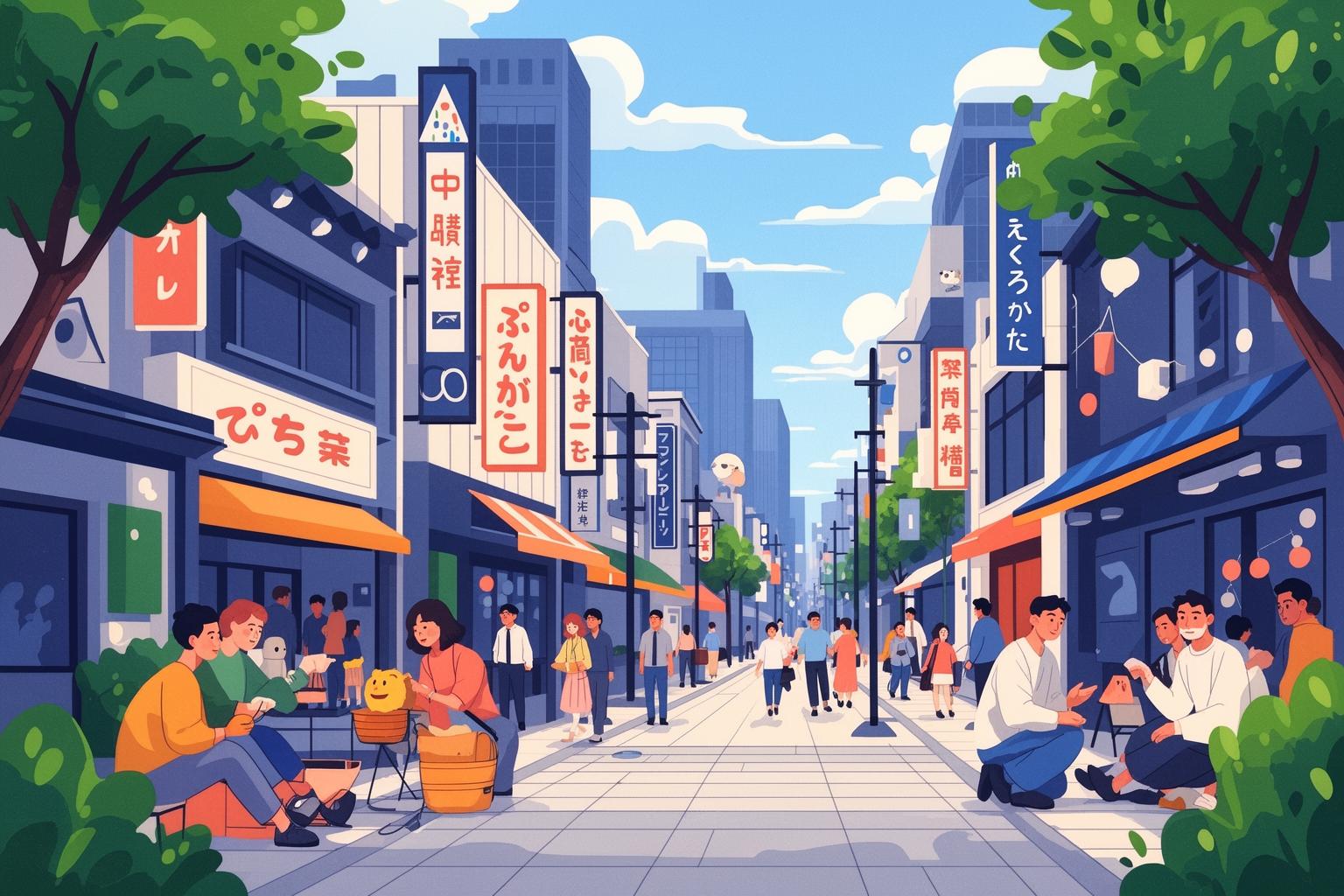
One of the greatest benefits of setting up your remote office in Nakazakicho is the abundance of inspiration waiting just outside the cafe door. Taking regular breaks is crucial for productivity and well-being, and this neighborhood turns that necessity into an enjoyable adventure. A simple fifteen-minute walk can clear your mind and replenish your creative energy in a way few other districts can.
Step away from your laptop and allow yourself to get lost. The grid layout of modern cities gives way here to a network of narrow, capillary-like alleys. Choose a direction and explore. You’ll find small, well-tended gardens nestled between houses, rows of potted plants adding a splash of green against weathered wood. You’ll come across shops that feel like personal treasure troves. There are vintage kimono stores offering exquisite, handcrafted fabrics, and ‘furugiya’ (second-hand clothing shops) expertly curated with styles from the 60s, 70s, and 80s. You’ll discover ‘zakka’ shops selling everything from handmade pottery and leather goods to quirky stationery and artisanal incense. These aren’t stores for mindless shopping; they are places of discovery, each item telling its own story.
Be sure to look out for small, almost hidden art galleries. Some are no larger than a single room, located in former garages or the fronts of houses. They showcase the work of local artists, providing a direct, intimate connection to the neighborhood’s creative spirit. You might also come across Hakuryu Okami Shrine, a tiny yet powerful spiritual spot tucked away in an alley, its red torii gate brightly contrasting with the muted hues of nearby buildings. Offering a quick prayer or simply taking a moment of quiet reflection here can be a meaningful way to reset your mind.
If you’re looking for a change of pace, the eastern edge of Nakazakicho borders the northern end of the Tenjimbashisuji Shotengai, Japan’s longest covered shopping arcade. A stroll through this lively, two-kilometer-long market presents a vivid sensory contrast to Nakazakicho’s quiet lanes. Here you’ll find everything from traditional food stalls and pharmacies to pachinko parlors and discount shops, all under one roof. It’s an excellent place to experience the vibrant, everyday commercial energy of Osaka. Using your breaks to explore these varied settings—the tranquil alleys, the curated shops, the spiritual sites, and the bustling arcade—is not only a way to rest your eyes from the screen but also an opportunity to actively engage with the culture and community, making your workday richer and far more memorable.
A Final Word: Your Chapter in Nakazakicho’s Story
Nakazakicho is more than just a collection of charming streets and work-friendly cafes; it embodies a philosophy. It shows that productivity need not be separated from beauty, that focus can emerge from tranquility, and that inspiration is a resource nurtured by one’s environment. For the digital nomad, used to a life of constant movement and adjustment, this neighborhood offers a rare and invaluable gift: a true sense of place. It’s a part of a vast metropolis that encourages you to slow down, observe, and connect not only to a Wi-Fi network but also to a story of resilience, creativity, and genuine quietness.
Choosing to work here is a conscious decision to integrate your professional life into this rich fabric. Every coffee ordered, every shop explored, every peaceful moment spent in a sunlit alley contributes to the vitality of this distinctive community. The ideal cafe for you might be one we’ve highlighted in detail or a hidden treasure you uncover on your own—a spot that perfectly aligns with the pace of your work and the flow of your thoughts. So bring your laptop, but also bring your curiosity. Let yourself wander through the maze. Allow the past to shape your present. Find your corner, order your coffee, and write your own chapter in the continuing, beautiful story of Nakazakicho. Your best work might be waiting there, in an office with more character than you ever imagined.