So you’re moving to Osaka. You’ve heard the stories. You know it’s not Tokyo. It’s louder, it’s bolder, the food is legendary, and the people walk on the right side of the escalator. You’ve done the basic research. But now you’re faced with the first, fundamental question that will define your entire existence here, a choice that cleaves this city in two: Kita or Minami? North or South? Umeda or Namba? This isn’t just picking a spot on a map. This is choosing your tribe. It’s a decision that will dictate the rhythm of your days, the contents of your wallet, the flavor of your nightlife, and the very way you understand the soul of this magnificent, messy metropolis. In Tokyo, your station is your identity. In Osaka, your allegiance to the North or the South is your compass. Kita, centered around the sprawling Umeda station complex, is the city’s crisp, modern business suit. It’s the face Osaka shows to the world—sleek, sophisticated, and perpetually in motion. Minami, with its beating heart in the neon-drenched streets of Namba and Shinsaibashi, is the city’s wild, laughing soul. It’s where Osaka lets its hair down, eats until it drops, and tells the best jokes. Forget tourist guides that treat them as two ends of a single subway line. For the people who live here, they represent two different philosophies of life. Choosing between them means asking yourself: Do you want to live in the polished glass tower or the chaotic, vibrant marketplace? This guide is your deep dive into that choice, breaking down how the great Kita-Minami divide will shape your rent, your routine, and your reality in Japan’s kitchen.
If you’re leaning towards the polished glass tower of Kita, you’ll quickly discover that assembling your perfect lunch in the legendary Umeda depachika is a daily ritual that defines its modern, competitive spirit.
The Tale of Two Cities: Kita’s Polish vs. Minami’s Grit
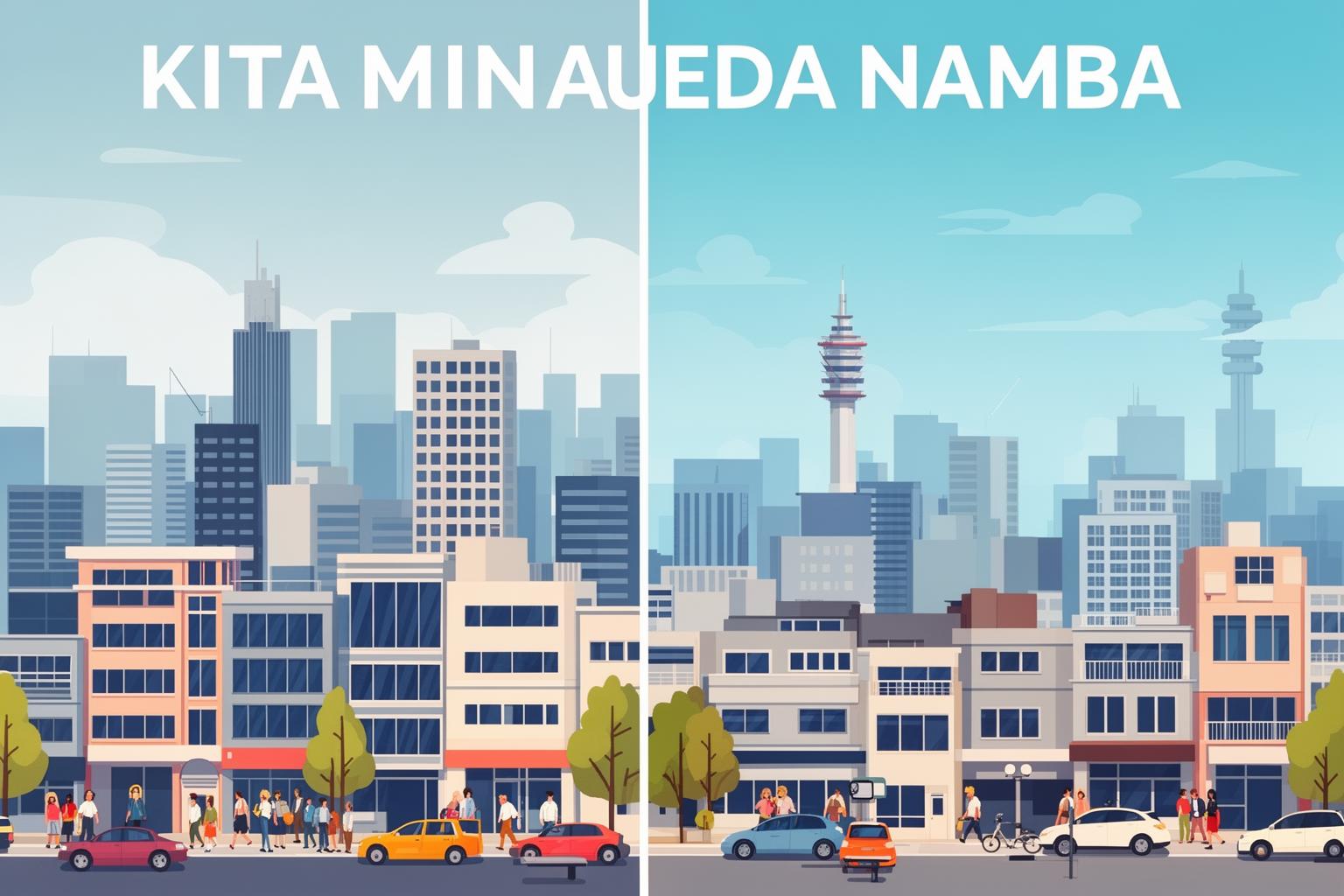
To truly grasp Osaka, you must first appreciate its dual character. The city pulses on two distinct wavelengths, radiating from two dynamic centers. These aren’t merely commercial zones; they serve as cultural magnets, each drawing the city’s identity in a unique direction. One prioritizes order and ambition, while the other thrives on spontaneity and genuineness. Your everyday experience—from your morning coffee to your last train ride—will be shaped by which frequency you choose to tune into.
Kita (Umeda): The Modern Face of Osaka
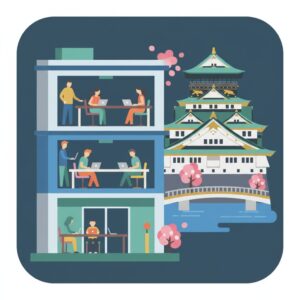
Step out of the intricate maze of Umeda Station, and you immediately plug into Osaka’s central hub. This is Kita, the city’s northern core. The atmosphere here feels charged with purpose. Surrounding you are soaring glass skyscrapers reflecting the sky, the pristine fronts of department store titans like Hankyu, Hanshin, and Daimaru, and the expansive, futuristic Grand Front Osaka complex. The streets are wide, sidewalks immaculate, and the flow of people moves more like a steady current than a crowd. This is the realm of the salaryman in a perfectly pressed suit, the office lady with a flawlessly coordinated handbag, and the focused shopper on a quest for luxury. The ambient sounds aren’t the boisterous laughter of street vendors, but the polite buzz of high-end cafes, the soft ding of department store elevators, and the determined click of heels on polished marble.
This atmosphere isn’t incidental; it reflects a fundamental aspect of Osaka’s spirit. Kita embodies the city’s ambition. It’s Osaka’s answer to Tokyo’s Marunouchi or Shinjuku, a statement of its presence on the global economic stage. The prevailing mindset here is efficiency, professionalism, and forward drive. A typical weekday morning is a showcase of organized energy, a flood of humanity pouring into the station, moving with silent synchronization toward the multitude of corporate offices that fill the district. On weekends, the area morphs into a luxury shopping haven, where families and couples explore designer stores and savor elaborate meals in sky-high restaurants offering panoramic city views.
The unspoken rule of Kita is that appearance matters. There’s a subtle expectation to present yourself neatly, to align with the sleek surroundings. It’s not the overt fashion focus of Tokyo’s Omotesando, but a quieter professionalism. Living here means embracing a refined urbanity. Your daily life becomes interwoven with this center of commerce and transit, a world defined by polished surfaces and clear intentions.
Minami (Namba): The Vibrant Soul of Naniwa
Take the Midosuji subway line eight minutes south, and you step into a completely different world. Welcome to Minami. If Kita is the city’s mind, Minami is its loud, unapologetic, and fervently beating heart. As soon as the train doors slide open at Namba, the energy rushes in. It’s a sensory feast in the best way. The air is thick with the scent of grilled takoyaki and savory okonomiyaki. The sights are a neon riot, dominated by the iconic Glico Running Man and the giant mechanical crab of Kani Doraku, all mirrored in the dark waters of the Dotonbori canal. Rather than broad boulevards, you find the shoulder-to-shoulder density of the Shinsaibashi-suji shopping arcade, an endless covered street where high-fashion boutiques sit alongside bargain souvenir shops and 100-yen stores.
The people here mirror this vibrant chaos. You’ll see everyone: wide-eyed tourists snapping selfies, teenagers in bold street styles straight out of Amerikamura, hopeful comedians distributing flyers for upcoming shows, slick-haired hosts enticing patrons into bars, and seasoned Osaka obachans (aunties) expertly bartering for deals. The vibe is casual, spontaneous, and refreshingly direct. This is the historic heart of Osaka’s merchant culture, the spirit of the shonin. It’s a culture grounded in salesmanship, entertainment, and human connection. The core values aren’t prestige and polish but great value (neuchi), fun, and fantastic food.
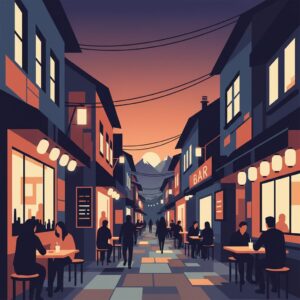
An average night in Namba is theater in motion. People don’t just walk—they swagger. Conversations aren’t just exchanges—they’re banter. Laughter pours out from packed izakayas and spills onto the narrow streets. Life unfolds openly, on plastic stools beneath makeshift awnings, clutching a can of Chu-Hi from a convenience store to sip by the river. The unspoken rule of Minami is that authenticity beats elegance. Being genuine, having a good sense of humor, and the ability to hold a lively conversation are the true social currencies. No one cares if your suit fits perfectly, but they will judge you on your capacity to take a joke. Living here means surrendering to the beautiful, relentless energy of it all.
Your Wallet and Your Walls: The Real Estate Reality
Your philosophical preference for Kita’s orderliness or Minami’s vibrancy is one matter; the practical issue of rent is quite another. The Kita-Minami divide is clearly reflected on the city’s real estate map, and your budget will heavily influence where you can settle. The price per square meter reveals much about desirability, convenience, and the lifestyle you can expect to build in the neighborhood you choose.
Renting in Kita: The Cost of Prestige
There’s no sugarcoating it: living in or near the Umeda hub comes with a premium price. This area is the city’s most desirable business and transportation center, and the rental market mirrors that reality. For a typical single-person apartment (a 1K or small 1LDK), you can expect to pay noticeably more than for a comparable space in the south. The upside is that you often pay for newer, more modern buildings. The skyline features gleaming tower mansions with hotel-like lobbies, advanced security systems, and sought-after amenities such as package delivery boxes and 24-hour garbage disposal rooms. What you lose in floor space, you gain in modern comfort and convenience.
But “Kita” extends beyond the immediate Osaka Station area. Surrounding neighborhoods present diverse flavors of northern living.
Fukushima
Just one train stop west of Umeda, Fukushima has surged in popularity. It’s a food lover’s paradise—a dense web of narrow streets packed with some of the city’s most inventive and acclaimed restaurants and standing bars. It maintains a somewhat more residential, neighborhood feel than Umeda itself, attracting young professionals who work downtown but crave a lively local scene to return to. Rent is high, but the reward is an unbeatable culinary and social life right outside your door.
Nakazakicho
A short walk east of Umeda, Nakazakicho feels like a hidden village frozen in time. It’s a labyrinth of tiny alleys lined with beautifully restored old Japanese wooden houses (machiya) now housing quirky independent cafes, vintage clothing shops, and art galleries. It carries a distinct bohemian, creative atmosphere. Although it offers a valuable sense of community and charm, its rising popularity and limited housing supply have driven rents up, making it a competitive market for those drawn to its unique character.
Tenma
Further east lies Tenma, home to the Tenjinbashi-suji Shotengai, Japan’s longest covered shopping arcade. This neighborhood offers a more grounded and somewhat more affordable take on the Kita experience. It’s always bustling, a sprawling marketplace filled with inexpensive, cheerful izakayas, sushi restaurants, and grocery stores. Living here provides a great mix of Kita’s connectivity with a more traditional, lively market vibe. While it can be noisy, many consider this a small price for the vibrancy and convenience.
Renting in Minami: Affordability, Diversity, and Energy
South of the city’s central Chuo-dori avenue, the rental scene shifts. Generally, your money goes further in Minami. For the price of a sleek but small studio in Kita, you might find a more spacious, albeit older, one-bedroom apartment. The building stock is more diverse, with many older, low-rise apartments mixed with newer ones. You might sacrifice fancy lobbies and auto-lock systems, but you gain character and more living space.
Minami’s neighborhoods offer a broad range of living experiences, from bustling entertainment districts to quieter residential enclaves.
Namba & Shinsaibashi
Living in the entertainment core is ideal for the young and energetic. If your ideal lifestyle means finishing work and walking to hundreds of bars, restaurants, clubs, and concert venues, this area is paradise. The downside is the noise and crowds. Your apartment might face a busy street filled with revelers late into the night. It’s an immersive urban experience that’s not for everyone, but for those who thrive on energy, it’s unmatched.
Horie & Amerikamura
Just west of Shinsaibashi’s main drag are two of Osaka’s trendiest neighborhoods. Amerikamura, or “Amemura,” is the heart of youth street culture, filled with vintage shops, record stores, and affordable eateries catering to a younger crowd. A bit further west, Horie offers a more mature, sophisticated vibe. Its tree-lined streets host high-end furniture designers, independent fashion boutiques, and chic, minimalist cafes. Both areas offer a dynamic lifestyle, with rents slightly above Minami’s average but still reasonable compared to Kita.
Daikokucho & Shin-Imamiya
Going further south from Namba, you reach neighborhoods known for some of the best rental value in central Osaka. Daikokucho, just one subway stop away, is a quiet, residential area with excellent grocery options and easy access to Namba. Continuing south, you arrive at Shin-Imamiya and Nishinari, historically known as Osaka’s grittiest, working-class districts. This reputation has deterred many renters for decades, but the reality is nuanced and evolving. While these areas maintain a rough-around-the-edges character, they also host a thriving community and offer incredibly low rents for central locations. For budget-conscious and open-minded residents, these neighborhoods provide an authentic, unfiltered experience of Osaka life and a practical base for exploring the city.
The Daily Grind and Weekend Vibe: Commuting and Socializing
Where you live shapes more than your address; it sets the pace for your social life and daily commute. The transportation networks and cultural vibes of Kita and Minami create two distinctly different patterns of movement and interaction. One is a highly organized world of transfers and scheduled meetups; the other embraces a more fluid lifestyle where your neighborhood serves as your playground.
The Kita Commuter: A Hub of Connectivity
Living in Kita means being at the very heart of Kansai’s transportation system. Umeda is not simply a station; it’s an expansive underground city linking JR Osaka Station, Hankyu Umeda, Hanshin Umeda, and three subway lines. From this single hub, direct and easy access to Kobe, Kyoto, and northern suburbs is at your fingertips. For many, this unmatched connectivity is the top reason to live in the north. Your commute is often a straightforward, one-train trip, and weekend travel across the region is seamless.
The commuting experience here is remarkable. Though it’s crowded, it’s impressively orderly. People move through the vast station complex with practiced efficiency, navigating the color-coded lines and labyrinthine corridors of the “Umeda dungeon” like experts. While initially overwhelming, you soon learn the rhythm and routes. Social life in Kita often reflects this structured ease. Plans are made ahead of time. After-work drinks, or nomikai, take place in numerous izakayas inside the station buildings or nearby office towers. Dinners tend to be at upscale venues in the Grand Front or Lucua shopping centers. For those arriving from different directions, the default meeting points are always “the big clock at JR Osaka Station” or “in front of the Hankyu department store.” This social dynamic revolves around the train station, serving as a central meet-up spot for a transient, professional crowd.
The Minami Resident: Living Where the Party Is
Namba is also a major transit hub, but it functions along a different axis. It acts as the gateway to the south, with the Nankai line providing direct access to Kansai International Airport (KIX) and the Wakayama mountains, while the Kintetsu line connects to Nara. Though well connected, it doesn’t quite match Umeda’s comprehensive reach to Kobe and Kyoto. However, what it lacks in intercity dominance, it compensates for with vibrant local energy.
For a resident of Minami, the idea of “going out” is different. You don’t have to board a train to find the excitement; you’re already immersed in it. Social life here is far more spontaneous and street-focused. A night out is less about reservations and more about exploring the winding back alleys of Uranamba—a dense network of tiny, incredible standing bars and eateries—choosing whatever catches your eye. It’s about grabbing a can of beer and some takoyaki and joining the crowds along the Dotonbori canal. It’s about catching an impromptu comedy show at the Namba Grand Kagetsu, the revered home of Japanese manzai comedy. Your social life unfolds on foot. The neighborhood itself is the main attraction. This cultivates a different mindset. Living here means the fun is right outside your door, so there’s less pressure to travel for it. Your apartment becomes less a final destination and more a launchpad for the adventures awaiting nearby.
The Cultural Divide: How Osaka Sees Itself
Beyond the concrete and train lines, the Kita-Minami divide embodies a deep-rooted duality in Osaka’s self-perception. It reflects the contrast between the image the city presents to the outside world and the one it holds internally. Grasping these two ideas—the outward appearance (sotozura) and the true feelings (hon’ne)—is essential to fully understanding the city’s character.
Kita’s “Sotozura” (Outer Face)
In Japanese culture, sotozura denotes the public persona—the polished, courteous version of oneself shown to outsiders, clients, or superiors. Kita essentially represents Osaka’s sotozura. It’s the city dressed in its finest, ready for business. The sleek architecture, international hotels, and upscale department stores all work to craft an image of a modern, sophisticated, global metropolis. It’s no accident that this area of Osaka is often likened to Tokyo. When people say Umeda “feels like Tokyo,” they mean its sense of order, cleanliness, and a more restrained, professional atmosphere (at least by Osaka standards).
For Osaka, this duality brings both pride and some anxiety. There’s pride in having a world-class business district that can rival the capital, but also a strong resistance to being seen as a mere imitation. This tension defines the Kita experience. Foreigners who spend most of their time in Umeda often mistakenly assume this polished persona represents all of Osaka. They may find the city less overtly “friendly” than expected, simply because interactions in Kita tend to be more formal and transactional. They see the impressive facade but overlook the lively spirit pulsating just a few kilometers away.
Minami’s “Hon’ne” (True Feelings)
If Kita is the public face, Minami embodies Osaka’s hon’ne—its true, unfiltered self. Here, the city drops its guard and immerses itself in its unique culture. This is the home of kuidaore (eating oneself into ruin), the boisterous humor of Yoshimoto Kogyo, and the fast-talking, bargain-hunting energy of the Naniwa merchant. The Osakan dialect, Osaka-ben, feels more vivid and prevalent here. Interactions are more direct, the humor quicker, and emotional expressions more pronounced.
This is the Osaka people imagine, and its authenticity is its greatest asset. Yet, it can also lead to misunderstandings. Foreign visitors who only see the tourist-packed spectacle of Dotonbori might think the entire south side is a chaotic, neon-lit amusement park. They witness the performance but miss the genuine, close-knit communities tucked just beyond the main streets. Additionally, Minami’s straightforward communication style can catch off guard those used to more indirect social norms in other Japanese cities. A shopkeeper’s blunt comment about a price or a stranger’s overly familiar joke is not rude; it’s part of the hon’ne culture—a gesture inviting open, genuine interaction without the veneer of formal politeness. Minami is where Osaka stops trying to impress and simply welcomes you to join the party as you are.
Beyond the Binary: Finding Your Perfect Osaka
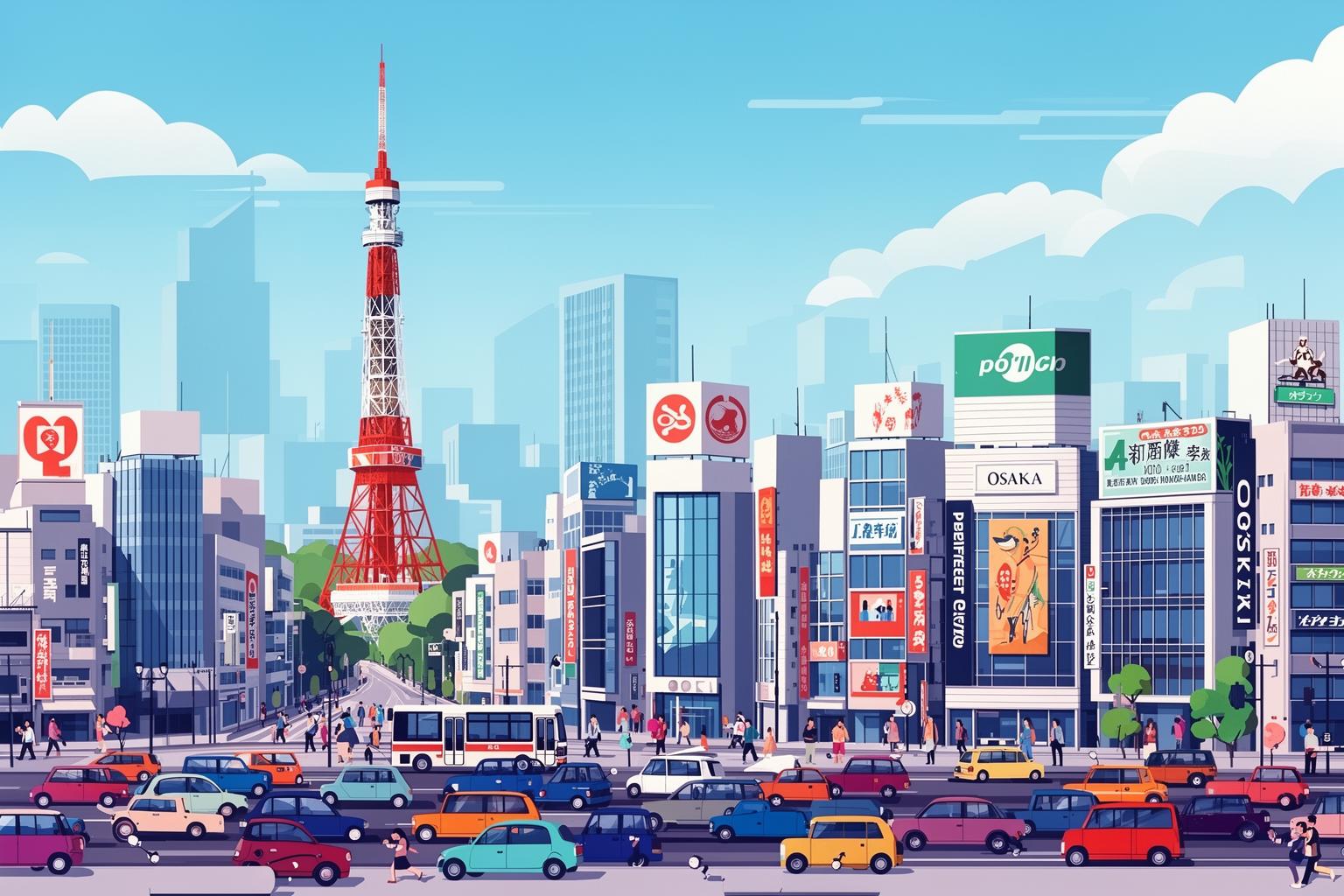
While the Kita versus Minami framework is key to understanding Osaka, it is also a simplification. The city is a vibrant mosaic of diverse neighborhoods, many defying straightforward classification and offering a distinctive mix of lifestyles. For many residents, the ideal place lies not at either extreme, but somewhere in the intriguing middle ground where various facets of the city’s character intersect.
The Tennoji/Abeno Revival
For years, Tennoji was seen as a secondary hub, but recent redevelopment has elevated it to a true “third center” of Osaka. It perfectly captures the city’s dual nature. On one hand, there’s Abeno Harukas, Japan’s tallest skyscraper, a dazzling symbol of modernity with a luxury department store, a five-star hotel, and a stunning observatory. This is Kita-style sophistication at its finest. Just a few minutes away, however, lies Shinsekai, a district wonderfully frozen in the Showa era, with the iconic Tsutenkaku Tower towering over streets packed with inexpensive kushikatsu eateries and nostalgic pachinko parlors. This is Minami’s retro grit in its purest form. The blend of the ultra-modern and the deeply nostalgic, all tied together by the expansive greenery of Tennoji Park and the historic Shitennoji Temple, makes this area uniquely appealing. It offers a balanced lifestyle with excellent transport links, great shopping, and a foot in both Osaka worlds.
The Bay Area and West Side Story
Moving west from the city center toward the port, urban density gives way to a more relaxed atmosphere. Neighborhoods like Bentencho and the vicinity of Osakako Station present a very different pace of life. This is the Bay Area, characterized by wider streets, larger parks, and a more residential, family-oriented vibe. While lacking the nonstop energy of central districts, it compensates with more affordable rents for larger apartments, a quieter environment, and close proximity to major attractions like Universal Studios Japan and the Osaka Aquarium Kaiyukan. For those who don’t need to be in the heart of the action or families seeking more space and a calmer daily routine, Osaka’s west side offers a practical and pleasant alternative. The trade-off is a longer commute to the main hubs, but for many, the tranquility is well worth it.
The Castle and the Business Park (Kyobashi/OBP)
To the east of the city center lies another vital yet often underappreciated area. Osaka Business Park (OBP) is a cluster of corporate towers near Osaka Castle, serving as a secondary business district that feels more contained and less hectic than Umeda. Adjacent is Kyobashi, a major JR and Keihan line station known as a salaryman’s haven. It’s a gritty, down-to-earth network of covered shopping arcades and back streets teeming with affordable, lively standing bars and izakayas. This area offers a straightforward, practical lifestyle. Residents enjoy the vast green refuge of Osaka Castle Park for leisure, the corporate environment of OBP for work, and the lively yet budget-friendly nightlife of Kyobashi for relaxation. While it may lack the distinct cultural identity of Kita or Minami, it provides a convenient and functional base for living in Osaka.
So, Where Do You Belong? A Final Gut Check
Choosing between Kita and Minami, or any neighborhood in between, ultimately comes down to personal preference. It depends on which side of Osaka resonates with your personality, priorities, and vision for daily life. There’s no right or wrong choice—just what feels right for you. When making the decision, consider it a gut check.
Choose Kita if…
You prioritize supreme convenience and connectivity. You have a corporate job and prefer a short, straightforward commute. Your ideal weekends include browsing upscale shops, savoring refined meals with a view, and taking easy day trips to Kyoto and Kobe. You value a clean, organized, and modern urban setting and don’t mind paying extra for a prestigious address and the latest amenities. You draw energy from ambition and professionalism.
Choose Minami if…
You crave spontaneity, vibrancy, and a bit of beautiful chaos. You want your social life to spill out like an extension of your living room, filled with affordable eats, dive bars, live music, and unexpected encounters. You appreciate character, grit, and authenticity more than polished surfaces and quiet evenings. You’re budget-conscious and want to maximize your living space. You wish to immerse yourself in the loud, proud, and spirited heart of classic Osaka culture.
The true charm of Osaka lies in its density. The Umeda-Namba divide is a significant cultural distinction, yet it’s connected by a single, eight-minute subway ride on the Midosuji Line. You can reside in the orderly world of Kita and escape to Minami’s glorious anarchy for a night out. You might make your home in Minami’s lively core and commute to Kita’s professional sphere for work. Your neighborhood choice shapes your home base, sanctuary, and daily rhythm, but the entire city—with all its polished, gritty, humorous, and flavorful character—is your playground. The best advice is to spend a day exploring each. Wander the streets, try the food, observe the people. Stand in the center of the Umeda skywalk and feel its purposeful energy. Then stand beneath the neon glow of the Glico Man and soak in its chaotic joy. Your gut will guide you to where you belong.