The day in Osaka doesn’t begin with the sun. It begins with a sound. A low, electric hum that rises from beneath the pavement, a rhythmic clatter that echoes through the pre-dawn quiet. It’s the sound of the first train pulling into Umeda Station, the city’s mechanical heart starting its daily, thunderous beat. Before the first rays of light splash across the Yodo River, a million individual journeys are already converging on this single, sprawling nexus. Umeda isn’t just a station; it’s a city within a city, a multi-layered labyrinth of steel, glass, and humanity. It’s a place of hellos and goodbyes, of frantic dashes and quiet moments of observation. For the daily commuter, it is both a battlefield and a ballet. For the visitor, it is the ultimate immersion into the kinetic energy that defines urban Japan. To understand Umeda is to understand the pulse of Osaka itself—a relentless, vibrant, and intricately choreographed flow of life that waits for no one, yet somehow, has a place for everyone. It’s the central nervous system of Kansai, a concrete canyon where the stories of millions of people intersect every single day, a place I’ve come to know not just as a point of transit, but as a subject of endless photographic and personal fascination. It’s where the grand scale of Japanese infrastructure meets the deeply personal rituals of daily life, and navigating its depths is a rite of passage for anyone calling this city home.
For those considering making Osaka their home, finding a great place to live near this hub is key, which is why many expats are drawn to affordable and convenient neighborhoods like Tenma.
The Morning Symphony: A River of Humanity
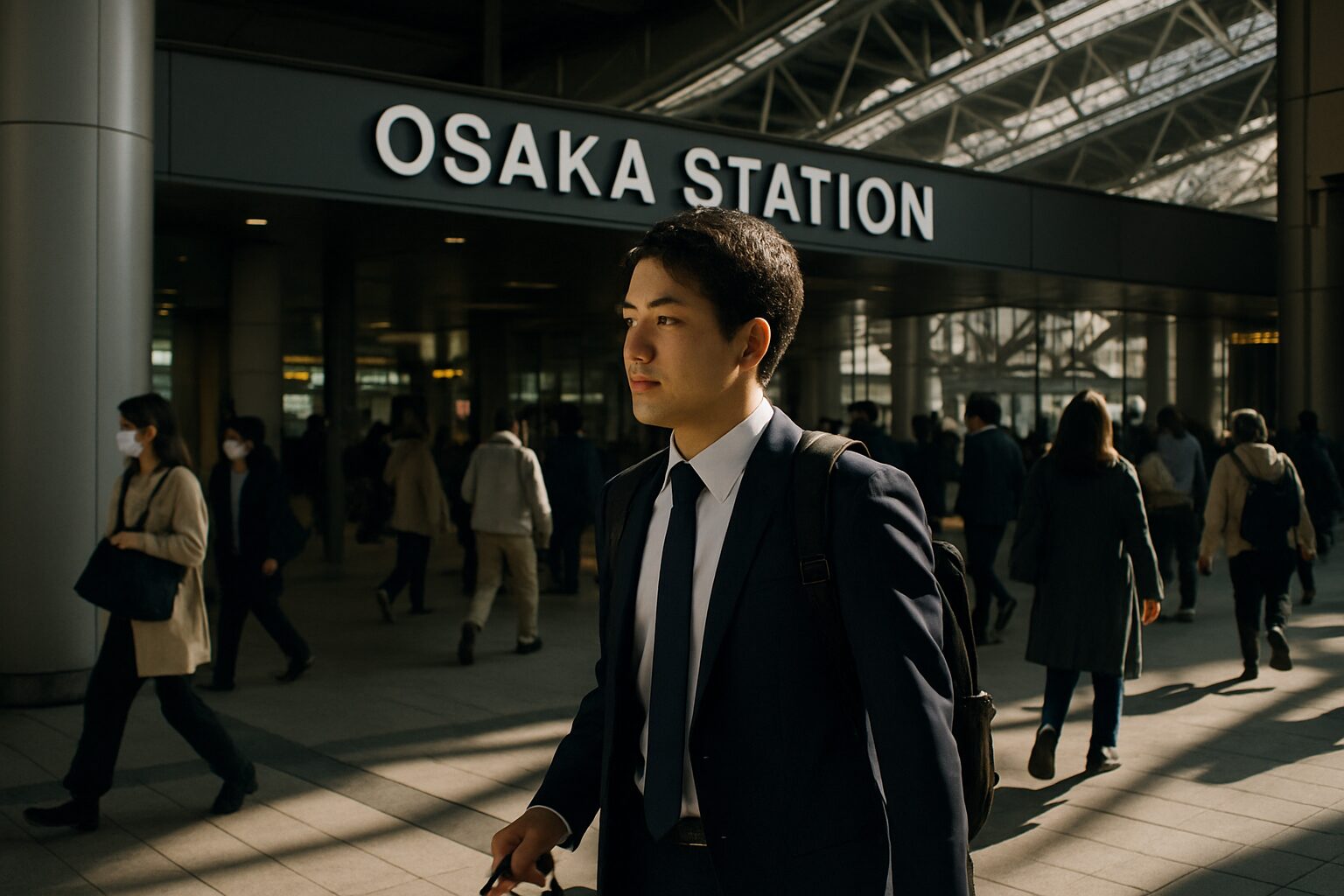
The clock ticks past seven, and the symphony begins in earnest. It’s not a gentle awakening; it’s a crescendo. From the deep arteries of the Midosuji subway line, a flood of people bursts onto the platform. The air, once cool and still, is now thick with the aroma of morning coffee, fresh bread from the station bakeries, and the faint, clean scent of laundry detergent on a thousand shirts. This is the great migration. The platform transforms into a living organism, inhaling a train’s worth of passengers and exhaling them into the station’s vast circulatory system. There’s a misconception that rush hour in Japan is chaotic and disorderly. Here in Umeda, it is quite the opposite. It is a masterclass in organized flow, a collective understanding of shared space. People move with a purpose that is almost hypnotic. They form unspoken lanes, their steps synchronized—a river of dark suits, sensible shoes, and downturned faces, each person a droplet in a powerful current flowing toward the ticket gates. The gates themselves are marvels of efficiency, a rhythmic line of beeps as thousands of IC cards—ICOCA, Suica, Pasmo—are tapped against the readers with a practiced flick of the wrist. There is no fumbling for change, no hesitation. Just a smooth, constant motion. As a photographer, I often find myself standing on one of the upper walkways, looking down at this scene. It’s a pattern of incredible complexity and beauty, a moving mosaic of life. You see high school students in their crisp uniforms, laughing and scrolling through their phones. You see office workers, the “salarymen” and “office ladies,” their faces a mask of stoic determination, already mentally at their desks. You see mothers guiding small children, their hands held tight, navigating through the forest of adult legs. Each person is locked in their own world, listening to music or podcasts, yet they move as one, directed by an invisible choreography. Escalator etiquette is strictly observed here in Osaka; you stand on the right, leaving a fast-flowing channel for those in a hurry on the left. This simple rule is a microcosm of the entire system: an agreement to maintain order for the benefit of all. The sheer scale can be overwhelming for newcomers. JR Osaka Station, the largest part of the Umeda complex, is crowned by a magnificent, whale-like glass roof that floods the main concourse with natural light. It feels less like a train station and more like an airport terminal or a modern cathedral devoted to transport. Giant digital timetables shimmer with destinations: Kyoto, Kobe, Nara, Kanazawa. The melodic chimes that announce each train’s departure are a uniquely Japanese sound, a gentle prompt punctuating the otherwise constant hum of the crowd. The key to survival, and eventually mastery, lies in learning the landmarks. The ‘Big Man’ video screen above the Kinokuniya bookstore at the Hankyu station entrance is a legendary meeting spot, its commercials a flickering beacon amidst the sea of people. The ‘Water Clock’ in the South Gate Building of Osaka Station City is another, a mesmerizing installation where jets of water create cascading images of flowers and the time itself—a moment of fluid beauty amid the rigid schedules.
The Station as a City: Beyond the Platforms
As the morning rush eases around ten o’clock, Umeda undergoes a striking transformation. The frantic energy of the commute fades away, replaced by a more relaxed, exploratory pace. The station stops being just a transit point and reveals its true nature: a self-contained vertical city, a universe of commerce and leisure stacked floor upon floor. This is when you realize the train lines form only the skeleton; the flesh and soul of Umeda lie in its department stores, underground arcades, and towering buildings. The three retail giants—Hankyu, Hanshin, and Daimaru—are either directly connected to or part of the station itself. They are more than shops; they are cultural landmarks. Entering the Hankyu Umeda Main Store feels like stepping into a world of refined elegance. The uniformed elevator operators with white gloves, the artful seasonal window displays, and the impressive nine-story open atrium all reflect a century of retail prestige. Hankyu is the destination for luxury fashion, upscale cosmetics, and its legendary food hall, or depachika. This basement level is a wonderland—a dazzling theater of food. Perfectly shaped melons are presented in velvet-lined boxes, costing more than a fine bottle of wine. Intricate wagashi (traditional Japanese sweets) are displayed like precious gems. The air is filled with the rich scents of roasting tea, sweet pastries, and savory sauces. Meanwhile, the Hanshin Department Store offers a more approachable, everyday gourmet atmosphere. It’s famous for its food hall as well, bustling with energy. The standing-room-only squid-grill stall, Ikayaki, is an Osaka institution, attracting lines throughout the day for its simple, delicious snack. The basement also houses an impressive sake selection and a lively fresh food market. Navigating these depachika is an experience in itself—a delightful sensory adventure where polite ladies offer tiny samples of pickles, cakes, and sausages. It stands in stark contrast to the silent, focused rush just a few floors above. Then there is the underground realm. Umeda is renowned for its extensive subterranean city, a network of shopping arcades like Whity Umeda and Diamor Osaka that link all the major buildings. On rainy or scorching summer days, these tunnels become the main thoroughfares. They are not dark, utilitarian passages but vibrant, bustling worlds lined with boutiques, cafes, and restaurants. You can walk for kilometers without ever seeing the sky. Learning to navigate this underground maze is essential for any Osaka resident. You begin to recognize the different colored tiles, the unique ambiance of each arcade, and the scent of the curry shop signaling you’re near a particular exit. For newcomers, it can feel like a video game, a labyrinth where every turn offers a new discovery. The challenge is great, but the reward is a profound connection to the city’s hidden geography. Above ground, architectural ambition continues. Grand Front Osaka and Lucua, located on the north and south sides of JR Osaka Station, showcase Umeda’s modern face. These gleaming glass and steel towers house trendy shops, international brands, and an impressive array of restaurants. Rooftop gardens, such as the ‘Tenku-no-noen’ (Sky Farm) at Osaka Station City, provide a surprising refuge. Here, amidst concrete and steel, small vegetable plots, cherry trees, and benches invite you to pause and watch trains glide in and out of the station below. It’s a moment of tranquility, a place to catch your breath and appreciate the vast urban landscape stretching to the distant mountains.
An Afternoon Escape: Views and Vertigo
When the enclosed world of the station complex starts to feel too restrictive, the afternoon presents a perfect chance to step outside and view Umeda from a fresh perspective. A brief, ten-minute walk through a slightly surreal underground passage leads you to one of Osaka’s most iconic landmarks: the Umeda Sky Building. This unique structure is hard to describe, featuring two 40-story towers connected at the top by a large, ring-shaped observatory that seems to float in mid-air. The ascent to the top is part of the adventure. A glass elevator takes you up to the 35th floor, followed by a glass-enclosed escalator that passes across the dizzying gap between the two towers. As you climb, the city unfolds beneath you, revealing the complex patterns of streets and train lines. The Floating Garden Observatory offers an uninterrupted 360-degree panoramic view. On a clear day, you can see the entire Osaka Plain, from the mountains of Kobe to the west to the distant hills of Nara to the east. You can watch planes landing at Itami Airport and spot the Akashi Kaikyō Bridge shimmering on the horizon. It’s a god’s-eye view that puts the morning’s commute into perspective. You can trace the route of the train you rode, notice the red Ferris wheel of HEP FIVE, and appreciate the dense, organic growth of the city. The wind here is brisk, and the open-air deck provides a tangible connection to the sky, a striking contrast to the underground world of the station. It’s a place for reflection, for seeing the bigger picture. Looking down at Umeda from this height, you truly grasp its role as the city’s heart, with roads and rails pulsating with life in every direction. Back at ground level, another type of excitement awaits at HEP FIVE. This bright red shopping complex stands out mainly because of the massive Ferris wheel on its roof. It symbolizes Umeda’s playful, youthful side. The mall itself targets a younger audience, with trendy fashion boutiques and character goods stores. Riding the Ferris wheel gives a more intimate, close-up view of the Umeda skyline. Each cabin has a speaker to play your chosen music, creating a personal soundtrack for the 15-minute rotation. At its highest point, you are level with the tops of nearby skyscrapers, looking directly into office windows—a strangely voyeuristic and thrilling perspective. It’s a moment of pop-culture fun that perfectly balances the grand, architectural awe of the Sky Building. For those looking for a different vibe, the narrow streets of the Kitashinchi district lie just south of the main station area. By day, it is fairly quiet, but this is Osaka’s premier upscale entertainment district. It’s a world of exclusive restaurants, discreet bars, and private clubs—a place where business deals are made over exquisite kaiseki meals. Simply walking through its lantern-lit alleys in the late afternoon offers a glimpse into a more traditional, refined side of Japanese nightlife, quite distinct from the busy crowds around the station.
The Evening Shift: From Commute to Celebration
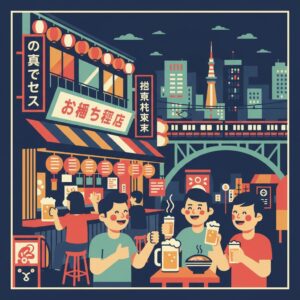
As daylight fades, Umeda is transformed once again. The blue hour bathes the glass facades of the skyscrapers in a magical light, and one by one, the neon signs flicker on, splashing the district with vibrant hues of red, blue, and gold. The energy shifts anew. The river of humanity begins to flow backward as commuters make their way to catch trains home. But now, they are joined by a fresh stream of people arriving in Umeda for the evening. The air fills with the tempting scents of grilled meat and savory broth as thousands of restaurants ignite their kitchens. The station, once a place of work and shopping, now becomes a playground. This is when the true spirit of Osaka, a city that delights in eating, drinking, and reveling (kuidaore), emerges. To witness this transformation in its most authentic form, you must explore the spaces beneath the elevated railway tracks. Here, in areas like Shin-Umeda Shokudogai, you’ll discover a maze of small, atmospheric eateries and standing bars (tachinomi). The air is thick with steam, cigarette smoke, and boisterous laughter. Salarymen, with loosened ties, stand shoulder to shoulder, clinking glasses of beer and highballs, sharing plates of yakitori, oden, and doteyaki. These spots are not fancy, but functional, lively, and unapologetically local. The noise is loud, the spaces cramped, and the experience utterly delightful. Here, you feel the day’s pressures melt away, the camaraderie, and the simple pleasure of sharing good food and drink. It’s a far cry from the polished decor of the department store restaurants just a few hundred meters away. For those seeking a sit-down meal, the variety is nearly endless. The upper floors of the Hankyu Grand Building, Grand Front Osaka, and Lucua are dedicated restaurant levels, offering everything from traditional Japanese dishes like sushi and tempura to Italian, French, and Korean cuisines. The competition is fierce, ensuring high quality across all price ranges. A local tip is to check the restaurant guide boards by the elevators; many feature detailed plastic food models (sampuru) in glass cases, showing exactly what you’ll order—a lifesaver for those who don’t read or speak Japanese. Beyond dining, Umeda is a major entertainment hub. The Umeda Arts Theater hosts big theatrical productions and musicals, while several cinema complexes screen the latest blockbusters. Evening is a time for leisure and enjoyment—a collective sigh of relief after a long day’s work. As night deepens, the station prepares for its final act. Announcements for the last trains begin, sending a final rush of people hurrying toward their platforms. Shops start lowering their shutters, cleaning crews appear, and the large station gradually powers down. The river of humanity thins to a trickle, and a relative calm settles over the area. Experiencing Umeda at these late hours is unique. The vast concourses, once packed with thousands, are now eerily empty, their polished floors reflecting the fluorescent lights. You can finally appreciate the architecture, the scale, and the sheer vastness of the space without the distraction of crowds. The last train is a significant moment in daily Japanese life, and catching it is both a common challenge and a genuine concern. Missing it means an expensive taxi ride or a long wait for the first train of the new day, which is only a few hours away.
A Guide to Mastering the Labyrinth
Navigating Umeda for the first time can feel overwhelming. The abundance of signs, overlapping maps from different railway companies, and the steady flow of people can easily confuse you. However, with some key strategies, this maze can be managed. First and foremost, realize that “Umeda Station” is not just one station. It comprises several stations: JR Osaka Station, Hankyu Umeda Station, Hanshin Umeda Station, and three subway stations (Midosuji Line’s Umeda, Tanimachi Line’s Higashi-Umeda, and Yotsubashi Line’s Nishi-Umeda). Identifying the company and specific line you need is the crucial first step. JR is ideal for trips to cities like Kyoto and Kobe. Hankyu and Hanshin are private railways also serving those cities but from separate terminals. The subway lines are your gateway to exploring Osaka itself. Color-coding is helpful: the Midosuji line, the city’s main route, is red; the Tanimachi line is purple; and the Yotsubashi line is blue. Following these colored signs on walls and floors will usually lead you correctly. Likewise, exits are numbered. If you need to reach the Umeda Sky Building, follow signs for the closest exit number. Checking Google Maps beforehand to find your destination’s nearest exit can save you significant time and frustration. Don’t hesitate to use information desks—they are staffed by multilingual experts familiar with the station’s layout. They can provide maps, directions, and train schedules, making them an invaluable resource. One essential tip is to wear comfortable shoes because you will do a lot of walking. Even a simple transfer between lines can require a ten-minute walk through underground passages. Lastly, embrace the chance of getting lost. Sometimes a wrong turn in Umeda leads to delightful discoveries: a hidden coffee shop, a quirky boutique, or an unexpected scenic view. View the station not only as a challenge to overcome but as a place to explore. Give yourself time to wander, admire the architecture, delve into the depachika, and pause to watch the vibrant flow of life around you. Umeda rewards curiosity, with each season bringing a fresh character to the station. In spring, department stores brim with cherry blossom-themed sweets and decorations. Summer sees beer gardens on rooftops providing cool relief. Autumn fills food halls with rich colors and flavors, and winter transforms the area around Osaka Station City into a dazzling wonderland of illuminations. There is always something new to discover, whether it’s an event, a shop, or a new taste.
The Heartbeat of a City
A day in Umeda offers a full immersion into the essence of modern Japanese city life. From the quiet, focused intensity of the morning rush to the lively, chaotic delight of an evening spent in an izakaya, it is a journey through contrasting experiences. Umeda is a realm of immense scale and personal moments, where high fashion meets humble street food, and cutting-edge architecture blends with timeless traditions. It can be overwhelming, confusing, and utterly draining. Yet it is also thrilling, captivating, and endlessly inspiring. Umeda Station is far more than just platforms and tracks; it stands as the powerful, relentless, life-giving heart of Osaka. It showcases the nation’s engineering skill, commitment to efficiency, and brilliance in commerce. Beyond that, it serves as a stage for millions of ordinary yet extraordinary lives unfolding daily. As a photographer and resident, it remains one of my favorite places in the city—a subject ever-changing with the light, the seasons, and the continuous, beautiful, rhythmic flow of its people. To stand in its grand hall is to feel the pulse of the whole region, a rhythm that, once sensed, stays with you forever.