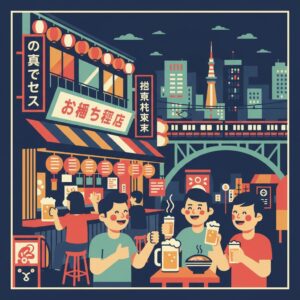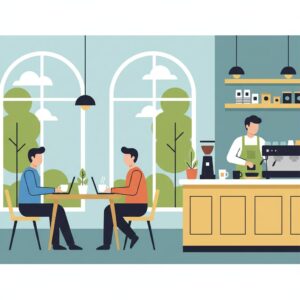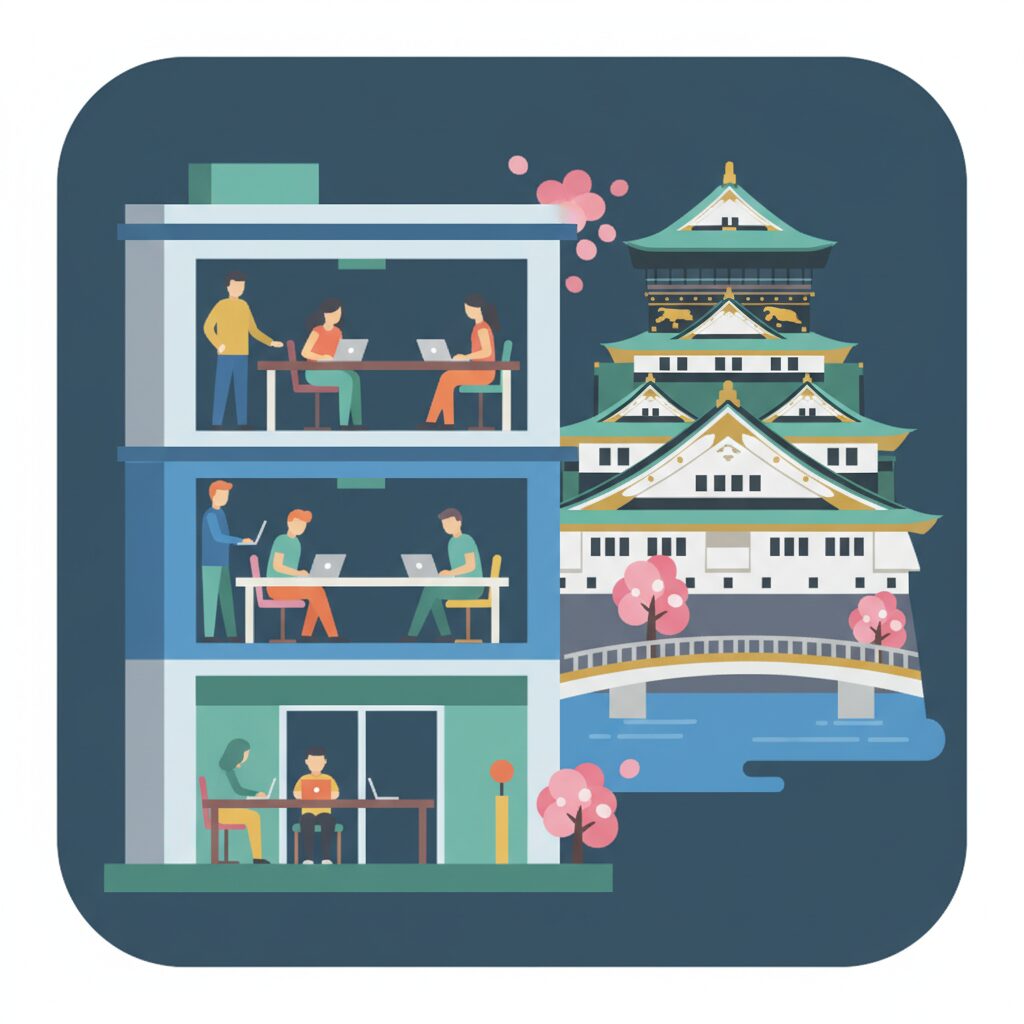
So you’ve landed in Osaka. You’ve heard the stories. It’s Tokyo’s louder, brasher, more down-to-earth cousin. The food is legendary, the people are direct, and the energy hits you the second you step off the train at Umeda Station. And that’s where the problem starts. Umeda isn’t a station; it’s a city-state, a sprawling, multi-layered labyrinth of department stores, train lines, and underground passages that seems designed to test your very will to live. It’s a place of commerce, of movement, of relentless, chaotic energy. Now, try opening your laptop in the middle of it. Try finding a quiet corner, a stable Wi-Fi signal, and that most sacred of artifacts: the available power outlet. The search for a place to work in Umeda is more than a logistical challenge; it’s a crash course in the soul of Osaka itself. It forces you to look past the neon glow and understand the city’s unspoken rules, its unique rhythm, and its deep-seated pragmatism. This isn’t about finding the cafe with the best latte art. This is about understanding how Osaka works, one power outlet at a time. It’s about learning to read the air in a city that’s less about quiet contemplation and more about getting things done, and finding your own productive hum within the city’s constant, vibrant roar.
To truly master this environment, you’ll also need to learn the art of navigating Umeda’s sprawling underground malls and rooftop gardens.
Decoding the Umeda Matrix: More Than Just a Station
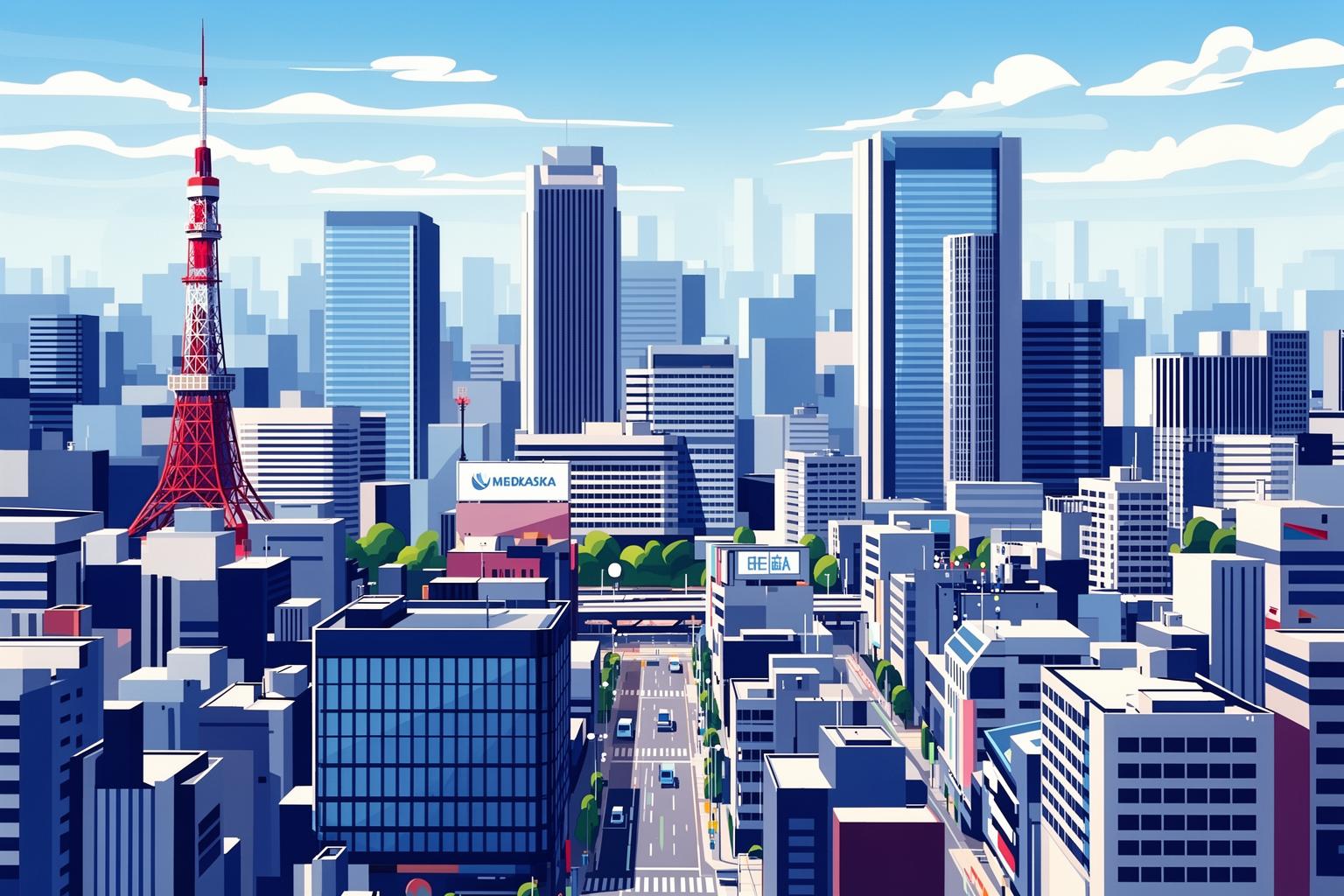
Before you even consider powering on your laptop, you need to grasp the nature of the beast. Umeda isn’t just one neighborhood; it’s a cluster of districts revolving around a transit hub. There’s JR Osaka Station City, a shining symbol of modern commerce. There’s Hankyu Umeda Station, with its grand, cathedral-like department store. You’ll also find the Hanshin lines, various metro lines, and an underground network linking them all in a way that defies typical maps. Foreigners often mistakenly view Umeda as a single, monolithic expanse of concrete and glass. They get lost, become frustrated, and give up. But locals see it differently. They perceive a system of interconnected systems—a place of pure, unfiltered utility. This isn’t a spot for strolling leisurely; it’s a machine designed to move people and money, with every inch optimized for that purpose.
The Refined West vs. The Bustling East: A Tale of Two Umedas
To find your workspace, you must first choose your territory. Broadly, Umeda divides into two distinct personalities. To the west and north lies the Grand Front Osaka and Lucua 1100 complex. This represents Umeda’s global face. It’s sleek, spacious, and upscale. Corridors are wide, lighting is soft, and the crowd is a mix of tourists, affluent shoppers, and business professionals. The cafes here are large, bright, and often offer stunning views. This area suits you when you need to impress a client or desire a taste of globalized, reliable comfort. It resembles Tokyo’s Marunouchi district—a carefully curated, corporate vision of urban life.
Then there’s the east side, around Hankyu and HEP Five, extending into the nightlife district of Higashi-Umeda. This is the older, rougher, more traditionally Osakan side. The arcades are narrower, signage louder, and the pace quicker, more intense. Workspaces tend to be smaller, often tucked into basements of aging buildings or squeezed between ramen shops. This is the Umeda of the salaryman grabbing quick coffee between meetings, or the student cramming for exams. It prioritizes function over aesthetics. Understanding this contrast is crucial. Are you seeking the calm, curated atmosphere of the west or the energetic, no-frills efficiency of the east? Your choice reveals what you value, and Osaka offers both without judgment.
The Unspoken Rules of Public Spaces: Tokyo’s Silence vs. Osaka’s Buzz
Here lies one of the key differences between Osaka and Tokyo. In a Tokyo Starbucks, silence can be overwhelming—a library of muted keystrokes and whispered exchanges. The social pressure to stay invisible and not disturb the peace is intense. Osaka, however, is different. It’s not loud with shouting, but there’s a steady, ambient buzz. Conversations carry a bit more, laughter is freer, and the overall volume is slightly higher. This isn’t rudeness; it’s a different social contract. Tokyo values seamless harmony. Osaka values vibrant coexistence.
This impacts your work. If absolute silence is essential for your focus, you’ll find many Umeda cafes challenging. The Osakan attitude is one of intense concentration within chaos. Observe a local salaryman in a crowded Doutor. He’s indifferent to the clatter and chatter, fully immersed in his spreadsheet. He’s created a personal bubble of focus in a public setting. This is a skill you’ll learn too. Foreigners often misread this ambient noise as inconsideration. It’s not—it reflects a city rooted in commerce, negotiation, and social interaction. The silence of a Tokyo café can feel isolating, but the hum of an Osaka café, once you adapt, feels invigorating—like being connected to the city’s lifeblood.
The Cafe Campaign: Finding Your Third Place in a City of Commerce
For most digital nomads, the journey starts in a cafe. However, in Umeda, selecting a cafe is a strategic choice that balances cost, comfort, and culture. The city’s merchant heritage is clearly visible here; each cafe presents a unique value proposition—offering a distinct answer to the question, “What are you willing to pay for?”
The Giants of the Grind: Starbucks, Tully’s, and the Predictability Play
These chains are everywhere for a reason: they provide a predictable experience—free Wi-Fi (often time-limited), a familiar menu, and general acceptance of laptop users. Amid Umeda’s bustle, this predictability is a valuable asset. Yet, not all chains are equal, and their locations reflect the city’s priorities.
Starbucks Reserve in Lucua 1100: The Status Symbol Workspace
This is more than a Starbucks; it’s a statement. Located on the 9th floor of the Tsutaya Bookstore inside Lucua 1100, it’s arguably the most coveted cafe workspace in Umeda. Offering expansive city views, comfortable seating, and endless books to browse, securing a seat—with a power outlet—is like hitting the jackpot. People often circle, waiting for someone to pack up their laptop. Working here feels less like a casual coffee break and more like a performance, signaling you belong to this polished, aspirational Osaka scene. The coffee is pricier, the atmosphere more subdued (for Osaka), and the silent rule is to look busy and important. It’s a slice of Tokyo-style sophistication, drawing many Osakans and expats alike, serving as an escape from the street-level grit and hustle.
Doutor and the Salaryman’s Sanctuary: A Lesson in Kosupa
Where Starbucks Reserve represents status, Doutor is pure function. Doutor Coffee is a Japanese institution, and its Umeda outlets are models of efficiency. The coffee is inexpensive and adequate. Seating is small and uncomfortable, subtly discouraging long stays. The clientele is largely local: salarymen on quick breaks, shoppers resting, students grabbing caffeine. There’s no pretense—you come to consume and leave. Although Wi-Fi is often available, power outlets are scarce by design. Doutor thrives on high turnover. Yet spending an hour here imparts a valuable lesson about Osaka: the concept of kosupa—cost performance—the art of maximizing value at minimal expense. An Osakan doesn’t need plush chairs or indie ambiance; they want a 250-yen coffee, a tiny table, and a brief window of focused work. It’s pragmatic, efficient, and deeply woven into the city’s merchant spirit.
Local Chains and the Quest for Authenticity
Between global giants and traditional coffee houses lies a niche filled by Japanese chains offering a different workspace vibe. These spots provide a cozier, more local experience than the big international brands.
Ueshima Coffee Lounge (UCC): The Enduring Charm of the “Social Coffee House”
Ueshima Coffee Lounge, or UCC, strikes a lovely balance. With its dark wood décor, brass accents, and plush seating, it evokes a more elegant era of coffee culture. The atmosphere is calmer than Doutor but less sterile than Starbucks. Their trademark nel drip coffee—a slower, more deliberate brewing method—yields a rich, smooth cup. This philosophy extends to the space, which feels less transient and more like a lounge. Patrons engage in quiet business meetings, read newspapers, or work on laptops. The unspoken rule is quiet dignity: you may stay for hours but without attracting attention. UCC embodies a particular Osakan professional spirit: established, traditional, appreciative of quality without needing flash. It’s an excellent choice for focused work in a comfortable, civilized setting.
Hidden Gems: Beyond the Big Names
Part of the joy in Umeda is uncovering smaller, independent spots hidden in the station’s labyrinthine corridors or on upper floors of department stores. Cafes like Campanella in the Diamor Osaka underground mall or The City Bakery at Grand Front each offer unique atmospheres. The City Bakery, a New York import, features a large terrace and excellent bakery goods, making it a popular but often crowded option. Campanella is a classic station-side cafe, perfect for people-watching and absorbing the city’s flow. Finding such places feels like a small victory—a quiet rebellion against Umeda’s overwhelming scale. The challenge remains constant: great atmosphere and quality coffee rarely come with plentiful seating and power outlets. It’s the nomad’s eternal trade-off.
Kissaten Culture: Time Travel and the No-Laptop Zone
Then there are kissaten—not merely cafes, but time capsules. These traditional Japanese coffee houses, often run by an elderly couple, have existed for decades. Their dark, smoky interiors, vinyl seats, and carefully brewed coffee command accordingly higher prices. You don’t visit a kissaten to work; you visit to escape work and step away from the modern world. Opening a laptop here is a major social faux pas, akin to taking a business call in a quiet library.
Understanding the Master’s Domain: Why Your MacBook Isn’t Welcome
A foreigner might see an empty kissaten and think, “Perfect, a quiet place to work!” But this misses the point. A kissaten is the master’s domain, a space created for conversation, reading, and quiet reflection over coffee. The clicking keyboard and glowing screen disrupt that carefully crafted atmosphere. It’s an intrusion of the hyper-efficient modern world that the kissaten offers refuge from. Some places post signs banning laptops; most rely on unspoken social rules or the customer’s ability to “read the air” (kuuki wo yomu). To Osakans, this is obvious, but outsiders may find it confusing or feel slighted. It’s not personal—rather, it’s a defense of a fading culture, a quiet assertion that not every space must be productivity-optimized. Respecting this boundary is essential to understanding the deeper layers of Japanese, and especially Osakan, culture.
The Coworking Revolution: Osaka’s Answer to the Modern Grind
When the chaos of a cafe becomes overwhelming, it’s time to upgrade. Coworking spaces provide the essential trio for digital nomads: dependable Wi-Fi, guaranteed power, and a dedicated workspace. Osaka’s coworking scene is thriving, highlighting the city’s pragmatic acceptance of new business models. Yet, the available options reflect the ongoing tension between global trends and local identity.
The Premium Experience: WeWork as the Global Benchmark
WeWork’s debut in Umeda marked a significant milestone. With multiple locations, including one in the Hankyu Grand Building, it introduced a Silicon Valley vibe and a global startup culture to central Osaka. The spaces are exactly what you’d anticipate: beautifully designed, equipped with amenities like endless coffee and beer, and buzzing with a mix of international remote workers, local startups, and corporate teams.
What WeWork’s Presence Reveals About Osaka’s Aspirations
The presence of WeWork in Umeda underscores Osaka’s ambition to establish itself as a global business hub. It signals to international firms that the city has the infrastructure to support modern, flexible work styles. It appeals to those who seek a seamless, premium experience and are willing to pay for it. The atmosphere is professional, polished, and unmistakably international. You’re just as likely to overhear English or Mandarin in the corridors as Japanese. Unlike Tokyo, where WeWork blends into a sprawling corporate environment, in Osaka, it feels like a purposeful statement—an embassy of the global tech world set within the merchant city.
The Ambiance: Is Tokyo’s Hustle Spreading South?
Working at a WeWork in Osaka can occasionally feel like you’re somewhere else entirely. The networking events, the startup buzzwords, and endless enthusiasm can seem like imports from Tokyo or San Francisco. This is both an advantage and a drawback. It’s an excellent place to connect with internationally minded professionals but can feel somewhat detached from the local business culture, which remains more traditional, relationship-focused, and grounded in tangible products rather than abstract applications. Osaka’s business community is famously straightforward, emphasizing personal trust often built over shared meals and drinks. While WeWork fosters a sense of community, it’s a different kind—more transactional and transient compared to the longstanding Osaka networks.
The Local Champions: Coworking Spaces Made for Osakans, by Osakans
For a more authentic Osaka experience, look to local coworking brands. These spaces may lack the flashiness of global chains but offer deeper insights into the regional work ethic. They operate on the principle of kosupa and cater to Japanese freelancers, small business owners, and remote workers.
The Hive Umeda: Cultivating a Genuine Community Spirit
Situated just north of the main Umeda bustle in the Shin-Umeda area, The Hive is part of an Asian regional chain but retains a distinctly local atmosphere. Housed in an eye-catching building with a lovely terrace, it prioritizes community building. While WeWork’s community can feel curated for corporate clientele, The Hive’s feels more natural. It attracts a diverse group of creatives, entrepreneurs, and remote workers who genuinely seek connection. The vibe is collaborative and welcoming—genuinely open and accessible once you get past the initial professional facade, reflecting a key Osakan trait.
Common Room Umeda: Practicality Over Glamour, and Proud of It
Common Room perfectly embodies the Osakan coworking ethos. Located in a somewhat older building, its design is functional rather than luxurious, with remarkably affordable pricing. This is a no-frills environment—no beer on tap, no meditation rooms—focusing on delivering a dependable, cost-effective workspace. The atmosphere is quiet, focused, and unpretentious. It’s a workspace as a straightforward utility, not a lifestyle symbol. This exemplifies the kosupa mindset: why pay extra for fancy furniture when all you need is a desk, a chair, and fast internet? This practical approach lies at the heart of Osaka’s business identity, valuing results over appearances, with Common Room serving as a perfect example.
Pricing, People, and Pragmatism: The Osaka Approach to Coworking
One noticeable difference between Osaka and Tokyo coworking spaces is cost. Osaka is nearly always more affordable. This isn’t just due to lower real estate prices but reflects a cultural expectation. Osakans are savvy consumers who won’t pay more if better value options exist. This pressure keeps coworking spaces competitive and focused on essentials. The clientele in local spaces also tends to differ: more small business owners, solo entrepreneurs, and freelancers who have built their careers from scratch. Conversations are more direct, practical, and less preoccupied with lofty theories—they revolve around sales, clients, and supply chains. This mirrors Osaka’s identity as a city of makers and merchants.
The Pay-as-you-go Pods: Maximizing Urban Efficiency
For those needing a workspace for just an hour or two, a new trend perfectly adapted to the Japanese urban environment has emerged: private work booths. These compact, soundproof pods are popping up throughout Umeda Station and office lobbies.
The Booth Boom: Telecube and Station Work
Solutions like Telecube and JR’s Station Work offer an elegant answer to a common challenge. You book a booth through an app for as little as 15 minutes. Inside, there’s a small desk, a chair, a power outlet, and secure Wi-Fi. It’s your own private office, condensed to the size of a phone booth. This is the ultimate manifestation of Japanese efficiency and the monetization of small spaces. For a quick, private Zoom call or a focused hour between meetings, these pods are unbeatable. Their adoption in Osaka reflects the city’s fast-paced business culture—a salaryman can jump from a meeting into a booth for a 30-minute client call, then catch a train to Kobe without missing a step. It’s a system tailored for a city always on the move.
The Nomad’s Toolkit: Practical Realities and Cultural Nuances
Selecting a space is only part of the challenge. Thriving as a digital nomad in Umeda involves navigating practical and cultural hurdles that can trip up even the most experienced traveler.
The Power Outlet Quest: A Digital Nomad’s Biggest Challenge
In many Western countries, power outlets in public places are abundant and taken for granted. In Japan, especially in busy areas like Umeda, outlets are limited and highly valued. Many cafes deliberately restrict outlet access to discourage long stays and promote customer turnover. This leads to the “power outlet quest,” a daily pursuit to find a spot near a socket. You’ll soon recognize them across a crowded room, develop a sixth sense for wired tables, and learn to ask, “Konsento, tsukattemo ii desu ka?” (“May I use the outlet?”) before ordering. This scarcity isn’t an accident; it’s a subtle crowd control measure and reflects a different approach to public resources. The space belongs to everyone, and monopolizing power for hours goes against the communal good. Always carry a fully charged power bank—it’s the most essential tool for working in Umeda.
The Wi-Fi Dilemma: Free, Fast, but Conditional
While free Wi-Fi is available, it often comes with restrictions. Many networks require email registration, and some disconnect you after 30 or 60 minutes, forcing you to log in again. Station-wide public Wi-Fi is convenient but can slow down and become unreliable during busy times. Coworking spaces offer the most stable connections. Cafes are hit or miss. The key takeaway is self-sufficiency. Having your own pocket Wi-Fi or a phone with a generous data plan isn’t a luxury—it’s a necessity. This freedom lets you work anywhere—a park bench or a quiet corner in a department store becomes your temporary office. This reflects the Osakan spirit of problem-solving independently rather than relying on others.
Noise, Phone Calls, and “Reading the Air”: Understanding Social Etiquette
Here, cultural subtleties are crucial. Although Osaka tends to be louder than Tokyo, personal noise rules are just as strict, if not stricter.
The “Zoom Call Zone”: A Concept Still Evolving
Taking a loud voice or video call in a public cafe is a serious faux pas in Japan. In Tokyo, it draws cold stares; in Osaka, you might encounter a direct, exasperated sigh or a discreet word from staff. It’s considered deeply rude to impose your conversation on others nearby. That’s why coworking spaces and private booths have grown in importance—they provide designated areas for such calls. If you must take a call in a cafe, be discreet: use headphones, speak softly, and keep it short. Even better, step outside. This isn’t just politeness; it’s about respecting the shared nature of the environment—an idea deeply embedded in Japanese culture.
Why Osakans Speak Louder but Still Expect Quiet
This might seem contradictory, but it makes sense once the context is clear. The background noise in an Osaka cafe is created by many people having quiet, private conversations, which blend into a pleasant ambiance. A single person on a loud phone call, however, breaks that harmony and forces everyone to listen to one side of the conversation. This is the difference between collective, harmonious noise and disruptive, individual noise. Osakans may be more expressive and less reserved in their chats, but they still abide by this unspoken rule. Foreigners who miss this distinction often cause tension—not out of rudeness, but because they haven’t learned to “read the air” of the room.
Beyond Umeda: Finding Your Flow in the Neighborhoods
After some time, the overwhelming intensity of Umeda can become exhausting. The steady flow of people, the sensory bombardment, the competition for resources—it doesn’t always foster deep, creative work. It’s crucial to remember that Umeda is the commercial heart, not the entire city.
A Nod to Nakazakicho: The Creative Retreat
Just a short walk east of the Umeda monolith lies Nakazakicho, a neighborhood that feels like a different world. A maze of narrow alleys lined with preserved pre-war wooden houses, it hosts independent boutiques, art galleries, and numerous quirky, unique cafés. Here, the pace slows down, the atmosphere turns bohemian, and many cafés are run by passionate owners who truly care about coffee and community. Spots like Salon de AManTo or Picco Latte aren’t simply businesses; they’re neighborhood landmarks. While they might lack the lightning-fast Wi-Fi or plentiful power outlets of modern coworking spaces, they offer something Umeda cannot: tranquility and a connection to a more intimate, human-scale side of Osaka. For a day dedicated to writing, brainstorming, or simply recharging your creative energy, escaping to Nakazakicho is essential.
Why Your Best “Osaka Office” May Not Be in Umeda at All
Umeda is a hub of transit and commerce. It’s where you go for meetings, shopping, or a quick burst of focused work between appointments. But for long, quiet hours of deep work, many digital nomads find their flow elsewhere. In the peaceful, green spaces of Utsubo Park. In the trendy cafés of Horie. In the grounded, residential neighborhoods along the train lines. Living in Osaka means learning to use the city’s various hubs for different needs. Umeda serves as your high-powered, high-energy headquarters, yet your true office—the place where you genuinely feel productive and comfortable—might be a quiet nook in a neighborhood café far from the station’s bustle. Thanks to the city’s excellent public transport, this polycentric work-life is not only feasible but enjoyable.
The Soul of the Osaka Workspace
What can the search for a workspace in Umeda teach us about Osaka? It reveals a city that is fundamentally practical, consistently efficient, and surprisingly flexible. It’s a city that prioritizes substance over style and value over superficial luxury.
It’s Not About Being Friendly, It’s About Being Practical
The well-known stereotype is that “Osaka people are friendly.” However, this oversimplifies the reality. Osakans aren’t friendly like a small-town shopkeeper might be. They are straightforward, pragmatic, and have little patience for pretense. This can come across as bluntness, but it’s actually a form of efficiency. In business, they want to get straight to the point. In service, they aim to solve problems quickly. This mindset extends to their workspaces. Cafes aren’t meant to be cozy living rooms; they are commercial venues offering services for a price. Coworking spaces aren’t social clubs; they are tools for business. Once understood, this pragmatic approach is refreshing—there are fewer hidden meanings and less need to interpret unspoken intentions. The rules may not be written, but they are clear.
Akindo no Machi (The Merchant City): How Commerce Shapes Every Corner
Osaka has been Japan’s commercial hub for centuries. Known as Akindo no Machi, the City of Merchants, this spirit infuses everything, including its “third spaces.” Every cafe and coworking space operates like a finely tuned business. Seating is arranged to maximize turnover; prices are calculated precisely to offer competitive cost performance (kosupa). Services are tailored to meet specific, practical needs. Unlike Tokyo, which also has a strong corporate culture but is burdened by its status as the national capital and a global cultural center, Osaka’s identity is more singularly focused on commerce. This lends the city a grounded, transparent motivation. Umeda exemplifies this perfectly: a business machine where every square meter is expected to generate profit. Working there means taking part in a longstanding tradition of trade and hard work.
Finding Your Rhythm in the City’s Relentless Beat
Ultimately, working as a digital nomad in Umeda is a process of adjustment. You learn to be self-sufficient, bringing your own power and internet. You learn to focus amid the crowd’s constant hum. You learn to read subtle signs indicating when you’ve overstayed your welcome in a cafe. You come to appreciate the straightforward efficiency of spaces designed for function rather than form. You navigate the labyrinth, both physically underground and culturally above ground. Rather than conquering Umeda, you find your own path through it—a rhythm that synchronizes with its unyielding, powerful pulse. In doing so, you don’t just find a workspace; you begin to grasp the vibrant, pragmatic, and distinctly unique essence of Osaka.