Welcome to the belly of the beast. That’s what Umeda feels like the first time, and maybe the hundredth time, you’re spit out from a train into its sprawling, subterranean chaos. From my Tokyo perspective, where stations are complex but generally follow a certain top-down logic, Umeda is a different creature entirely. It’s not a station with a mall attached; it’s a living, breathing underground city that happens to have several major train stations embedded within it, almost as an afterthought. You hear people call it the “Umeda Dungeon,” and they’re not wrong. It’s a labyrinth of endless corridors, shifting floor levels, and signs that seem to contradict each other with a cheerful indifference. But here’s the secret, the thing you only learn after you stop trying to conquer it and start trying to understand it: Umeda’s chaos isn’t a design flaw. It’s a feature. It is the most potent, concentrated expression of the Osaka mindset you’ll ever find—a place built by merchants, not emperors, where practicality smothers elegance, and the best route is never a straight line. This isn’t just about getting from point A to point B. It’s about navigating a complex social ecosystem, a city beneath a city that tells you everything you need to know about how Osaka breathes, eats, and lives, sheltered from the typhoons and the scorching summer sun. Forget your map for a second. Let’s get lost the way the locals do.
To truly understand this city beneath a city, you must also explore the budget-friendly food labyrinth of Tenma after dark.
The Umeda Labyrinth: Organized Chaos or Just Chaos?
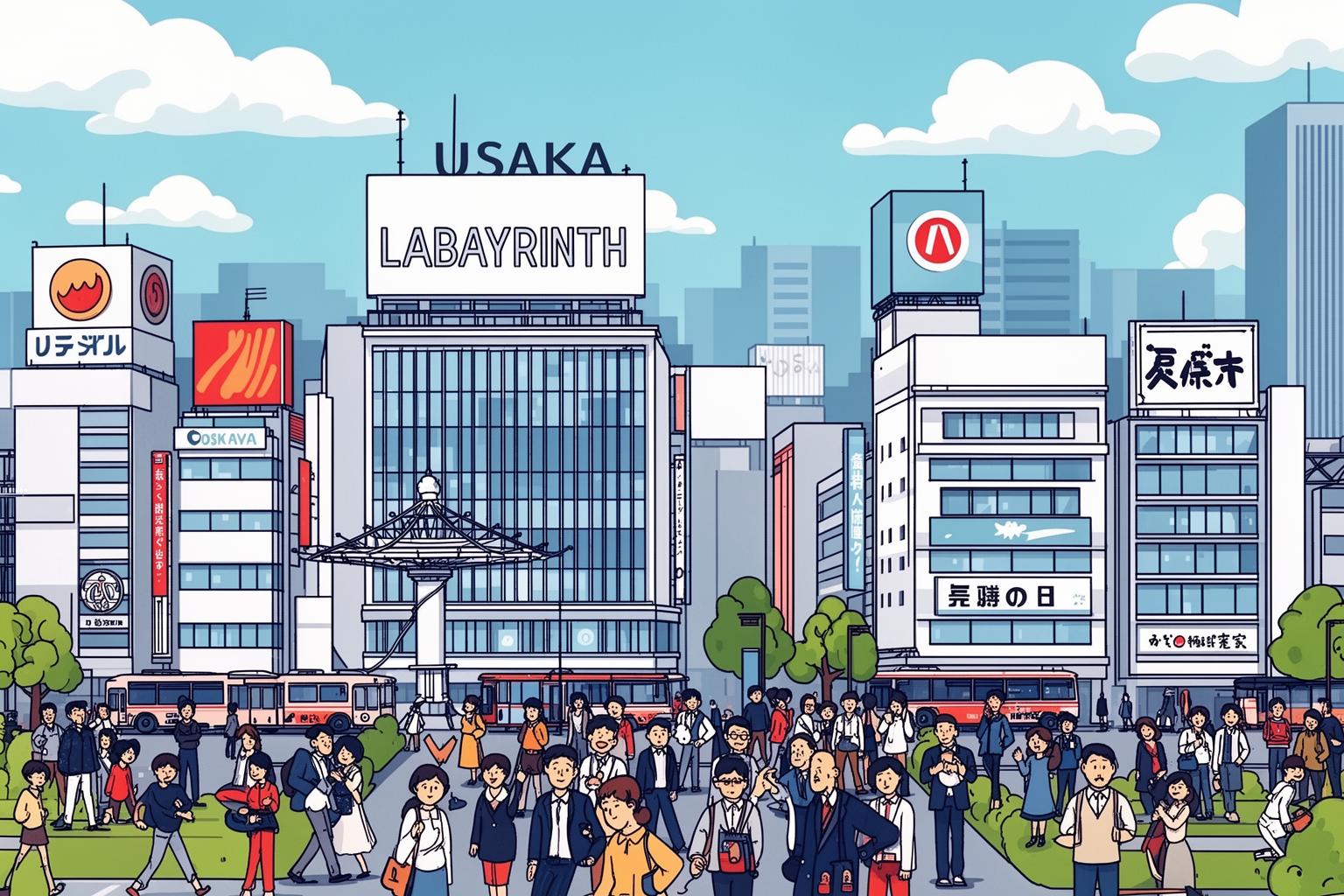
Tokyo builds upward. Osaka digs downward. That’s the first lesson Umeda imparts. While Tokyo’s enormous stations like Shinjuku and Shibuya indeed extend extensively underground, they feel like natural expansions of the station itself—ticket gates lead to shopping areas, which lead to subway platforms. There is a clear hierarchy. Umeda discards that. Its underground network, a maze of interconnected malls such as Whity Umeda, Diamor Osaka, and the basements of the Hankyu and Hanshin department stores, doesn’t exist to serve the stations. Instead, the stations serve it. This subterranean world is the main attraction, a weatherproof heart of the city where daily life can continue uninterrupted by the elements. Osaka’s summers are oppressively humid, its winters sharply cold, and its rainy season unrelenting. The underground is the ultimate practical solution. Who needs to see the sky when all you want is to get from your office to your favorite izakaya?
This practicality is ingrained in the place’s very structure. It wasn’t born from a single grand design. It evolved organically, a patchwork of various developments from different eras sewn together over decades. One corridor, broad and brightly lit with modern shops, will suddenly narrow and descend into a dim passage from the Showa era, lined with tiny stand-up kushikatsu joints that have lasted fifty years. This organic growth explains why the signage is notoriously confusing. A sign pointing to the Hankyu line might refer to a route that made sense in 1985, before a new wing was added, now blocking the most direct path. Locals don’t rely on signs. They navigate by instinct and landmarks. They flow. They know that to reach the Kinokuniya bookstore from the Yotsubashi subway line, you follow the smell of fresh bread from the corner bakery, turn right at the giant red pillar, and take the escalator that always squeaks slightly. It’s a learned language, an internal map built from repetition and sensory details. A Tokyoite would be paralyzed without clear, logical directions. An Osakan just senses their way through.
This reveals a fundamental difference in civic philosophy. Tokyo’s urban planning, despite its scale, often feels shaped by a central, bureaucratic desire for order and clarity, even if it falls short sometimes. Umeda seems built by countless shopkeepers each wanting a direct route from their store to the nearest train line. It’s a bottom-up creation, reflecting a merchant spirit that values a good deal and convenience over grand architectural statements. It’s messy, it’s human, and it works. The aim isn’t to create an architectural masterpiece; it’s to sell takoyaki, help people catch their trains, and provide a spot to meet a friend without getting drenched by a sudden shower. It’s the triumph of function over form, and in that, it is unapologetically, beautifully Osaka.
Decoding the Social Geography of the Underground
To truly grasp the Umeda labyrinth, you need to stop viewing it as a single place. It’s a collection of distinct neighborhoods, each with its own personality, social role, and unwritten rules. Navigating it like a local means knowing which neighborhood suits which purpose. It’s a social map, not merely a physical one.
The Hankyu Empire: Refined and Reserved
To the east lies the domain of the Hankyu Railway and its flagship department store. This is Umeda’s upscale district, its version of Ginza—but underground. The corridors here tend to be wider, the lighting softer, and the shops more luxurious. The Hankyu Department Store sets the tone, with its windows regarded as legendary artworks that change with the seasons, and its food hall offering a beautifully curated, almost museum-like experience. People strolling through the Hankyu side are usually more dressed up. This is the place to buy a serious gift, one meant to impress. It’s where you meet a friend for a delicate cake set at a quiet café, rather than a lively beer. There’s a palpable composure here, a slightly more formal atmosphere that feels closer to the Tokyo standard. It’s elegant and sophisticated—the aspirational face of Umeda. If you spot a group of women in elegant dresses and flawless makeup, chances are they’re heading to or from the Hankyu department store.
The Hanshin Realm: Loud, Proud, and Delicious
Cross the invisible border to the south and west, and you enter the territory of the Hanshin Railway. The mood shifts immediately. The Hanshin Department Store is the spiritual center here, and its basement food hall is the soul of Osaka. It’s loud, crowded, and filled with the scent of grilled squid from the legendary Ikayaki stand, fried pork from the tonkatsu counters, and sweet red bean paste from the manju makers. This is not a place for quiet reflection. It’s a place for eating with gusto and without pretense. People from all walks of life—salarymen, grandmothers, students—jostle for space at the standing-only snack bars, grabbing quick, cheap, and utterly delicious bites. The famous Hanshin Tigers baseball team store adds to the boisterous, for-the-people energy. This area is the raw, beating heart of Osaka’s kuidaore (eat till you drop) culture. It’s functional, unpretentious, and entirely focused on delivering maximum satisfaction at a reasonable price. This is the district for everyday life.
Whity Umeda and the Ghost of the Fountain
Radiating from the center is Whity Umeda, one of the oldest and most classic parts of the underground. Its name, a somewhat awkward blend of “White City,” hints at its origins in a different era. The true heart of Whity is Izumi no Hiroba, or Fountain Plaza. For decades, a large, elaborate fountain served as Umeda’s primary meeting spot. “See you at the fountain” was the usual instruction. A few years ago, the fountain was removed during renovations and replaced with a light fixture called the “Water Tree.” Yet people still say, “Let’s meet at the fountain.” The physical fountain is gone, but the social landmark remains deeply rooted in the city’s collective memory. It represents a shared history and a local culture built more around people and habits than a developer’s rebranding. The area around the old fountain is a major crossroads, linking to the Higashi-dori nightlife district above ground. It’s a river of people, a steady stream of commuters, shoppers, and friends gathering to begin their evening. It’s the social commons of the underground city.
Diamor Osaka: The Modern Artery
Connecting the main station area to the office towers of Nishi-Umeda is Diamor Osaka. This section feels newer, more spacious, and deliberately “designed.” The corridors are wide and straight, lined with global fashion brands. It feels somewhat anonymous, more like a modern mall you could find anywhere in the world. This is the “aspirational” zone for a younger crowd, a popular spot for dates. It’s clean, efficient, and a bit sterile compared to the chaotic charm of the Hanshin side. It serves as a polished artery that channels people from the business district back into the heart of the labyrinth. While it lacks the deep character of the other neighborhoods, its sleek functionality is also part of Umeda’s modern story. Mastering the navigation of these different social zones is essential. You don’t simply take the fastest route; you choose the path that fits your mood and mission, whether it’s a classy gift hunt in Hankyu territory or a cheap and cheerful snack stop on the Hanshin side.
Escaping to the Sky: Umeda’s Rooftop Sanctuaries
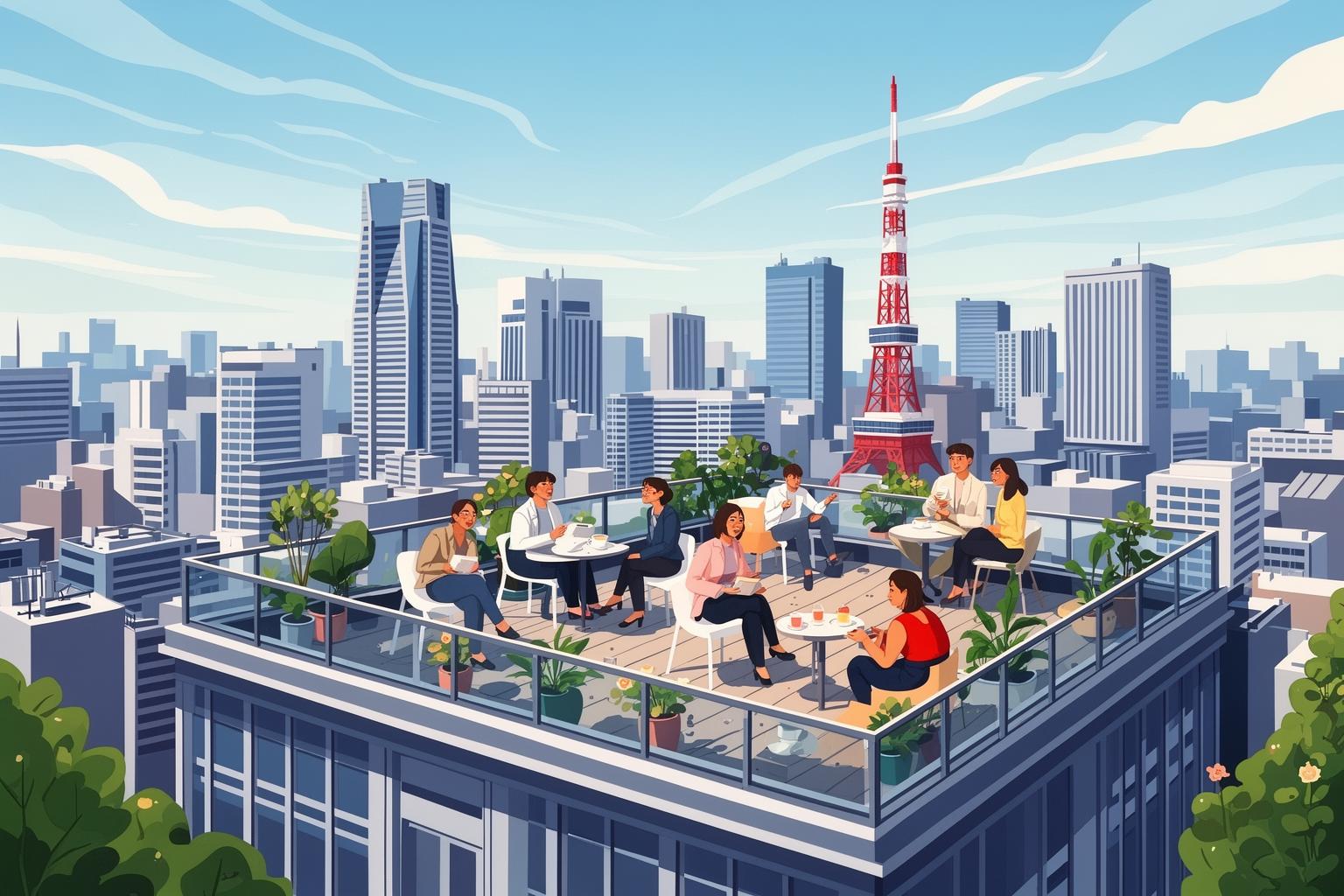
After spending enough time in Umeda’s windowless, fluorescent-lit underground world, a primal craving for sunlight and open space begins to emerge. The great paradox of Umeda is that after mastering its subterranean maze, the next step to becoming a local involves learning how to ascend vertically. Atop the massive commercial buildings lie a series of stunning rooftop gardens—public sanctuaries that provide a complete emotional and sensory contrast to the hustle below. These are not mere token green spaces; they are deeply woven into the daily life of the city and reveal a softer, more nuanced side of Osaka’s practical mindset.
Osaka Station City: Farms and Plazas in the Sky
The most impressive of these vertical retreats are found directly above the JR Osaka Station complex. This is prime real estate, a location that in Tokyo would almost certainly be occupied by an exclusive, high-priced restaurant or a ticketed observation deck. In Osaka, it’s a public park—a choice that speaks volumes about the city’s values.
Tenku no Noen (Sky Farm)
On the 14th floor of the South Gate Building lies something truly extraordinary: a farm. Not just a decorative garden with a few herbs, but a genuine, productive vegetable patch in the sky, carefully tended by a mix of staff and local volunteers. You can see everything from eggplants and tomatoes to blueberries and rice growing in neatly arranged plots, set against the surreal backdrop of the city skyline. This is the pinnacle of Osaka practicality. Why settle for a simple, passive green space when you can create one that is productive, educational, and community-building? It’s a place where office workers can come during lunch break to encounter something real and alive. It embodies a connection to the earth and community that serves as a powerful antidote to the concrete and commerce below. It’s not just for looking at; it’s for participating in. This concept of productive public space feels distinctly Osakan.
Kaze no Hiroba (Wind Plaza)
Directly opposite, on the 11th floor of the North Gate Building, is Kaze no Hiroba. As its name suggests, it is an open, breezy plaza designed to let you feel the elements. There are benches, a bit of lawn, and a spectacular, unobstructed view of the Umeda Sky Building and the northern cityscape. Best of all, it’s completely and wonderfully free. On any given day, you’ll see salarymen eating their bento boxes, young families letting their toddlers run free, students studying, and couples simply sitting and watching the sky. It functions as a genuine public square, a shared backyard for the entire city. This democratic use of prime real estate quietly rebels against the monetization of every urban inch. It sends a message that everyone, regardless of means, deserves a place to rest, breathe, and enjoy a view.
Grand Front Osaka: The Chic Escape
Connected to the station is Grand Front Osaka, a newer, sleeker development. Its rooftop gardens are more meticulously designed and manicured than the slightly wilder, more homespun feel of the station’s gardens. They are beautiful, featuring water elements, carefully chosen plantings, and stylish seating areas that provide stunning views over the train tracks and across the city. This is the rooftop you bring a date to. It feels more cosmopolitan, more aligned with a global design aesthetic—perhaps a touch more “Tokyo” in its polished presentation. It offers a fascinating contrast to the Sky Farm, highlighting the divide between a corporate vision of green space and a community-centered one. Both are valuable but serve different social purposes. Grand Front invites admiration; Tenku no Noen encourages participation.
These rooftop oases are more than just parks. They form a crucial part of Umeda’s mental and emotional landscape. They are the exhale after the inhale of the underground. They demonstrate that even in the densest heart of one of Japan’s largest cities, there remains a deep desire for human-scaled experiences, a connection with nature, and public spaces designed for citizens’ well-being rather than solely for commerce. For locals, knowing which garden to escape to for a quiet ten minutes is as essential a navigation skill as mapping the quickest route through the underground maze.
The Umeda Mindset: A Tale of Two Cities
Umeda, ultimately, is not a single place. It embodies a duality—a city existing on two levels, the subterranean and the celestial, which together serve as a perfect metaphor for the spirit of Osaka. To live and flourish here means understanding how to navigate between these two realms and what each represents.
Below ground lies the domain of the Osakan merchant: the engine room. Life here is fast, efficient, pragmatic, and relentlessly commercial. The winding, seemingly illogical paths result from countless practical decisions, forming a chaotic yet functional whole. It’s a world of sensory overload—the clatter of trains, the sizzle of food, the roar of crowds. This is where you come to get things done: to commute, shop, or grab a quick, affordable, and satisfying meal. Aesthetic considerations take a backseat to function. If a hand-drawn sign is clearer than an elaborate digital one, it remains. If a cluttered old shop sells the best pickles, it becomes a landmark. This is the Osaka that values results, eschews ceremony, and sees a good deal as a thing of beauty. It is the city’s bustling, vital heart.
Above ground, on the rooftops, is the realm of the Osakan citizen—the city’s soul. Here, priorities are reversed. The underground’s frantic pace gives way to stillness; commercial noise is replaced by the rustle of leaves and open sky. This world offers respite, community, and simple, uncommercialized pleasures. The decision to dedicate some of the city’s most valuable real estate to public gardens and even a farm is a profound statement. It asserts that quality of life is as crucial as economic activity. It reflects a deep understanding that people need more than places to shop; they need places to simply be. This is the Osaka that values community, finds joy in shared spaces, and honors the importance of a patch of greenery and a sliver of sunlight.
A common mistake foreigners make is to see only the chaos of the underground and dismiss Umeda as a stressful, confusing maze. They bring a Tokyo-style expectation of top-down order to a place shaped from the bottom up. They seek a single “correct” path on a map, unaware that for locals there are countless “correct” routes, depending on whether they’re hungry, in a hurry, or avoiding an old boss. The true logic of Umeda is not geometric; it is situational and social. Daily life here involves building your own mental map, layering shortcuts, favorite spots, and quiet corners. It means knowing you can sprint from subway to JR in five minutes, but it’s worth taking a ten-minute detour past a great bakery. It means knowing which rooftop garden offers the best sunset view and which one shields you from the wind. It’s a relationship with this place, not merely a means of passing through.
Umeda does not easily reveal its secrets. It demands your attention and patience. It asks you to abandon preconceived ideas of how a city center should function. But once you cease resisting and learn its rhythms—the underground’s frantic pulse and the rooftops’ calm heartbeat—you will grasp something essential about Osaka. You will see a city both intensely practical and deeply human, one that works tirelessly yet instinctively knows when it’s time to head upstairs and gaze at the sky. Don’t just attempt to navigate Umeda. Strive to live within it, embracing all its contradictory splendor. Getting lost is not an error; it is the start of your education.