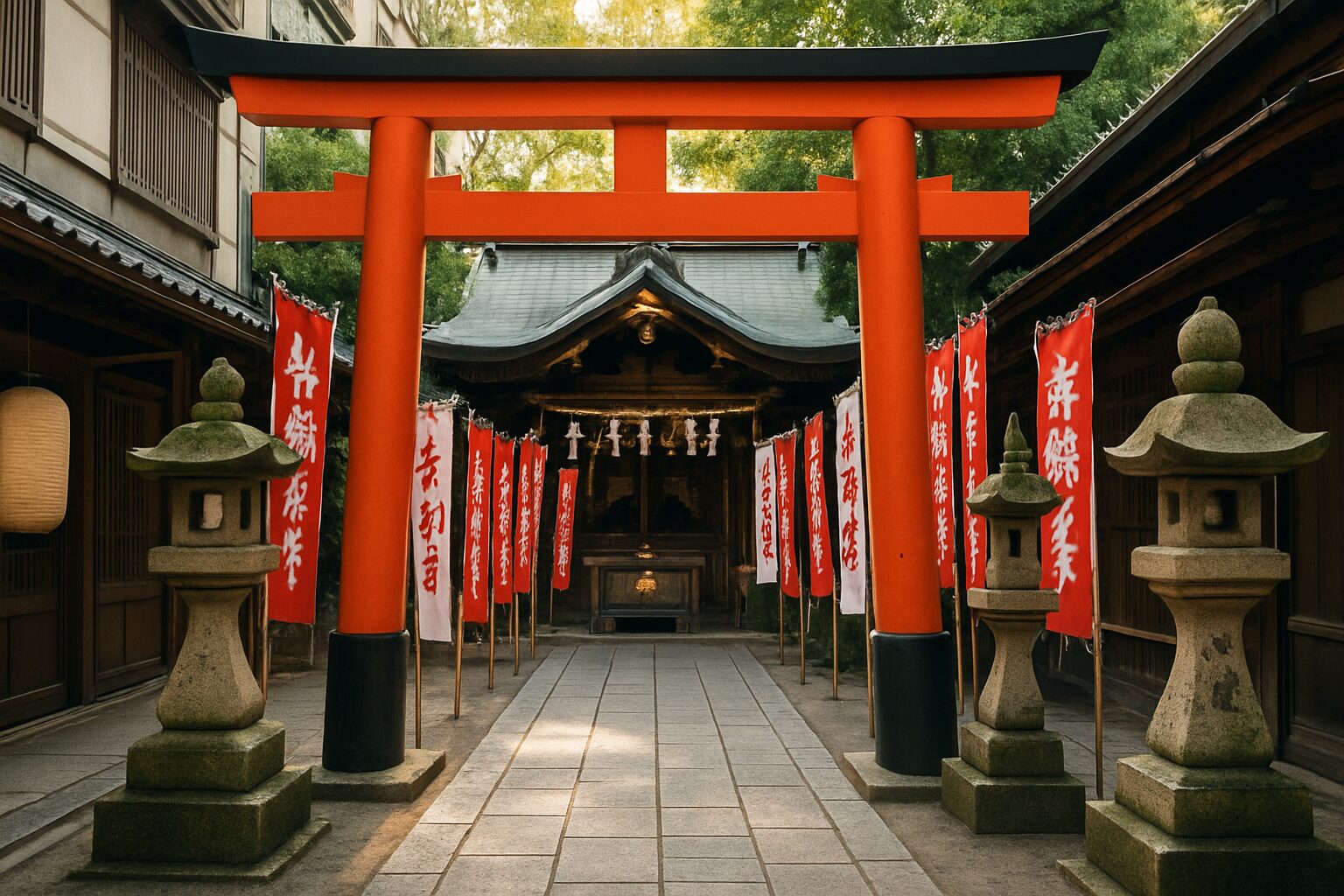
Step away from the dazzling, electric pulse of Osaka’s Umeda district, and you’ll find something entirely unexpected. Tucked between towering office buildings and the neon-soaked labyrinth of entertainment arcades lies a small, tranquil world, a sanctuary where a timeless love story whispers through the leaves of ancient trees. This is Sonezaki Ohatsu Tenjin Shrine, known officially as Tsuyu no Tenjinsha. It’s more than just a place of worship; it’s the final, hallowed stage of one of Japan’s most famous and heartbreaking love stories, a tale of devotion so profound it was immortalized in a puppet drama that captured the soul of a nation. This isn’t just a stop on a tourist map; it’s a journey into the heart of Osaka’s culture, a place where profound emotion and serene spirituality coexist amidst the relentless energy of a modern metropolis. Here, visitors come not just to pray, but to bear witness to a love that defied fate, a story that continues to resonate with lovers and dreamers centuries later. To step through its gates is to feel the powerful, lingering echo of Ohatsu and Tokubei, the star-crossed lovers whose legend gives this sacred ground its unforgettable pulse.
For a different perspective on the city’s deep spiritual connection to its patron deity, consider exploring the vibrant history of Osaka’s Tenjin Matsuri.
The Echoes of a Tragic Tale: Sonezaki Shinju
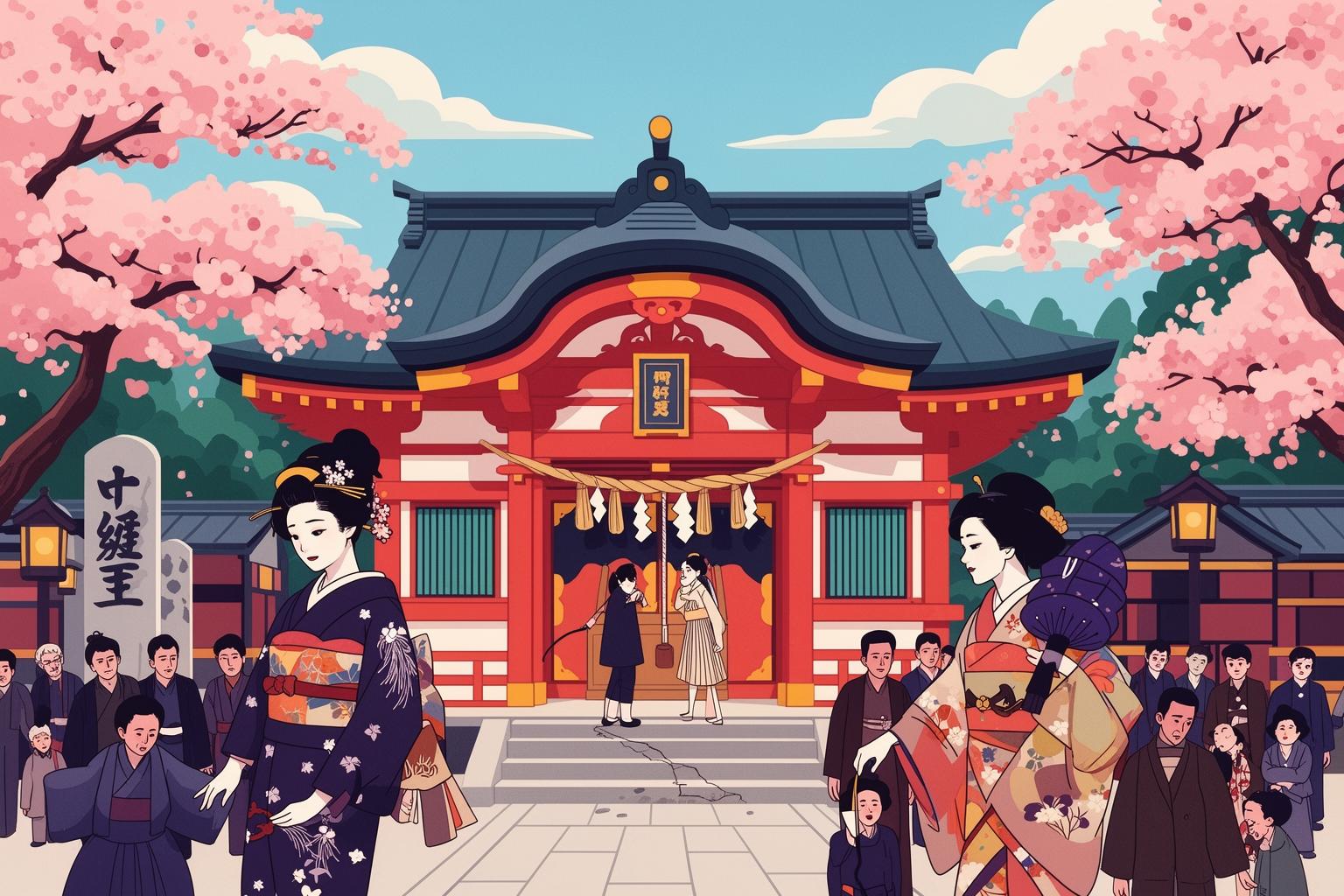
To grasp the essence of this shrine, one must first be familiar with the tale of Sonezaki Shinju, or The Love Suicides at Sonezaki. Written in 1703 by the renowned playwright Chikamatsu Monzaemon, this piece was not mere fiction but a dramatic adaptation of a real event that shocked and captivated Osaka. Performed with lifelike puppets in the Bunraku theater, the play quickly became a sensation, its emotional intensity striking a deep chord with the Edo-period merchant class.
The narrative revolves around two lovers bound by passion but separated by circumstances. Tokubei, an honest and diligent clerk for a soy sauce merchant, is deeply in love with Ohatsu, a beautiful, devoted courtesan from the Sonezaki entertainment district. Their love was sincere, yet their path was obstructed by numerous challenges. Tokubei’s uncle, aiming to secure his nephew’s future, arranged a marriage for him with a wealthy merchant’s daughter, accompanied by a dowry that Tokubei was expected to accept. However, Tokubei’s heart belonged solely to Ohatsu; he rejected the arrangement and returned the dowry to his uncle.
Here, fate turns cruel. A supposed friend of Tokubei, a deceitful oil merchant named Kuheiji, was in urgent need of a loan. Loyal as ever, Tokubei lent him the returned dowry money, which he was obligated to repay to his uncle. Kuheiji promised prompt repayment, but his intentions were malicious. When it was time to settle the debt, Kuheiji not only denied receiving the money but also publicly accused Tokubei of fraud and theft. In a society where honor and reputation were paramount, this was a devastating blow. Tokubei was beaten, humiliated, and left with no means to prove his innocence. His social standing was ruined, and his future destroyed.
Crushed and dishonored, Tokubei secretly met Ohatsu one final time under the cover of darkness. As they concealed themselves beneath the porch of her teahouse, they overheard Kuheiji boasting about his deceit. Understanding the full extent of their betrayal and the impossible situation, Ohatsu silently conveyed her unwavering love and decision through a poignant gesture: she tapped her foot against Tokubei’s and pressed her sandal to her throat, signaling that she would rather die with him than live without him. In that instant, their tragic pact was sealed. Believing their love could only be fulfilled in the next life, they resolved to commit shinju, a double suicide. Together, they journeyed to the nearby forest of Tenjin Shrine, the very location of Ohatsu Tenjin today. In the pre-dawn stillness, beneath the quiet gaze of the gods, they ended their lives, hoping to be reborn as one on a single lotus blossom in paradise. The play’s final, poetic lines depict their passage from this fleeting, sorrowful world to eternal union.
Chikamatsu’s masterpiece was so powerful and deeply moving that it inspired a wave of real-life copycat suicides among young lovers in similar straits. The phenomenon grew so extensive that the Tokugawa shogunate, fearing social disruption, ultimately banned performances of the play. Yet, the story could not be silenced. It established the shrine’s identity as a sacred place for lovers, where the spirits of Ohatsu and Tokubei are believed to linger, watching over those who seek true and enduring bonds.
A Sanctuary Tucked Away in the Urban Jungle
Discovering Ohatsu Tenjin Shrine is an experience in itself. You’ll find yourself navigating the lively, and sometimes chaotic, Sonezaki district—a neighborhood filled with countless restaurants, glowing pachinko parlors, and bustling izakayas. The air hums with the city’s sounds—the murmur of crowds, the clatter of games, the sizzling of street food. Then, you turn a corner, walk down a narrow shopping arcade called Ohatsu Tenjin Dori, and suddenly, the noise begins to soften. You spot the stone torii gate, a solemn and dignified entrance that marks the shift from the secular to the sacred. Passing through it feels like stepping into another era.
Inside, the atmosphere is surprisingly serene. The concrete and neon of Umeda give way to stone lanterns, gravel paths, and the cool, calming shade of ginkgo and camphor trees. The shrine grounds aren’t expansive, but every inch feels rich with history and reverence. The air is cooler here, carrying the faint, sweet scent of incense and the gentle rustle of leaves. You can hear the soft clinking of coins being tossed into offering boxes and the quiet, whispered prayers of visitors.
Your gaze will naturally be drawn to the shrine’s main hall, the honden, an elegant wooden building topped with a gracefully curved roof. This is where the shrine’s primary deity is enshrined. But for most visitors, the emotional core of the shrine lies in a bronze statue nearby. It portrays Ohatsu and Tokubei in their final moments, locked in a gaze filled with deep love and sorrowful resolve. He holds a dagger; she gently rests her hand on his arm, their forms entwined in a poignant, eternal embrace. It’s a powerful, moving tribute that makes their three-century-old story feel immediate and real. Visitors pause here for a long time—to take photos, offer silent prayers, or simply absorb the weight of their sacrifice. It stands as a tangible link to the past and a focal point for the shrine’s identity as a sanctuary for lovers.
Symbols of Everlasting Love
Every feature of the shrine seems to highlight its theme of love and connection. Look around, and you’ll find wishes for romantic fulfillment expressed in many ways. The most notable are the ema—small wooden plaques on which visitors write prayers and hang for the gods. While most shrines have rectangular ema, here you’ll find unique designs, including beautifully crafted heart-shaped plaques and others decorated with the elegant image of Ohatsu herself. The wishes inscribed on them attest to the shrine’s lasting appeal. You’ll see heartfelt appeals for finding a soulmate, prayers for happy marriages, hopes for healing broken relationships, and messages of thanks from couples who believe their love was blessed here.
Beyond romance, the shrine invites prayers for all kinds of positive connections, or en. This encompasses strengthening friendships, fostering better business ties, and even achieving success. The belief is that the same divine energy that united Ohatsu and Tokubei can help forge strong and positive bonds in every aspect of life. You can also purchase omamori, protective amulets specifically meant for love and relationships. These small, beautifully embroidered pouches are popular keepsakes, carried by visitors to retain the shrine’s blessing.
Be sure not to miss the Ohatsu Tokubei Yukari no Ishi, a stone monument honoring the couple’s story further, or the water basin called the temizuya, where you can perform the purification ritual before approaching the main hall. Each of these elements adds another dimension to the experience, creating a space that feels deeply engaging and personal. It’s a place not just to observe, but to actively participate in a long and cherished tradition.
Beyond the Legend: The Shrine’s Deeper Roots
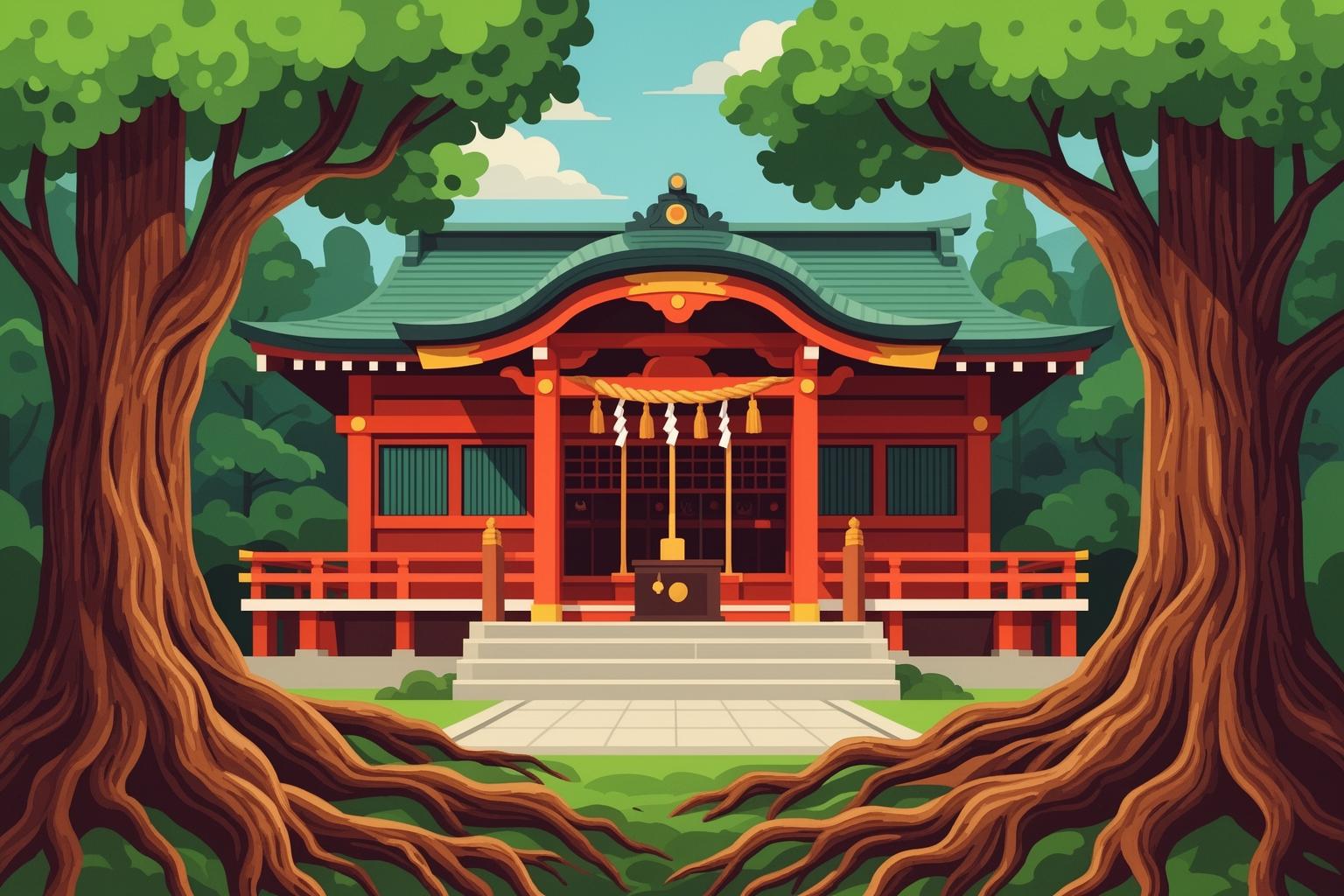
While the tragic love story attracts most visitors, the shrine boasts a much longer and richer history. Its official name, Tsuyu no Tenjinsha, meaning “The Dewy Shrine of the Heavenly Deity,” predates the tale of Ohatsu and Tokubei by centuries. Established over 1,300 years ago, it is one of the oldest shrines in the region.
The “Tenjin” in its name refers to its main enshrined deity, Sugawara no Michizane, a distinguished scholar, poet, and statesman of the Heian period (794-1185). Michizane was a high-ranking court official who was unjustly exiled due to political rivalries. After his death in exile, a series of plagues and natural disasters afflicted the capital, which were believed to be caused by his vengeful spirit. To appease him, the imperial court posthumously pardoned him, restored his titles, and deified him as Tenjin, the god of scholarship, literature, and protection from false accusations.
Today, Tenjin shrines are scattered across Japan, and students visit them to pray for success in their exams. Thus, while Ohatsu Tenjin is renowned for love, it is also a place where students sincerely pray for academic achievement and wisdom. The shrine’s nickname, “Tsuyu no Tenjinsha” or “Dewy Tenjin,” is said to come from a touching waka poem Michizane wrote during his lonely exile journey, in which he lamented his separation from the capital and likened his tears to morning dew.
This dual identity adds intriguing depth to the shrine. It serves both as a monument to passionate, earthly love and as a sacred site dedicated to the pursuit of knowledge and justice. This blend makes it uniquely compelling, offering blessings for both the heart and the mind.
Practical Guidance for Your Pilgrimage of the Heart
Visiting Sonezaki Ohatsu Tenjin Shrine is incredibly convenient due to its central location in Osaka’s busiest transportation hub. It perfectly exemplifies Osaka’s ability to preserve its history alongside modern development.
Getting There
The shrine is situated in the Kita ward, just a short walk from several key train stations. Your main destination will be the Umeda area.
- From JR Osaka Station: Use the Midosuji South Exit. From there, it’s roughly a 10-minute walk via underground passages or surface streets. Head east toward the Sonezaki entertainment district. The route is well-signposted, though you might enjoy exploring the lively streets as you make your way.
- From Hankyu or Hanshin Umeda Stations: These stations are also centrally located. Exit and walk east. The walk should take about 5 to 10 minutes.
- From Higashi-Umeda Station on the Tanimachi Subway Line: This station is the nearest. Take Exit 7, which leads directly to the Sonezaki Ohatsu Tenjin Dori shopping street. The shrine is just a few steps down this covered arcade.
The entrance is modest and tucked away from the main street, adding to its charm. Watch for the stone markers and the traditional torii gate.
Best Time to Visit and Shrine Etiquette
The shrine is open 24 hours a day, though the main office, where you can buy amulets and ema, is usually open from 9:00 AM to 6:00 PM. Early morning visits are especially enchanting when the city is just waking up, and the shrine grounds are peaceful and nearly empty, ideal for quiet reflection. Evening visits are also highly recommended; when the stone lanterns are lit, they cast a warm, gentle glow that contrasts beautifully with the neon lights just beyond the gates.
On the first Friday of every month, the shrine hosts a lively flea market, offering a chance to experience local life and perhaps discover unique treasures. The main festival takes place annually on the third Friday and Saturday of July, featuring traditional music, food stalls, and a vibrant procession.
For first-time visitors to a Japanese shrine, a few etiquette tips will make the experience more comfortable:
- The Torii Gate: The torii marks the entrance to a sacred space. It is customary to bow once before passing through and again upon leaving.
- The Temizuya: Before praying at the main hall, purify your hands and mouth at the water basin. Using the provided ladle, pour water over your left hand, then your right. Next, pour some water into your cupped left hand to rinse your mouth (do not drink directly from the ladle or spit back into the basin). Finally, rinse your left hand again and tip the ladle to let the remaining water run down the handle to cleanse it for the next person.
- Praying: At the main hall, offer a small donation in the offering box. If there is a bell, ring it to greet the deity. Bow twice deeply, clap your hands twice, say your silent prayer, and then bow once more.
A Journey Through Sonezaki’s Vibrant Streets
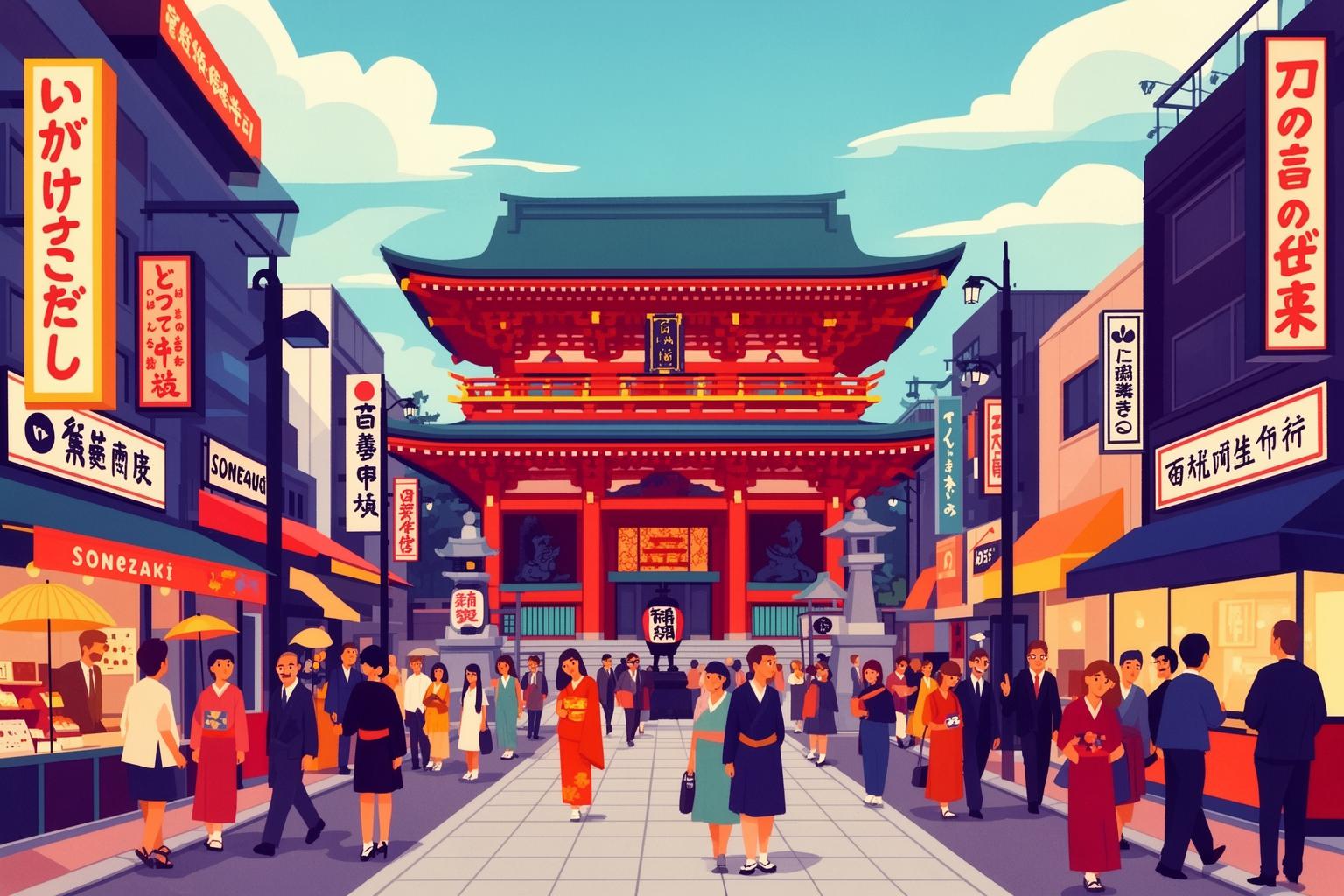
A visit to Ohatsu Tenjin Shrine isn’t complete without exploring the surrounding neighborhood. The Sonezaki district stands out as one of Osaka’s most atmospheric and lively entertainment areas, delivering a sensory overload in the best way. The narrow alleys, especially within the Sonezaki Ohatsu Tenjin Dori shopping arcade, are filled wall-to-wall with an incredible variety of dining options.
This neighborhood is the ideal spot to immerse yourself in Osaka’s famous food culture, often called kuidaore, which loosely means “eat until you drop.” As you stroll, you’ll be tempted by the savory scent of grilling yakitori, the bubbling pots of oden, and the mouthwatering aromas of okonomiyaki (savory pancakes) and takoyaki (octopus balls) sizzling on griddles. The area is packed with traditional izakayas—Japanese-style pubs—where small dishes are enjoyed alongside sake or beer. These venues are typically cozy, intimate, and very welcoming, providing a wonderful chance to mingle with locals.
As day fades to night, Sonezaki truly comes alive. Red paper lanterns glow, neon signs flicker on, and the streets fill with people heading out for dinner and drinks. The vibe is lively, friendly, and distinctly Osakan. Exploring these backstreets after the quiet reverence of the shrine offers a complete experience of the city’s character—its ability to harmonize deep tradition with vibrant modernity. Grab a seat at a counter, order a local dish, and soak up the lively energy of a city that knows how to live life to the fullest.
A Final Thought on Love and Legacy
Sonezaki Ohatsu Tenjin Shrine is much more than a historical landmark. It stands as a living testament to the enduring power of a story. The tale of Ohatsu and Tokubei, rooted in real-life tragedy and immortalized through art, has transformed this small piece of land into a potent symbol of unwavering devotion. It reminds us that love, in its deepest form, can transcend even death, and that a well-told story can resonate across centuries, continuing to touch the hearts of new generations.
When you visit, you are not merely a tourist admiring a site. You become part of this living legacy. Whether you seek a blessing for your relationship, pray for academic success, or simply look for a moment of calm in a bustling city, the shrine provides a unique and profoundly moving experience. It is a place where you can sense the heartbeat of old Osaka—a city built on stories, passion, and an unbreakable bond with its past. Leave the rush behind for a moment, step into the shade of the Tenjin forest, and let the timeless love story of Sonezaki envelop you.