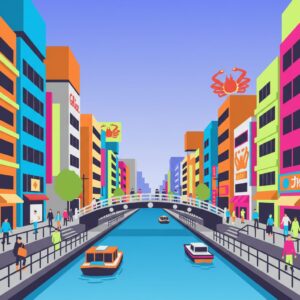
Walk out of any exit at Namba Station, and you’re hit by a wall of sound and light. It’s a sensory overload, a chaotic symphony of pachinko parlor jingles, vendor shouts, and the rolling thunder of a thousand tourist suitcases. The air hangs thick with the scent of grilled crab legs and sweet takoyaki batter. Giant, animatronic sea creatures cling to buildings, their mechanical claws frozen mid-pinch. This is the Namba everyone knows, the one plastered on postcards and splashed across travel blogs. It’s Dotonbori’s electric dreamscape, the visual shorthand for Osaka’s boisterous, over-the-top personality. The question most visitors ask is, “How can anyone handle this much energy?” But the real question, the one that gets you closer to the city’s heart, is “Who actually lives here?” Because behind the glowing billboards and theatrical restaurant fronts, Namba isn’t just a destination; it’s a neighborhood. Or rather, it’s a dense, overlapping collection of neighborhoods, each with a distinct pulse, a unique identity, and a surprisingly practical reason for existing. To understand Namba is to look past the Glico Man’s finish line and see the starting blocks of countless daily lives. It’s not Osaka’s version of Shinjuku, a corporate behemoth with a wild side, nor is it Shibuya, a frantic nexus of youth trends. Namba is something grittier, more fragmented, and ultimately, more human. It’s a place where the grand performance of Osakan identity happens every night, and where, just a few blocks away, people are quietly making dinner, walking their dogs, and living lives that are both powered by and insulated from the neon glow.
The steady pulse beneath Namba’s dazzling neon display gradually unveils local traditions and hidden passions, as highlighted by super tamade insights that reveal Osaka’s soulful core.
The Namba Trinity: Minami’s Three Faces

First, an essential piece of local vocabulary. While foreigners say “Namba,” Osakans often think in broader terms: “Minami,” meaning “South.” Namba is the core of Minami, but the area’s identity is really a trio of distinct zones, each reflecting a different aspect of the Osakan mindset. To navigate this space is to understand that a five-minute walk can lead you to an entirely different world. You aren’t merely moving through streets; you’re shifting between cultural wavelengths. Locals don’t view it as one large, chaotic district. They see a finely tuned ecosystem of commerce, culture, and everyday life. This mental framework is the first step to seeing Namba as a resident does—not as a jumble of attractions but as a city within a city, with its own logic and rhythm.
The Showa Spectacle: Dotonbori and Sennichimae
This is the Namba of the world’s imagination. It’s a living museum of Showa-era commercialism, a bold declaration of Osaka’s merchant spirit. The aesthetic here is kote kote—a term that’s tricky to translate but means something like gaudy, rich, over-the-top, and unapologetically loud. The giant octopus, the puffing dragon, the scowling chef’s face—these aren’t ironic gimmicks. They are the natural outcome of a business philosophy that shouts, “Look at me! My food is so good, my sign is trying to eat the street!” In Tokyo, branding often emphasizes sleek minimalism and understated elegance. In Dotonbori, it’s about competitive maximalism. It’s a visual battle for your attention and your yen. This isn’t just for tourists—locals out on a special night, celebrating a bonus or birthday, come here to soak in the energy. It’s a shared stage where everyone agrees to suspend disbelief and join the performance. The unspoken rule is that this is a zone of acceptable chaos. You come to be loud, to eat with abandon, to become part of the spectacle. It’s an expression of the Osakan love for a good time—a place built not just for commerce, but for collective catharsis.
The Youth Culture Engine: Amerikamura and Horie
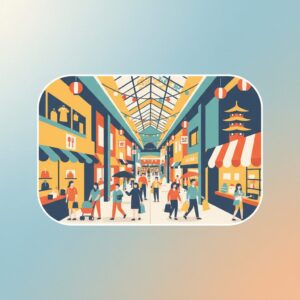
Cross the broad Midosuji boulevard to the west, and the atmosphere changes completely. This is Amerikamura, or “Amemura.” If Dotonbori is a theatrical show, Amemura is a street-level jam session. This is Osaka’s answer to Tokyo’s Harajuku, but the comparison has its limits. While Harajuku can feel polished and corporate-driven, Amemura is rougher around the edges and more organic. It’s a landscape of independent vintage shops, tiny record stores, skate parks, and street art. The fashion here is less about following specific brands and more about crafting a unique identity from secondhand finds. It’s a testament to the Osakan knack for reinvention and making something cool from what’s at hand. It feels less like a consumer utopia and more like a clubhouse for the city’s subcultures. Just a short walk west lies Horie, where the Amemura crowd graduates to. The creative energy remains, but it’s channeled into sleek furniture boutiques, minimalist cafes, and independent designer labels. It’s calmer, more upscale, yet still retains that independent spirit. The transition from Amemura to Horie tells a story about growing up in Osaka: starting with raw, expressive youth energy and refining it into a sustainable, creative lifestyle. It’s a practical, Osakan approach to artistry.
The Kitchen and Backstage: Kuromon Market and Doguyasuji
This is the heart of Minami’s engine room, powering the restaurants and kitchens throughout the district. Kuromon Ichiba Market is famously known as “Osaka’s Kitchen.” In recent years, it has drawn many tourists, with vendors selling grilled scallops and sea urchin on the spot. But if you arrive early in the morning, you’ll witness its original purpose. Professional chefs in whites, eyes sharp, meticulously inspecting fish; local grandmothers haggling over vegetables—this is where the Osakan obsession with food quality begins. It’s not just about the final plate of takoyaki but about the freshness of the octopus and the source of the flour. Nearby is Sennichimae Doguyasuji, or Kitchenware Street—a covered arcade devoted entirely to culinary tools: high-quality knives, takoyaki grills, custom plastic food models, and restaurant-grade dishware. Doguyasuji may be the most Osakan spot in all of Namba. It is a tribute to pragmatism and the dignity of work. It expresses a deep cultural belief that the tools you use are as important as the product you create. Tokyo has its luxury department stores; Osaka has a street dedicated to industrial-grade spatulas. This focus on the practical, the functional, and the professional forms the foundation of the city’s merchant culture—and it all unfolds just behind the neon curtain.
Beyond the Core: Where People Actually Live
With all the bustling commerce and chaos, where can one actually find a home? Namba’s livability secret lies in the neighborhoods surrounding its commercial core. These areas shift from loud clamor to gentle hums, where sensory overload gives way to the rhythms of everyday life. For many residents, living here is a deliberate compromise—an example of Osakan pragmatism: trading a bit of tranquility for unmatched convenience.
Sakuragawa: The Quiet Neighbor
Step west of the elevated Hanshin Expressway, and you enter Sakuragawa. It’s close enough to Namba’s heart to feel its pulse, yet the neighborhood itself remains surprisingly calm. The mix of older low-rise apartments alongside sleek modern condos reflects its evolving character. Here, signs of domesticity abound: bicycles with child seats parked out front, small parks where toddlers play, and local supermarkets catering to weekly shoppers. Sakuragawa’s appeal is straightforward. You can stroll to Namba Parks or catch a concert at Zepp Namba in ten minutes, but still hear the cicadas in summer. It’s the ideal life hack for urban dwellers seeking the best of both worlds. This reflects a core Osakan value: securing the best possible deal. In this case, that means a prime central location without the madness, a strategic retreat—a quiet residential base camp from which to explore the city’s vibrant heart.
Nipponbashi and Denden Town: The Otaku Haven with a Residential Side
East of Nankai Namba Station lies Nipponbashi, home to Denden Town, Osaka’s center for electronics, anime, and manga. On the surface, it resembles a smaller, rougher Akihabara. Its main street is filled with multi-story hobby shops, from collectible figures to rare electronic parts. Venture into the side streets, though, and you discover its other side. Amid the maid cafes and arcades lie numerous small, often older and affordable apartment buildings. This attracts residents such as students, budget-conscious single professionals, and enthusiasts deeply engaged with the neighborhood’s subcultures. Living in Nipponbashi means your local convenience store likely stocks more manga than milk, and the soundtrack includes the chimes of nearby arcades. It’s a bubble, certainly, but an exceptionally convenient one. While commonly viewed as merely a consumption and entertainment district, it is in fact a functional, affordable residential area for those drawn to or unbothered by its distinct character. It exemplifies Osaka’s knack for high-density living, where vastly different worlds exist side by side.
Daikokucho: The Working-Class Core
Head directly south from Namba Parks, and you’ll notice a different scene—Daikokucho. The gloss of department stores fades into the faded awnings of a local shotengai (shopping arcade). The atmosphere is older, grounded, and unmistakably working-class. This neighborhood anchors Namba, keeping it from dissolving entirely into commercial frenzy. Here, you’ll find public bathhouses (sento), tiny restaurants run by families for decades, and small-scale manufacturing workshops. Residents include longtime locals who have witnessed Namba’s transformation over time and younger folks attracted by some of central Osaka’s most affordable rents. In Daikokucho, you hear the authentic, melodic rhythm of Osaka-ben dialect. You see neighbors chatting in the street, and life runs on daily chores rather than train timetables. This area reveals the foundation beneath Namba’s spectacle—it’s a reminder that Osaka, at its core, is a city of merchants and makers, where hard work and community matter. Living here provides a connection to that history, offering a regular dose of the city’s raw, unvarnished soul.
The Namba Mindset: How the City’s Hub Shapes Its People

Choosing to live in or near Namba is not just a practical choice; it reflects a particular mindset, a way of positioning oneself in relation to the city. The area’s geography and vibrancy shape a distinct Osakan perspective on life, work, and identity, sharply contrasting with that of Tokyo.
A Hub, Not a Center: The Osakan Sense of Place
In Tokyo, major hubs like Shinjuku, Shibuya, and Tokyo Station often feel like the city’s definitive centers, gravitational points around which everything else revolves. Osaka, however, is structured differently. It has two rival cores: Kita (North), centered on Umeda Station, and Minami (South), anchored by Namba. This duality is central to the city’s identity. Locals frequently identify themselves based on their preference. Kita is regarded as more polished, corporate, and sophisticated—somewhat “Tokyo-like.” Minami represents traditional Osaka culture: more chaotic, colorful, and down-to-earth. Though the rivalry is mostly friendly, it highlights a decentralized sense of place. Namba is a vast hub, but it never lets you forget that another, equally vital one lies just a few subway stops away. This creates a competitive, multi-polar urban experience, unlike the more centralized atmosphere of Tokyo.
Practicality Over Prestige: The Logic of Living in Namba
Why would anyone choose to live near such constant stimulation? The answer lies in pure, straightforward Osakan logic: radical convenience. Namba is among the most connected transport hubs in western Japan. The Nankai Line offers direct access to Kansai International Airport. The Kintetsu Line whisks you to Nara and Nagoya. Three subway lines (Midosuji, Yotsubashi, Sennichimae) intersect here, linking you to every part of the city. For residents, this means unparalleled access to the entire region. This is the merchant’s mindset applied to daily life logistics. An Osakan doesn’t ask, “Is this a prestigious address?” but rather, “Does this make my life more efficient? Does this save me time and money?” Living in Namba is a strategic decision focused on maximizing operational efficiency. You trade the prestige of a quiet, leafy suburb for the practical advantage of being at the crossroads of everything. It’s a life hack—and Osakans thrive on good hacks.
The Performance of Identity
Living near Namba means constantly negotiating the boundary between public and private self. Dotonbori is a stage, and Osakans are master performers. They step into that world, adopting the loud, friendly, witty persona expected of them, then just as easily step back out. They can walk ten minutes home to their quiet Sakuragawa apartment and shed that public facade. This ability to code-switch is a vital survival skill and key to understanding the local character. The stereotypical “friendly Osakan” isn’t a fixed identity; it’s a social tool, often used in commercial or entertainment contexts. It’s a role they play—and play well. Living in Namba lets you witness both the performance and the behind-the-scenes reality. You see restaurant owners shouting greetings to customers, then quietly sweeping the sidewalk after closing. This duality is central to the Osakan identity—a flamboyant public persona grounded in private pragmatism.
What Foreigners Get Wrong About Namba
Because its image is so vivid and unique, Namba often becomes a source of misunderstandings. Newcomers frequently arrive with assumptions that don’t entirely align with the area’s complex reality.
Myth 1: It’s a 24/7 Party Zone and Unsafe.
The truth is more complex. Although the central entertainment areas of Dotonbori and Sennichimae remain lively until the last trains depart, the neighborhood is far from lawless. Japan’s strong public safety measures are very much in place here. For residents, the main concerns are noise and crowds rather than crime. Just a few blocks away from the main streets, the area becomes surprisingly quiet after midnight. The party has clear boundaries. Locals quickly learn these borders, understanding which streets to avoid on a Friday night and which quiet alleys provide shortcuts home.
Myth 2: It’s Only for Tourists.
This is likely the biggest misconception. While tourism has influenced parts of Namba, it continues to serve as an essential, functional hub for Osaka residents and those from the wider Kansai region. Locals frequent large department stores like Takashimaya and Namba Parks for serious shopping. They seek out the specialized, high-quality goods at Doguyasuji or the fresh produce at Kuromon. They cherish their favorite tiny, ten-seat izakayas tucked away in the Ura-Namba alleys that tourists typically overlook. To a local, Namba is not merely a spectacle; it is a toolbox, a pantry, and a living room all in one.
Myth 3: All of “Minami” is the Same.
A visitor might view the entire stretch from Shinsaibashi to Daikokucho as one continuous urban sprawl. A resident, however, recognizes a dozen distinct neighborhoods. They know the fashion in Amemura is completely different from the luxury brands along Midosuji. They appreciate that the food offered in the tourist-heavy center of Dotonbori differs from the local treasures hidden in the side streets. Developing this detailed mental map—understanding each block’s character and each alley’s specialty—is how one truly becomes a Minami local. It’s about discerning the intricate patterns within the apparent chaos.
So, Should You Live in Namba?
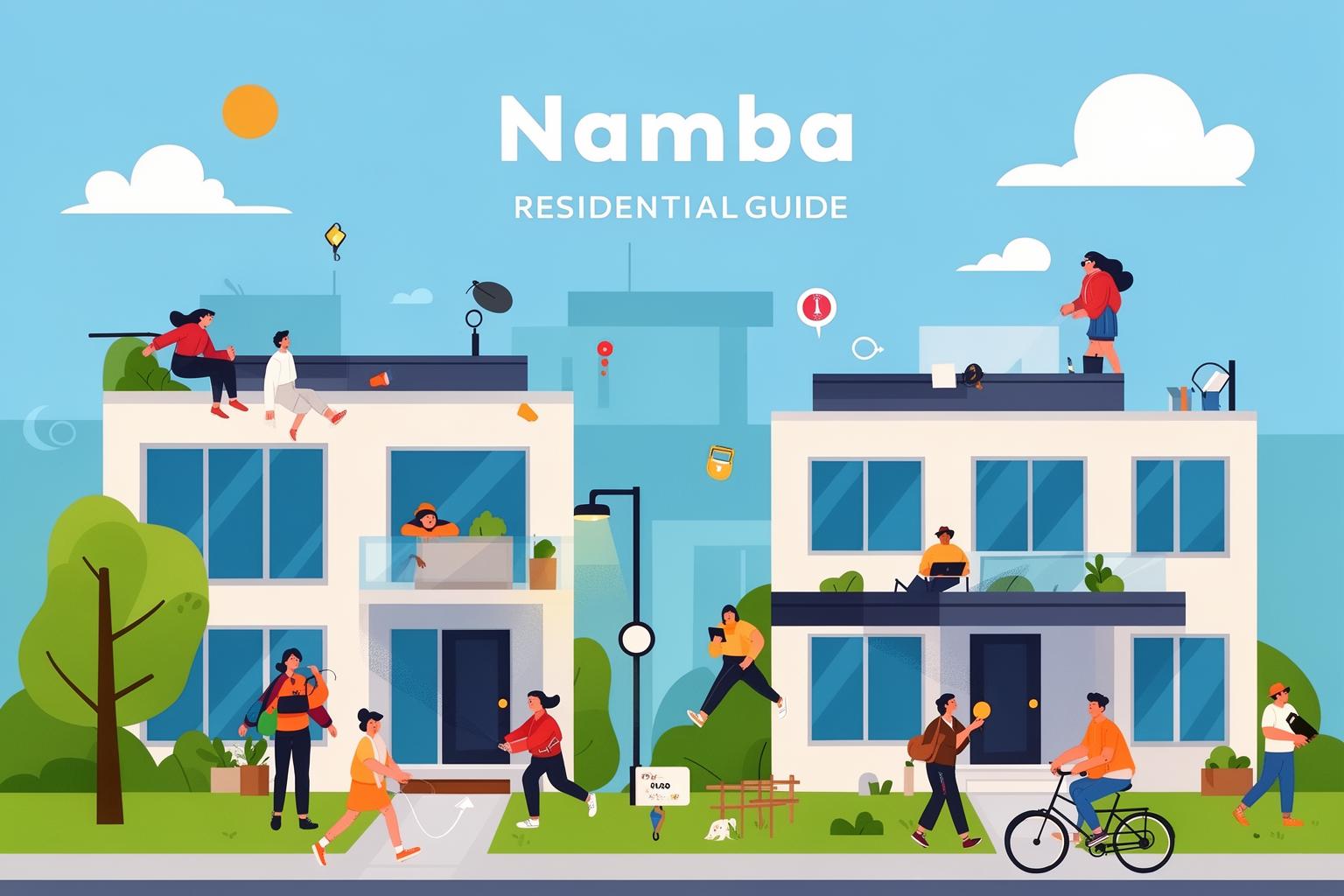
Choosing to settle in or near Namba means plugging directly into the city’s main power source. It’s not suited for everyone, but for the right individual, it offers an unparalleled experience. This decision should be guided by personality and priorities, rather than simply a desire to be “in the center.”
Who it’s for:
This area suits those who thrive on urban energy. If you draw vitality from the buzz of crowds and the constant pulse of city life, Namba will feel like home. It’s ideal for the hyper-connected—the student, young professional, freelancer—who prioritizes immediate access to transportation, entertainment, and dining above all else. If your motto is “efficiency is everything,” and you want to cut down on commute times while maximizing your options for late-night ramen or spontaneous trips to other cities, Namba is your logistical ideal. It’s made for those who want to immerse themselves daily in Osaka’s raw, unfiltered commercial heartbeat.
Who should avoid it:
If tranquility and quiet are essential for recharging, this is not the place. Even in quieter residential areas, the ambient noise of a major urban center is unavoidable. Families with young children might struggle with the limited green spaces and dense crowds, although Sakuragawa presents a reasonable compromise. If you are sensitive to sensory overload—bright lights, loud sounds, throngs of people—living in Namba may bring more stress than excitement. It’s not suited to a calm, reflective lifestyle.
Ultimately, choosing to live in Namba is a classic Osakan trade-off. You exchange space, silence, and serenity for something else: time, access, and energy. It’s a practical bargain where you accept the chaos as the cost of ultimate convenience. For those willing to make that trade, living in Namba offers far more than just a place to rest; it provides a front-row seat to the daily performance of one of Japan’s most vibrant and often misunderstood cities. It’s a choice to live not merely in Osaka, but at its very core.