So you’ve landed in Osaka. You’ve done the Dotonbori shuffle, eaten your weight in takoyaki, and now you’re staring at real estate listings, feeling a familiar wave of urban dread. Everything looks the same. Clean, compact, beige boxes stacked high in Umeda or Shinsaibashi, each demanding a king’s ransom for the privilege of hearing your neighbor sneeze through paper-thin walls. The ads promise convenience, a sleek modern lifestyle. But your gut tells you something’s missing. You came to Osaka for the noise, the grit, the pulse—not for a sterile Tokyo-lite experience.
You start asking around, whispering about finding something with “character,” something “real.” And that’s when the names come up, dropped like warnings or secret passwords. Nishinari. Taisho. The real estate agent shifts uncomfortably. Your Japanese friends raise an eyebrow. “Are you sure?” they ask, their voices laced with concern. These are Osaka’s shitamachi, the old-school, blue-collar downtowns that time, and gentrification, seem to have forgotten. They’re places with reputations, neighborhoods that don’t make it into the glossy travel magazines. But they are, I’d argue, where you’ll find the city’s stubborn, beating heart. The real question isn’t if you can live there, but if you have what it takes to appreciate a life that values guts over gloss, and community over convenience. This isn’t a guide to finding an apartment; it’s a map to finding a different kind of life in a city that refuses to be polished.
For those drawn to the unpolished pulse of the city, delving into Osaka’s bustling neighborhoods and its unmistakable shotengai communication offers a compelling glimpse into its authentic character.
The Shitamachi Mindset: What ‘Guts’ Really Means in Osaka
Before considering rent or square footage, you first need to grasp the true currency of these neighborhoods. It isn’t yen; it’s konjo—a word that’s difficult to translate, combining guts, grit, and unwavering spirit. In Tokyo, social currency revolves around subtlety, polish, and sensing the mood. In Osaka’s shitamachi, it means resilience. It’s about taking a hit, laughing it off, and buying the other person a drink. People here have experienced it all and have no patience for pretense. Life unfolds loudly on the streets, in cramped izakayas, and over fences between balconies. It’s a world apart from the silent, anonymous existence of a Tokyo high-rise.
Beyond the Reputation: Deconstructing Nishinari
Let’s address it upfront. Nishinari. You’ve probably heard the stories. It’s Osaka’s most notorious ward, home to Japan’s largest population of day laborers, a sizable homeless community, and a reputation for being tough around the edges. When you tell a Tokyoite you’re thinking of living in Nishinari, they look at you as if you’ve just declared an interest in crocodile wrestling. The common misconception is that it’s a lawless danger zone. That’s simply untrue.
The reality is far more nuanced. Is it impoverished? Yes, in parts. Does it have social problems? Absolutely. But it is also one of the most intensely human places in Japan. The konjo here is shaped by hardship. People care for each other because they must. This isn’t just a feel-good community; it’s a functional, essential one. The atmosphere here hums with a unique energy. It’s the sound of men gathering at dawn, hoping for a day’s work. It’s the aroma of affordable, delicious street food—ホルモン (horumon) sizzling over coals, 100-yen ramen stalls. It’s the image of an elderly woman scolding a young man for dropping a can, then picking it up for him.
Life in Nishinari is stripped of all pretense. Conversations are direct, sometimes harsh. No one is trying to impress you. They’re too busy surviving, living, and finding joy in small things—a winning bet at the boat races, a cold beer at a stand-up bar where the floor is sticky but the laughter genuine. Living here offers a view of Japan that many Japanese people themselves rarely see. It’s a place that teaches you strength isn’t about possessions, but about what you can endure.
Little Okinawa in the Big City: The Vibe of Taisho
Head west from Nishinari’s raw energy, cross the Kizugawa River, and you arrive in Taisho ward. The vibe shifts instantly. The air feels saltier, the pace slows, and faint twangy notes of a sanshin, the Okinawan three-stringed lute, might drift by. This is Osaka’s Little Okinawa, a neighborhood shaped by generations of migrants from the Ryukyu Islands who came seeking factory work along the bay.
Still a working-class area, Taisho’s spirit contrasts with Nishinari’s. It’s less about individual grit and more about a strong collective cultural identity. The community is bound by shared roots, food, music, and dialect. The Okinawan spirit of ichariba chode—once we meet, we are brothers and sisters—thrives here. People take fierce pride in their heritage, which permeates every aspect of daily life.
Stroll down the street and you’ll see shops selling goya (bitter melon) and spam alongside Okinawan pottery. Community centers host elders teaching traditional Eisa dancing. Local izakayas are much more than bars; they act as extensions of family living rooms. A quiet drink can easily turn into an impromptu music session with someone pulling out a sanshin and the whole bar joining in song. In Tokyo, you might live next door to someone for years without learning their name. In Taisho, if you become a regular at the local Okinawan soba shop, you’ll soon be adopted into a sprawling network of pseudo-aunts, uncles, and cousins who know your favorite dish and will scold you for not eating enough.
The Apartment Hunt: Ditching the Spreadsheet for Street Smarts
If you approach apartment hunting in these neighborhoods as you would in a major metropolis, you’re bound to fail. Your carefully curated list of requirements and reliance on polished websites with virtual tours—discard them all. This is an analog world driven by relationships, not algorithms. The best apartments in Nishinari and Taisho never appear online. They’re rented through networks of whispers, local connections, and small, family-run real estate offices.
Why Your Tokyo Apartment Hunting Skills Won’t Work Here
In Tokyo, apartment searching is a clinical, transactional affair. You deal with a young agent in a sharp suit at a well-known company. They run your financials through a system. A faceless guarantor company approves or denies you. You sign heaps of paperwork and pay hefty fees like “key money” and “gift money” without question. The landlord remains an unseen figure you’ll never meet.
In Osaka’s shitamachi, that process is completely reversed. The best approach is to put on comfortable shoes and simply walk around. Look for handwritten 入居者募集 (Tenant Wanted) signs taped to the windows of older buildings. Step inside the tiny neighborhood fudosan-ya (real estate agent’s office)—the kind plastered with yellowed maps on the walls and staffed by an elderly man smoking at his desk. This is where the real listings are found.
Here, the game is personal. The agent is not just a salesperson but a gatekeeper and matchmaker for the community. They will ask you personal questions: What do you do? Why this area? Are you likely to have loud parties? They’re not just renting out a property—they’re selecting a new neighbor for themselves or their friend, the landlord, who often lives upstairs. Your financial background matters less than your character. If they like you and get a good feeling, doors will open that no online platform ever could.
Reading the Unwritten Rules
When you finally visit a place, prepare for a reality check. You won’t find cutting-edge earthquake-proofing or automated bath systems. Instead, expect Showa-era charm—a polite way of saying old. Floors might slope a little. The kitchen might have only a single gas burner and a tiny sink. Usually, there will be a traditional Japanese-style squat toilet and rooms with fragrant but delicate tatami mats.
But what you lose in modern conveniences, you gain in soul and space. These older apartments, often part of wooden nagaya (row houses), can be surprisingly roomy. They feature closets deep enough to get lost in and balconies overlooking a maze of telephone wires and everyday neighborhood life. This is where the Osaka mindset is crucial. Negotiation isn’t insulting; it’s a conversation. If the rent is 40,000 yen, you can politely ask if 38,000 might be possible. You might negotiate away the key money by promising to be a long-term, quiet tenant. This is a dance, a human interaction—not a checklist.
Of course, being a foreigner adds an extra layer of challenge. Some old-school landlords are wary. They’ve heard horror stories of foreigners not following garbage rules or simply disappearing one day. Your task is to gently dismantle those fears. Speak the best Japanese you can, dress respectfully, and show that you understand and honor the local way of life. Bringing a Japanese friend can help, but what really works is demonstrating genuine enthusiasm for the neighborhood and a readiness to be part of it.
Daily Life in the Deep End: What You Actually Get
Living in these neighborhoods is more than just finding an inexpensive place to sleep. It means embracing an entirely different pace of life, centered around human connection and the lively chaos of the community. It’s an all-in experience that may not suit everyone, but the rewards are deeply fulfilling.
The Rhythm of the Shotengai (Shopping Arcade)
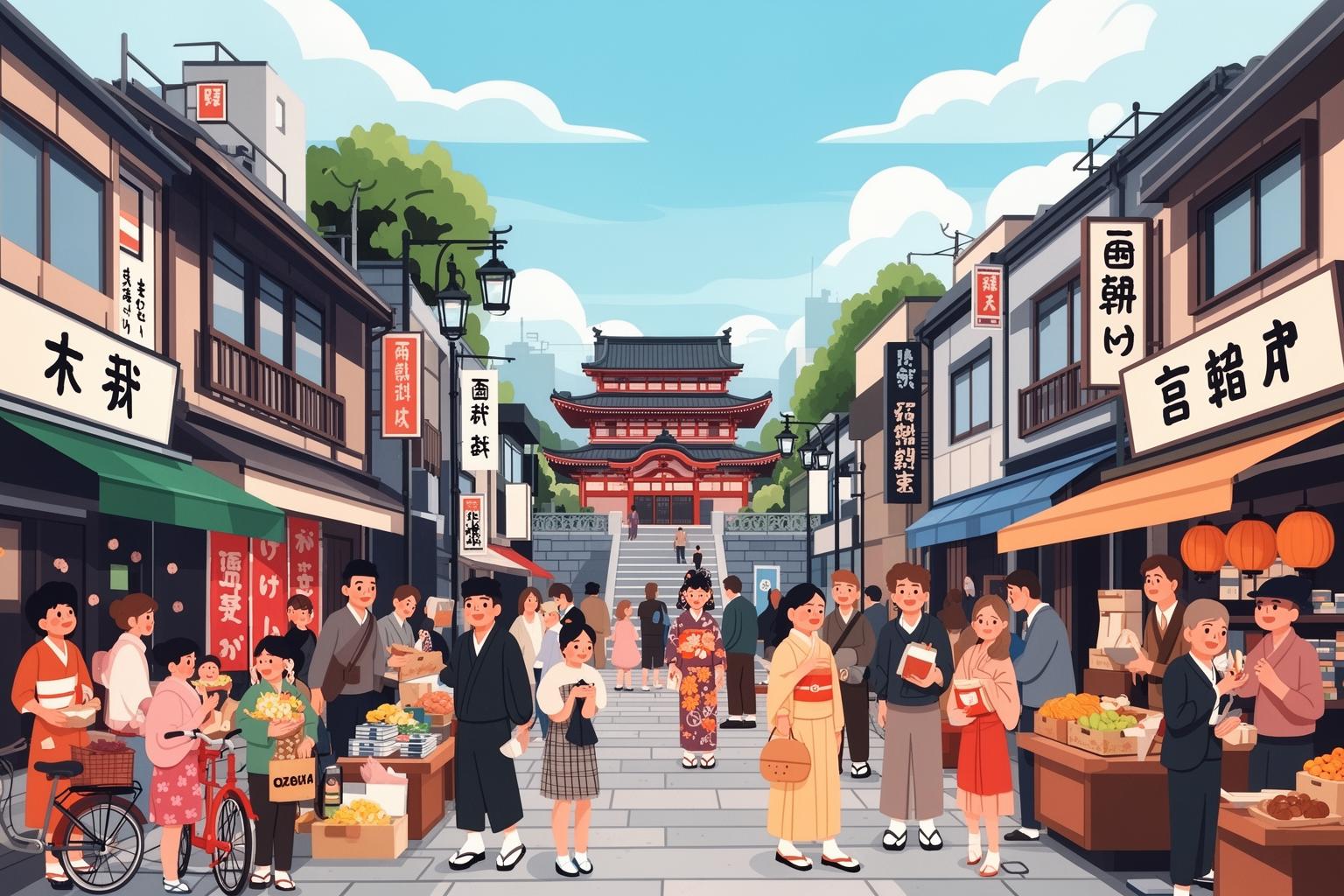
The modern supermarket feels like a shrine to sterile efficiency. You enter, grab your plastic-wrapped goods under fluorescent lighting, pay a machine, and leave without exchanging a word. The shotengai—the covered shopping arcades winding through these neighborhoods—could not be more different. They are the lifeblood of the community, bursting with energy, noise, and gossip.
Your daily shopping turns into a social occasion. You don’t just buy tofu; you get it from the elderly woman who has handcrafted it for fifty years. She’ll ask how your Japanese is coming along and slip you a free piece of okara. The butcher not only sells meat but offers cooking tips and shares stories about his grandson. The fishmonger shouts greetings from across the arcade. It’s a place built on relationships. In Tokyo, you might pursue Michelin stars; here, you savor the joy of discovering the best コロッケ (croquette) in the arcade, a local secret passed down through generations.
Neighborly vs. Nosy: The Osaka Take on Privacy
In most large cities, anonymity is standard—you can live somewhere for years without talking to your neighbors. This idea is foreign in Osaka’s shitamachi. Here, privacy is flexible. Your neighbors will know your routines, see when you get mail, and definitely comment on who you associate with.
For those accustomed to Western or mainstream Japanese notions of personal space, this may initially feel invasive. When the elderly woman next door asks why you were out so late, she’s not being rude; she’s looking out for you in her way. It’s a social pact—you trade some privacy for a safety net. If you fall ill, someone will notice. If a stranger is lingering, the neighborhood watch, made up of every retired person with a window, will be on alert. It’s a system of mutual surveillance that blossoms into mutual care. You must decide if that trade-off suits you. It’s the distinction between being lonely and being alone.
The Cost of Living the Dream
Let’s get practical. The financial advantage of living here is remarkable. A reasonably sized 2K apartment (two rooms and a kitchen) in Nishinari or Taisho can cost less than half what a tiny studio in central Tokyo goes for. Rents range from about 30,000 to 50,000 yen per month.
But the savings extend beyond rent. Your everyday expenses shrink. Dinner isn’t a 1,500-yen set meal; it’s a 300-yen bowl of udon from a stand or fresh vegetables from the shotengai at a fraction of supermarket prices. Entertainment means sharing a can of chu-hai with friends by the river, not a 2,000-yen craft cocktail. This isn’t about enforced austerity; it’s about embracing a culture that values thrift, practicality, and good times with good people over brands and fancy decor. It’s a freeing mindset that can deeply transform your relationship with money and belongings.
So, Is a Shitamachi Apartment Right for You?
Choosing to live in a place like Nishinari or Taisho goes beyond a simple logistical decision; it’s a philosophical one. It involves consciously stepping off the well-trodden path of typical expat life and immersing yourself fully in the messy, complex, and beautiful reality of old Osaka. It demands a certain type of person, and a strong sense of self-awareness is essential before making that leap.
The Honest Self-Assessment
This lifestyle is suited for adventurers, the adaptable, and those who find beauty in cracked pavement and poetry in peeling paint. It’s for people who long for authentic human connection and are ready to invest the effort needed to cultivate it. If you are a student of human nature, an artist, a writer, or simply someone weary of the polished perfection of modern life, you may discover your paradise here. If you’re willing to sacrifice some comfort for a deeper sense of soul, you are an ideal candidate.
This way of life isn’t for everyone. If you require a pristine, quiet, and predictable environment, you will likely be unhappy. If personal privacy is your highest priority and unsolicited conversations from strangers unsettle you, you’d be better off in the newer apartment complexes in the city center. If you judge a neighborhood by its number of organic cafés rather than its multi-generational family businesses, this probably isn’t the place for you. There is no judgment here; it’s simply about knowing yourself.
The Misunderstanding That Costs You
The greatest error foreigners make is judging these neighborhoods on a simple scale of “good” versus “bad,” or “safe” versus “dangerous.” This kind of binary thinking misses the essence entirely. These neighborhoods are not failures; they are thriving communities grounded in a different set of values. They stand as living proof of a Japan that is rapidly fading—a Japan built on interdependence, resilience, and an unyielding sense of place.
Choosing an apartment in Taisho or Nishinari is more than just a way to save on rent. It is a commitment to engage with Osaka on its own terms. It means learning a unique social language, communicated through gestures, shared meals, and loud greetings across the street. It is a choice to see the city not as a visitor or temporary resident, but as a neighbor. The path is challenging, but for those who take it, the reward surpasses any view from a high-rise balcony: a genuine connection to the raw, chaotic, and deeply human spirit of Osaka.