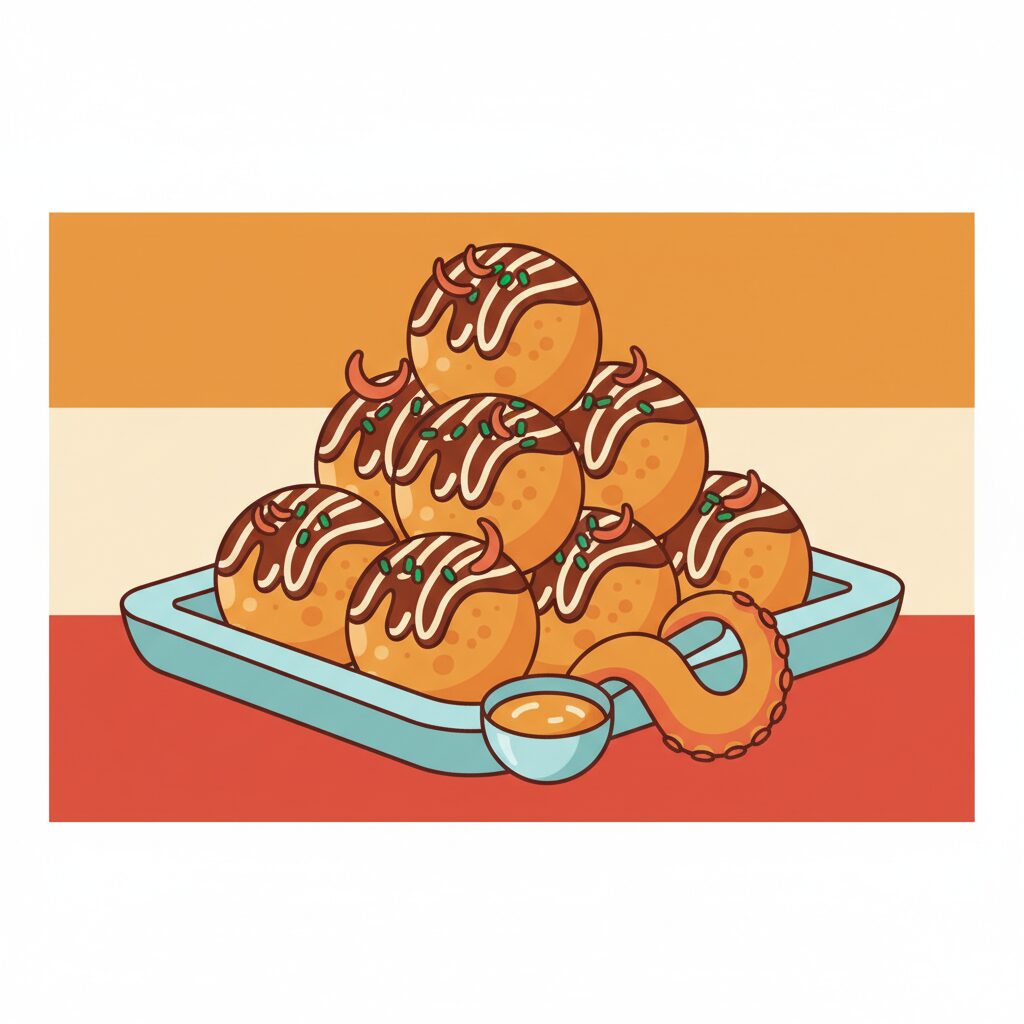
When I first heard the words “Tako-Pa,” I pictured something… different. A party, sure. With octopus, obviously. But my mind, conditioned by months of living in the quiet, orderly suburbs of Tokyo, conjured images of delicate seafood tastings, polite conversation, and shoes neatly aligned at the door. I was a newcomer to Osaka, fresh off the Shinkansen, my brain still wired for the capital’s reserved precision and its intricate web of unspoken social rules. So when my new neighbor, a woman with a booming laugh and a Kansai accent as thick as okonomiyaki sauce, leaned over her balcony and yelled, “Hey, Daniel! We’re doing a Tako-Pa tonight! You in?” I straightened my shirt, mentally rehearsed my most formal Japanese greetings, and prepared for an evening of careful culinary observation.
I could not have been more wrong. The moment her door slid open, I wasn’t hit with a wall of serene politeness, but a tidal wave of glorious, chaotic energy. The air was thick with the scent of sizzling batter, savory dashi stock, and the sharp, clean tang of pickled ginger. Laughter bounced off the walls, so loud and unrestrained I thought the windows might vibrate. And there, in the center of the low living room table, surrounded by a constellation of small bowls filled with chopped octopus, bright green onions, crimson beni shoga, and crunchy tenkasu, sat the glowing heart of the evening: a black, dimpled takoyaki hot plate. There were no designated seats, no formal introductions, just a chorus of “Osu! Welcome!” and a metal pick thrust into my hand. “Your turn to flip,” someone shouted over the sizzle, pointing at a row of half-cooked batter balls. This wasn’t a dinner party. This was a team sport, a contact sport, a loud and messy ritual. And it was my first real lesson in understanding Osaka. Forget the guidebooks, the temples, the neon-drenched tourist traps. To truly know this city, you have to understand what happens around that communal hot plate. You have to understand the soul of Osaka: konamon.
This is a world away from the neon-drenched tourist traps, and to truly understand it, you need to explore the city’s real heart, which you can find in places like the iconic Super Tamade.
More Than a Meal: The ‘Konamon’ Philosophy
To truly understand Osaka, you need to grasp its deep-rooted passion for flour. In Tokyo, food often feels like an art form to be admired from afar, a flawless arrangement on an elegant plate. In Kyoto, it represents a link to history, a gentle echo of seasons gone by. But in Osaka, food is fuel, fun, and fundamentally democratic. It’s konamon—literally meaning “flour things.” This isn’t merely a type of cuisine; it’s an entire mindset, a philosophy embedded in the city’s character. It’s a culture that embraces the idea that the best things in life are often simple, a bit messy, and best shared with others.
What Exactly is ‘Konamon’?
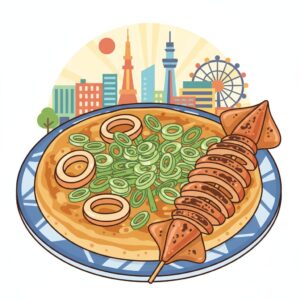
Konamon is the catch-all term for a vast array of flour-based comfort foods. It includes takoyaki, those famous octopus-filled batter balls—crispy outside, molten inside. It’s okonomiyaki, a savory pancake loaded with cabbage and chosen ingredients, grilled to perfection and coated in a sweet, tangy sauce. It also covers negiyaki, a thinner, scallion-rich relative of okonomiyaki, and ikayaki, a straightforward squid pancake popular at festivals. Konamon forms the core of the city’s culinary identity.
The story of konamon is entwined with Osaka’s history itself. This food belongs to merchants and laborers, to a city known for its pragmatism, resourcefulness, and rough charm. After World War II, with rice in short supply, flour became a crucial staple. People learned to stretch it, mixing it with whatever was available—cabbage, bits of meat, seafood—to create something warm, hearty, and satisfying. That inventive spirit endures. Konamon isn’t about rare or expensive ingredients; it’s about turning the humble and everyday—flour, eggs, water, cabbage—into something delicious through skill, passion, and a lively sense of community. While Tokyo has its own flour-based dish, monjayaki, it often feels like a specialty enjoyed out occasionally. In Osaka, konamon is not a rare indulgence; it’s a fundamental part of home cooking, as essential as rice and miso soup elsewhere.
Every Household, A Takoyaki Master
One clear sign of Osaka’s konamon passion is the standard kitchen gear. In North America, you might find a toaster and coffee maker. In Osaka, there’s a takoyaki maker. It’s not a niche gadget for enthusiasts; it’s a basic appliance tucked away in the kitchen cabinet, ready for weeknight dinners, weekend lunches, or impromptu gatherings. Visit any electronics store like Yodobashi Camera or Bic Camera, and you’ll find an entire section devoted to them: basic electric models, heavy cast-iron plates for gas stoves, even novelty devices that automatically turn the takoyaki. This widespread presence speaks volumes. It shows that making this food isn’t left to restaurants; it’s a home skill, a family tradition.
With this common ownership comes widespread expertise—or at least, strong opinions. Everyone in Osaka has a takoyaki philosophy. The debates are passionate, nuanced, and never-ending. It begins with the batter. Should it be made using a store-bought mix, or is that a cardinal sin? Purists insist on a personal blend of flours, a secret ratio of all-purpose and low-protein flours, and a carefully prepared dashi stock, perhaps enhanced with soy sauce or mirin. Then there’s the filling. Naturally, octopus—tako—is essential, but what about the rest? Finely chopped beni shoga (pickled red ginger) and tenkasu (crispy tempura bits) are essentials for texture and taste. And cabbage? Some households swear by finely shredded cabbage for sweetness and moisture; others reject it as a filler that undermines the takoyaki’s gooey center. These aren’t mere preferences; they’re family traditions, identity markers passed down through generations. Being invited to a Tako-Pa offers a glimpse into a family’s soul, one perfectly browned, octopus-filled ball at a time.
The Art of the ‘Tako-Pa’ (Takoyaki Party)
A Tako-Pa is where the konamon philosophy truly comes alive. It’s a social gathering that perfectly captures the Osaka spirit: casual, inclusive, and centered on the enjoyment of making and eating food together. It acts as a strong social glue, turning strangers into friends and friends into family. It’s like the city’s living room, open to all.
The Invitation: A Casual Command
Forget the formal invitations and weeks-of-planning often associated with dinner parties in other cultures. An invite to a Tako-Pa in Osaka is usually wonderfully spontaneous. It might come as a quick text: “Doing takoyaki tonight. Come.” Or a shout across the office on a Friday at 5 PM: “My place, 7 o’clock, Tako-Pa!” There’s a refreshing directness to it, an assumption of friendship. The wording itself reveals much. It’s not, “Would you be interested in possibly attending a gathering at my home?” It’s “Uchi, takoyaki suru kedo, kuru?”—”We’re doing takoyaki at my place, you coming?” The focus is on the shared activity.
This casual, almost commanding invitation reflects a key part of the Osaka mindset, often contrasting sharply with the indirect communication styles common in Tokyo. There’s less need to kuuki wo yomu (read the air) and more of a culture of straightforward expression. The expectation is that if you’re free, you’ll come; if not, you’ll say so—and no offense will be taken. This simple social exchange encapsulates life in the city: less about navigating complicated social subtleties, more about genuine, direct connection. The Tako-Pa is the perfect icebreaker, a social event with such a low barrier to participation that joining feels almost effortless.
It’s a Team Sport, Not a Dinner Service
The biggest difference between a Tako-Pa and a typical dinner party is the complete blurring of host and guest roles. Upon arrival, you aren’t seated at a perfectly arranged table to be served a finished meal. Instead, you’re handed an apron, a knife, or a set of takoyaki picks and put to work. The scene is one of controlled chaos. The living room table turns into a communal prep area. Someone mixes a huge bowl of batter, making sure it’s just right—not too thick, not too thin. Another carefully chops boiled octopus into bite-sized pieces. Kids might be assigned to sprinkle tenkasu and beni shoga into each dimple of the hot plate.
Then the main event begins. The host pours the batter, filling the entire plate into a sizzling sheet. Fillings go in quickly. Then comes the flipping. This is where the magic happens. Everyone crowds around the hot plate, picks in hand, focusing on the cooking batter. It’s a collective effort. People take turns, skillfully (or not) using their picks to separate the batter and coax each half-cooked sphere into a perfect ball. Conversation flows naturally around this activity. There are no awkward silences because the task itself sets the rhythm and focus for social interaction. You discuss technique, tease the person who breaks one, cheer when a perfect batch comes off the grill. You are not a passive diner; you are an active co-creator of the meal. This hands-on approach is a strong bonding experience. It removes formality and pretense, fostering an immediate sense of shared experience and easy intimacy.
The Unspoken Rules of the Grill
Though a Tako-Pa seems chaotic, there is an underlying etiquette, a set of unspoken rules around the hot plate. First, respect the process. There’s a rhythm to it: the sizzle when the batter hits the hot iron, the tense moment before the first flip, the satisfying scrape of the picks, and the final touch of drizzling takoyaki sauce and mayonnaise. Rushing is a rookie mistake. Second, know your role. Usually, there’s an unofficial leader—the most skilled flipper—who runs the first rounds and demonstrates the right technique. You watch, learn, and wait your turn. Trying to take charge or offering unsolicited tips to the expert is bold, only acceptable if you’re confident you can do better.
The tools are sacred. The takoyaki picks—long, sharp metal skewers—are your instruments. You learn to hold them lightly, to gently coax the batter rather than stabbing it violently. Hogging the best picks is frowned upon. Social dynamics unfold in real-time: who’s brave enough to flip first, who hangs back observing, who naturally teaches the beginners. The grill’s sounds punctuate the conversation—the soft sizzle signals wet batter; the sharper crackle means a crispy edge and time to flip. You learn to cook with both ears and eyes. The party often features playful twists, like a few “Russian roulette” takoyaki filled with a dollop of wasabi or spicy mustard instead of octopus. The resulting drama over who gets the “penalty ball” adds endless amusement. This shared experience—full of small victories, funny missteps, and delicious rewards—is what builds lasting friendships.
Okonomiyaki at Home: The Family Canvas
If the Tako-Pa epitomizes social gatherings with friends, then okonomiyaki captures the essence of the family meal in Osaka. It follows a similar concept—a central hot plate and participatory cooking—but with a focus on nurturing, personalization, and the soothing rhythms of family life. It embodies the city’s practical and generous culinary spirit.
“As You Like It” Pancake
The name okonomiyaki reveals its nature: okonomi means “as you like it,” and yaki means “grilled.” This dish springs from the ideas of customization and resourcefulness. Its basic recipe serves as a blank canvas: a batter of flour, grated nagaimo (mountain yam) for fluffiness, dashi, and eggs, mixed with a generous amount of shredded cabbage. From there, it’s open-ended. The ingredients depend on what’s in the fridge and what the family desires that day.
Here is where the heart of Osaka’s kuidaore (“eat ’til you drop”) culture truly shines. It’s not about waste; it’s about clever reuse. Leftover pork belly from last night? Toss it in. A handful of shrimp? Perfect. Squid? Sure thing. Modern Osaka households have broadened the range of toppings to include cheese, mochi rice cakes, kimchi, corn, bacon, even hot dogs for the kids. The okonomiyaki becomes a record of the week’s meals, a flavorful collage of leftovers reimagined into a fresh creation. This is the opposite of strict, recipe-bound cooking. It’s an improvisational art, proving that with just flour and a hot plate, anything can be delicious. It teaches abundance, showing that a satisfying feast can be crafted from the humblest ingredients.
The Hot Plate as the Family Hearth
On weekend afternoons, the large, flat teppan hot plate is often set on the dining table, turning into a modern family hearth. The ritual begins. Dad might take charge of mixing the batter, using his strength to fold in the large quantities of cabbage. The kids arrange pork belly slices on the sizzling griddle. Each family member customizes their own pancake: one child wants extra cheese and corn; another chooses shrimp and mochi. Mom sticks to a classic pork and egg combination.
There’s a deeply comforting rhythm to this ritual: the clatter of metal spatulas on the hot plate, the scent of cabbage sweetening as it cooks, the collective focus as everyone tends their own creation, flipping it with a satisfying thud. Then comes the final decorative touch—a thick lattice of dark, sweet okonomiyaki sauce, a delicate crosshatch of Japanese mayonnaise, a sprinkle of shimmering green aonori (seaweed powder), and a generous handful of katsuobushi (dried bonito flakes) that dance and curl with the rising steam, as if alive. Watching a family make okonomiyaki together is like witnessing a silent play about their relationships: the gentle guidance, playful competition, and shared satisfaction. It’s a transfer of cultural knowledge—not through words, but through the muscle memory of mixing, flipping, and eating together. For many Osakans, the taste of a perfectly cooked okonomiyaki—with its crispy edges, tender interior, and harmonious toppings—is the true taste of home.
What This Tells You About Osaka Life
This fascination with communal, hot-plate cooking is more than just a charming culinary tradition. It serves as a Rosetta Stone for understanding the character of the city and its inhabitants. It reveals their communication style, social structures, and fundamental values. It behind the familiar “friendly Osaka” stereotype.
Pragmatism over Pretension
At its heart, konamon culture is profoundly pragmatic. It’s food made for the people. It’s affordable, satisfying, highly adaptable, and above all, enjoyable. This sharply contrasts with the refined culinary customs found in other Japanese cities. In Kyoto, you might relish the delicate, seasonal tastes of a multi-course kaiseki dinner in a quiet, tatami-matted room. In Tokyo, you may wait for hours to savor the perfect piece of sushi crafted by a reserved master. In Osaka, you’ll be laughing with friends, beer in hand, perhaps getting batter splattered on your shirt as you attempt to flip a stubborn takoyaki. The ultimate aim isn’t visual perfection; it’s shared pleasure. This reflects Osaka’s historical identity as a city of merchants. For centuries, it was Japan’s commercial center, valuing efficiency, practicality, and a good bargain above all else. That spirit remains vibrant. Osakans prioritize substance over style, a good laugh over solemn respect. Rolling up your sleeves to create something tasty together is regarded as a higher ideal than passively admiring a chef’s flawless work.
Breaking Down the ‘Uchi-Soto’ Barrier
Japanese culture is famously structured around the concept of uchi-soto, the distinction between one’s “inside” group (family, close colleagues) and “outside” group (everyone else). The social boundaries between these groups can be strong, and being invited into someone’s home—the ultimate uchi space—is often a significant milestone in relationships that may take months or even years to develop. The Tako-Pa is Osaka’s cultural shortcut for bypassing this system. It’s a way to rapidly—and joyfully—dismantle the uchi-soto divide. By inviting you not only into their home but to actively take part in a key domestic ritual, your host is sending a clear message. They are drawing you from the soto world into their uchi circle in the course of a single evening. Standing shoulder-to-shoulder with someone, focused on the shared task of not burning the takoyaki, social barriers dissolve. You’re no longer a distant acquaintance or a new colleague; you’re part of the crew. For foreigners feeling isolated or struggling to forge close connections in Japan, receiving an informal invitation to a Tako-Pa is like a golden ticket. It’s a sincere gesture of acceptance and inclusion—Osaka style.
A Different Kind of Communication
The atmosphere of a konamon party encourages a communication style that is distinctly Osaka: direct, loud, and physical. The activity itself necessitates interaction. You need to ask someone to pass the octopus. You have to coordinate who flips which row. You shout a warning when a takoyaki is on the verge of burning. The constant activity and the background sounds of sizzling and laughter create a setting where the reserved, indirect communication typical of other regions simply wouldn’t work. You have to speak up to be heard. People openly critique each other’s flipping technique, passionately debate the ideal amount of mayonnaise, and tell jokes that are loud and uninhibited. This is why Osaka residents are often seen by other Japanese as louder, more direct, or even aggressive. Their social life is forged in the heat of the hot plate—a setting where lively, unfiltered interaction isn’t just accepted; it’s essential. It’s a culture where community is actively and noisily built, one flour-based dish at a time.
Bringing Konamon Culture into Your Own Osaka Life
Understanding this culture is one thing; living it is another. For any foreigner who truly wants to feel at home in Osaka, embracing the art of the hot plate isn’t merely recommended—it’s practically essential. It’s your gateway to the heart of the city.
Your First Piece of Equipment: The Takoyaki Maker
Your first task, if you’re up for it, is to purchase a takoyaki maker. Don’t overthink it. Head to Don Quijote, a home goods store, or the electronics district in Namba. You can easily find a simple, fully functional electric model for a few thousand yen. This isn’t just a kitchen gadget—it’s a social tool and a declaration of intent. It says, “I’m not just a visitor passing through; I’m here to join in.” Placing that dimpled black plate in your shopping basket marks a rite of passage—it’s the moment you move from merely observing Osaka’s culture to becoming part of it. Bring it home, unbox it, and give it a place of honor in your kitchen. It’s your key to forging a deeper social connection in the city.
Hosting Your First ‘Tako-Pa’
Now, the final step: host your own Tako-Pa. This might seem daunting, but remember the essentials. It’s not about perfection—it’s about participation. Start simple with a bag of pre-made takoyaki mix from the supermarket. It’s foolproof and delicious. Gather the key ingredients: boiled octopus (or feel free to get creative with sausage, cheese, or shrimp), green onions, tenkasu, and beni shoga. Most importantly, don’t have everything perfectly prepared when your guests arrive. Let them chop the onions, mix the batter, and take the picks and pitcher of batter to enjoy the fun, chaotic process. The golden rule is to let go of control. Your role as host isn’t to serve but to facilitate the enjoyment. Allow your guests to make the food alongside you. Let someone burn a few takoyaki. Laugh about it. Debate the best sauce techniques. Create a mess joyfully. This is the genuine experience. By hosting your own Tako-Pa, you’re not just copying a local tradition—you’re actively contributing to the lively, messy, and wonderfully human culture of Osaka. You’re no longer just living there; you’re helping shape it, one sizzling, perfectly imperfect flour ball at a time.