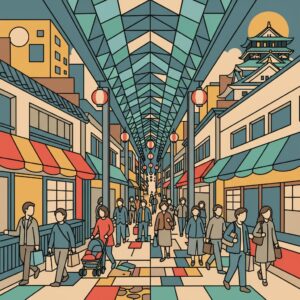
Welcome to Osaka, the city that runs on two wheels. You see it the moment you step out of the station. A silver tide of bicycles, a metallic river flowing through every street and alley. There are sleek road bikes, foldable commuters, but the undisputed king is the mamachari—the mighty “mom’s chariot.” These beasts of burden, with their front and back baskets, child seats, and kickstands as solid as landing gear, are the lifeblood of the city. They ferry groceries, children, and a thousand daily errands. Seeing this, you think, “Perfect. I’ll get a bike. It’s flat, it’s convenient, it’s the ultimate way to live like a local.” And you’re not wrong. Cycling in Osaka is freedom. It’s weaving through a vibrant shotengai shopping arcade, the smell of takoyaki in the air. It’s cruising along the Yodo River on a sunny afternoon. It’s the feeling that the entire city is your neighborhood. But then, one day, reality hits. You dash into a convenience store for five minutes, leaving your bike leaned against a guardrail. When you come out, it’s gone. Vanished. In its place is a small, laminated notice stuck to the pavement, a bureaucratic ghost haunting the spot where your freedom used to be. Or maybe you find a stark white ticket zipped to your saddle, a silent, official rebuke. Suddenly, the simple joy of cycling is complicated by a web of rules, fees, and unspoken social contracts you never knew existed. This isn’t just about parking tickets. This is your first real lesson in how Osaka works. It’s a city that prizes pragmatism over polish, a place where controlled chaos is the natural state of being. The bicycle parking system, or lack thereof, is a perfect window into the Osaka mindset, a world away from the seemingly pristine order of Tokyo. To understand the city, you have to understand the silent war being waged on its sidewalks every single day.
Cycling through Osaka’s tangled fees and rules might prompt you to refine your urban survival skills, such as incorporating waribiki food-saving strategies into your daily budget.
The Mamachari Kingdom: Why Bicycles Rule Osaka’s Streets
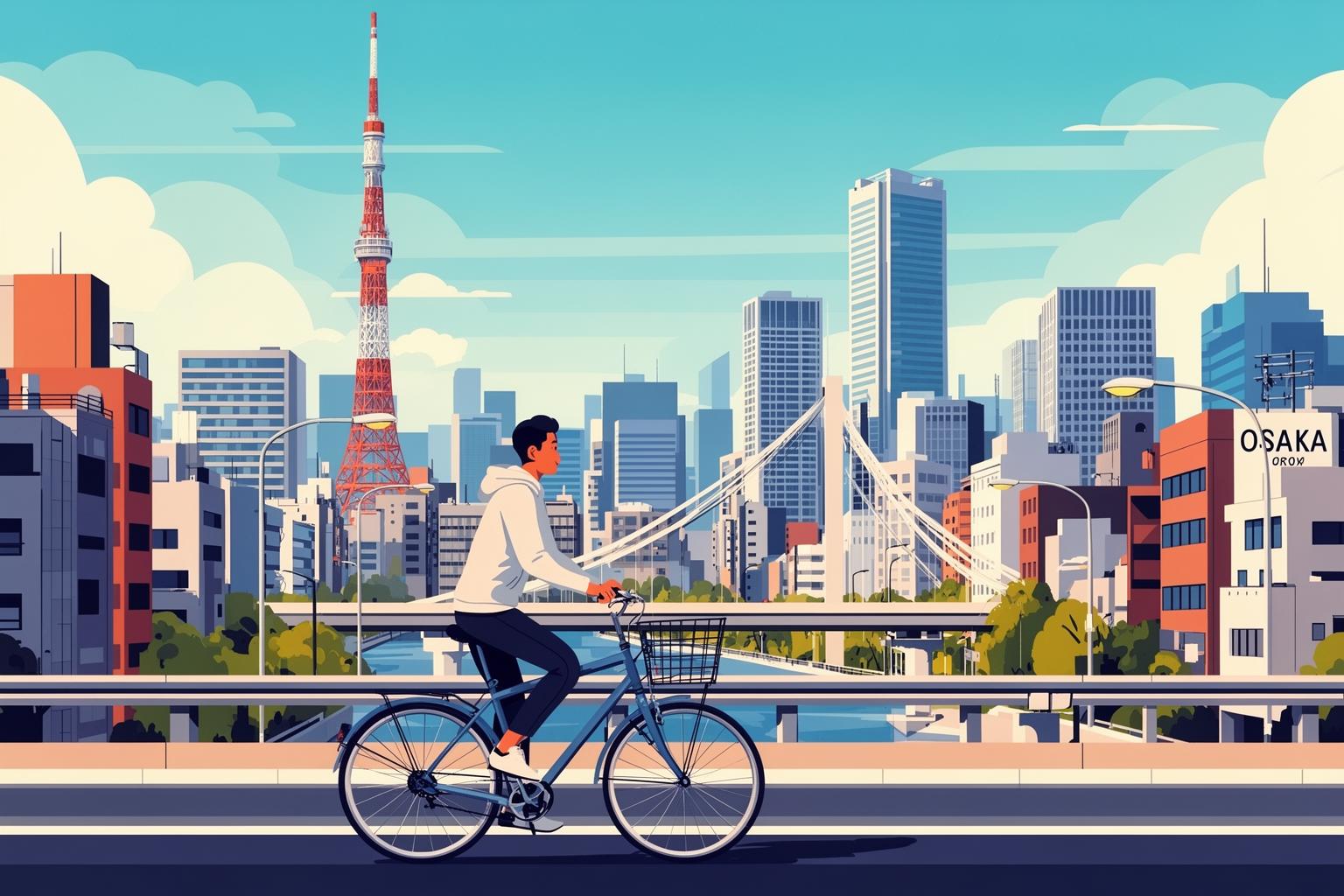
A City Built on Two Wheels
To understand the parking challenge, you first need to recognize the vast scale of Osaka‘s cycling culture. This is more than a pastime; it’s a fundamental part of the city’s infrastructure. Osaka is mostly flat, a sprawling coastal plain that makes cycling easy. Unlike Tokyo, with its unexpected hills and valleys, Osaka is a cyclist’s haven. The urban design itself caters to cyclists. Dense, compact neighborhoods are connected by numerous shotengai, covered shopping arcades often too narrow for cars but ideal for bikes. For the average Osakan, a bicycle isn’t just for exercise; it serves as the family’s second car, its pickup truck, its school bus. You’ll see mothers expertly balanced with one child in front, another on the back, and a week’s groceries spilling from the basket. You’ll encounter elderly men in tweed caps, pedaling slowly to their favorite kissaten for morning coffee. You’ll spot office workers in suits, briefcases strapped to their front baskets, effortlessly gliding past traffic jams. The mamachari is the great equalizer—affordable, efficient, and practical. This deep reliance on bicycles fuels Osaka’s central issue: an enormous number of bikes competing for a remarkably limited amount of space. It’s a problem rooted in the city’s success and practical mindset.
The Illusion of Free Parking
A newcomer wandering through Osaka might easily assume that no rules apply. Bikes are everywhere—packed onto sidewalks, creating dense metal thickets around station entrances. They lean against utility poles, storefronts, and public art installations. They’re tucked into alleys and lined up beneath highway overpasses. This chaotic scene appears anarchic, like a city that has simply surrendered. This is the most common and costly misconception for outsiders. It’s not a lawless free-for-all but a highly intricate, invisible dance governed by its own rhythm and rules. Locals sense this dance instinctively. They understand that the line of bikes outside a local supermarket is temporary, a mutual understanding that these bikes belong to shoppers inside. They know that the cluster near the pachinko parlor will remain for hours but belongs to patrons with an unspoken agreement from management. What foreigners see as disorder, Osakans recognize as a functioning, though cluttered, system of temporary claims on public space. The problem arises because the city government doesn’t always accept these informal arrangements—that’s where conflict starts.
Decoding the System: The World of Municipal Churinjo
What is a “Churinjo”?
To tackle the problem of overcrowded sidewalks, the city offers an official solution: the shiritsu jitensha chushajo (市立自転車駐車場), commonly abbreviated to churinjo. These municipal bicycle parking facilities are essential for maintaining harmony with the city’s enforcement teams. They come in several varieties, each showcasing Japan’s engineering skill and inventive use of limited space. First, there are the extensive underground complexes, often situated beneath major train stations like Umeda or Namba. Entering one feels like descending into a futuristic bicycle catacomb. Endless well-lit rows of two-tiered racks stretch far into the distance. It’s clean and secure, though finding your bike in this labyrinth can be tricky. Second, there are the more prevalent street-level lots. These typically consist of fenced-in areas equipped with simple locking racks. You roll your bike in, push down a lever to lock the wheel, and then receive a printed ticket. They are straightforward, functional, and widely found in residential neighborhoods. Lastly, there are the high-tech, multi-story automated garages. These are engineering marvels. You place your bike on a platform, insert a card, and the machine transports your bike into the building’s interior. To retrieve it, you just swipe your card, and your bike returns within a minute. It’s like something from a sci-fi film and perfectly demonstrates how technology can solve spatial challenges.
The Fee Structure: It’s More Affordable Than You’d Expect, But Costs Can Add Up
So, what’s the cost for this convenient system? Using a churinjo is surprisingly affordable, and the pricing is structured with Osaka’s commercial rhythms in mind. For temporary parking, or ichiji riyo, many lots—especially those near shopping districts—offer a grace period, often free for the first 30 to 120 minutes. This is a smart and practical approach, encouraging people to cycle to local shops for quick errands, get their shopping done, and leave promptly, freeing the space for the next user. This keeps the city’s commercial arteries flowing smoothly. If you stay longer, the fee is usually a modest 100 or 150 yen for several hours, sometimes up to a full day. It’s a small charge for peace of mind. For daily commuters who need to park near a station, the teiki riyo, or monthly contract, is indispensable. This grants you a reserved parking spot for your bike. Prices vary by location but generally range from 2,000 to 4,000 yen per month. Applying for a spot involves a process, and in high-demand areas near major transit points, it can even require a lottery. If you’re successful, you receive a coveted sticker for your bike’s fender. This sticker acts as a status symbol. It signals to everyone, especially parking attendants, that you belong. You are part of the system. This sticker marks the boundary between an experienced local and a newcomer.
The Red Tag of Doom: The Reality of Illegal Parking Enforcement
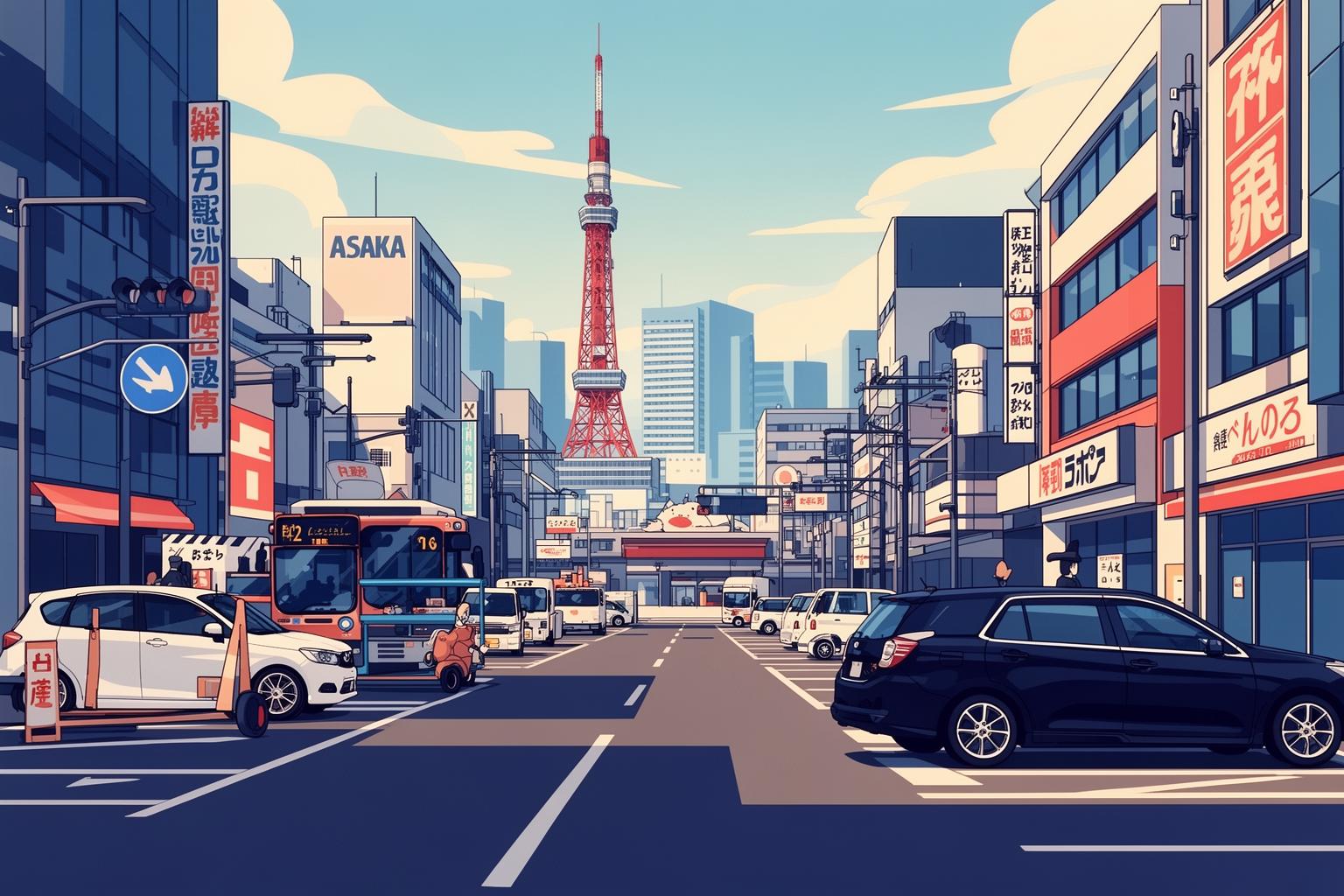
The “Jitensha Tounan Torishimari Kuiki” (Bicycle Removal Enforcement Area)
Even though churinjo parking lots are available, the lure of illegal parking remains strong. This is where you see the distinct blue and white signs that say 自転車等放置禁止区域 (jitensha-tou houchi kinshi kuiki), meaning “Bicycle, etc., Abandonment Prohibited Area.” Don’t be misled by the gentle term “abandonment.” It actually means “No Parking, Tow-Away Zone.” These zones are mainly found near train stations, hospitals, public buildings, and major shopping areas. They serve as the front line in the city’s battle against sidewalk clutter. What sets Osaka’s enforcement apart from, say, Tokyo’s, is its apparent inconsistency. In Tokyo, rules feel absolute and enforcement steady. In Osaka, it’s more like a shifting weather pattern. One week, a sidewalk near Tennoji Station might be so packed with illegally parked bikes that it’s nearly impassable. Locals understand it’s a gamble, but one they take. Then suddenly, one morning, all the bikes disappear. The city has conducted a swift, decisive sweep. This periodic crackdown, rather than a constant, relentless enforcement, is emblematic of Osaka. It permits a certain level of benign disorder, stepping in only when the situation becomes intolerable. This unpredictability catches many off guard.
The Sweep: How Your Bike Disappears
The removal process is a model of municipal efficiency. It’s carried out not by the police, but by contractors hired by the city. They arrive early in the morning in small flatbed trucks, working in teams. One person identifies the offending bicycles. Another may place a warning notice if required by policy, though often they proceed straight to removal. A third team member uses bolt cutters to cut through cheap locks (a sturdy, heavy-duty lock can sometimes deter, but not always). They load the bikes onto the truck with cold efficiency. There’s no negotiation or discussion. Your bike is simply gone. Usually, they tape a notice to a nearby pole listing when and where the bikes have been impounded. To the contractors, it’s just another job. To you, it’s a sudden and bewildering disruption to your routine.
The Walk of Shame: Retrieving Your Impounded Bike
Getting your bike back is a bureaucratic ordeal, designed to be just inconvenient enough to teach a lesson. It’s a multi-step process that every long-time resident seems to experience at least once. First, you must decipher the notice left at the scene or call the city’s bicycle division to confirm your bike was towed, not stolen. They will ask for your bike’s anti-theft registration number—something you absolutely must have. Once confirmed, they’ll tell you which impound lot, or jitensha hokanjo, has your bike. Second comes the journey. These lots are never conveniently located. They’re generally in remote, industrial areas under expressways or near port facilities, reachable only by a long walk from an obscure bus stop. This inconvenience is intentional, part of the penalty. Third, you must come prepared. Bring your official ID (Residence Card), the key to your bike’s lock, and cash. The fee typically ranges from 2,500 to 4,000 yen. Credit cards are not accepted. This cash-only requirement feels like a throwback to a more rigid, older Japan hidden beneath the modern surface. Finally, you arrive at the lot—a surreal sight: rows upon rows of confiscated bicycles forming a vast open-air “library.” Hundreds, sometimes thousands, are neatly organized, silently bearing witness to the city’s continuing parking battle. You find your bike, present your documents to a stoic employee in a small prefab office, pay your fee, sign a form, and are free to wheel your bike away, beginning the long, sheepish walk home.
The Osaka Mindset: Navigating the Unspoken Rules
Reading the Air (Kuuki wo Yomu) of Parking
To avoid the walk of shame, you need to operate like an Osakan. This means going beyond written rules and learning to kuuki wo yomu, or “read the air.” Several principles define this unspoken code. The first is the Supermarket Shuffle. It is socially acceptable to park your bike directly in front of a store as long as you are actively shopping there. This act temporarily claims the space based on a transaction. The moment you finish and move on to, say, the bookstore next door, you break this social contract. Your bike stops being a customer’s vehicle and becomes an obstruction. The second rule is the Station Radius. The risk of being towed rises sharply the closer you park to a train station entrance. Locals are well aware of this and willingly park three blocks away in an unmarked yet informally accepted area, choosing to walk the rest of the way. They’ve made the calculation: a five-minute walk is preferable to a 3,000 yen fine. This perfectly captures the famous Osaka kechi mindset. Often translated as “stingy,” it is more accurately described as deeply, almost spiritually, frugal and value-conscious. Why pay for parking or risk a fine when a bit of extra effort can avoid it altogether? The third rule is to follow the crowd, but cautiously. A bike-packed spot suggests a relatively safe zone, but it might also be the next prime target for a sweep. The Osaka approach is to weigh the risk. Is it a major thoroughfare? Does it block pedestrian access, especially the yellow tactile paving for the visually impaired? If so, avoid it. If it’s a quiet side street with bikes neatly arranged, you’re probably safe for a little while.
Why It’s Not Like Tokyo
This whole dynamic feels fundamentally different from Tokyo. The capital often presents a more polished, orderly appearance. Parking rules feel clearer and more consistently enforced. Designated parking areas are more common, and using them feels more compulsory. There is less tolerance for the casual, chaotic parking taken for granted in Osaka. Osaka’s approach is more organic and bottom-up. It reflects the city’s merchant history: a culture of negotiation, bending the rules to their limit, and finding the most efficient way to get things done, even if it looks a bit messy. The city government acts less like a constant disciplinarian and more like a gardener who lets the weeds grow to a point before clearing them out. This creates a city that feels more lived-in, more chaotic, but also more flexible. Life in Osaka demands you be street-smart, constantly reading the situation and calculating the risks. It’s less about strict rule-following and more about understanding the consequences.
Practical Strategy for the Osaka Cyclist
Get Registered (Bouhan Touroku)
First and foremost, when purchasing a bicycle in Japan, you must have it registered. This is called bouhan touroku, or anti-theft registration. It costs around 600 yen and links your name and address to the bike’s frame number. The bike shop will handle this for you. You will receive a small orange sticker to attach to the frame. This step is mandatory. If your bike is towed, this registration is the primary way the city identifies its owner. Without it, retrieving your bike becomes extremely difficult, and after a certain time, it will be discarded.
Know Your Zones
Pay close attention. When near a train station or in a busy downtown area, actively look for blue and white “No Parking” signs. Take note of the enforcement zones along your usual routes. Observe where locals park and where they don’t. This situational awareness is your best defense against fines. Don’t assume that just because other bikes are parked there, it’s a safe spot. Locals might know something you don’t, or they might just be taking bigger risks.
Embrace the Churinjo
If you commute by train, don’t resist the system. Apply for a monthly parking spot. The cost is a legitimate part of your commuting budget, much like a train pass. The peace of mind it offers is invaluable. For daily errands, familiarize yourself with the locations of temporary parking lots. Most mapping apps can show their locations. The 150 yen fee isn’t an expense; it’s insurance against a 3,000 yen fine and a wasted afternoon traveling to an impound lot in an industrial area.
The “Gomen-nasai” Technique
If you must park on the street for a very short time, do so respectfully. This is the “excuse me” or gomen-nasai approach. Don’t just leave your bike carelessly. Park it neatly, parallel to the curb. Make sure it’s not blocking entrances, fire hydrants, or walkways. Most importantly, never block the yellow tactile paving lines for the visually impaired. Doing so is a major social taboo and will earn the disapproval of passersby as well as likely prompt swift removal. Park with the unspoken apology that you are aware you are temporarily inconveniencing the public and will be gone shortly. This small consideration can make a surprising difference.
More Than Just a Fee: A Lesson in Urban Coexistence
The intricate world of bicycle parking in Osaka is more than simply a set of rules and possible fines. It offers a vivid lesson in the everyday realities of urban Japanese life. It involves the ongoing, dynamic negotiation for space in one of the most densely populated countries on Earth. This reflects Osaka’s distinctive character: a city that is both highly organized and delightfully chaotic, deeply practical and fiercely independent. The frustration of finding your bike missing, the bureaucratic effort to retrieve it, and the daily mental calculation of where to park are all part of the assimilation process. When you start instinctively spotting the churinjo sticker on other bikes, when you can glance at a row of parked bicycles and accurately gauge the likelihood of a sweep, you become more than just a visitor. You begin to grasp the city’s rhythm. You learn to read the air. And you discover that the true cost of cycling in Osaka isn’t counted in yen, but in the attention and understanding needed to coexist successfully in the Mamachari Kingdom.