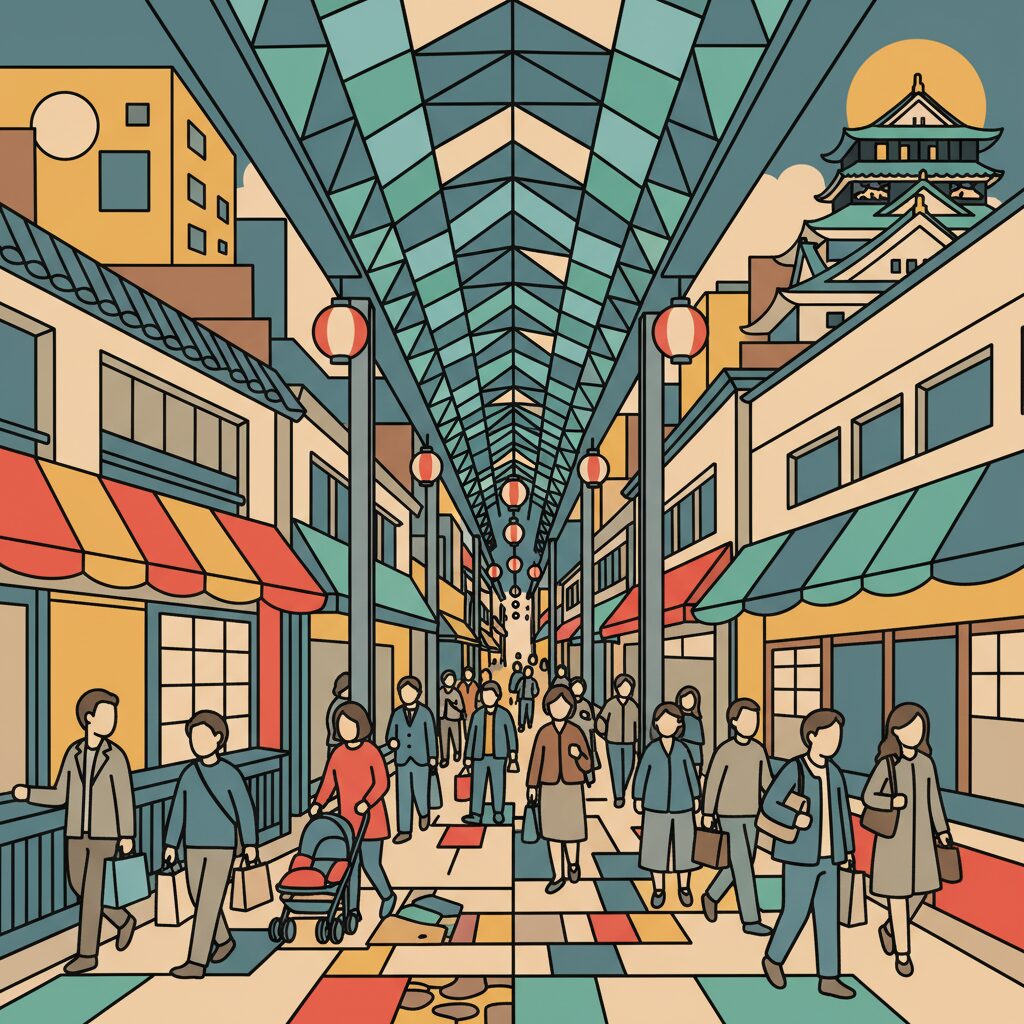
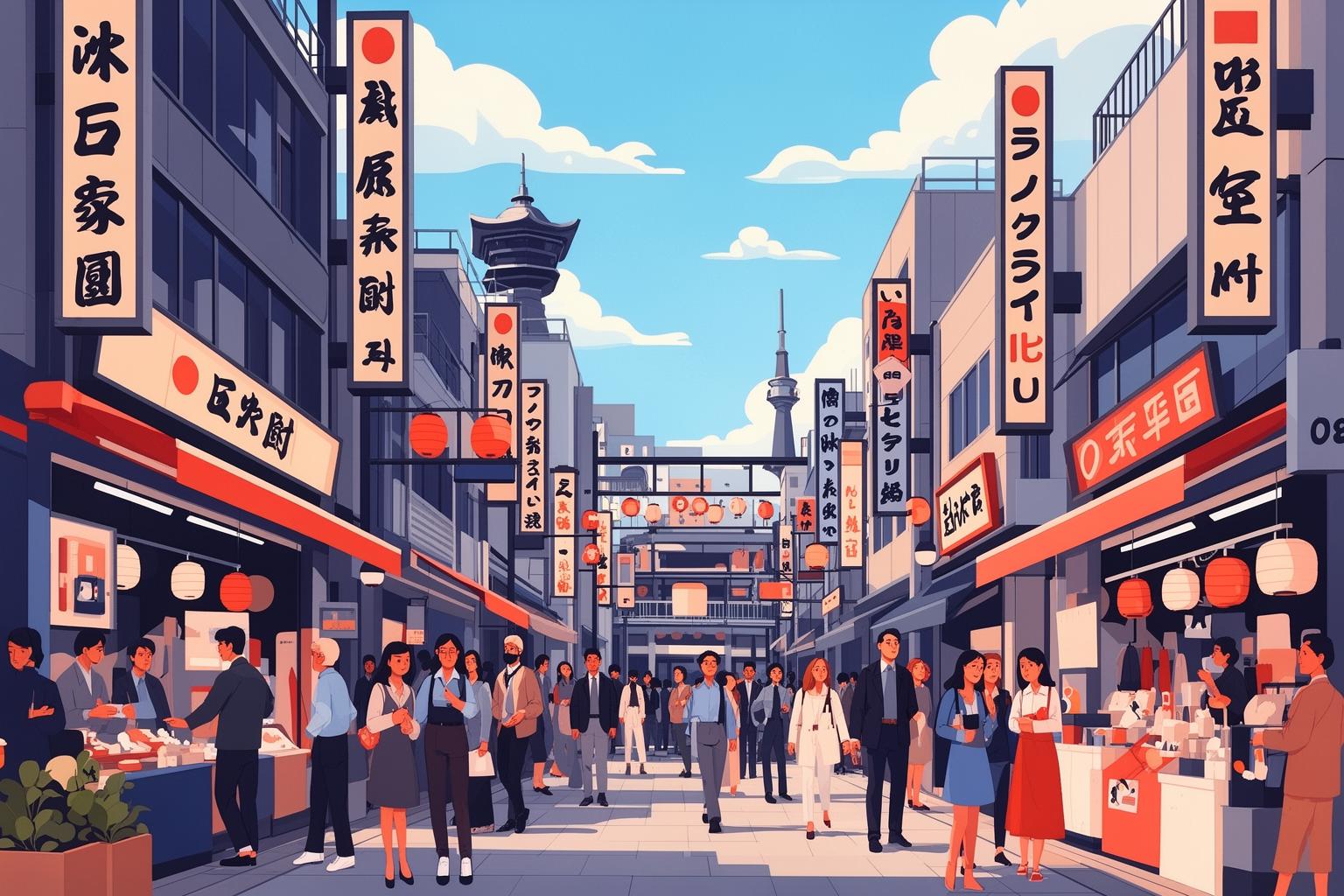
When you first move to Osaka, the shotengai can feel like a sensory assault. It’s not the serene, minimalist Japan you might have pictured. It’s a riot of sound and color, a chaotic ballet of bicycles, shouting vendors, and meandering grandmas. Your first instinct might be to compare it to a department store basement, that glorious food-focused labyrinth known as a depachika. Both sell food, both are crowded. But after a few weeks, you start to realize they exist in different universes. The depachika is a pristine gallery of culinary art, a place of polite transactions. The shotengai, the covered shopping arcade that snakes through so many of Osaka’s neighborhoods, is something else entirely. It’s the city’s heart, its public living room, and its soul laid bare. To understand the shotengai is to understand the rhythm of daily life in Osaka, a rhythm that pulsates with a very different energy than you’ll find in Tokyo or anywhere else in Japan. It’s where commerce, community, and character collide in a loud, fragrant, and wonderfully human tangle. This isn’t just where Osaka shops; it’s where Osaka lives.
In contrast to the shotengai’s vibrant chaos, a visit to a depachika reveals a refined culinary escape that highlights a more sophisticated side of Osaka’s food culture.
The Shotengai as a Community Living Room

Step into a typical Osaka shotengai around four in the afternoon. The air is rich with the aroma of grilling eel, freshly fried potato croquettes, and sweet soy sauce from the simmered dishes at the osōzai-ya, the local deli. But listen more carefully. Beneath the commercial noise, you’ll hear the true soundtrack: the steady, relaxed chatter. The butcher isn’t just weighing meat; he’s inquiring about a customer’s husband’s recent hospital stay. The woman at the vegetable stand isn’t simply bagging daikon radishes; she’s cooing over a baby in a stroller and slipping the young mother an extra mikan orange for the child. This isn’t merely business. It’s a daily ritual of connection. In Osaka, a transaction is seldom just a transaction. It’s a reason for conversation, a quick check-in, a reinforcement of a bond. This is the key difference. A supermarket is designed for efficiency. A shotengai is designed for relationships.
The Unspoken Language of Loyalty
Within this environment, you become a jōren-san, a regular. This status is earned through consistency. When you first begin shopping, you are just another face in the crowd. But after buying your tofu from the same small shop for three weeks straight, the elderly woman behind the counter will start greeting you with a nod of recognition. By the sixth week, she’ll have your usual order ready even before you ask. By the tenth week, she might add a block of fried tofu, an atsu-age, into your bag for free. This is omake, a little extra, but it’s more than just a freebie. It’s a thank you. It’s an acknowledgment that you are part of her community, that your steady, small purchases help keep her tiny shop alive amidst giant supermarket chains. People in Osaka don’t just shop for groceries; they support their neighbors. They are deeply loyal to “their” fishmonger, whose recommendations they trust completely, or “their” fruit vendor, who always picks out the sweetest melon for them. It’s a profoundly personal form of commerce based on trust and mutual support, a sharp contrast to the impersonal click of an online shopping cart.
A Tale of Two Cities: Shotengai in Osaka vs. Tokyo
The concept of a shotengai exists throughout Japan, but its expression in Osaka is distinctive. Tokyo boasts famous shopping arcades, such as Yanaka Ginza and Ameya Yokocho, yet they often feel quite different. Many exude a curated, almost cinematic vibe, polished for visitors with a “retro-chic” aesthetic that resembles a beautifully preserved museum of a past era. They are destinations, places where people travel specifically for the experience.
In contrast, Osaka’s shotengai are fundamentally practical. They don’t perform nostalgia; they live it, breathe it, and embrace its messiness. Primarily, they serve local neighborhood residents. The focus isn’t on artisanal presentation but on providing good, fresh food at reasonable prices for those living nearby. The atmosphere is grittier, louder, and more aggressively commercial. It’s less about quiet appreciation and more about the excitement of the deal.
“Mōkarimakka?” – The Commerce of Conversation
A phrase you’ll often hear in Osaka encapsulates this spirit perfectly: “Mōkarimakka?” which literally means, “Are you making a profit?” It’s a common greeting among shopkeepers and regular customers alike. The typical response is a wry smile and “Bochi bochi denna,” meaning something like “So-so” or “Getting by.” This isn’t a serious question about finances but rather a verbal handshake—a uniquely Osakan icebreaker rooted in the city’s long history as Japan’s merchant hub. It’s a way of saying, “We’re all playing this buying and selling game together.” This casual, business-focused banter blends into the cultural backdrop here. It contrasts sharply with the formal, reserved bows found in high-end Tokyo shops. In Osaka, business is personal, and conversation is the currency that builds connection.
The Aesthetics of Practicality
The visual style also differs. An Osaka shotengai often displays a vibrant jumble of hand-written signs shouting today’s specials in bright, clashing colors. Produce spills out of styrofoam boxes onto the pavement. The lighting is fluorescent and unflattering. To outsiders, it might appear cluttered or even dilapidated. Yet this isn’t neglect; it’s evidence of a bustling market in full operation. The aim isn’t to produce a minimalist, Instagram-ready image but to convey abundance, value, and freshness. The somewhat chaotic visual environment reflects a mindset that values substance over style and a good deal over a polished package. It’s an aesthetic rooted in pure, unfiltered practicality.
Decoding the Shotengai Ecosystem
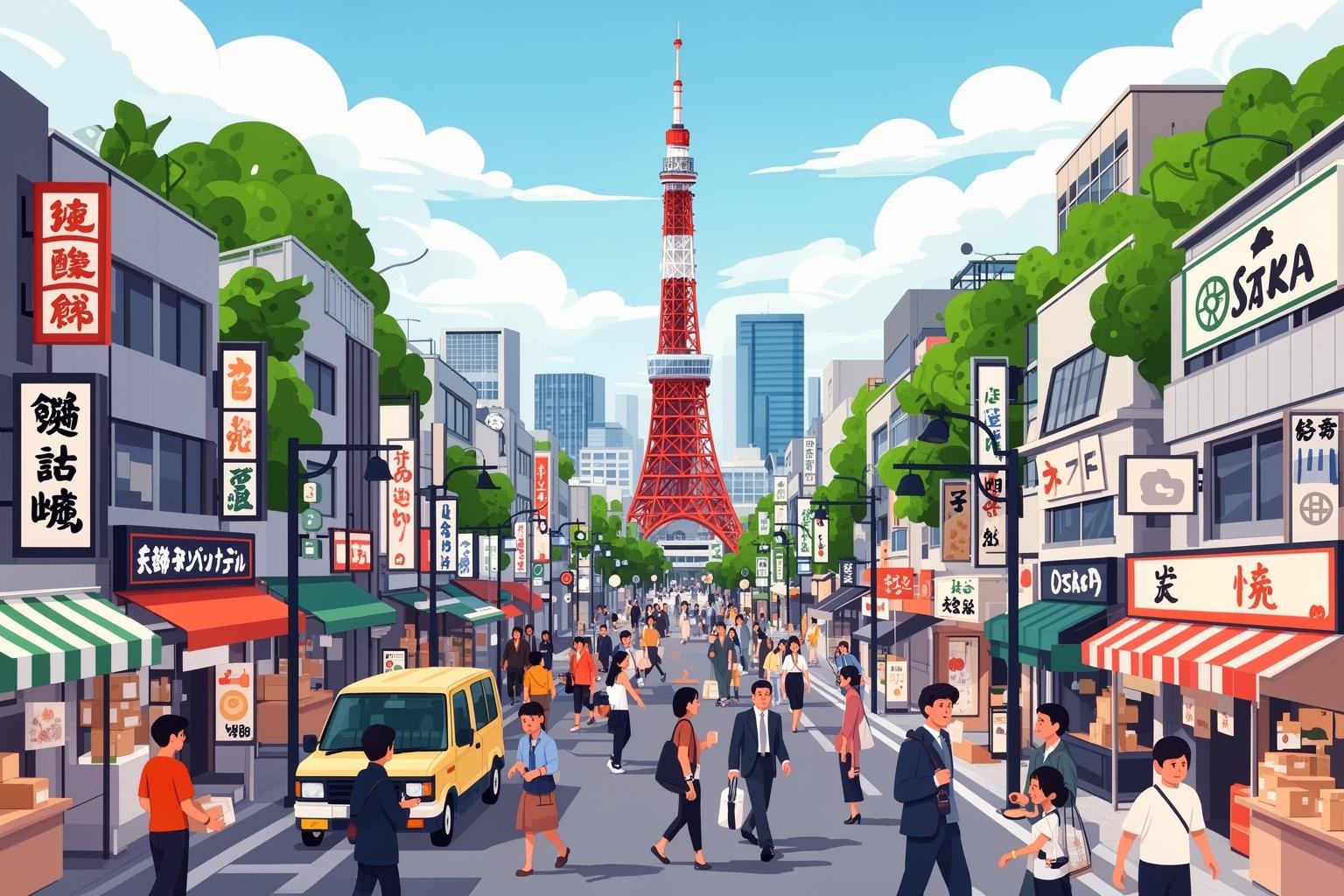
Every shotengai functions as a complex, self-sustaining ecosystem of small businesses, each playing an essential role in the daily life of the neighborhood. Navigating it is akin to learning a new language. You soon realize that the one-stop-shop convenience of the supermarket is replaced by a more intentional, multi-stop routine.
The Pillars of Daily Sustenance
At the heart of any shotengai are its primary food vendors. There’s the yaoya-san (the greengrocer), offering heaps of seasonal fruits and vegetables. Then comes the niku-ya (the butcher), where the constant hum of the meat slicer fills the air. Nearby is the sakana-ya (the fishmonger), surrounded by ice and the fresh scent of the sea, who not only sells fish but often prepares it for sashimi right before your eyes. You’ll find the tofu-ya, with vats of water and freshly made silky tofu from that morning, and the o-kome-ya (the rice seller), who will custom-mill a bag of rice for you. Crucial for any working parent is the osōzai-ya—the neighborhood deli, featuring counters brimming with glistening trays of nimono (simmered vegetables), kara-age (fried chicken), kinpira gobo (braised burdock root), and many other home-style dishes. This deli is the secret weapon of Osaka households, offering delicious, nutritious, and affordable side dishes that make putting dinner on the table much easier.
Beyond the Groceries: The Social Hubs
However, the shotengai is more than just a place to buy food. It serves as the setting where the entire fabric of daily life unfolds. There’s the small, family-run pharmacy where the pharmacist has known three generations of your family and can recommend cold medicine based on your personal history. The dry cleaner doubles as the neighborhood’s chief information officer, privy to all the latest gossip. Tiny clothing stores sell practical vests and comfortable trousers for the elderly, while the local futon shop will re-stuff and air out your bedding. Tucked into a corner, you’ll often find a kissaten, an old-fashioned coffee shop. Inside, the air is hazy with smoke, and groups of retirees—the neighborhood elders—sit for hours nursing a single cup of coffee, reading the newspaper, and discussing the world’s problems. These are not mere businesses; they are vital social hubs, the analog social network binding the community together.
What Foreigners Often Get Wrong
Navigating the shotengai as a foreigner can feel daunting, and it’s common to rely on certain misconceptions. Grasping the truth behind these assumptions is essential to fully appreciating the value of these neighborhood hubs.
Misconception 1: “It’s just for old people.”
While it’s true that the elderly are the most visible and loyal customers of the shotengai, serving as its lifeblood, it’s wrong to assume it’s solely their space. Look closely, and you’ll find young mothers with strollers taking advantage of fresh, affordable produce and a friendly, safe setting. You’ll spot working professionals quickly stopping by an osōzai-ya to pick up dinner on their way home. More and more, a new generation of entrepreneurs is revitalizing the arcades—trendy craft coffee stands might open next to longtime seaweed shops, or modern sourdough bakeries can be found opposite traditional rice cracker stalls. The shotengai isn’t a relic; it’s a dynamic space where generations mingle, blending old and new in a unique way.
Misconception 2: “It’s dirty and chaotic.”
Compared to the spotless, sterile aisles of a modern supermarket, the shotengai may appear visually cluttered. But what some see as “chaos,” an Osakan views as “energy” or “liveliness” (nigiwai). The noise, crowds, and overflowing displays are all part of the vibrant, thriving atmosphere. Worn floors and faded signs reflect a space that’s actively used and cherished daily. It’s not a pristine museum; it’s a workshop for everyday life, and workshops are naturally a bit messy. The organizational standard here is based on human interaction rather than corporate precision.
Misconception 3: “I can’t speak Japanese well enough to shop there.”
This is often the biggest concern for many non-Japanese residents, yet it’s the easiest to overcome. While some Japanese is helpful, shotengai vendors excel at communicating beyond language—they’ve been interacting with a diverse range of customers for decades. A smile, a point, or holding up fingers to indicate quantities is perfectly clear and effective. In fact, shopkeepers here are often more patient and willing to engage than the rushed cashiers at major chain stores. They seek connection as much as a sale. Any effort, no matter how limited your Japanese, will be met with warmth and encouragement. Simply starting with “Kore o kudasai” (“This one, please”) is enough to open the door to a new world of interaction.
How to “Live” the Shotengai Life
Becoming part of your local shotengai doesn’t happen instantly. It’s a gradual journey of developing familiarity and trust. It calls for a slight shift in mindset—moving away from focusing solely on efficiency and towards fostering connection.
Start Small, Stay Consistent
Don’t attempt to cover the entire arcade all at once—it can be overwhelming. Instead, choose one or two items you regularly purchase—your daily bread, the vegetables for dinner, or your afternoon snack—and buy them from the same shop each time. Make yourself a familiar face. This is the crucial first step. Consistency transforms you from a random shopper into a regular. After several visits, the shopkeeper will begin to recognize you. A simple nod soon becomes a greeting, and greetings evolve into brief conversations. This is how the foundation is laid.
Observe and Adapt
Take time to watch how the locals go about their shopping. They move with a practiced rhythm, bring their own bags or small wheeled carts, and often engage in small talk before shopping. They might ask what’s especially good that day rather than grabbing the first item they see. The pace is slower, more intentional. Also, be considerate of the unspoken rules—narrow lanes are shared spaces. Keep your bicycle off the main path, don’t stop suddenly mid-way to check your phone, and stay aware of the flow of pedestrian traffic. It’s a dance, and learning the steps helps you become a good neighbor.
Embrace the Conversation
This is the final piece. Fluency isn’t required—just willingness. Start with a comment about the weather or a simple question like, “Kore wa, dō yatte taberu?” (“How do you eat this?”). The shopkeeper’s face will likely brighten. They are passionate experts who love to share their knowledge. You might receive a cooking tip, a recipe, or an enthusiastic explanation of why their product is special. At this moment, you stop being just a consumer—you become a participant in the life of the shotengai. You’re not merely buying fish; you’re engaging with your fishmonger. And in Osaka, that’s what it’s all about.