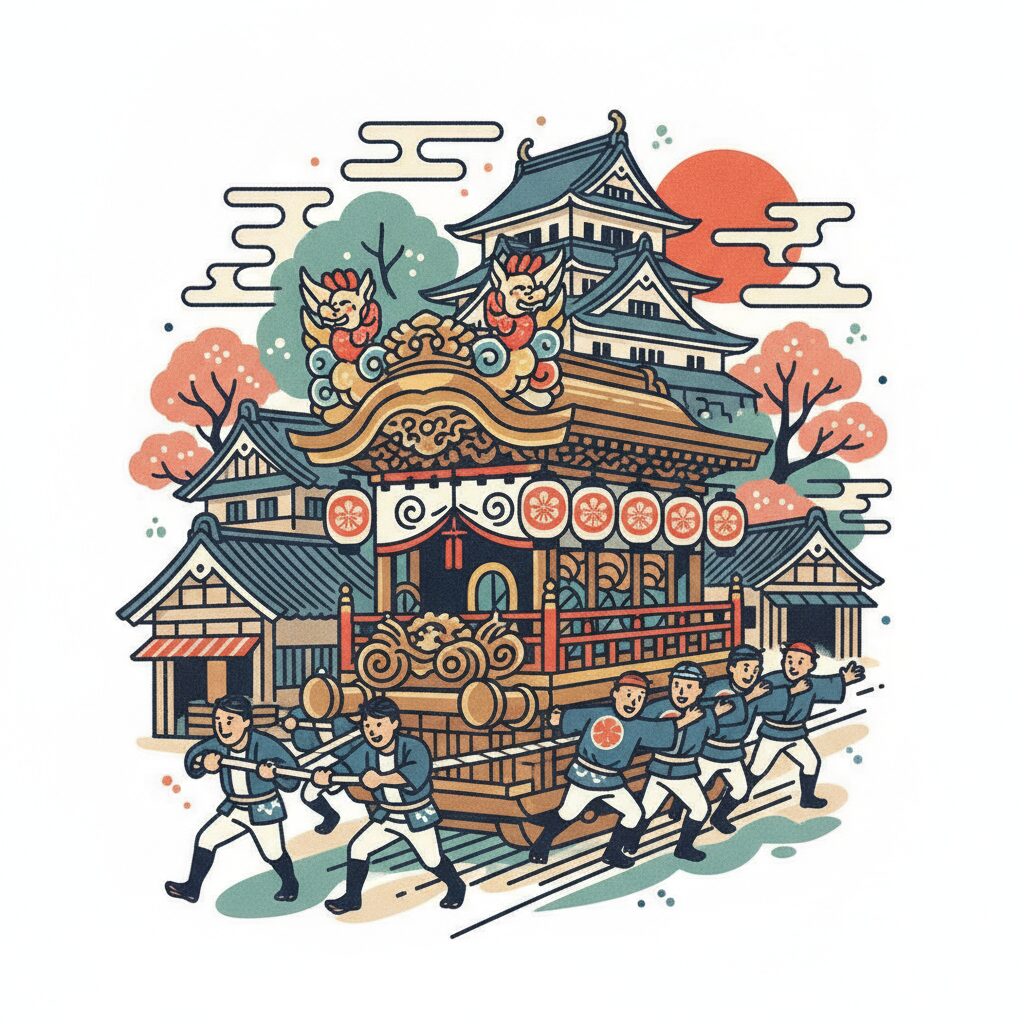
When you first move to Osaka, you get a script. Go to Dotonbori, see the Glico Man, eat takoyaki until you can’t stand up. You learn the big city beats, the neon pulse of Namba, the sophisticated hum of Umeda. It’s electric, it’s chaotic, and it’s undeniably Osaka. But it’s not the whole story. Not even close. You hear whispers of something different, something older and more intense, down south in the Senshu region. The word you hear most is Danjiri. You see the videos online—huge, thundering wooden floats, men sprinting at full speed, weaving through impossibly narrow streets, dancing on the rooftops. It looks wild, a two-day explosion of pure, unfiltered energy. And for a long time, I thought that’s all it was: a spectacular, slightly terrifying festival that happened once a year. I wondered, what’s life like in a town like Kishiwada for the other 363 days? Does the thunder just fade into a quiet seaside murmur? I had to know. So I packed a weekend bag, hopped on the Nankai Line, and went south to find the city’s true, year-round rhythm.
Discover another side of Osaka’s vibrant rhythm with a Sakai weekend adventure that captures a neighboring city’s independent spirit.
The Year-Round Danjiri Rhythm
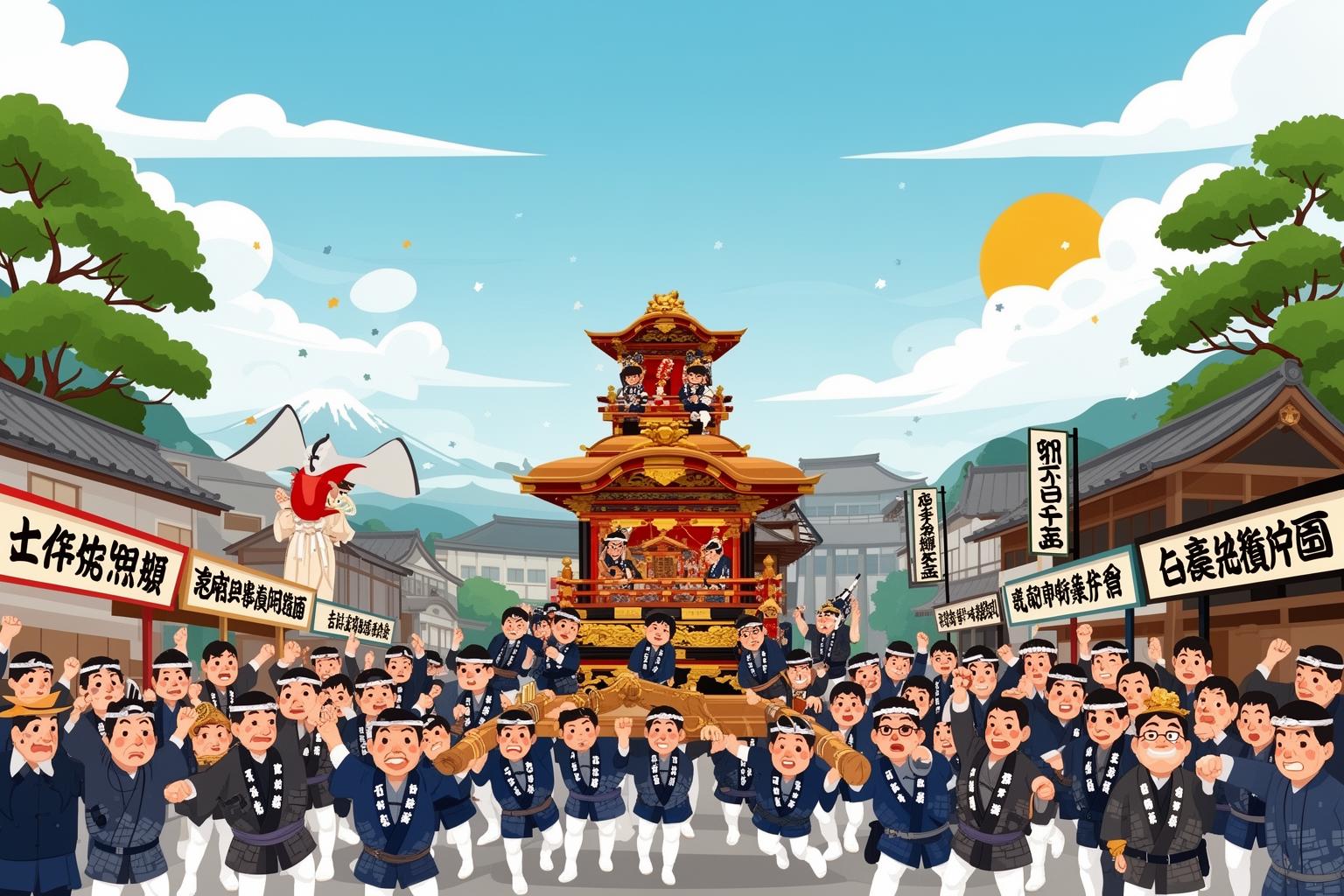
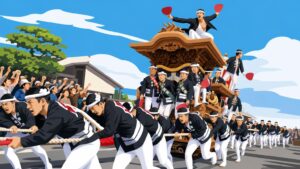
The biggest mistake you can make is assuming the Kishiwada Danjiri Matsuri is merely a September event. That’s like saying a star is simply a point of light. The festival is the bright, explosive core, but its gravity, heat, and energy influence every single day of life here. Walking through the city on a quiet Saturday, long after the crowds have dispersed, you can feel it. It’s present in the architecture, the conversations, and the very air you breathe. You might be strolling down a residential street lined with neat homes and potted plants when you suddenly spot it: a massive, temple-like garage with heavy wooden doors. This is a danjiri-goya, the sacred home of the neighborhood’s float.
These are not dusty storage sheds; they are shrines. Peeking through a crack, you might glimpse the danjiri itself, a colossal work of art carved from keyaki wood, shining under a single bare bulb. It’s adorned with intricate scenes from history and legend, a rolling museum of local pride. Sometimes, the doors are wide open, revealing a group of men, young and old, carefully cleaning the wheels or polishing the brass fixtures. This isn’t a special occasion; it’s just Tuesday. The maintenance is ongoing, a year-round ritual of care and respect. This float is the heart of their chōnai, their neighborhood association. It symbolizes their ancestors, their collective strength, and their identity in the world.
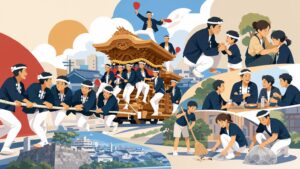
This is where Kishiwada begins to feel deeply different from Tokyo or even central Osaka. In a Tokyo neighborhood, community might mean a seasonal cleanup or a polite nod to your neighbor. In Kishiwada, community is a constant, high-stakes commitment centered around this single, shared purpose. The roles are deeply rooted. The daikugata, the men who dance on the roof, aren’t just daredevils; they are elite athletes who train tirelessly. The men pulling the ropes, numbering in the hundreds, must move as one organism. The musicians who play the flute, drum, and bell—the narimono—practice for months to perfect the frantic, hypnotic soundtrack. These roles are often inherited, a legacy passed from father to son. It’s not a hobby you casually adopt; it’s a birthright earned through sweat and dedication. Your life is marked by the festival calendar: planning meetings in winter, physical training in spring, intense rehearsals in summer, the festival’s explosive arrival in autumn, followed by a brief rest before the cycle begins anew.
The Sound of the City: More Than Just Taiko Drums
If you spend a night in Kishiwada, especially in the months leading up to September, you’ll catch the city’s authentic soundtrack. As dusk settles, a peculiar sound begins to drift through open windows. It’s a rhythmic clang, a sharp whistle, a driving beat. It’s the sound of practice. Somewhere in a local park, community center, or even an empty parking lot, a neighborhood group is running drills. They practice turns, shout commands, and perfect their timing. The narimono musical troupes are rehearsing the intricate melodies that signal speed and direction. This sound isn’t a disturbance; it’s the city’s heartbeat. It serves as a constant reminder of what unites everyone. It’s the sound of a community sharpening its edge.
Then there’s the language. If you think Osaka-ben is a thick dialect, wait until you hear Senshu-ben. It’s an entirely different level. The words are clipped, sentences rush by, and the intonation is rugged and straightforward. It’s a dialect shaped by the fishing ports and factory floors of the Senshu region. There’s no room for polite ambiguity. Communication is direct, efficient, and brutally honest. To outsiders, it can sound harsh. You might overhear what seems like a heated argument, only to see the speakers break into laughter. Foreigners and even Japanese people from other regions often misunderstand this. They hear the gruffness and mistake it for anger or rudeness. But that’s only a surface-level interpretation.
What you’re really hearing is the sound of a community that works together physically. When you’re pulling a four-ton float at a dead sprint, there’s no time for the delicate, layered language of Tokyo’s boardrooms. You need to shout clear, unambiguous commands. That directness carries over into daily life. It’s a culture that values honesty over politeness, action over words. There’s warmth, but it’s not a soft, gentle warmth. It’s the fierce warmth of a bonfire, built on shared struggle and mutual reliance. Once you grasp that, the city’s entire soundscape transforms. You stop hearing aggression and start hearing trust.
Community Over Everything: The Unspoken Rules of Kishiwada Life
This is the aspect that truly defines Kishiwada and reveals so much about the Osaka mindset. The community, the chōnai, means everything. Life centers around it in a way that can be difficult for those from individualistic cultures to understand. Your social standing, your network, your identity—all are tied to your degree of commitment to your neighborhood and its danjiri.
I was speaking with a woman who runs a small café near the castle. When I asked about her son, she began describing his Danjiri practice schedule before mentioning his school. She spoke of his wakamonogashira, the youth group leader, with the same respect one might show to a university professor. In Kishiwada, the festival organization serves as a parallel educational system. Young boys learn discipline, respect for elders, and the value of teamwork not in a classroom, but out on the streets, holding a rope. It’s there they discover that the group’s success matters more than their own comfort. This is a significant contrast to the mainstream Japanese education system, which prioritizes academic achievement above all else.
The unspoken rules hold great power. Businesses will literally close for important Danjiri meetings. Taking time off work for the festival isn’t seen as a vacation; it’s an undeniable obligation. This is where foreigners often misunderstand. Observing the drinking, shouting, and physical abandon of the festival, they dismiss it as a wild party, a form of collective madness. But it’s not chaos. It’s highly organized, deeply traditional, and extremely serious. The intensity isn’t for show; it’s the physical expression of a year’s commitment. It’s the ultimate test of the community’s bond. Calling it a party misses the point entirely. It’s a ritual that reaffirms social ties, settles disputes, and passes cultural values to the next generation. It’s the city’s most important board meeting—except it happens at thirty kilometers an hour.
This creates a social safety net that is remarkably strong. In a city like Tokyo, you might not know your neighbors for years. Your life is largely your own responsibility. In Kishiwada, your neighbors are your team. They’re the ones who will support you if your business struggles, care for your children, and show up unbidden if you’re in trouble. But this support must be earned. It results directly from your participation and contribution to the group. It’s a demanding social contract, yet the reward is a sense of belonging that feels almost primal.
Beyond the Float: Where History and Daily Life Weave Together
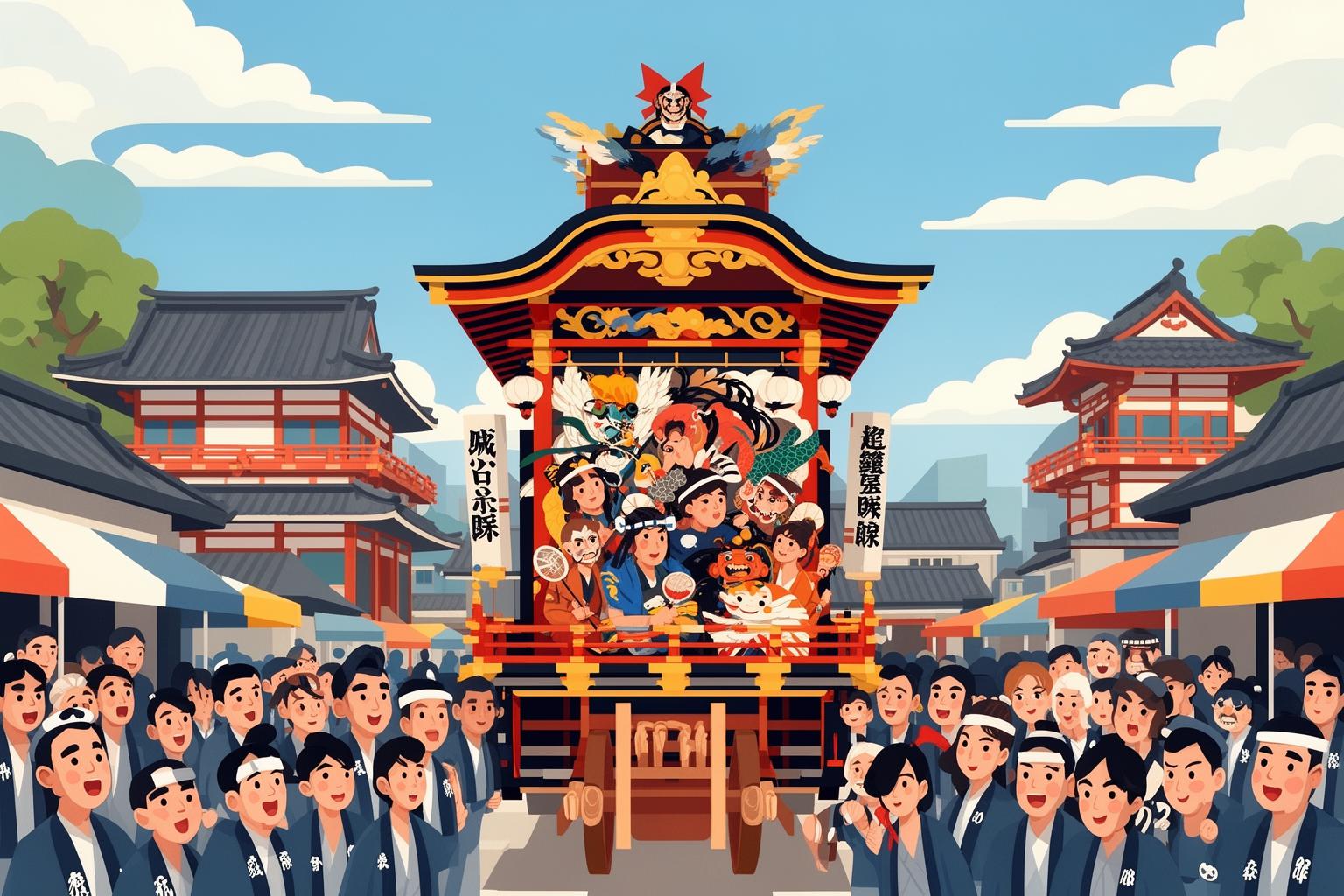
The all-encompassing Danjiri spirit extends beyond the festival itself; it influences every part of daily life. Take a stroll to Kishiwada Castle. In many cities, a castle is merely a sterile tourist spot, a place for photos and a brief history lesson. Here, it feels different. It feels alive, like the proud grandparent of the town. This castle belonged to Okabe Nagayasu, the feudal lord who, in the 18th century, founded the festival as a prayer for a bountiful harvest. Locals don’t view it as just a historical site; they see it as the birthplace of their identity. The castle grounds are a favorite gathering place for families, couples, and children practicing their Danjiri chants. It stands as a constant, tangible reminder of their roots, overlooking the city with quiet dignity.
Next, wander through the main shotengai, the covered shopping arcade. It’s a nostalgic throwback, a stark contrast to the sleek, impersonal department stores of Umeda. This place prioritizes function over form. Butchers call out to familiar customers, fishmongers showcase the local catch, and Danjiri motifs are everywhere. Towels adorned with the crest of local neighborhoods hang in a dry-goods shop. A bakery sells cookies shaped like Danjiri floats. Keychains, phone straps, t-shirts—you name it. The festival isn’t just a cultural event; it drives the local economy and serves as the central symbol of commerce.
Even the food tells the community’s story. It’s not fancy or pretentious. It’s the food of a hardworking coastal town. You must try Gatcho no Karaage, small, deep-fried lizardfish eaten whole, bones and all. It’s salty, crunchy, and perfect with a cold beer. Or sample the local Mizunasu, a unique type of eggplant so juicy and sweet it can be eaten raw, like an apple. This is nourishment. Simple, delicious, and deeply local sustenance that fuels the people who pull the floats and build the city. It is honest food for an honest town.
A Different Kind of Osaka Pride
Leaving Kishiwada and returning to the train bound for the glitter and noise of Namba felt like moving between two entirely different worlds. My weekend trip uncovered a side of Osaka that is often completely hidden from foreigners, and even from many Japanese. The city is not a single entity. The brash, money-driven, food-obsessed character of central Osaka is just one chapter in a much larger story.
Kishiwada embodies a hyper-local, deeply traditional form of Osaka pride. This pride isn’t measured in yen or Michelin stars, but in the mastery of a corner turn, in the roar of the crowd, in the shared exhaustion and joy after a successful run. It’s a pride rooted in a collective physical effort, in a history that is felt in the muscles and bones, not just learned from books. This stands in stark contrast to Tokyo. If Tokyo’s identity is a vast, shimmering mosaic of millions of individual ambitions, Kishiwada’s is a single, solid block of granite, shaped over centuries with the story of one community. It’s a story of shared fate.
Understanding Kishiwada helps deepen your understanding of Osaka. It shows you that beneath the surface of the modern metropolis, ancient, powerful currents of community continue to flow. Life here isn’t about being “friendly” in a superficial, tourist-welcoming way. It’s about something deeper, more demanding, and infinitely more fulfilling. It’s about belonging. It’s about knowing, without question, that you are part of something much, much bigger than yourself. And in our disconnected modern world, that’s a feeling worth traveling south to experience.