When you tell people you live in Osaka, a certain picture flashes in their minds. It’s a kaleidoscope of neon chaos, a Blade Runner city washed in endless rain. It’s the Glico Man running forever above Dotonbori, it’s the concrete canyons of Umeda, it’s a blur of speeding trains and a tidal wave of people. That’s the image, the brand, the city sold to the world. And it’s not wrong, exactly. But it’s like describing the ocean by showing someone a single, crashing wave. It’s true, but it misses the immense, quiet depth beneath the surface. For years, I moved through that chaotic surface, camera in hand, capturing the energy. But a question started to linger, a quiet hum beneath the city’s roar: Is this all there is? Is Osaka just a sprawling, energetic, concrete beast, a louder cousin to Tokyo with better food? The answer, I found, wasn’t in the city center. It was a forty-minute train ride south, in a place that feels like it belongs to a different century. It’s called Tondabayashi Jinaimachi, an immaculately preserved merchant town from the Edo Period. And walking its streets is less a history lesson and more a deep dive into the source code of Osaka’s very soul. This isn’t a tourist trap; it’s a living neighborhood that holds the keys to understanding why Osaka people think, act, and live the way they do. It’s where you discover that the city’s heart isn’t made of concrete and steel, but of dark wood, fired tile, and an unbreakably pragmatic merchant spirit.
After immersing yourself in the historical ambiance of Tondabayashi, you might also want to discover Sakai’s artisan knife forging traditions and ancient tomb explorations to further uncover Osaka’s rich heritage.
The Soul of the Merchant: Pragmatism Carved in Wood and Tile
More Than Just Old Buildings
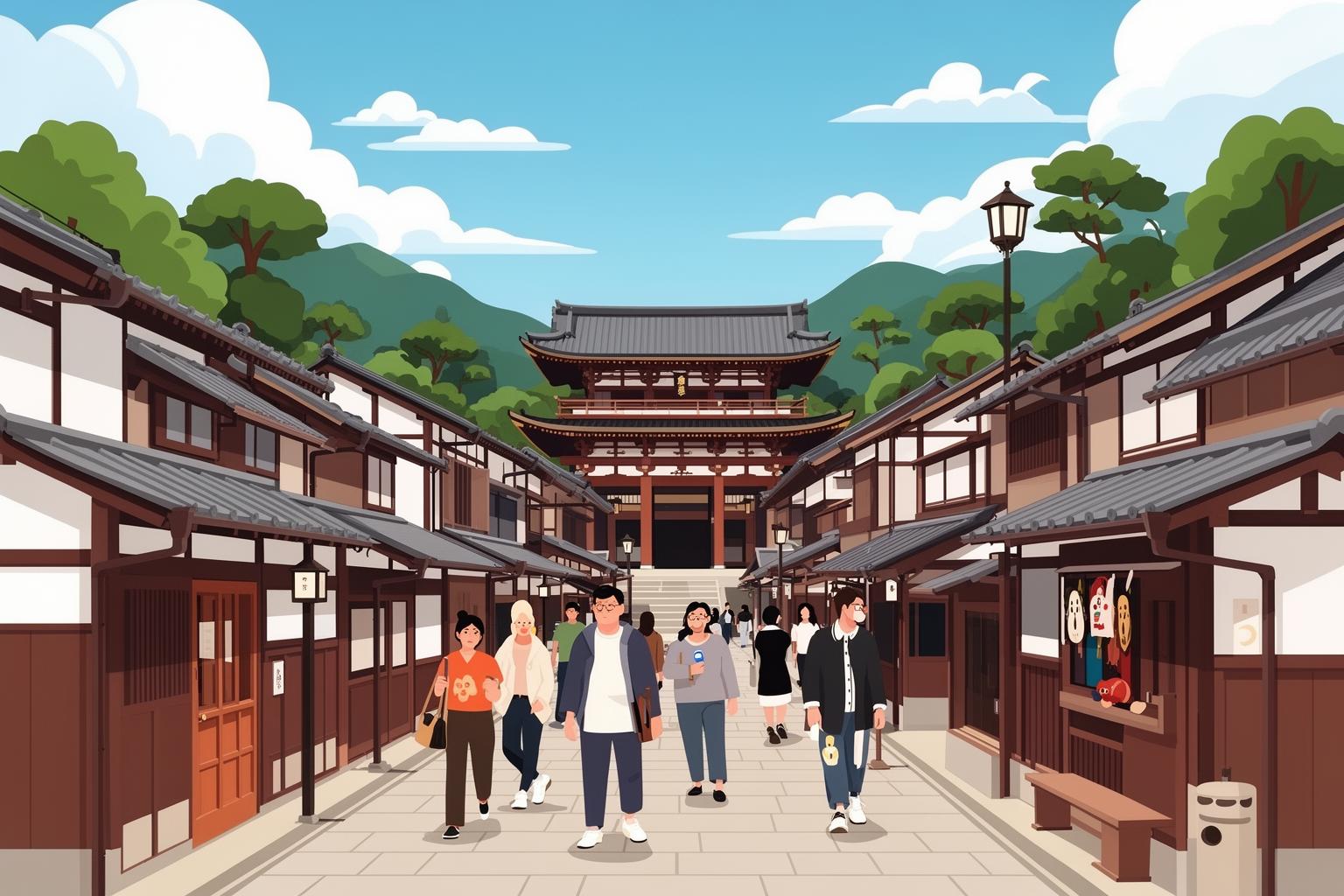
The first thing that stands out in Tondabayashi Jinaimachi is its architecture. The whitewashed plaster walls, the dark, oiled wooden lattices, and the heavy, charcoal-grey roof tiles create a stunning sight—a photographer’s dream. Yet, to appreciate these buildings solely for their beauty is to miss their deeper significance. These structures are stories told through wood and clay, reflecting the Osakan mindset. Consider the shape of the houses themselves: famously narrow at the street-facing front, but extending far back into the block. Known as unagi no nedoko, or “eel beds,” this evocative name describes their long, slender form. This design wasn’t chosen for aesthetics but was a clever, practical response to a tax system that assessed property taxes based on street frontage width. The merchants of Jinaimachi, ancestors of modern Osakans, didn’t just comply with the rule—they turned it to their advantage. Building narrow saved on taxes, while building deep maximized living and storage space. This is the physical embodiment of the Osakan spirit of kashikoi, meaning clever or shrewd, with an implication of street-smart wisdom. It’s about finding angles, advantages, and clever solutions that work within the rules but benefit you. This mindset is visible throughout modern Osaka: in the labyrinthine shotengai shopping arcades that cram countless businesses into covered streets forming a vibrant, weather-proof commercial ecosystem; and in the obsession with “cospa,” or cost performance, which drives people to queue for an hour for ramen that’s ten yen cheaper and ten percent tastier than the next place. This sharply contrasts with Tokyo’s cultural legacy, which grew from the samurai class. Samurai culture prized form, appearance, and strict hierarchy. Samurai mansions were built to showcase power and status, while Jinaimachi’s merchant houses were designed to generate profit and support family businesses. One emphasizes presentation; the other prioritizes pragmatism. This fundamental difference helps explain much of the contrast between the two cities today.
The Hidden Details Tell the Story
As you venture deeper into Jinaimachi, subtleties begin to emerge. While merchants avoided the samurai’s ostentatious displays, they developed their own language of success. This is evident in the udatsu—small, walled sections of roof that rise above the roofline between houses. Initially firebreaks, udatsu became a quiet but clear way for wealthy merchants to signal their prosperity. More elaborate and beautifully tiled udatsu indicated a more successful family, serving as a discreet boast recognizable to those familiar with the signs. The latticework, or mushiko-mado, on the second floors also tells a story—the intricacy and finesse of the woodwork reflected the owner’s wealth. Yet, from afar, everything blends harmoniously. This is the Osaka way of displaying wealth: overt flashiness is often viewed as vulgar, or gehin. True class lies in understated quality—whether it’s the perfectly marbled cut of beef in a quiet restaurant, the flawlessly smooth finish on a piece of lacquerware, or the rich, complex flavor of locally brewed sake. Foreigners often misinterpret this subtlety. They arrive in Osaka, see people dressed simply, driving modest cars, and assume there’s less wealth here than in Tokyo, with its fleets of European luxury cars and conspicuous designer logos. But the wealth is present; it’s just not shouting for attention. It hides in secluded gardens, tsuboniwa, glimpsed only through narrow passages. It resides in generations of craftsmanship behind a single knife or a flawless piece of tofu. In Jinaimachi, you learn to look beyond obvious signs of success and recognize the quiet marks of quality—a skill that deepens your understanding of the rhythms of daily life throughout Osaka.
A Fortress of Faith and Community: The Jinaimachi Spirit
The Power of Self-Governance
To truly understand Jinaimachi, you need to know the meaning behind the name itself. A jinaimachi literally means a town within a temple’s precincts. These were distinctive, self-governing towns that formed around a Buddhist temple—specifically, the Koshoji Betsuin temple, which still stands at the center of the town. Established by followers of a powerful branch of Pure Land Buddhism, these towns operated with an exceptional level of autonomy. They were not governed by a distant feudal lord or samurai official but led by their own prominent residents—the wealthy merchants. They even constructed their own defenses; remnants of the original moats and earthen ramparts remain visible, built not to guard against outside invaders but to protect the town from interference by established authorities. This history shapes Osaka’s well-known independent and sometimes defiant spirit. There exists a long-standing distrust of centralized power, particularly that emanating from Edo (now Tokyo). The ingrained cultural attitude for centuries has been: “We’ll take care of ourselves.” This spirit endures today in the fierce loyalty to local sports teams like the Hanshin Tigers, where fandom feels more like tribal identity than casual support. It’s evident in local politics, which often run on a completely different wavelength than the national discourse. It’s also visible on a more intimate scale in neighborhoods. One quiet morning in Jinaimachi, I observed an elderly shopkeeper sweeping the stone street. He didn’t stop at the edge of his own property but continued to sweep the front of his neighbor’s closed shop—a silent, habitual act of shared responsibility. This was not a city service but the jinaimachi spirit in practice: the community looking after itself. It is a powerful, unspoken social contract that continues to hold Osaka’s neighborhoods together.
The Human-Scale City
Strolling through Jinaimachi offers a sensory experience that modern urban planning has mostly overlooked. The streets are narrow, designed for pedestrians and handcarts rather than cars. This encourages a different kind of attentiveness. You walk slowly. You catch the murmur of a television from an open window, the sharp smell of daikon being pickled, the flutter of laundry drying on a second-floor balcony. It’s a place built to human scale, where the community’s life is not hidden behind tall walls and sealed windows but remains present, audible, and tangible. This organic, bottom-up urban design stands in stark contrast to the top-down mega-projects that characterize much of modern Tokyo. Developments like Roppongi Hills or Tokyo Midtown are impressive feats of engineering and investment, yet they can feel sterile—like carefully curated theme parks of urban living. Those places are designed by corporations for consumers. Jinaimachi, on the other hand, was designed by residents for residents. This fundamental difference helps explain why Osaka, even amid its chaos, often feels more accessible and grounded than Tokyo. The city is a sprawling network of these human-scale neighborhoods. Even in the shadow of Umeda’s skyscrapers, you can slip into a narrow alley and find a tiny, family-run okonomiyaki shop operating for sixty years. You can walk away from the crowds in Namba and discover a quiet residential street where the only sounds are the chime of a local temple and the clatter of a bicycle. This is what everyday life really looks like. It’s not about living in the landmarks; it’s about navigating the intricate, interwoven, human-scale spaces that connect them. Jinaimachi is the archetype—the original model of the Osaka neighborhood.
Living History, Not a Museum Piece
The Echo of Festivals and Daily Rituals
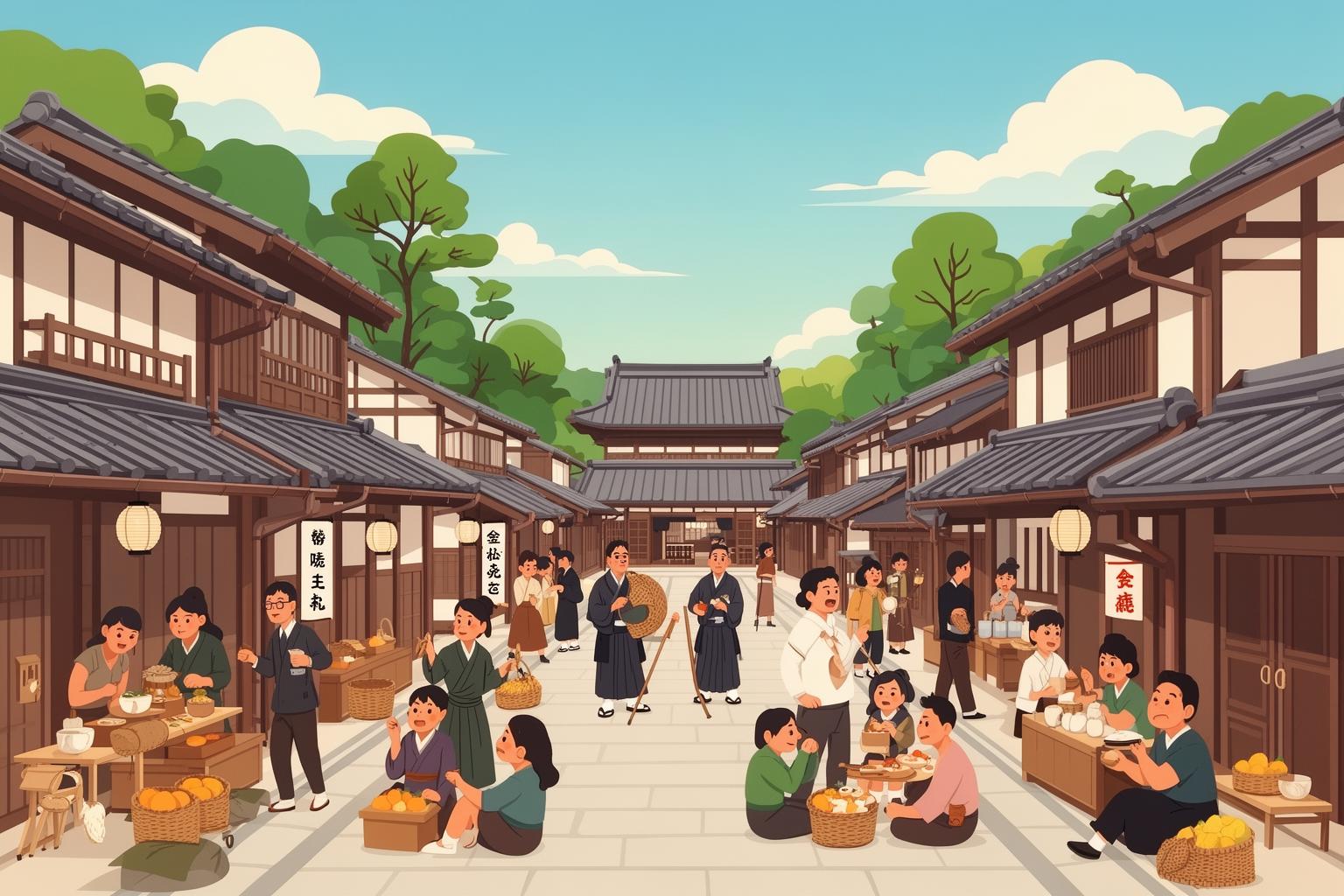
What makes Jinaimachi so captivating is that it isn’t a museum. It isn’t a perfectly preserved artifact behind glass. Rather, it is a living, breathing town where the past and present coexist in a natural, effortless rhythm. People truly live here, with families having inhabited these same wooden houses for generations. This connection is evident in small details: a modern air conditioning unit subtly attached to a 200-year-old wall, a satellite dish peeking over an ancient tile roof, a child’s plastic tricycle parked beside a stone lantern. This blend is most apparent during local festivals. During the Hina Matsuri (Doll Festival) in March, many historic homes open their front rooms to visitors, showcasing stunning collections of antique dolls handed down through their families for centuries. It’s not a formal display but a personal, intimate sharing of family heritage with the community. These celebrations form the town’s heartbeat. They’re not put on for tourists; they are rituals that strengthen bonds between neighbors. This reflects a key part of the Japanese approach to preservation, which can be puzzling to outsiders. The aim isn’t to freeze a place in time or create a sterile historical exhibit. Instead, the goal is to ensure continuity. While the buildings matter, the life inside them—the families, traditions, daily commerce—is what truly counts. History isn’t a separate attraction; it’s woven into the fabric of everyday life. A delivery driver on a scooter will zip down a street laid out in the 16th century without anyone thinking twice. This seamless blending of old and new is one of the most remarkable aspects of living in Japan, and Tondabayashi Jinaimachi stands as one of its purest expressions.
The “Regulars” and the Unspoken Rules
To truly get the rhythm of Jinaimachi, you need to engage with its small businesses. There’s a historic sake brewery, a tiny shop selling homemade tofu, a café housed in a restored merchant’s home. These aren’t sleek, modern commercial ventures; they operate on a different currency: the currency of relationships. In Osaka, becoming a jōren, or regular customer, is an essential part of integrating into local life. It means more than just frequenting the same place—it means being recognized. The tofu maker knows you prefer firm tofu. The coffee shop owner starts preparing your usual order as soon as you walk through the door. Conversations pick up exactly where they left off last time. This is worlds apart from the anonymous, hyper-efficient atmosphere of a Tokyo convenience store. For foreigners, this can feel intimidating at first. The interactions are more personal and less transactional, and you might feel like an intruder. But in reality, this is the social glue holding the neighborhood together. These small shops serve as nodes in the community’s information network—where local news circulates, where older residents check on one another, where connections are nurtured. Many foreigners misunderstand this dynamic. They might gravitate toward larger, more impersonal supermarkets and chain stores for the sake of simpler interactions. But doing so means missing out on the very essence of neighborhood life in Osaka. By taking the time to become a jōren at a local shop, you cease being just a resident and become part of the community. You enter a tradition of commerce based on trust and familiarity that originated in towns like Jinaimachi.
How Tondabayashi Explains Modern Osaka
The DNA of the “Akindo”
Strolling through Tondabayashi Jinaimachi feels like discovering a Rosetta Stone for understanding modern Osaka. Many of the city’s quirks, its vitality, and defining traits trace back to the culture of the akindo, the merchant class. The pragmatism, street savvy, obsession with a good bargain, skepticism of authority, subtle display of quality, and strong community loyalty are all here, embedded in the town’s layout and architecture. When a shopkeeper in the Tenjinbashisuji Shopping Arcade playfully haggles with a customer, you’re hearing the echo of centuries of commerce along these narrow streets. The dense, clever use of space in the small bars and restaurants tucked beneath the train tracks at Shin-Umeda Shokudogai exemplifies the modern-day application of the “eel bed” principle—maximizing value in limited space. Even the Osakan dialect, with its direct, earthy, and often humorous focus on business and money (moukarimakka? – “making a profit?”), was shaped in these market towns, far from the formal, polite language of the samurai court in Edo. Jinaimachi stands as a living blueprint, showing that Osaka’s culture is not a recent development but a deep, enduring current flowing through centuries.
Why Osaka Isn’t “Tokyo-Lite”
Ultimately, a place like Tondabayashi Jinaimachi offers the clearest response to the longstanding question of how Osaka differs from Tokyo. It’s not merely about food, accents, or attitude. It’s about a fundamental difference in historical DNA. Tokyo’s identity was shaped from the top down by the shogun, samurai, and later by the imperial government and large corporations. It is a city of power, hierarchy, and carefully maintained public images. Osaka’s identity, on the other hand, was built from the bottom up by the akindo in self-governing towns like Jinaimachi. It is a city of commerce, pragmatism, and communities that look out for one another. Living in Osaka means experiencing this difference daily—in the way strangers strike up casual conversations on the train, how a neighborhood comes together for a local festival, or how business often still relies on handshakes and enduring relationships. Foreigners trying to understand Osaka by comparing it to Tokyo begin from the wrong premise. It is neither “Tokyo-Lite” nor “Tokyo’s unruly sibling.” It is its own entity, governed by a distinct cultural logic. As a photographer, I arrived in Jinaimachi to capture images of the past and left with a clearer vision of the present. I realized that to reveal Osaka’s true character, you don’t point your lens at futuristic skyscrapers—you focus on the spaces in between: the old wooden houses, the bustling shotengai, the faces of shopkeepers, and the quiet resilience of its neighborhoods. It is there, in the legacy of Tondabayashi’s merchants, that the city’s enduring, unshakable heart resides.