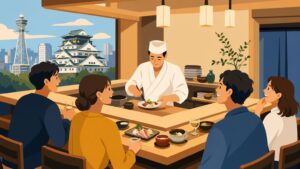
You’ve made it to Osaka. You’ve navigated the train system, found an apartment, and maybe even conquered the linguistic challenge of ordering your first bowl of ramen. But then, a quiet reality sets in, one that doesn’t make it into the travel vlogs. It’s Tuesday night, you’re tired from work or school, and the thought of dicing a single onion feels like climbing a mountain. Eating out every night is a fast track to an empty wallet, and your culinary repertoire might not yet extend to a full Japanese meal. You stand in your tiny kitchen, staring at a pristine but empty rice cooker, and wonder: How do people actually survive here? How do they eat, day in and day out, without spending a fortune or living on instant noodles?
The answer, my friend, isn’t in a fancy restaurant or a secret cooking class. It’s under the bright, fluorescent lights of your neighborhood supermarket, in a corner of the store that hums with a quiet, powerful energy. Welcome to the world of souzai—the prepared dishes of the supermarket deli. This isn’t just about convenience food; it’s a window into the very soul of Osaka. It’s where the city’s famous love for food (kuidaore, or eating until you drop) collides with its equally powerful obsession with value and pragmatism. Forget the castles and the neon signs for a moment. To truly understand how Osaka works, you need to understand the art of the supermarket deli. This is your survival guide.
When daily convenience leaves you craving a change, consider a nostalgic escape exploring satoyama scenery and local cafes to experience another side of Osaka’s charm.
Beyond the Bento Box: Deconstructing the Souzai Aisle
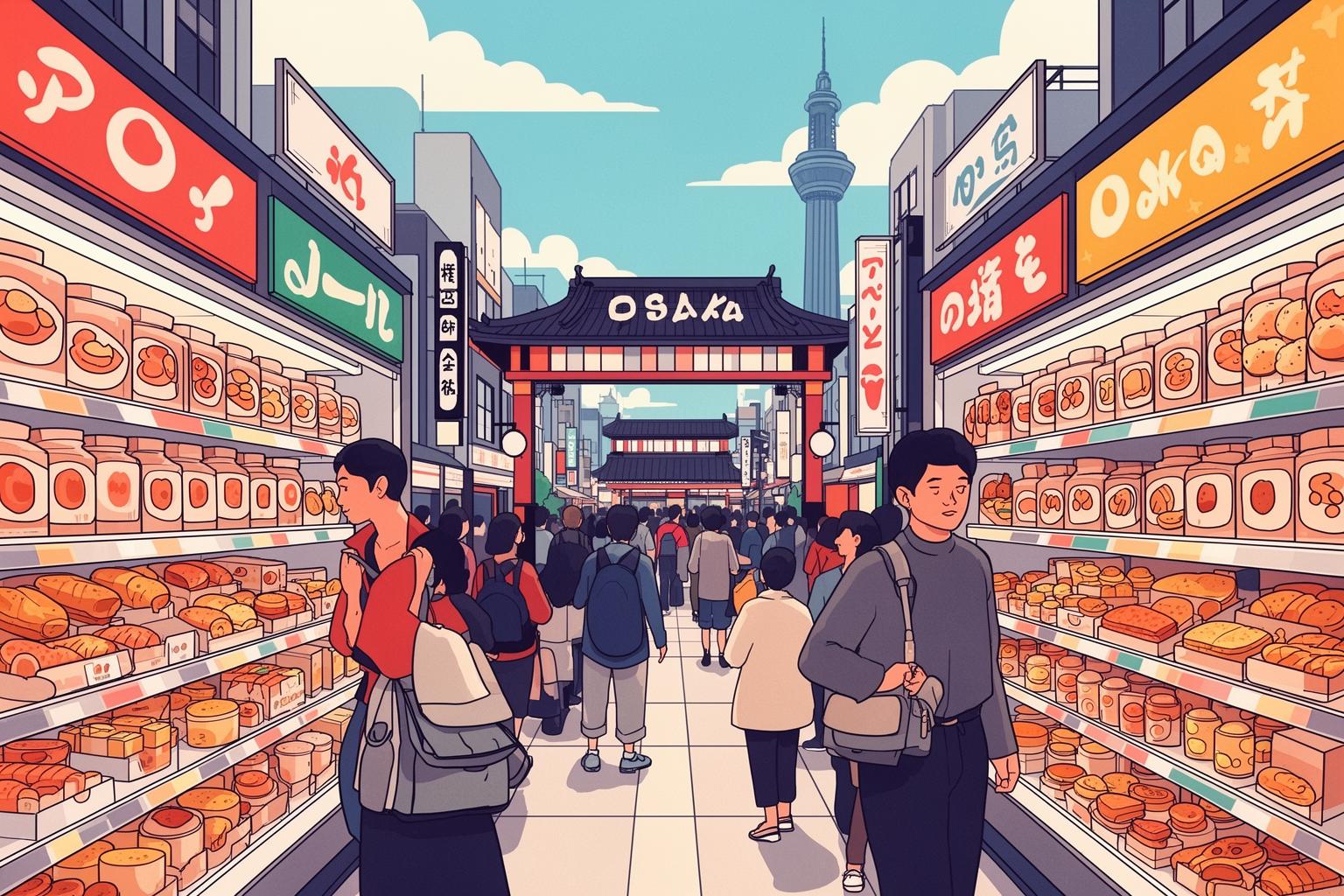
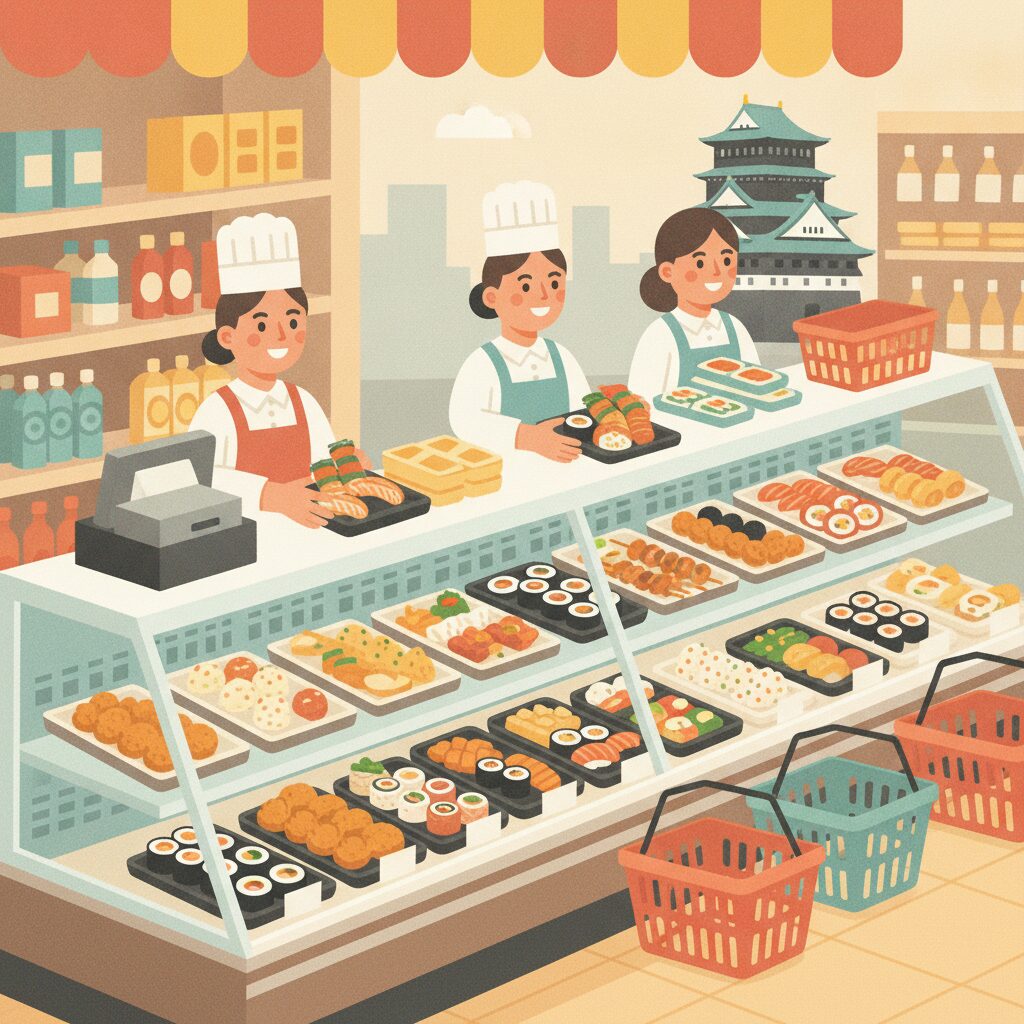
Your first visit to the souzai section can feel overwhelming. It’s a lively array of plastic containers, each holding a part of a potential meal. It’s much more than just pre-made bento boxes, though those are certainly available. This is an à la carte system, designed for maximum flexibility. You are the architect of your dinner, and the souzai aisle offers the building blocks. To navigate it successfully, you need to understand the basic categories, the culinary language spoken in every supermarket—from the sleek basements of Umeda‘s department stores to the bustling aisles of a local Tamade.
The Holy Trinity: Agemono, Yakimono, Nimono
At the core of any souzai corner lie three pillars of Japanese home cooking. Mastering these is your first step to deli fluency.
First, there’s agemono, or fried foods. This section often has the most enticing aroma—a siren call of hot oil and savory indulgence. Here you’ll find golden-brown karaage (Japanese fried chicken), crispy korokke (potato and meat croquettes), perfectly breaded tonkatsu (pork cutlets), and plump ebi-fry (fried shrimp). This isn’t delicate health food; it’s hearty, satisfying, and deeply comforting. It’s the answer after a long day—the protein-packed centerpiece of a no-fuss meal. The quality is impressively high; the chicken stays juicy, and the katsu’s breading is delightfully crunchy. It’s proof that even convenience food in Osaka upholds a high standard of deliciousness.
Next is yakimono, the grilled and pan-fried dishes. The standout here is often yakizakana (grilled fish). A perfectly grilled mackerel or salmon, with crisp skin and flaky flesh, is a simple yet profound pleasure. Making this at home usually involves smoke, a lingering fishy smell, and a tricky cleanup for your small grill. The souzai version delivers all the flavor with none of the hassle. This is pure pragmatism. Alongside the fish, you’ll find glistening teriyaki chicken, neatly rolled tamagoyaki (Japanese omelet), and small savory hanbagu (hamburger steaks), often coated in demi-glace or tomato sauce. These are the dependable staples of the dinner table.
Finally, and perhaps most importantly, there is nimono, or simmered dishes. This is where you find the soul of Japanese home cooking—the flavors of ofukuro no aji (mom’s cooking). Look for plastic packs filled with earthy kabocha no nimono (simmered pumpkin in dashi and soy sauce), complex chikuzenni (a mix of chicken and root vegetables like carrots, lotus root, and bamboo shoots simmered in a savory broth), and humble kiriboshi daikon (simmered dried radish). These dishes are time-consuming to make from scratch, requiring patience and a gentle touch. The souzai versions provide a direct line to these traditional, comforting flavors. Buying a pack of nimono is like outsourcing the most time-intensive part of dinner, allowing you to enjoy a taste of home even on the busiest nights.
Salads and Sides: The Supporting Cast
No meal is complete without side dishes, and the souzai section shines here. This isn’t your typical deli coleslaw. You’ll find generous portions of potato salad and macaroni salad, both made with Japanese mayonnaise, which gives them a distinctively sweeter, richer flavor and smoother texture. Vibrant green salads are available, as well as uniquely Japanese preparations like goma-ae (vegetables, usually spinach or green beans, dressed in a sweet sesame sauce) and various tsukemono (pickles) that add an essential acidic crunch to the meal. These sides aren’t afterthoughts—they are vital components that help create a balanced, multi-flavored dinner plate. You can pick up a single serving of three different sides and instantly have a varied and interesting meal, a feat that would require a mountain of prep work in your own kitchen.
The Osaka Rules of Engagement: Timing is Everything
Now you know what to buy. But in Osaka, how and when you buy it is a crucial aspect of the culture. This isn’t a mere transaction; it’s a strategic game, a daily ritual that reflects the city’s essence: a fierce, unapologetic passion for bargains, governed by a surprising set of unspoken social rules.
The Pre-Dinner Rush and the Art of the ‘Waribiki’ Sticker
As the afternoon progresses, a subtle tension starts to build in the souzai aisle. This is the lead-up to the main event: the arrival of the waribiki shiru—the discount sticker. Around 5 or 6 PM, and again an hour or two before closing, a staff member will appear, armed with a sticker gun. This is the signal. A slow, casual circling of shoppers begins. They might pretend to be inspecting the tofu or milk, but their eyes are fixed on the souzai.
The first wave of stickers tends to be modest: 20% off, maybe 30%. This caters to the cautious, those who want a deal but want to secure their preferred dish. However, the true prize, the holy grail, is the gleaming gold or red han-gaku sticker: 50% off. Half price.
The hunt for the half-price sticker is a performance. It’s a ballet of baskets, a silent negotiation of personal space. A polite game of chicken played at a walking pace. No one shoves or shouts. Yet, there is an intense, focused energy. People track the sticker-wielding staff like predators stalking prey. The moment the sticker is slapped on a pack of karaage, a hand swiftly and gracefully snatches it from the shelf. It’s done.
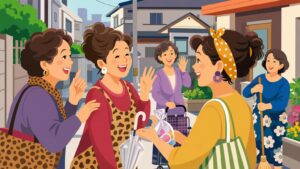
This is quintessential Osaka. In Tokyo, this process might be more discreet, perhaps even a bit shameful. But here, it’s a source of pride. Scoring a half-price tonkatsu isn’t seen as cheap; it’s seen as kashikoi—clever, sharp, savvy. It’s a victory. You’ll see strangers exchange knowing nods. You might even hear an older woman say: “Anata, ee mon getto shita na!” (“Wow, you got a good one!”). It’s a shared experience, a collective celebration of value. Wasting food is bad, but paying full price when you could have waited an hour is, in its own way, a far greater sin.
Reading the Room: Supermarket Social Dynamics
There are unwritten rules in this game. You don’t hover right over the employee’s shoulder; that’s too aggressive. You don’t grab an item before the sticker is fully applied. And you don’t hoard. Taking the last three packs of half-price gyoza is a major faux pas. You take what you need for dinner tonight. It’s a system built on a shared understanding of fairness and timing.
This dance also varies depending on the supermarket. The discount hunt at a high-end department store like Hankyu is a far more subdued, elegant affair than the free-for-all at a budget supermarket like Tamade. Understanding these nuances is part of becoming a local. You learn the rhythm of your neighborhood store, the exact times when discounts are likely to appear, and the level of competition you’ll face for that half-price grilled salmon.
How the Souzai Shapes the Osaka Lifestyle
The souzai corner is more than just a place to purchase food; its very presence influences and supports the lifestyles of millions in the city. It addresses the challenges of modern urban living, specifically catering to the needs of Osaka.
The Single Person’s Lifeline
For the large number of students, young professionals, and singles living in small apartments, the souzai aisle serves as a vital lifeline. Cooking for one is often inefficient. Buying a whole daikon radish or a large pack of meat can lead to waste. The souzai section offers perfectly portioned meals. You can pick up two pieces of karaage, a scoop of potato salad, and a small serving of simmered pumpkin. The result is a varied, balanced, and affordable meal with no food waste and minimal cleanup. It saves time and mental effort—valuable assets in a busy lifestyle.
The Working Parent’s Secret Weapon
In Japan, there is strong social pressure, especially on mothers, to provide healthy, home-cooked meals. The souzai aisle acts as a socially accepted ‘cheat code’ to achieve this. A working mother can come home, prepare rice and a simple miso soup, and complete the meal with grilled fish, chikuzenni, and salad—all sourced from the supermarket. The meal is balanced, delicious, and both looks and tastes homemade. This clever compromise allows families to eat well without overburdening one person. It respects modern realities while upholding the tradition of shared family meals.
It’s Not ‘Lazy,’ It’s ‘Kashikoi’ (Clever)
A common misconception among foreigners is to see prepared food as lazy or less healthy. However, in Osaka, the perspective is different. The question isn’t, “Why didn’t you cook?” but rather, “Why spend an hour cooking something you can buy for 300 yen?” This reflects the philosophy of cos-pa—cost performance—applied to time. Time is a precious resource. Buying a delicious, professionally made souzai dish that frees up an hour for relaxation, study, or family is not lazy—it’s a smart use of resources. It rejects performative domesticity in favor of practical, joyful living.
The Taste of a Neighborhood: Supermarket Terroir
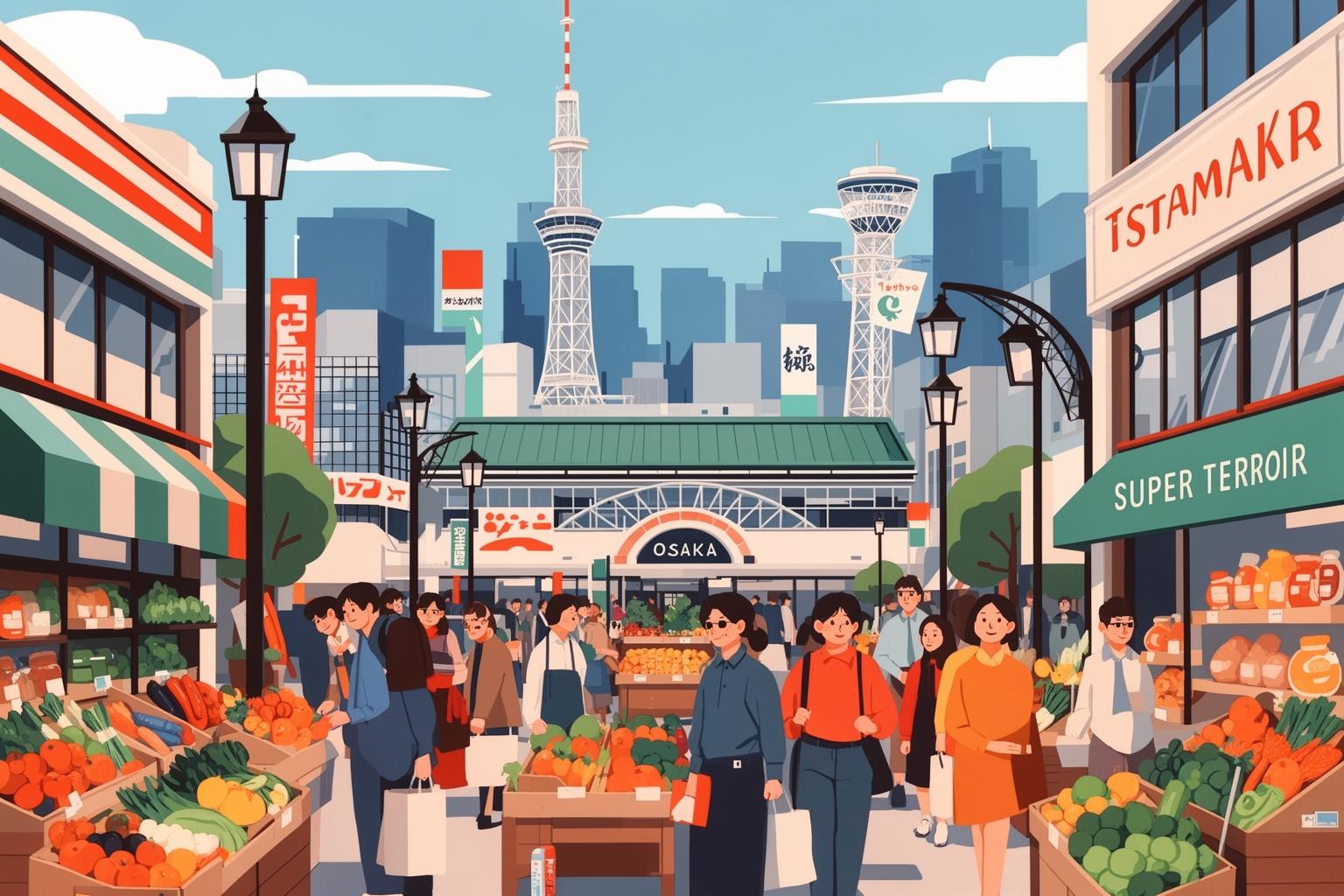
One of the most intriguing things you’ll notice is that not all souzai is made equal. The deli section of a supermarket directly reflects its customers and the neighborhood it serves. In a way, supermarkets have their own terroir.
Department Store Basements (Depachika): The Gourmet Level
Visit the basement of any major department store like Hankyu, Daimaru, or Takashimaya, where the souzai aisle, called the depachika, transforms into a gourmet food hall. The lighting is softer, and the presentation is flawless. You’ll find elaborate salads, premium roast beef, and dishes from renowned local restaurants, all packaged for takeaway. Naturally, it’s pricier. This souzai is for special occasions, when hosting guests, or when you want to indulge in something luxurious without the formality of dining out.
The Local Chain (Mandai, Life, Kansai Supermarket): The Everyday Choice
These are the workhorses of the Osaka supermarket landscape. They strike the best balance of quality, variety, and price. Their souzai sections are extensive and dependable. This is where most people do their everyday shopping and where intense discount wars happen. The quality remains consistently good, designed as a reliable staple for the local community. This sets the baseline, the everyday standard by which all others are measured.
The Budget Fighter (Gyomu Super, Super Tamade): The Wild Frontier
At the opposite end of the spectrum is another story. Gyomu Super (Business Supermarket) targets bulk buyers but also offers a surprisingly solid souzai selection at rock-bottom prices. The quality can be hit-or-miss, but the value is unmistakable. The true champion of budget Osaka is the notorious Super Tamade. With its flashy neon lights, pachinko-parlor vibe, and constant loudspeaker announcements, a visit to Tamade is a cultural event itself. Their souzai is famously inexpensive. You might find a whole bento for 250 yen or a pack of korokke for 100 yen. The flavor is… functional. It’s fuel. Tamade is an unapologetic tribute to Osaka’s obsession with low prices. Not for the faint-hearted, but an indispensable part of the city’s ecosystem.
A Final Word on Your Souzai Journey
Living in Osaka teaches you to find culture in the everyday. It’s not always found in grand temples or famous landmarks. Sometimes, it’s in the quiet buzz of a supermarket deli after 7 PM. The souzai aisle is more than just a selection of prepared foods; it’s a living, breathing reflection of the city’s deepest values.
It tells a story of practicality amid busy lives. It reveals a genuine love of good food that insists even convenience items must be delicious. And above all, it celebrates the excitement of a good deal—the cleverness of securing value, not as a sign of poverty but as a badge of pride. It’s the spirit of the merchant city, alive and thriving, unfolding every night over packs of discounted karaage.
So next time you’re tired and hungry, skip the convenience store onigiri. Head to your local supermarket. Stroll through the souzai aisle. Watch the dance. Wait for the stickers. Don’t hesitate. Grab a basket, pick out a few dishes, and join the nightly ritual. You’re not just buying dinner—you’re taking part in the real, everyday life of Osaka.