
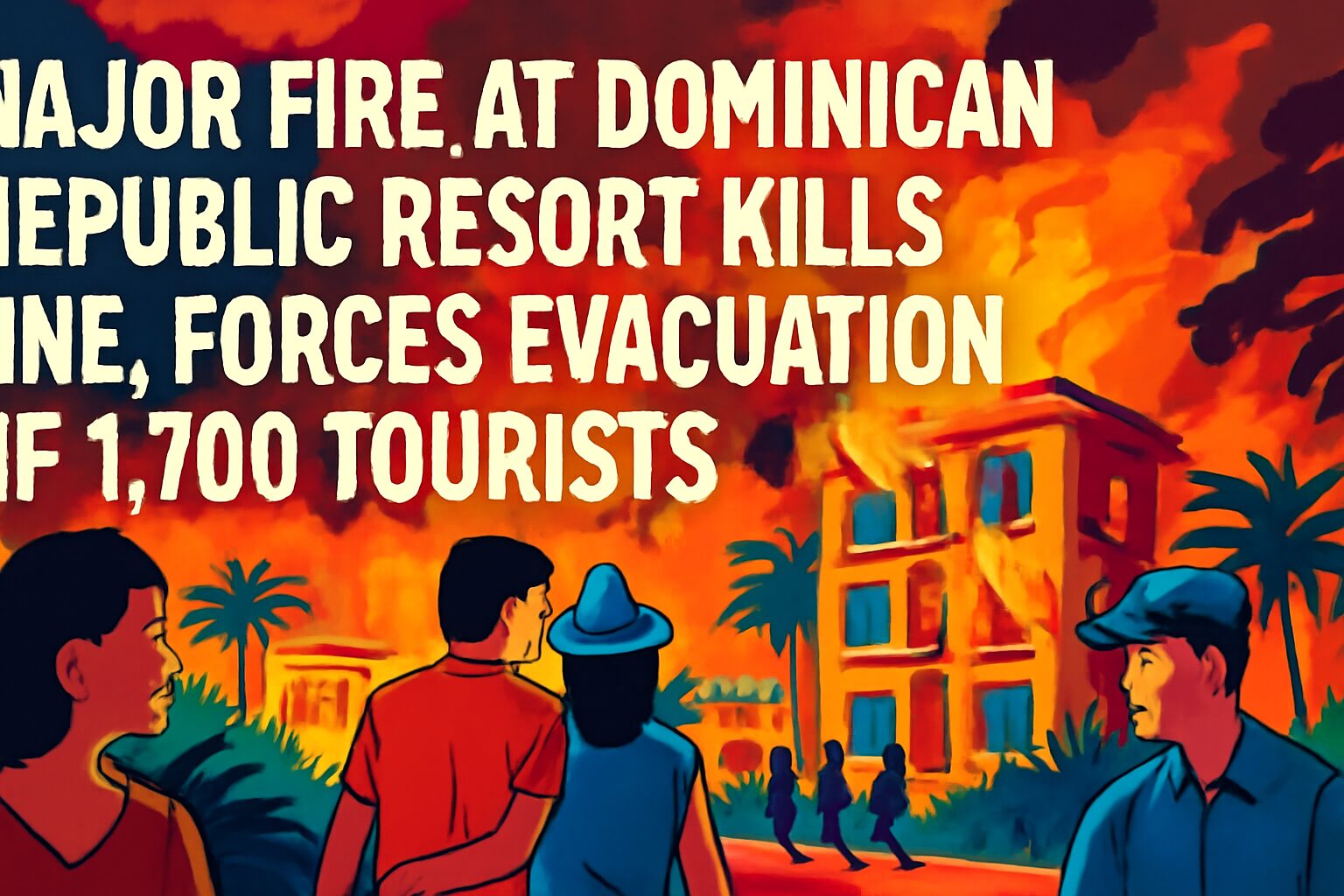
A tragic fire at a popular luxury resort in the Dominican Republic has left one person dead and forced the emergency evacuation of nearly 1,700 guests and staff. The incident, which unfolded on the morning of June 19, 2026, has sent shockwaves through the global tourism sector, raising urgent questions regarding safety protocols, architectural materials in tropical destinations, and how travelers will evaluate risk when booking future accommodations.
Details of the Incident at Viva Wyndham Dominicus Beach
The fire broke out at approximately 11:00 a.m. at the Viva Wyndham Dominicus Beach Hotel, a four-star resort situated in the coastal town of Bayahibe in the La Altagracia province. At the time of the emergency, the hotel was operating at an 84 percent occupancy rate.
Emergency response teams evacuated exactly 1,690 tourists from the property, relocating them to nearby facilities, including the adjacent Viva Wyndham Dominicus Palace, which remained undamaged. Despite the rapid evacuation efforts, the Dominican Republic’s Emergency Operations Center confirmed the death of a 46-year-old Italian national. In addition to the fatality, nine individuals sustained injuries; three were transported to local hospitals, while six received immediate medical attention at the scene.
Background: Architectural Vulnerabilities and Rapid Spread
Preliminary investigations highlight that the blaze spread at an alarming rate due to strong coastal winds and the highly combustible nature of the resort’s traditional architecture. Many of the structures along the beach featured thatched roofs made of dry palm and cane. While these materials are aesthetically pleasing and culturally authentic, they present severe fire management challenges.
Once the dry thatch ignited, the flames rapidly consumed the beachfront buildings before local firefighters from La Romana could fully contain the perimeter. This event underscores the inherent risks of utilizing traditional, highly flammable materials in densely populated tourist zones without adequate fire-suppression technology.
Future Implications for the Hospitality Sector and OTAs
The fatal incident in Bayahibe is expected to trigger significant changes across the international hospitality landscape, affecting both hotel operators and consumer behavior.
In the immediate future, global hotel chains are anticipated to conduct rigorous audits of their fire safety protocols, especially in resorts utilizing natural building materials. There will likely be an industry-wide push to mandate effective fire-retardant treatments on thatched structures, alongside the installation of enhanced early-warning smoke detection systems calibrated for open-air environments.
Furthermore, this tragedy will heavily influence booking patterns on Online Travel Agencies (OTAs). Modern travelers are becoming increasingly conscious of resort safety standards and crisis response capabilities. OTAs may soon face pressure to prominently display safety certifications, evacuation capabilities, and structural risk assessments directly on their property listing pages.
For travelers based in Osaka and the broader Kansai region—a demographic that traditionally places a premium on safety and disaster preparedness when planning overseas vacations—transparent crisis management policies will become a critical deciding factor. Accommodations that fail to clearly communicate robust emergency protocols may see a measurable decline in international bookings. Ultimately, the events of June 2026 serve as a somber reminder that idyllic destinations must balance authentic atmospheric design with uncompromising safety standards to protect the lives of their guests.








