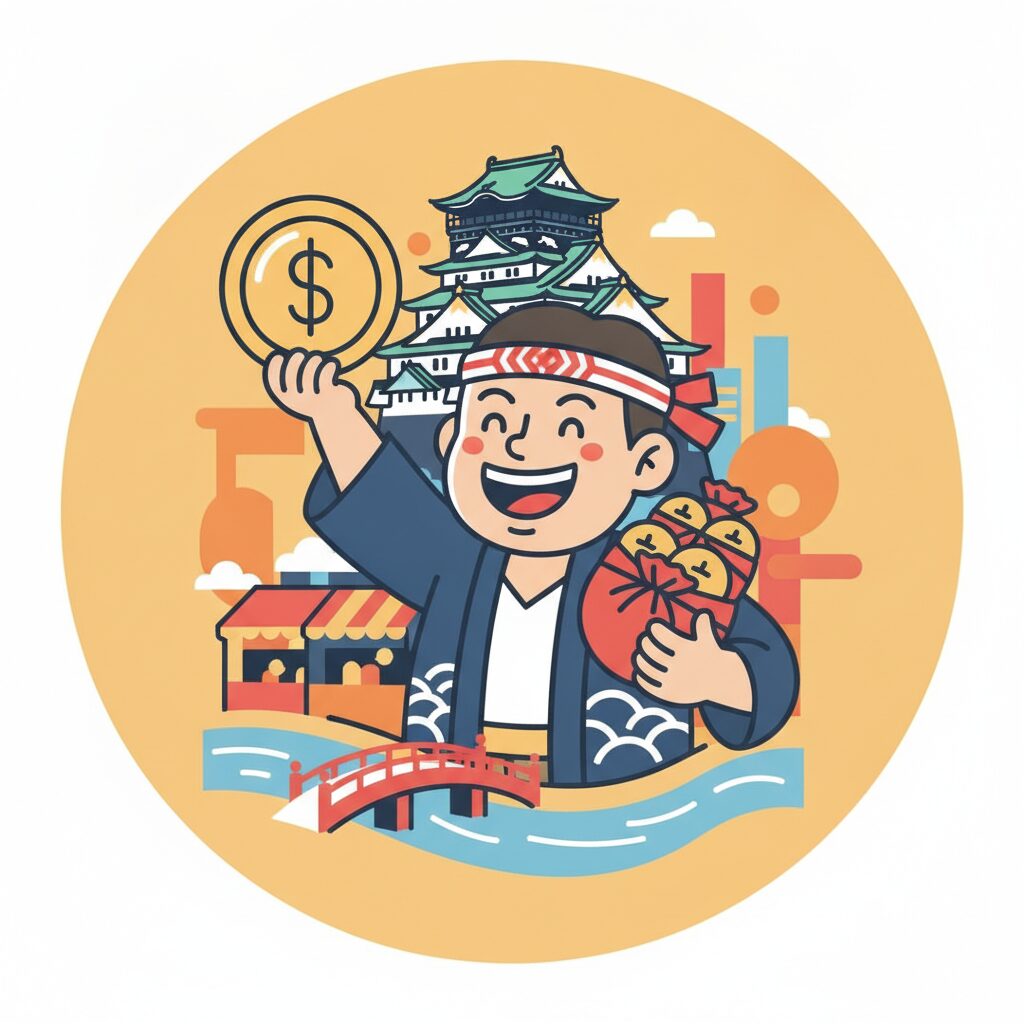
You feel it the moment you step off the Shinkansen. The air in Osaka crackles with a different kind of energy. It’s louder, faster, more direct. You go to a local market, and the shopkeeper doesn’t just sell you an apple; they engage you in a rapid-fire conversation, ask where you’re from, and maybe slip an extra orange into your bag with a wink. You try to pay, and a playful negotiation might just break out. In Tokyo, you felt the quiet hum of polite efficiency. Here, you feel the lively, chaotic pulse of commerce. This isn’t just about business; it’s a way of life. This is the ‘Akindo’ spirit—the soul of the merchant—and it’s the invisible engine that powers every interaction in this city, from the grandest deal to the simplest greeting. Forget the quiet formalities you learned. To understand Osaka, you need to understand that life itself is a transaction, a negotiation, a constant search for value in the most human sense of the word.
The vibrant pulse of Osaka’s merchant culture is matched only by how unforeseen events—such as a major fire incident at a Dominican Republic resort—can dramatically alter the economic landscape.
The Art of the Deal: More Than Just Money
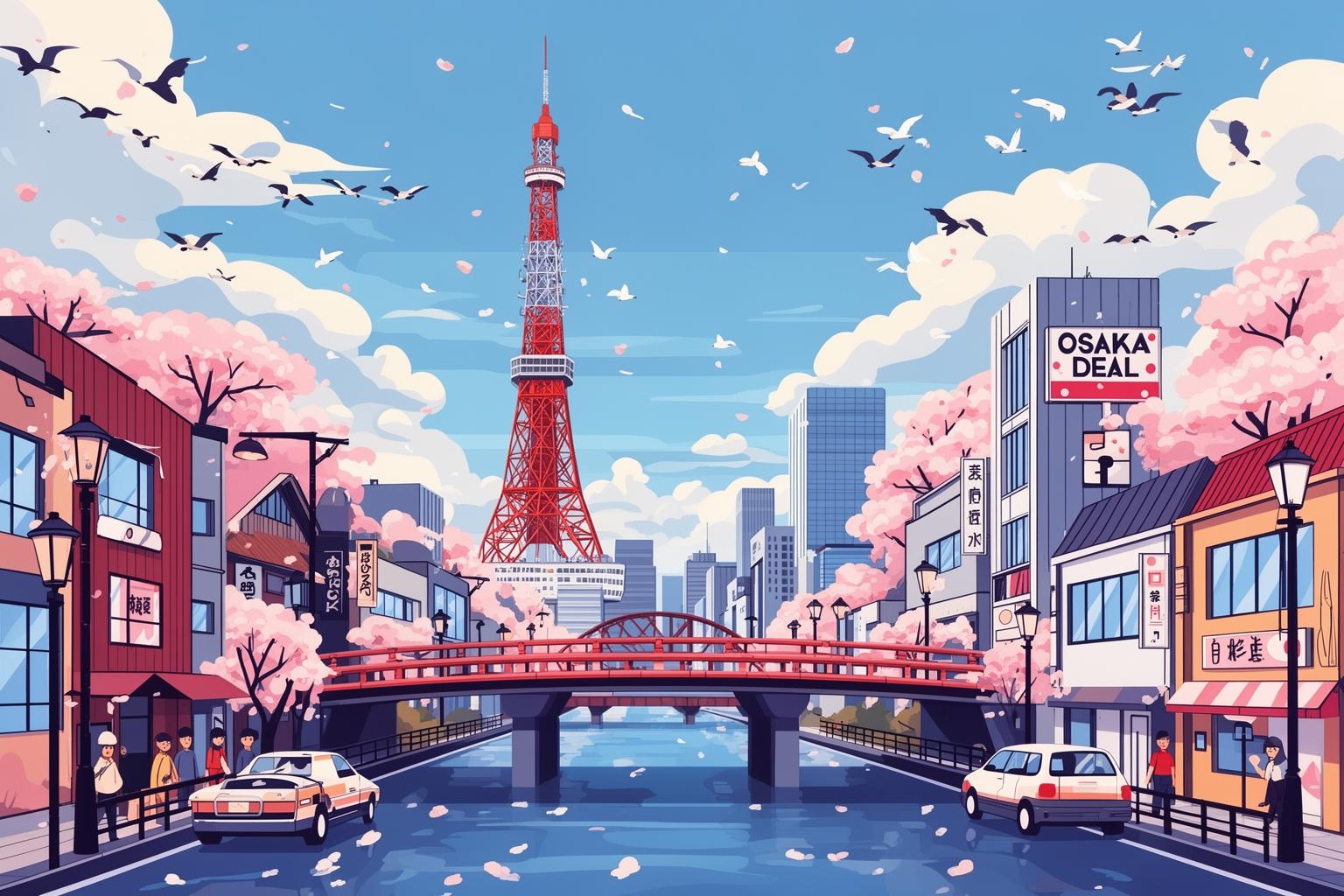
In Osaka, shopping is not merely a passive activity; it’s a performance, a conversation. Historically, the city was Japan’s commercial center, known as the ‘nation’s kitchen,’ where rice and goods from all over the country were exchanged. This heritage isn’t confined to museums. It lives on in the covered ‘shotengai’ shopping arcades, the lively electronics district of Nipponbashi, and in the spirited calls of vendors at the Kuromon Market. The Akindo spirit teaches that an item’s value goes beyond its price tag. True value lies in the interaction—the relationship formed between buyer and seller—and the satisfaction of a clever, mutually beneficial transaction.
“Mokkari-makka?”: The Million-Dollar Greeting
Strolling through a shotengai like Tenjinbashisuji, you’re likely to hear it. One shopkeeper calls to another, “Mokkari-makka?” which literally means, “Are you making a profit?” The customary response, accompanied by a smile, is, “Bochi-bochi denna,” or “So-so, bit by bit.” To outsiders, this might seem like an intrusive or rude question about someone’s finances. But that couldn’t be further from the truth. This isn’t an inquiry; it’s Osaka’s way of saying “How are you?” It’s a cultural handshake grounded in a shared identity as people engaged in commerce. It instantly creates a playful, practical connection. It’s essentially saying, “We’re both in this business of life, trying to make a living. How’s your hustle today?” It acknowledges shared effort and ambition, all wrapped up in a quick, friendly exchange. It serves as the perfect icebreaker in a city built on trade.
The Dance of ‘Nebiki’ (Price Negotiation)
In much of Japan, questioning the price is socially frowned upon because it implies the seller is being unfair, disturbing the harmony known as ‘wa.’ But in Osaka, it can be a sign of respect. This doesn’t apply in upscale department stores or convenience shops, of course. However, at an independent electronics store, a flea market, or a street stall, a bit of ‘nebiki’ (price bargaining) is often expected. It’s not about simply being thrifty. It’s a mental game. By asking for a better price, you’re showing that you’re a savvy shopper who values good deals. The seller, on the other hand, gets to display their negotiation skills and generosity. This back-and-forth is a dialogue. “Can you give me a little less?” you might ask. They may respond with a story about their expenses, then offer a slight discount or add a freebie. Ultimately, the final price matters less than the shared satisfaction of reaching a fair and mutually rewarding agreement. You leave not only with a product but with a story and a connection.
The ‘Omake’ Dividend: A Small Token of Future Business
Closely linked to negotiation is the cherished tradition of ‘omake’—the little extra. You buy a bag of takoyaki, and the vendor tosses in one more. You pick up a few groceries, and the elderly shopkeeper slips you a piece of candy. This isn’t random generosity, though it is kind. It’s a clever business tactic born from the Akindo philosophy. The ‘omake’ is an investment. It costs the seller little but builds strong goodwill and customer loyalty. It turns a simple purchase into a memorable, positive interaction. You feel appreciated, like you’ve received a special deal, and you’re very likely to return. It’s the Akindo’s silent way of saying, “Thank you for your business. Please come back.” A small gesture that yields a high return on investment.
Social Currency: Applying Merchant Logic to Relationships
The Akindo spirit continues beyond the shop shutters closing. It influences social interactions, shaping how friendships develop, how conversations unfold, and even how people plan their weekends. The fundamental values of value, reciprocity, and efficiency are extended to human connections, creating a social environment that feels refreshingly straightforward and transparent compared to Tokyo’s often subtle social codes.
The Unwritten Ledger of Friendship
In Osaka, relationships often follow a clear ‘give and take’ principle. This can be striking for those used to more nuanced social signals. If an Osaka friend buys you dinner, there’s a strong, unspoken expectation that you’ll treat them next time. It’s not about keeping a detailed score but about maintaining balance and mutual fairness. This pragmatism directly reflects the merchant mindset: a good relationship, like a good business partnership, is one in which both parties contribute and benefit. This straightforwardness can be mistaken for coldness or calculation, but for Osakans, it forms the basis of a healthy, sustainable friendship. It removes uncertainty. You always know where you stand, and the relationship rests on solid mutual respect and reciprocity, not on vague obligations.
Humor as the Ultimate Bargaining Chip
Why is Osaka known as the comedy capital of Japan? It’s no coincidence. In a city that values quick thinking and sharp negotiation, rapid wit is the ultimate social asset. Humor acts as a kind of currency. A well-timed joke or a clever ‘tsukkomi’ (comeback) is more than just entertainment; it breaks down barriers, builds rapport, and quickly gauges a person’s intellect and character. The classic ‘boke’ (fool) and ‘tsukkomi’ (straight man) roles in Manzai comedy are constantly played out in everyday conversations. Someone makes a silly remark (the ‘boke’), and a friend instantly replies with a sharp correction (the ‘tsukkomi’). This isn’t heckling; it’s cooperative play. It indicates you’re paying attention, fully engaged, and clever enough to join in. In social settings, making others laugh is a valuable contribution. It’s a mutually beneficial exchange that enhances the moment for everyone involved.
‘Sontoku Kanjou’: The Everyday Cost-Benefit Analysis
‘Sontoku Kanjou’ (損得勘定) is a common phrase in Osaka. It refers to calculating costs and benefits, literally weighing gains and losses. Osakans apply this mindset to nearly everything. Is it worth traveling 30 minutes to a ramen shop that’s only slightly better than one 5 minutes away? Will this ‘nomikai’ (drinking party) be genuinely enjoyable, or just a duty? This isn’t about being cheap with money; it’s about being economical with time and energy. Life is limited, and an Akindo wastes nothing. A Tokyoite might attend a social event out of obligation to the group, while an Osakan is more likely to ask, “What’s in it for me? Will I have a good time? Will I make valuable connections?” This surprises outsiders who might interpret it as selfishness. But for Osakans, it represents self-respect and efficiency. It ensures that when they commit to something, they are fully present and engaged, having already decided it’s a worthwhile investment of their most precious resource: time.
A Foreigner’s Guide to Osaka’s Social Market
For a newcomer, navigating this environment can be challenging. The directness may come across as aggression, the humor might seem like mockery, and the pragmatism can feel lacking in sentiment. Grasping the Akindo mindset is essential to appreciating the warmth and logic behind these behaviors.
Common Misunderstandings to Avoid
Directness is Not Rudeness
When an Osakan speaks plainly, it’s not meant to offend. It’s about efficiency. They value clarity and dislike ambiguity. Whether in business or casual conversation, beating around the bush is viewed as wasting time. They show respect by being honest and transparent. Embrace this approach. Ask straightforward questions and expect candid answers—it’s a quicker route to true understanding.
Teasing is a Form of Affection
Playful teasing and ‘tsukkomi’ indicate inclusion. If someone is poking fun at you, it means they feel at ease with you and consider you part of the group, capable of handling the banter. The worst social signal in Osaka is polite indifference. When you’re on the receiving end of friendly roasting, the best reactions are to laugh it off or deliver a witty comeback. Doing so earns instant respect.
Practicality is Not Coldness
The emphasis on ‘sontoku’ and reciprocity doesn’t reflect a lack of warmth. Quite the opposite—it’s a system to ensure fairness and prevent resentment arising from unreciprocated obligations. By maintaining a balanced social ledger, relationships stay strong and free of hidden debts. It provides a practical foundation for genuine, lasting connections.
How to Thrive and Profit Socially
Learn the Language of Value
Show appreciation for a good deal, whether it’s a discounted meal or a generous ‘omake.’ Using phrases like “Meccha eeやん!” (This is great!) or a heartfelt “Ookini!” (Thank you in Osaka dialect) makes a big difference. Recognizing and acknowledging value is a way to speak the local language.
Engage in the Banter
Don’t just watch quietly. If a shopkeeper starts chatting, join in. If friends are exchanging jokes, try to participate. You don’t need to be a comedian, but showing you’re willing to join the playful back-and-forth is key. It signals that you’re not just a tourist but someone who understands the culture.
Be a Reliable Partner
Keep the principle of reciprocity in mind. If a coworker helps you, offer to buy them coffee. If a friend invites you home, bring a gift. When going out for drinks, be ready to pay your share or treat others in turn. Be a person who adds value to relationships. In Osaka, the merchant city, your social reputation is your greatest asset.
The Unseen Balance Sheet of a Merchant City
The Akindo spirit serves as Osaka’s operating system. It operates behind every interaction, calculating, negotiating, and constantly seeking value. However, the ‘profit’ it pursues is not always financial. It is the profit of a good laugh, the profit of a strong friendship founded on fairness, the profit of a delicious meal worth its price, and the profit of a community linked by a shared history of pragmatism and resilience. Living in Osaka means learning to recognize this invisible balance sheet. It means understanding that a blunt question signals honesty, negotiation is a form of communication, and the extra piece of fruit in your bag is a long-term investment in a relationship. This city does not conceal its logic. It is a place where the deal is always open, and the best things in life come from fair exchanges and generous returns of happiness.