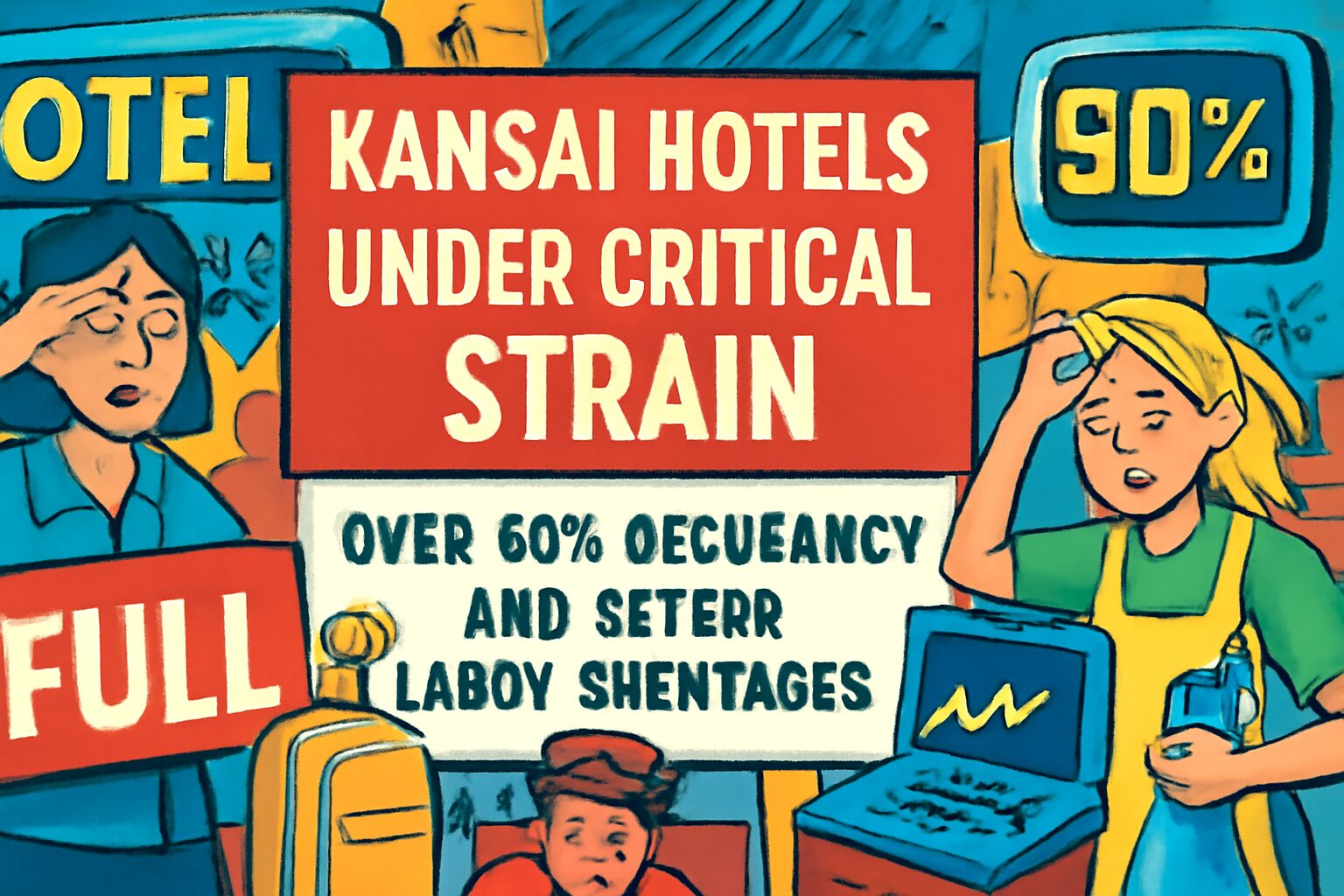
The hotel industry in Osaka and the broader Kansai region is currently navigating an unprecedented high-pressure environment. As of mid-2026, a relentless wave of inbound international tourism has pushed local hotel occupancy rates consistently above the 90% mark. While this sustained demand serves as a massive economic driver, it has exposed a critical vulnerability within the hospitality sector: a severe and persistent labor shortage. For travelers planning a visit to Japan’s vibrant western capital, understanding this dynamic is essential for securing accommodations and managing budget expectations.
The Post-Expo Tourism Boom
The roots of the current occupancy surge stem from a perfect storm of tourism drivers. The momentum generated by the World Expo 2025, which concluded late last year, firmly established Osaka as a premier global destination and brought sweeping infrastructure upgrades to the region. Combined with a historically weak yen that stretches international travel budgets, the influx of tourists has only accelerated throughout 2026.
While Japan’s national hotel occupancy rate climbed to an impressive 84.2% during the first half of 2025, Osaka and its neighboring prefectures have outpaced the national average. Today, top-tier city hotels and regional resorts in Kansai are operating at over 90% capacity on a near-daily basis. This volume has triggered massive revenue growth but has simultaneously pushed the physical and operational limits of the local infrastructure.
The Deepening Labor Crisis
Behind the bustling hotel lobbies lies a stark operational reality. The hospitality industry across Kansai is grappling with a crippling lack of manpower. During the peak of the Expo 2025 preparations, researchers estimated a regional labor shortage of approximately 462,000 workers across various sectors, and the hospitality industry continues to bear the brunt of this deficit today.
Hotels are struggling to recruit and retain essential staff, from housekeepers and culinary professionals to front desk personnel. In some parts of Japan, the hospitality sector has reported labor deficits as high as 40%. This scarcity makes it exceedingly difficult for properties to maintain “omotenashi”—Japan’s world-renowned standard of meticulous customer service. The gap between sky-high guest volume and available staff is creating a bottleneck that directly affects daily hotel operations.
Impact on Travelers and Travel Agencies
For international visitors and Online Travel Agencies (OTAs), the dual forces of 90% occupancy and understaffing translate into a highly competitive accommodation market. Room rates in Osaka have surged as demand vastly outstrips the supply of fully serviced rooms. Last-minute availability is now exceptionally rare, particularly in central districts like Umeda, Namba, and the Osaka Bay area.
Travelers are strongly advised to adopt proactive booking strategies. Industry experts now recommend securing hotel reservations at least three to six months in advance to lock in reasonable rates and guarantee availability. OTAs are also adjusting their platforms to emphasize early booking incentives, as dynamic pricing models continue to drive up costs for short-notice travelers.
The Future: A Tech-Driven Hospitality Sector
Looking ahead, the Kansai hotel sector is rapidly transforming to survive the ongoing labor crisis. To mitigate staffing gaps, properties are aggressively accelerating the integration of advanced technologies. Traditional front desks are increasingly being replaced or supplemented by multilingual self-check-in kiosks, drastically reducing wait times for arriving guests.
Furthermore, AI-powered concierges and automated guest service platforms are becoming the new standard in Osaka’s hotels. These digital solutions handle everything from dining recommendations to room service requests, allowing the limited human staff to focus on complex guest needs and personalized care. As 2026 progresses, travelers to the Kansai region can expect a highly digitized, streamlined hospitality experience that balances Japan’s traditional warmth with cutting-edge operational efficiency.