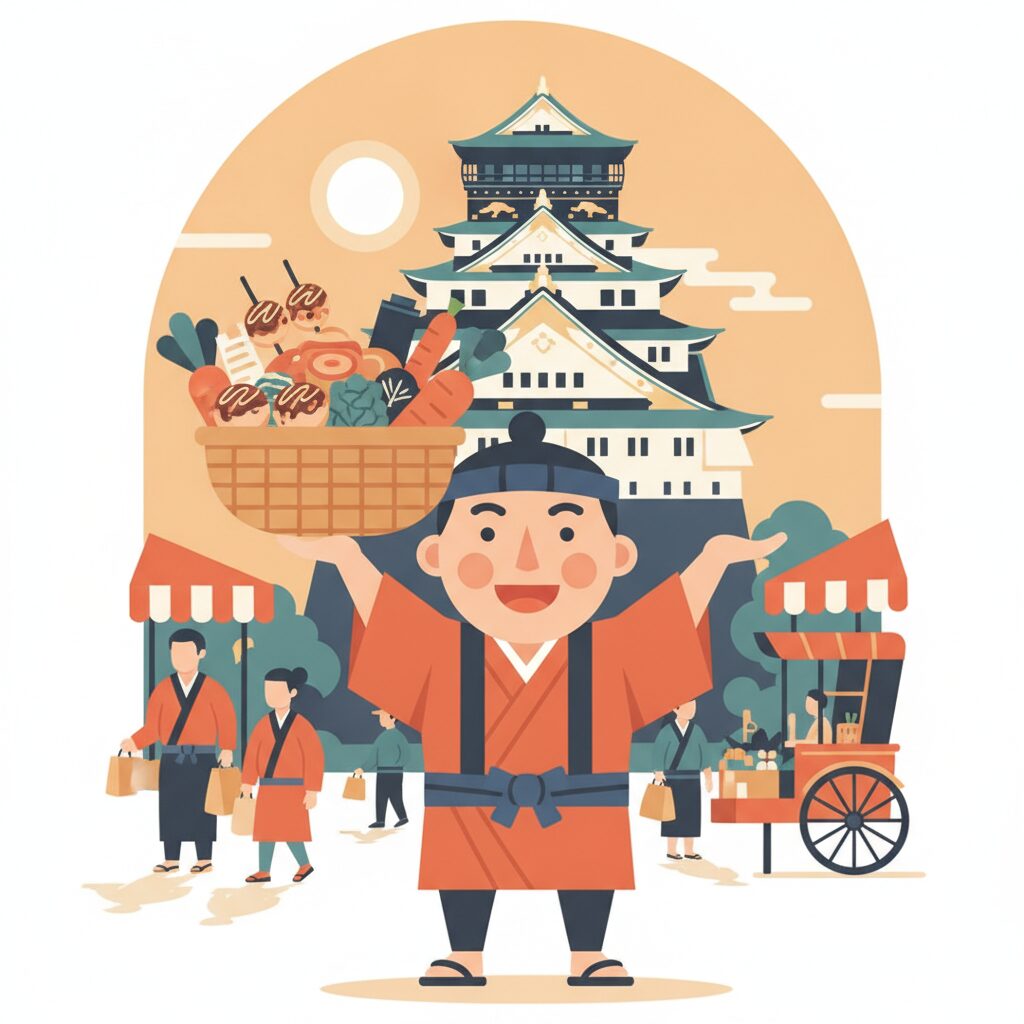
Step off the Shinkansen at Shin-Osaka Station, and you feel it instantly. The air isn’t just humid; it’s buzzing with a different kind of energy. The escalators are a battleground of purpose, people walking on the right, a stark contrast to the rest of Japan. Voices are louder, laughter is quicker, and the interactions feel raw, unfiltered. You might ask a station attendant for directions and get a rapid-fire, heavily accented explanation that’s more efficient than it is elegant. Welcome to Osaka. This isn’t Tokyo’s polite, polished cousin. This is a city with its sleeves rolled up, a calculator in one hand and a hot takoyaki in the other. For any foreigner trying to build a life here, the biggest culture shock isn’t the food or the dialect; it’s the mindset. It’s the pragmatic, paradoxical, and powerful spirit of the ‘akindo’—the merchant.
This isn’t a term you’ll find in a tourist guidebook, but it’s the invisible software running this entire metropolis. The ‘akindo’ mentality is a worldview forged over centuries of trade, a philosophy where value, practicality, and human connection are currencies as real as the yen. It explains why a stranger might critique your fashion sense on the subway, why shopkeepers treat a transaction like a comedy routine, and why the pursuit of a good deal is considered a high art form. It’s the source of Osaka’s legendary warmth and its sometimes-jarring bluntness. To truly live in Osaka, you have to understand this commercial soul. It’s not just about business; it’s about a way of life that prizes substance over style, results over rituals, and a hearty laugh over a silent nod. This is your guide to weighing the benefits and the drawbacks of that spirit, to see how it shapes every interaction, from buying groceries to making friends in the vibrant, chaotic heart of Kansai.
The ‘akindo’ mentality isn’t limited to business—its influence is evident in every facet of life, including the city’s renowned culinary offerings that you can explore in an insightful look at Osaka’s vibrant food culture.
The Merchant’s DNA: Where ‘Akindo’ Comes From
To understand Osaka, you need to recognize that its heroes aren’t stoic samurai or revered emperors. They are the savvy traders, clever artisans—the people who built fortunes through their wits and words. While Tokyo, then known as Edo, served as the political center governed by a rigid samurai bureaucracy, Osaka thrived as the freewheeling commercial powerhouse, the “tenka no daidokoro,” or “the nation’s kitchen.” It was here that rice from across Japan was gathered, stored, and traded, effectively setting the price for the country’s most vital commodity. This history is far more than a footnote; it is the city’s origin story, resonating through its streets even today.
A City Built on Water and Trade
Osaka’s unique geography—a network of rivers and canals opening into a sheltered bay—made it a natural hub for shipping and commerce. During the Edo period, it was not merely a city but a vast marketplace. The Dojima Rice Exchange, founded in the late 17th century, became one of the world’s first futures markets. Merchants here dealt not just in bags of rice but in concepts, promises, and risk. This environment gave rise to a particular type of person: sharp, numerate, communicative, and endlessly practical. There was no place for the samurai’s abstract, high-minded honor codes. In Osaka, your word was your bond, as a broken promise meant financial ruin. Reputation was the most valuable asset. This legacy created a culture where direct communication wasn’t rude; it was essential for clear and profitable business. The city’s DNA is inscribed with the language of the deal, the rhythm of the market, and the core belief that prosperity is earned through hustle, not decree.
‘Shobai’ is More Than Business, It’s a Worldview
The Osaka word for business is “shobai” (商売), and it embodies far more than a mere commercial transaction. “Shobai” represents a philosophy permeating every aspect of daily life. It centers on creating value, recognizing opportunities, and ensuring fairness in all exchanges, not just monetary ones. It emphasizes efficiency and the elimination of waste—whether of time, resources, or words. This is the fundamental point where Osaka diverges from Tokyo. Tokyo’s culture carries the legacy of the samurai court, marked by deep respect for hierarchy, form, and “tatemae” (the public face or facade). In Tokyo, the process often holds as much importance as the outcome. In Osaka, the “akindo” spirit turns this dynamic upside down. The result is king. Did the customer receive a good product at a fair price? Was the problem solved efficiently? Did both parties feel they got a fair deal? If yes, then the “shobai” succeeded, even if the conversation was blunt and formalities were skipped. This pragmatic focus on results over protocol explains why an Osakan will get straight to the point while a Tokyoite is still exchanging formal greetings.
The Upside: How the ‘Akindo’ Spirit Makes Life Better
Living within this merchant-driven culture can be remarkably refreshing, especially for foreigners fatigued by Japan’s well-known indirectness. The ‘akindo’ spirit reveals itself as a form of bold pragmatism that cuts through social noise, fosters authentic connections, and honors the simple, fulfilling pleasure of getting good value for your money and time. It is the source of the city’s vibrant, human-scaled energy.
Pragmatism Over Polish: Getting Things Done
One of the most immediate advantages is the directness. In Osaka, ambiguity is seen as a drawback. This is evident in countless everyday interactions. Visit a clothing store in the Shinsaibashi arcade, try on a jacket, and ask the owner for their opinion. In Tokyo, you’re likely to receive a stream of polite, non-committal compliments. In Osaka, the shopkeeper might squint, tilt their head, and say, “Hmm, the shoulders are a bit tight. Makes you look stiff. Try this one instead, it’s cheaper and fits you better.” This isn’t meant as an insult—it’s customer service. Their aim isn’t to flatter you into a purchase; it’s to ensure you leave with a product you’re genuinely happy with, so you’ll return. They’re solving a problem: you need a good jacket. Wasting your time and money on a poor one is just bad ‘shobai’. This attitude extends beyond shopping. At work, you’re more likely to receive straightforward, honest feedback. In social settings, people tend to express their opinions plainly rather than hiding behind polite façades. It can be surprising at first, but once you adapt, it feels highly efficient and freeing.
The Art of the Deal: ‘Mokkari makka?’ and the Value of Value
The iconic Osaka greeting, though less common among younger people, is “Mokkari makka?” meaning “Are you making a profit?” The usual reply is “Bochi bochi denna,” or “So-so, can’t complain.” Imagine this exchange in London or New York—it would be seen as shockingly rude. In Osaka, however, it’s a form of camaraderie. It’s a verbal handshake that acknowledges, “I see you. I recognize the hustle. We’re all in this game of life together.” This shared mindset centers on the concept of ‘kosupa,’ or cost performance. Getting a good deal isn’t simply a financial win; it’s an intellectual and emotional triumph. Osakans proudly boast about an amazing 500-yen lunch set with the same enthusiasm a collector might reserve for a rare artwork. This isn’t about being cheap; it’s about being savvy. The city’s many ‘shotengai’—covered shopping arcades—are fierce arenas of value. Tenjinbashisuji, the longest in Japan, stands as a sprawling testament to this philosophy. Here, you witness the ‘akindo’ spirit at its purest: vendors peddling their goods, the aroma of fresh korokke filling the air, and shoppers with a sharp eye for quality and price. Living here trains you to be a connoisseur of value, appreciating the skill and effort involved in creating something both affordable and good.
Human Connection as the Ultimate Currency
This is the secret ingredient that makes the ‘akindo’ mindset so appealing. The cliché is that “Osaka people are friendly,” but the truth is more nuanced. That friendliness is a byproduct of good ‘shobai’. In a merchant culture, long-term relationships are more valuable than one-time transactions. A loyal customer is like an annuity. This principle encourages a form of commerce that feels deeply personal and community-focused. The owner of the local fruit stand doesn’t just sell you apples; they ask about your week, remember you prefer Fuji apples, and maybe throw in an extra mikan as a little ‘omake’ or bonus. This isn’t random generosity; it’s a strategic investment in goodwill. These behaviors create strong community bonds, especially in older neighborhoods and shotengai. You’re not just a customer; you’re Tanaka-san from down the street. This transactional warmth extends beyond shops. People are more likely to start a conversation on the train or offer help if you look lost. They’re investing a small amount of social energy in hopes of a positive exchange—a micro-form of ‘shobai’. It makes the sprawling city feel like a network of small, connected villages.
The Downside: When Pragmatism Feels Brutal
Naturally, every coin has two sides. The same ‘akindo’ qualities that make Osaka efficient and welcoming can also come across as abrasive, transactional, and draining. The emphasis on directness may lack social finesse, and the continuous assessment of value can remove the charm and spontaneity from interactions. For foreigners, especially those from more reserved cultures, these sharp traits can be challenging to handle.
The Blunt Instrument: When Honesty Hurts
The boundary between useful directness and hurtful bluntness is narrow, and Osakans frequently cross it. The pragmatism that helps you choose the right jacket can also result in unsolicited and occasionally painful personal remarks. An ‘obachan’ (middle-aged woman) might say you look tired and suggest you eat more. A coworker might mention that your Japanese accent is difficult to understand during a meeting. A friend might candidly question a life choice, asking, “Why would you pay so much rent for that tiny apartment? It’s terrible ‘kosupa’.” Usually, there’s no ill intent. They see a ‘problem’ and offer a ‘solution’ or straightforward observation, applying the ‘shobai’ principle of efficiency to social exchanges. But for the receiver, it can feel like a constant stream of micro-criticisms. Coping with this requires a thick skin and a nuanced understanding of the local culture to not take it personally and to realize that what feels like an insult is often meant as a form of engagement.
The Tyranny of the Yen: When Everything Comes with a Price Tag
While valuing cost-effectiveness can be enjoyable, it also means that everything tends to be evaluated in monetary terms. Conversations with new acquaintances may feel less like genuine getting-to-know-you chats and more like financial assessments. Questions such as “How much is your rent?” or “What’s your salary?”—which would be considered taboo in many cultures (including Tokyo’s)—can arise surprisingly quickly. Social plans may be weighed through a cost-benefit lens. An invitation could prompt, “How much does it cost?” rather than “That sounds fun!” This continual financial calculation can make relationships feel transactional. You might begin to wonder if you’re appreciated for who you are or for the ‘value’ you offer, whether it’s your professional network, your ability to split bills, or your willingness to engage in their deal-making world. At times, it feels like the poetry of human connection has been replaced by the prose of an accounting ledger.
‘Kechikusai’ vs. ‘Shimatsu’: The Delicate Balance Between Frugal and Stingy
In Osaka, there is a cherished concept called ‘shimatsu’ (始末), which refers to being resourceful, economical, and avoiding waste. It means using every part of a daikon radish, from the flesh to the greens, and is a valued trait. However, the pejorative term ‘kechi’ (ケチ) means stingy or miserly. To outsiders, and even some Japanese, Osaka’s focus on saving money often appears more like ‘kechi’ than ‘shimatsu’. A typical example is splitting a dinner bill. In many places, it’s common to round up or have one person pay slightly more for convenience. In Osaka, it’s not unusual to see friends using calculators to divide the bill down to the very last yen. This is not considered cheap; it’s seen as fair and precise—good ‘shobai’. But for newcomers, it can seem petty and take the joy out of a shared meal. This mentality also fosters resistance to paying for things that seem to lack value, which can sometimes include art, services, or experiences without an immediate, tangible return. The pragmatism of the ‘akindo’ spirit can occasionally dampen appreciation for the priceless.
Navigating the ‘Akindo’ World: A Practical Guide for Residents
Thriving in Osaka isn’t about changing who you are; it’s about understanding the local way of doing things. It involves adjusting your expectations, redefining your sense of politeness, and learning to appreciate the method behind what might initially seem like madness. Once you crack the code, you can unlock a truly rewarding life in this distinctive city.
Embrace the Banter, But Don’t Take It Personally
The conversational style in Osaka is a quick exchange between the ‘boke’ (the funny man/idiot) and the ‘tsukkomi’ (the straight man/retort). The blunt remarks and teasing often serve as ‘tsukkomi’—playful jabs meant to keep the conversation lively. If someone makes a direct comment to you, it’s usually an invitation to engage. It shows they feel comfortable enough to drop the formalities. The worst response is to retreat into polite silence. The best approach is to learn to banter back. A simple, good-natured comeback like “Nande ya nen!” (“Why would you say that!” or “No way!”) can earn you instant credibility. It signals you understand the game. View the directness not as aggression, but as a shortcut to intimacy.
Learn to Love the Bargain
Instead of being put off by the emphasis on price, embrace it. Make exploring the local shotengai a weekend pastime. Don’t just shop—observe. Watch how the experts do it. Listen to the exchange between a seasoned housewife and a fishmonger. It’s a performance, a negotiation, and a relationship being nurtured. When shopping, don’t hesitate to engage the owner. Ask what’s good today. Compliment their store. Build a bit of rapport. Then, when buying several items, politely ask for a little ‘omake’. More often than not, they’ll be happy to accommodate a customer who shows sincere interest. Mastering the art of the deal is a vital survival skill, helping you feel more like a local and less like a tourist in your own city.
Understand the Two Faces of Osaka
Finally, keep in mind that while the ‘akindo’ spirit is strong, it isn’t the only force in Osaka. This city also boasts a rich cultural heritage. It’s home to Bunraku puppet theater, a world-class aquarium, and excellent art museums like those in Nakanoshima Park. The ‘akindo’ mindset doesn’t erase these—it simply interacts with them. An Osakan might love classical music, but they’ll absolutely seek the cheapest tickets or a free performance first. They appreciate high culture, but want it at a good ‘kosupa’. Don’t mistake their frugality for a lack of sophistication. The city encompasses both the boisterous marketplace of Kuromon Ichiba and the serene reverence of Shitennoji Temple. The key is realizing that many locals view and engage with every aspect of life through a pragmatic merchant lens, from the sacred to the profane.
Living in Osaka is a full-contact experience. It’s a city that challenges and involves you, never allowing you to remain a passive observer. The ‘akindo’ mentality drives this relentless energy. It can be loud, blunt, and sometimes feel like everyone’s keeping score. But it’s also the source of the city’s vibrant vitality, disarming humor, and a kind of warmth that’s earned rather than freely given. This warmth is built on shared experience and mutual respect for the daily hustle. To live here is to learn to appreciate a different kind of beauty—not the pristine, manicured beauty of a temple garden, but the messy, vibrant, deeply human beauty of the marketplace. It’s a city that rewards those who listen, learn, and aren’t afraid to laugh at themselves. Forget Tokyo’s polite distance; Osaka draws you close, looks you in the eye, and asks, “So, what’s the deal?” Learning how to answer that question is the real adventure.