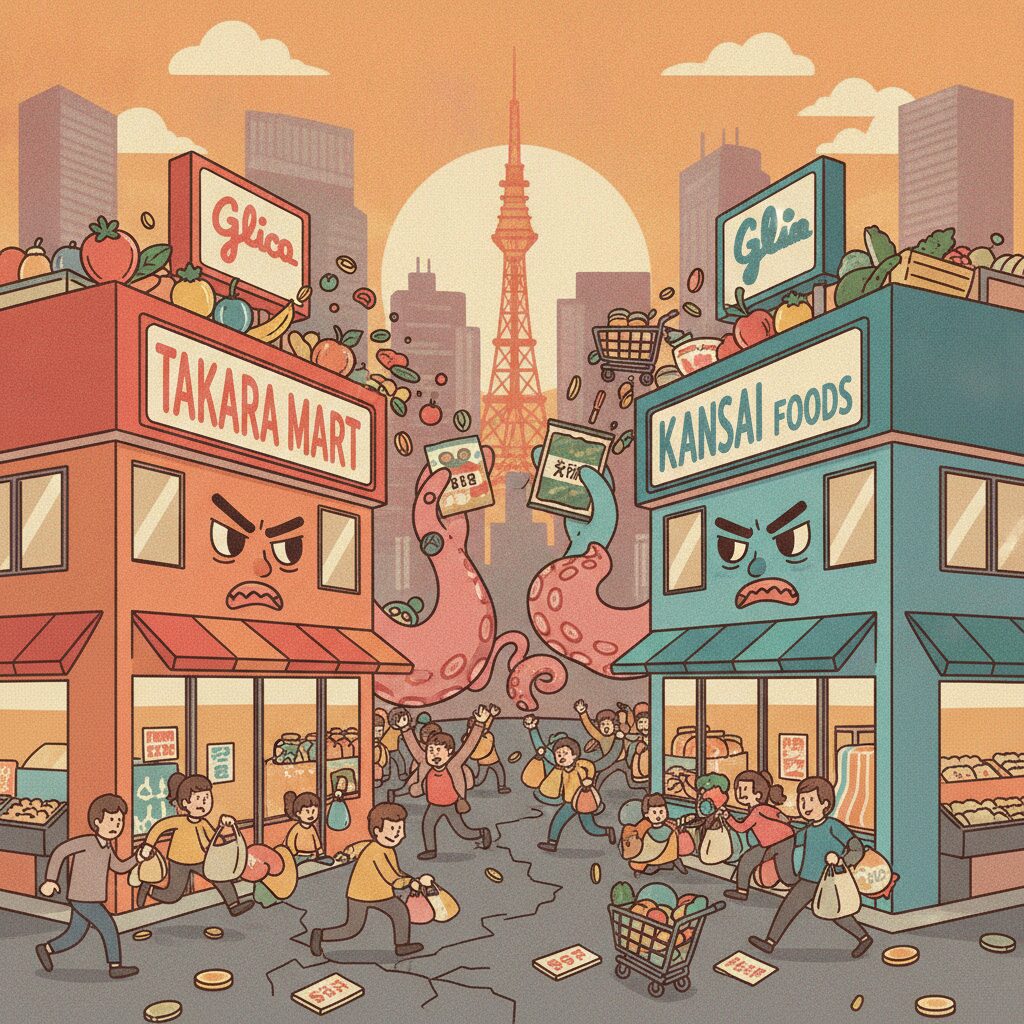
When I first moved to Osaka, I thought I had the Japanese aesthetic figured out. I envisioned serene temples, minimalist design, and the quiet, curated elegance you see in magazines. I pictured myself gracefully selecting a perfectly marbled slice of beef from a pristine, silent grocery store. Then, someone told me I had to check out a supermarket called ‘Tamade’ to save some money. What I found shattered every single one of my preconceived notions. It was a full-frontal assault on the senses, a riot of canary yellow and flashing neon that looked less like a place to buy groceries and more like a pachinko parlor that had decided to sell cabbages on the side. Blaring announcements echoed off the low ceilings, signs screamed prices in aggressive, bold fonts, and the sheer, unapologetic chaos of it all left me standing in the aisle, wondering if I’d stumbled into an alternate dimension. But then I saw the prices. A block of tofu for pennies. A mountain of bean sprouts for less than a coin. And the legendary one-yen sales. This wasn’t just a store; it was a statement. It was my first real lesson that to understand Osaka, you don’t go to the castle first—you go to the supermarket.
Yet the more I explored this urban carnival, the more I realized that embracing the distinctive Osakan approach to getting things done was as vital as understanding its supermarket spectacles.
Decoding the Neon Jungle: A Deep Dive into the Tamade Experience

Walking into a Super Tamade for the first time is a lesson in sensory recalibration. Forget the soft instrumental music and orderly aisles typical of a Tokyo market. This is raw, unfiltered Osaka energy. The exterior is famously, almost defiantly, yellow, decorated with neon signs that pulse like something from an 80s arcade. At night, these stores bathe their neighborhoods in an otherworldly glow, serving as a beacon for bargain seekers. The name itself, 玉出, can be interpreted as ‘jewel’ or ‘ball’ coming out, referencing the gambling-like excitement of the deals inside.
Inside, the atmosphere is nonstop. A looping, upbeat jingle plays repeatedly, interrupted by loud, rapid-fire announcements from staff over a crackling PA system, promoting the latest limited-time deals. “Ima dake! Kore dake! Hyaku-en desu!” (Only now! Only this! 100 yen!). It feels less like shopping and more like being a contestant on a high-energy game show where the prize is discounted fish. The aisles are narrow, packed tightly with products stacked high, often still in their original cardboard shipping boxes to save on labor. There’s no attempt at elegant merchandising here; the aim is maximum density, maximum visibility, and maximum value.
Then there are the legendary sales. The most famous is the ‘1 Yen Sale.’ You’ll see signs offering eggs, a pack of noodles, or a can of coffee for just one yen. The catch? You have to spend at least 1,000 yen on other items first. This isn’t a hidden trick; it’s a transparent, brilliant piece of retail theater. It’s a loss leader of the highest order, a challenge to the shopper: “We’ll give you this for practically nothing if you come inside and play the game.” It’s a strategy that perfectly captures the Osaka merchant mindset—a flashy, irresistible hook that benefits both the store and the savvy shopper who was already planning to spend that 1,000 yen.
The Merchant’s Soul: Why Osaka Is Hardwired for Bargains
This fixation on price isn’t a contemporary phenomenon; it’s ingrained in the city’s very essence. While Tokyo evolved as Japan’s political and military hub—a city of samurai and bureaucrats—Osaka emerged as the nation’s commercial center. During the Edo period, it was known as “tenka no daidokoro,” or “the nation’s kitchen,” serving as the main distribution point for rice and various goods from across the country. This was a city shaped not by warriors, but by merchants, brokers, and artisans. Business, or shobai, was more than just a profession; it defined the city’s identity.
This legacy creates a distinctly different outlook. In Tokyo, greater importance is often placed on form, presentation, and paying a premium for perceived quality and brand prestige. In Osaka, however, the main value is practicality. The city’s residents are famously pragmatic and unsentimental when it comes to commerce. They take great pride in their skill at finding a good deal. Outsiders often misinterpret this as kechi, or stinginess. But for an Osakan, it’s not about being cheap; it’s about being shimarishou, meaning frugal and shrewd. Paying full price when a better bargain exists is considered foolish, not refined. The pleasure lies in the transaction itself—the thrill of having navigated the game skillfully and coming out ahead.
This culture is visible every day. Standing near the checkout, you’ll overhear shoppers, often strangers, comparing their purchases. “You got the daikon for 88 yen? I found mine for 79 at Mandai!” This isn’t a complaint; it’s a social interaction, a shared celebration of thriftiness. It’s like a sport. This attitude extends into other areas of life. While haggling is uncommon in most parts of Japan, it’s more accepted in Osaka’s electronics districts and smaller shops. The spirit of the deal is always alive.
An Ecosystem of Extreme Competition: Beyond the Yellow Palace
Super Tamade may be the most flamboyant player, but it’s the fiercely competitive environment across the entire city that keeps prices remarkably low. Tamade can’t rely on gimmicks because it’s locked in a constant price war with numerous other aggressive, low-margin supermarkets. Stores like Gyomu Super (literally “Business Supermarket”), which offers bulk products at wholesale prices, are extremely popular. National chains like LIFE and local strongholds like Mandai must provide their own steep discounts and point-card systems to stay competitive. There’s an ongoing, highly visible battle for the customer’s yen.
This competition plays out most intensely in the city’s hundreds of shotengai, or covered shopping arcades. These arcades serve as the heartbeat of many neighborhoods, creating an incredibly dense retail ecosystem. A large supermarket might anchor one end of the arcade, but along its length, you’ll find tiny, independent specialists: a greengrocer with heaps of fresh produce, a fishmonger with a stall covered in ice and the morning’s catch, a butcher with a devoted local clientele, and a tofu shop crafting fresh blocks in the back. These small vendors are agile. They adjust prices on the fly, offer personalized service, and generate a level of competition that a standalone supermarket in a Tokyo suburb simply does not face. An Osaka shopper might buy milk and eggs at Tamade, then walk fifty meters down the shotengai to the elderly couple at the vegetable stand because their onions are cheaper and fresher that day. This pressure forces everyone to keep prices sharp and quality honest. The result is a system that, while chaotic, ultimately favors the consumer.
The Savvy Shopper’s Guide: Navigating Quality, Tactics, and Traps

Living in Osaka and embracing its culture demands a strategic change in how you approach grocery shopping. It’s not a passive, one-stop experience. Instead, it’s an active, multi-faceted effort to stock your fridge without draining your budget. The first question every foreigner asks is, “Okay, it’s cheap, but is it any good?” The honest answer is: it depends on what you buy and how carefully you evaluate it.
The incredibly cheap prepared foods, such as the 250-yen bento boxes or 100-yen sushi packs found late at night, are a lifesaver for students and single workers. However, it pays to stay alert. Check the expiration dates. Understand that the produce may be perfectly fine to eat despite cosmetic flaws—a slightly misshapen cucumber or a discolored carrot. The meat is often cheaper, fattier cuts. This isn’t the place to seek out A5 Wagyu or artisanal cheese. It’s where you get the essentials for daily living.
To shop like a local Osakan means mastering the “grocery portfolio.” You create a mental map of your neighborhood’s strengths and weaknesses. You might know Tamade offers the cheapest eggs and milk because those are their loss leaders. But you also recognize that the fishmonger in the arcade has the best saba mackerel on Tuesdays, and the small fruit stand near the station sells bruised but tasty apples at a fraction of the cost. You learn to time your shopping—when stores mark down prices and which days feature the best deals. This takes more effort than simply visiting the nearest Aeon, but the savings are significant, and there’s genuine pride in mastering the system. It’s a skill, and like any skill, it brings a sense of accomplishment.
Price Tags as Punchlines: The Tokyo-Osaka Supermarket Showdown
The cultural divide between Osaka and Tokyo is most evident in their grocery shopping experiences. A high-end Tokyo supermarket, such as Dean & DeLuca or Seijo Ishii, resembles a temple of consumption. The lighting is gentle, the music is classical, and the products are displayed like museum artifacts. A single mango might be showcased in its own carefully crafted box, costing more than a week’s worth of groceries at Tamade. The experience is meant to be calm, pristine, and aspirational. Customers pay not just for the food, but for the peaceful atmosphere and the assurance of flawless quality.
In stark contrast, Osaka’s approach is the exact opposite. The supermarket is not a sanctuary; it’s a lively marketplace. The ambiance is loud, the energy is intense, and the emphasis is squarely on the price. This reflects the city’s character: practical, straightforward, and with a sharp sense of humor. There’s an unspoken understanding that beautiful stores with wide aisles and fancy displays come at a cost—one that ultimately falls on the customer. Osaka shoppers prefer to keep the extra yen in their pockets. This mindset is strongly connected to the well-known Osaka-Tokyo rivalry. Tokyo is viewed as valuing style, formality, and appearances, while Osaka prides itself on substance, directness, and cutting to the chase.
The contrast is even mirrored in their comedic styles. Tokyo comedy typically features clever wordplay and subtle, ironic scenarios. Osaka comedy, or manzai, is known for being fast-paced, loud, and physical—a rapid-fire exchange of jokes and slapstick. Super Tamade is the manzai of supermarkets: bold, somewhat outrageous, and unafraid to look silly to provoke laughter—and attract customers. A Tokyo store offers a polite smile; an Osaka store delivers a hearty laugh.
Finding Your Price in the City of Bargains
Ultimately, the fiercely competitive world of Osaka supermarkets is more than just a method to save money. It’s a daily, interactive lesson in the city’s fundamental values. It shows you that in Osaka, value is a virtue, pragmatism reigns, and community emerges through the shared pursuit of a good deal. The flashing lights of Super Tamade aren’t merely gaudy decorations; they serve as a beacon for a city unafraid to be different, loud, and unapologetically itself.
When I first arrived, the chaos was overwhelming. I missed the quiet orderliness I had come to associate with Japan. But now, I understand it. I find genuine excitement when I snag a carton of milk for a two-digit price. I feel a rush of triumph when I uncover the exact brand of soy sauce I need amid a chaotic bargain bin. I’ve even started comparing prices with the neighborhood obachan at the checkout counter. My journey from being baffled by Super Tamade to actively planning my shopping trips around its daily deals is, in many respects, the story of my integration into this vibrant, practical, and deeply human city. You learn that the true taste of Osaka isn’t just in its famous takoyaki or okonomiyaki; it’s in the satisfaction of knowing you got a great deal on the flour to make it yourself.