
You’ve seen the pictures. The endless shots of takoyaki sizzling on cast-iron grills, the steaming bowls of ramen, the mountains of okonomiyaki smothered in sauce and mayonnaise. You’ve heard the word, a curious term that rolls off the tongue with a certain dramatic flair: Kuidaore. It’s translated, almost universally, as “to eat until you drop,” or more colorfully, “to eat yourself into bankruptcy.” This single word has come to define Osaka’s identity for the outside world. It paints a picture of a city populated by joyous, insatiable gluttons, stumbling from one food stall to the next in a blissful, calorie-induced haze, with the Glico Running Man sign cheering them on from above. It’s a fantastic story. It’s also mostly a myth, at least in the way it’s commonly understood. As someone living amidst the rhythm of this city, I can tell you the reality of Osaka’s food culture is far more interesting, complex, and, frankly, smarter than the tourist slogan lets on. The spirit of kuidaore isn’t about mindless consumption. It’s about a deeply ingrained, razor-sharp obsession with value. It’s not about how much you can eat, but how well you can eat for what you spend. This is the real story of the Osakan appetite—a daily practice of culinary intelligence honed over centuries in the merchant capital of Japan. Forget eating until you drop; this is about eating until you’re satisfied you’ve gotten the absolute best deal in town.
This pursuit of exceptional value is also evident in everyday habits, with locals turning to Super Tamade’s budget-friendly grocery shopping to keep their expenses in check while still enjoying quality.
The Myth of the Gluttonous City
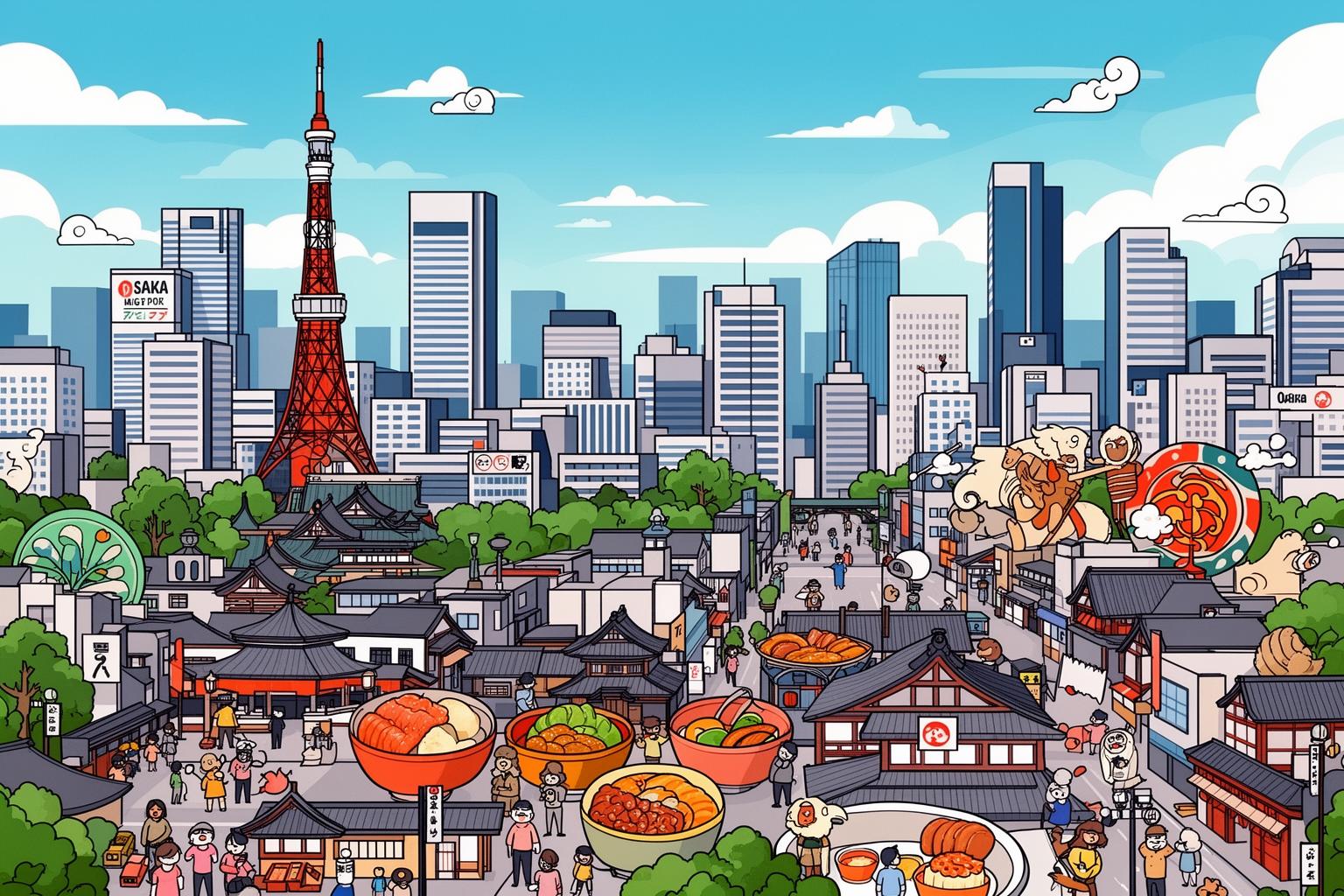
To truly grasp the essence of Osaka, you first need to peel back the layers of its performance. The stage for this act is, naturally, Dotonbori. It’s an intentional sensory overload, a commercial theater masterpiece that has perfected its role as the heart of kuidaore.
Dotonbori’s Neon-Soaked Spectacle
Stroll through Dotonbori on any night, and you’re not merely in a neighborhood; you’re on a set. Giant mechanical crabs wave their claws, a huge octopus dominates a takoyaki stall, and a fugu lantern glows eerily. The air is heavy with the aroma of grilled meat and sweet sauces. This is Osaka’s food culture turned up to the max, amplified and packaged for mass appeal. For tourists, this tells the whole story. They line up for hours for a famous cheesecake or a particular ramen stand, checking off items on a culinary bucket list. Osakans, however, mostly observe this from afar. While they might have a nostalgic attachment to the area or visit occasionally, this is not where they carry out their daily dining. They understand that these long lines are often driven by guidebooks and social media buzz, not necessarily by exceptional quality or value. The Dotonbori you witness is a stunning, dazzling food theme park. And like any theme park, locals work there; they don’t necessarily live there.
‘Kuidaore’ as a Marketing Slogan
The phrase itself has been refined into a potent marketing slogan. It’s simple, catchy, and exotic. It gives visitors a goal: come to Osaka and conquer its food scene. But the literal meaning, “eat until you go bankrupt,” carries a different implication. The original spirit wasn’t about overindulgence, but about prioritization. It implied that food was such a top-quality, worthwhile pursuit in Osaka that one would willingly spend their fortune on it, rather than on other luxuries like fine clothing (as seen in Kyoto with its concept of kidaore). Over time, this idea of prioritizing food expenses has been simplified and reduced to the far more marketable—and less nuanced—concept of simply eating a lot. The city and its businesses have embraced this image because it works. It attracts people. Yet it masks the clever, deliberate mindset that genuinely shapes the Osakan approach to food.
The Real Osakan Food Philosophy: ‘Kosupa’ is King
If you want a single word that truly captures how Osakans think about food, forget kuidaore. The word you need is kosupa. It’s a Japanese blend of the English words “cost performance,” and in Osaka, it represents a philosophy, a religion, and a city-wide sport.
It’s Not ‘Cheap,’ It’s ‘Smart’
This crucial distinction is often missed by outsiders. The pursuit of kosupa is not about being cheap or stingy. A cheap meal that tastes bad is simply a failure. A genuinely great kosupa accomplishment is finding something that tastes amazing at a price that seems almost unbelievably low. It’s about maximizing the satisfaction-to-yen ratio. An Osakan will proudly share a story about a fantastic sushi lunch they enjoyed for 1,000 yen that tasted like it should have cost 3,000 yen. They’re not just boasting about saving money; they’re boasting about their skill in uncovering value. It’s a tribute to their discerning eye and deep familiarity with the city’s culinary scene. In a city where everyone is a critic, restaurants can’t thrive on hype alone. They thrive by delivering exceptional kosupa. This constant public pressure keeps quality high and prices fair.
The Merchant’s Mindset at the Dinner Table
This obsession with value is no coincidence. It’s ingrained in the city’s DNA. For centuries, Osaka was the “nation’s kitchen” (tenka no daidokoro), the commercial heart of Japan, where rice and goods were traded. This created a culture of merchants (shonin), who were pragmatic, resourceful, and extremely savvy with money. They had to be. Their livelihood depended on sharp negotiations, quality assessment, and never, ever overpaying. This merchant spirit never disappeared. It simply shifted from the trading houses to the dinner table. An Osakan judges a meal with the same critical eye a rice merchant would use to inspect a shipment. Is it worth the price? Is the quality there? Could I get better value elsewhere? This practical, no-nonsense attitude leaves little room for pretension. Flashy decor, a celebrity chef, or a trendy location mean nothing if the food on the plate doesn’t justify the cost. Substance always, always outweighs style.
Lunchtime as the Proving Ground
The battle for kosupa supremacy is most fiercely fought during the weekday lunch hour. The ‘lunch set’ is a sacred institution. Office workers, students, and retirees flood the streets in search of the day’s best deal. The competition is intense. Restaurants attract customers with extensive set menus—a main dish, rice, miso soup, a side of pickles, maybe even a small dessert or drink—for well under 1,000 yen. The legendary ‘one-coin lunch’ (a full meal for a single 500-yen coin) is the ultimate prize. Discovering a new spot offering an amazing one-coin lunch sparks celebrations and quickly becomes the hottest topic in the office. This isn’t just about recharging for the afternoon. It’s a daily ritual that reinforces the city’s core values: providing for the people, rewarding the discerning customer, and proving that a great meal doesn’t have to be a luxury.
Where Osaka Actually Eats: Beyond the Tourist Trail
So if the average Osakan isn’t constantly snacking in Dotonbori, where else might they be? They are immersed in the city’s lively, down-to-earth, and indispensable food ecosystems that thrive well beyond the tourist hotspots.
The ‘Shotengai’ (Shopping Arcade) Ecosystem
The true pulse of Osaka’s everyday food culture lies within its numerous shotengai. These covered shopping arcades, such as the expansive Tenjinbashisuji (the longest in Japan), are bustling hubs of community life. Here, you’ll discover the foundation of Osakan home cooking and casual dining. Family-run tofu shops, butchers selling freshly made croquettes (korokke), and delis (souzai-ya) offering a dazzling variety of cheap yet delicious prepared dishes abound. Nestled among these stores are the modest but cherished eateries that constitute the core of the local diet. Tiny standing-only udon counters serve bowls of hot, savory noodle soup for just a few hundred yen. Classic diners (shokudo) with plastic food models in the window provide hearty set meals that have remained unchanged for decades. The shotengai operates as a closed-loop of value, where locals carry out their daily shopping and enjoy quick, satisfying meals, all while supporting long-established neighborhood businesses.
Supermarket Wars and the Legend of Tamade
The battle for the Osakan consumer wallet also plays out in grocery stores. Supermarkets here are engaged in an ongoing price war, but none captures the city’s spirit quite like Super Tamade. To outsiders, Tamade appears as a wild spectacle. Its stores glow with garish neon lights, pachinko-parlor music blasts through the aisles, and signs shout about unbelievably low prices. But to locals, Tamade is a sanctuary of kosupa. It’s famous for its legendary 1-yen sales, where spending a certain amount allows you to purchase items—such as eggs, bread, or tofu—for just one yen. Shopping at Tamade is more than a chore; it’s a tactical operation. Shoppers plan their visits to catch the best deals and leave with bags bursting with groceries for a fraction of normal prices. Tamade embodies the merchant mindset in its most chaotic and glorious form: an unapologetic, relentless pursuit of rock-bottom prices that transforms ordinary grocery shopping into an exciting treasure hunt.
The Unsung Heroes: Udon and Kissaten Mornings
While tourists queue for takoyaki, many Osakans find comfort in a bowl of udon. Osaka-style udon is softer than in other regions and served in a light yet deeply flavorful dashi broth made from kelp and bonito flakes. It’s the ultimate fast food: quick, incredibly affordable, and deeply satisfying. It fuels salarymen on the go, shoppers taking a break, and anyone seeking a warm, dependable meal. Another staple of daily life is the local kissaten (old-school coffee shop). Here, the concept of ‘morning service’ or simply ‘morning’ perfectly embodies the value-conscious mindset. Order a coffee in the morning—usually priced around 400-500 yen—and you receive a complimentary breakfast, typically a thick slice of toasted bread (shokupan) and a hard-boiled egg. This simple, graceful gesture reflects the kosupa principle: you came for one thing, but as a thank you, you get a little something extra. It’s a small token of hospitality that also serves as a clever business strategy.
Osaka vs. Tokyo: A Tale of Two Appetites
The contrast in food culture becomes strikingly evident when you compare Osaka with its eastern counterpart, Tokyo. These two cities embody fundamentally different philosophies toward dining and, by extension, life itself.
Substance Over Style
Tokyo is a city defined by polish and presentation. It holds the record for the most Michelin-starred restaurants worldwide. Dining in Tokyo often emphasizes the entire aesthetic experience: minimalist decor, meticulously curated tableware, and Instagram-worthy plating. Status and trends play a significant role. In Osaka, however, the hierarchy is reversed. The main, and often sole, criterion is: “Is it delicious?” (Umai ka?). Osakans harbor a strong skepticism toward anything that seems pretentious. A fantastic meal served in a cramped, slightly grimy eatery run by a grumpy owner will be praised far more than a mediocre dish in a chic, trendy venue. This emphasis on substance fosters a very democratic dining culture. A talented chef doesn’t need a wealthy backer or a prime Ginza location to succeed. If they create exceptional food at a reasonable price, the people of Osaka will discover and celebrate them.
“How Much Was It?” – The All-Important Question
This difference in values also shows up in social interactions. In Tokyo, talking about the cost of a meal, especially a fancy one, can be seen as inappropriate. It introduces the crudeness of money into what is supposed to be an elegant experience. In Osaka, however, it’s often one of the first questions asked. When a friend mentions a great new restaurant, the natural follow-up is, “So, how much was it?” (de, ikuraやったん?). This isn’t considered rude; it’s a crucial piece of information. It expresses interest and serves as a request for valuable insight. Sharing tips about high-kosupa finds is a form of social bonding. It’s about looking out for one another and helping friends and colleagues succeed as well. The food culture acts like a collaborative, open-source project where the aim is to enhance everyone’s dining experience. It’s not about individual status; it’s about shared wisdom.
Redefining ‘Kuidaore’ for the Modern Resident
Living in Osaka means moving beyond the tourist-friendly notion of kuidaore and embracing its deeper, more practical, and everyday significance. It’s about adopting a fresh perspective on food and value.
From ‘Eating Till You Drop’ to ‘Strategic Spending’
True kuidaore isn’t a physical feat; it’s a financial and intellectual one. It’s about being a discerning consumer, a connoisseur of worth. It means you can walk past a famous restaurant with a long line without feeling FOMO because you know a spot three blocks away that’s half the price and twice as good. It’s the quiet pride of knowing you’ve uncovered a city secret not found in any guidebook. The “bankruptcy” part of the phrase isn’t a caution against overindulgence; it’s a celebration of prioritizing what truly matters. For Osakans, that’s undeniably exceptional food that delivers far beyond expectations. It’s about managing your resources skillfully to maximize joy and satisfaction.
How to Eat Like a Local
So, how can you, as a resident, immerse yourself in this authentic food culture? Begin by shifting your mindset. Appreciate Dotonbori as the dazzling spectacle it is, then explore the side streets. Get lost in your local shotengai. Try the croquette at the butcher shop. Enjoy a bowl of udon at a counter where everyone slurps quietly. Make the weekday lunch special your culinary journey. Don’t be deterred by restaurants that look old or lack an English menu; these often hold the most history and offer the best value. Listen to conversations around you. Notice what your neighbors and coworkers are excited about. And when you discover that perfect little place—that spot with mind-blowing ramen for 700 yen or the amazing tempura set for 900 yen—don’t keep it a secret. Share it. Because that is the true spirit of kuidaore. It’s not about eating yourself into exhaustion. It’s about being part of a city-wide community of smart, passionate, and perpetually hungry experts.