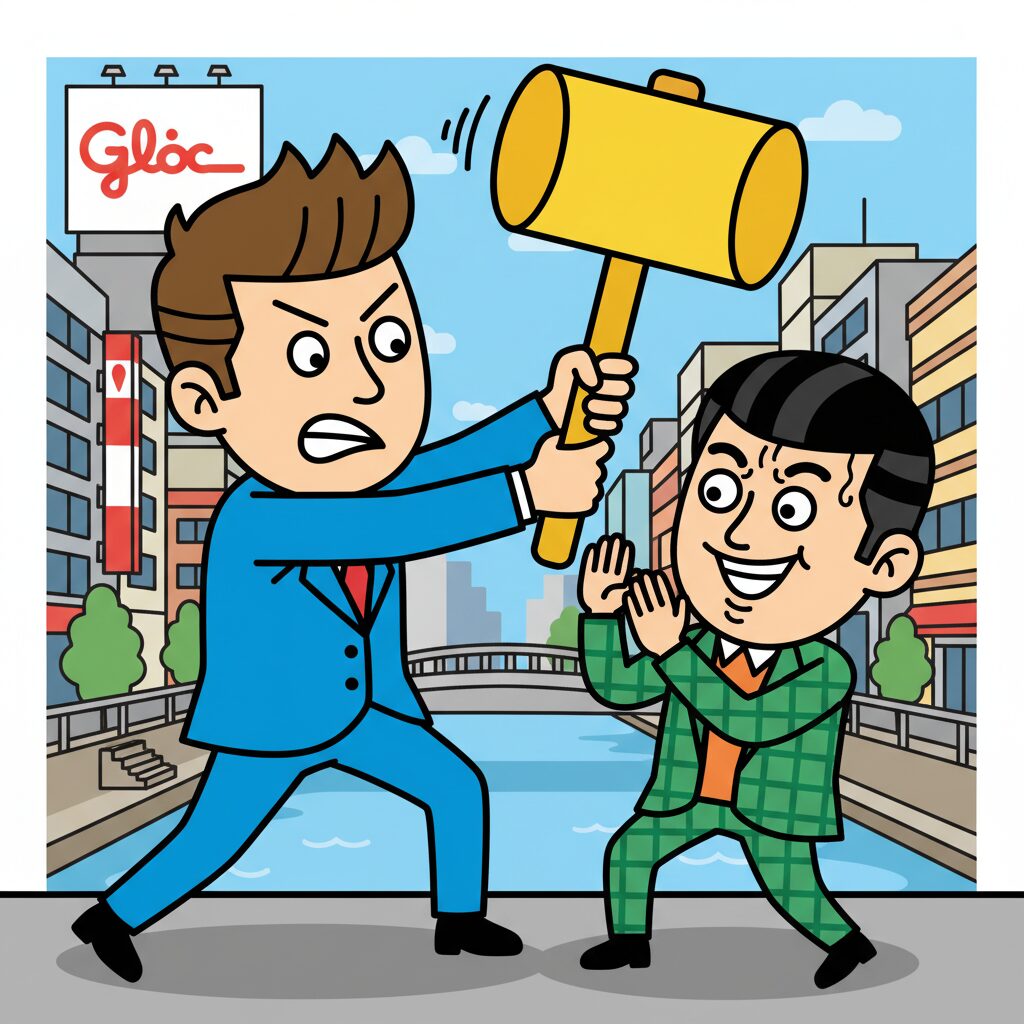
Spend enough time in Osaka, and you’ll inevitably encounter it. You might be standing in line for takoyaki in Namba, sipping coffee in a Kissaten in Tenma, or riding the Midosuji line during rush hour. You’ll hear a conversation that, to the uninitiated ear, sounds like the beginning of an argument. The tempo is fast, the interjections are sharp, and the tone seems almost confrontational. One person says something, and before they can even finish their thought, their partner cuts in with a rapid-fire correction, a pointed question, or an incredulous exclamation. You brace for a conflict, a public spat. And then, just as suddenly as it began, the tension breaks, and both parties erupt in laughter. What you’ve just witnessed isn’t a fight. It’s the lifeblood of Osaka communication. You’ve just witnessed a ‘tsukkomi’.
For many foreigners, this dynamic is one of the most confusing yet defining aspects of daily life here. We’re often taught that Japanese communication is indirect, subtle, and built around preserving harmony at all costs. But Osaka plays by a different set of rules. Here, harmony isn’t preserved through quiet deference but forged in the fire of witty banter. This constant back-and-forth, this verbal dance of ‘boke’ (the absurd comment) and ‘tsukkomi’ (the sharp retort), is far more than the foundation of Japan’s most famous style of stand-up comedy, Manzai. It’s the city’s unofficial social language, a deeply ingrained cultural practice that shapes everything from how you buy groceries and interact with colleagues to how friendships are built and affection is expressed. To understand tsukkomi is to move beyond the surface-level clichés of Osaka being merely ‘friendly’ or ‘loud’ and to grasp the intricate, hilarious, and deeply human mechanics of how this city connects. This isn’t about learning punchlines; it’s about decoding the rhythm of a place where a playful jab is often the warmest form of a handshake. It’s the key to understanding why a conversation that sounds like an argument is actually a symphony of social bonding.
To truly grasp how this dynamic shapes daily life, it’s helpful to understand the distinct social atmospheres of different areas, such as the contrasting character between Kita (Umeda) and Minami (Namba).
The Sound of Osaka: Deconstructing the Boke-Tsukkomi Duet
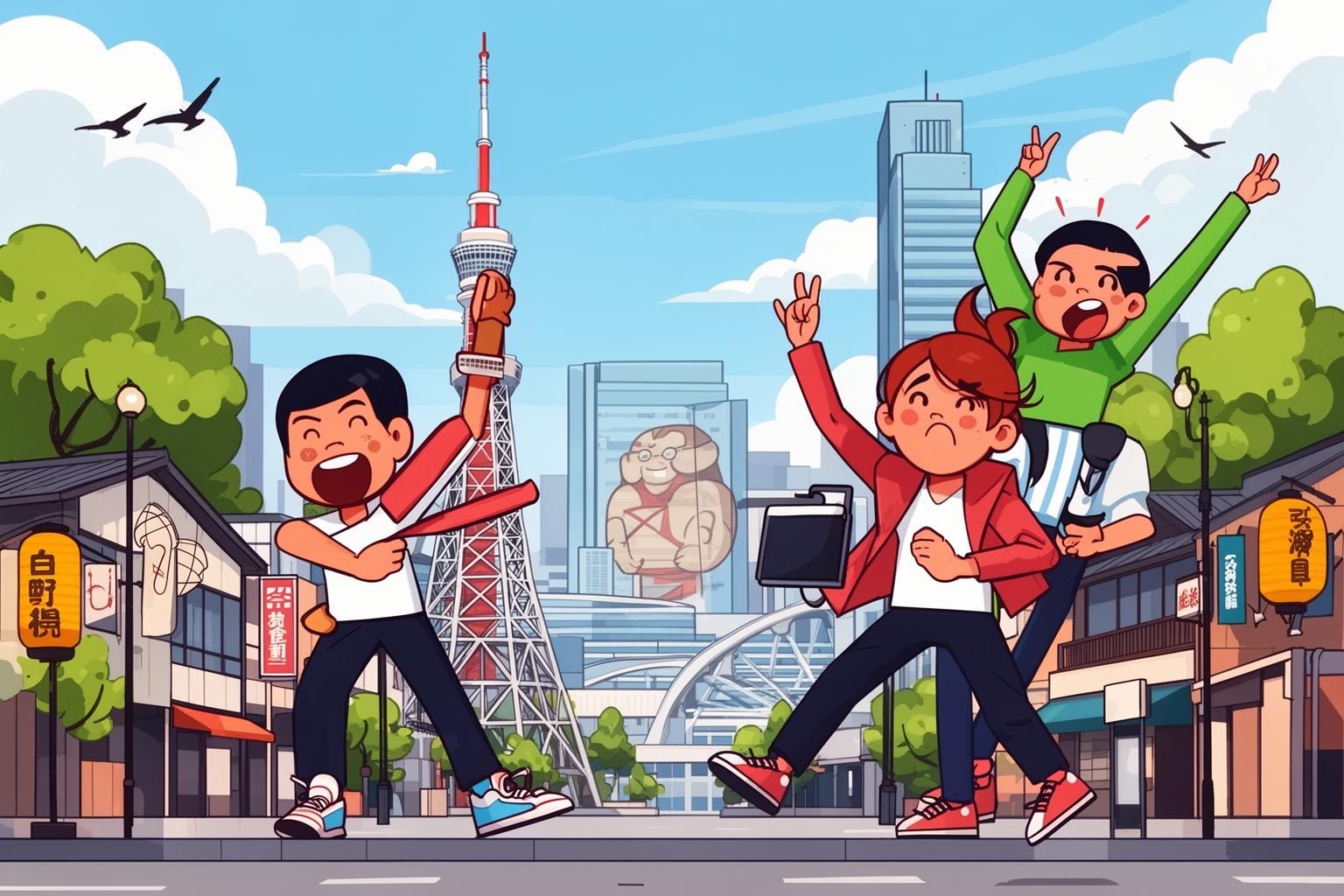
To truly understand the essence of Osaka’s everyday banter, one must first become familiar with its key elements: the ‘boke’ and the ‘tsukkomi.’ Although these terms come from the structured tradition of Manzai comedy, where one comedian plays the fool (boke) and the other the straight man (tsukkomi), in Osaka’s streets these roles are fluid. They shift dynamically and can be exchanged multiple times within a single conversation, often even within the same sentence. It’s a verbal back-and-forth, a collaborative effort to craft a shared moment of amusement.
More Than Just a Punchline: Tsukkomi as a Social Signal
The ‘boke’ is the setup—a statement that is deliberately or inadvertently absurd, exaggerated, incorrect, or simply silly. It’s like a conversational pitch, tossed up with the unspoken expectation that it will be returned. The boke might be a loud, theatrical claim or a casual, offhand remark. For example, a friend looking at a cloudy sky might sigh deeply and say, “Ah, I wanted to go to the beach today, but this typhoon ruined everything.” Of course, there’s no typhoon. This is the boke, an invitation to engage.
The ‘tsukkomi’ is the reply. Its literal meaning, ‘to thrust in,’ perfectly describes its role. It’s a quick, sharp comeback that punctures the boke’s absurdity. It acts as the voice of reason, but one delivered with wit and playful charm. Responding to the typhoon comment, a typical tsukkomi might be, “Typhoon? That’s just a few clouds. Are your eyes broken?” or the iconic Osaka phrase, “Nande ya nen!” (“Why the heck!?”). Importantly, the tsukkomi is not meant to be hurtful. Its purpose is not to genuinely mock or embarrass the boke. Rather, it signals active engagement. It says, “I’m listening so carefully that I immediately spot the absurdity in your statement.” It’s a form of active listening that is performative, audible, and cooperative. In this way, a successful boke-tsukkomi exchange works like a brief, two-person play, creating a shared moment of humor that strengthens social bonds.
“Nande ya nen!”: The Anatomy of a Classic Retort
“Nande ya nen!” is perhaps the most iconic phrase in the Osaka dialect and the quintessential tsukkomi. Outsiders or people from other regions of Japan might mistake its emphatic delivery as genuine anger or confusion. In truth, it is rarely a literal question expecting an answer. Rather, it functions as a rhetorical device, a verbal exclamation more akin to “What on earth are you talking about?” or “You must be kidding!” The tone is crucial; it conveys feigned exasperation, a performance of disbelief that acknowledges and validates the boke’s silliness.
Tsukkomi, however, comes in many forms, each suited to the type of boke it addresses. There’s the ‘Correction Tsukkomi,’ which fixes a factual mistake. Boke: “I just ran 100 kilometers on the treadmill.” Tsukkomi: “The machine says 10. Did you add a zero yourself?” There’s the ‘Exaggeration Tsukkomi,’ which points out hyperbole. Boke: “This bag is so heavy it feels like it’s full of rocks.” Tsukkomi: “What did you do, go rock collecting? Give it here, you’re weak.” There’s also the ‘Analogy Tsukkomi,’ which compares the boke’s comment or action to something absurd. Boke (wearing a brightly colored shirt): “What do you think of my new look?” Tsukkomi: “You look like a walking traffic light. Are you going to direct cars with your chest?” In every instance, the tsukkomi brings the conversation back to shared reality, but does so with a flair that turns a simple exchange into a piece of micro-entertainment.
The Unspoken Rules of Engagement: When, Where, and How to Tsukkomi
Although the boke-tsukkomi dynamic might appear as a chaotic free-for-all, it actually functions according to a complex and mostly unspoken set of social rules. A well-timed tsukkomi can strengthen a friendship, but one that is poorly timed or inappropriately expressed can seem genuinely rude, arrogant, or socially awkward. Mastering this art requires not only quick wit but also a finely tuned social sensitivity.
Reading the Air, Osaka-Style
The Japanese idea of ‘kuuki wo yomu‘ (reading the air) is fundamental to social interaction across Japan. Nonetheless, its practice in Osaka differs markedly from that in, for example, Tokyo. In Tokyo, reading the air typically means perceiving what is unsaid. It involves picking up on subtle hints, grasping unspoken hesitations, and maintaining harmony by avoiding direct conflict. The aim is to create a smooth, conflict-free environment.
In Osaka, reading the air is a more active, participatory endeavor. It involves sensing the moment to inject humor, recognizing the conversational opening for a boke or a tsukkomi, and judging whether a playful jab will be met with laughter or awkward silence. This makes Osaka’s social atmosphere feel more lively and less fragile. People continually test the boundaries, and the air buzzes with potential energy awaiting someone to spark a laugh. Context is crucial. This style of communication is reserved for relationships with a certain degree of comfort—friends, family, regular customers, and close colleagues. You wouldn’t tsukkomi a police officer giving directions, nor would you use it during a first meeting with a potential client. It is a language of familiarity.
The Hierarchy of Humor
As with many aspects of Japanese society, tsukkomi is subtly influenced by hierarchy, age, and status, although Osaka’s famously egalitarian merchant culture has largely leveled these structures compared to other regions. Generally, it is safer for someone higher in status to deliver a tsukkomi to someone lower down. For example, a manager might playfully tsukkomi a junior employee’s exaggerated weekend story: “You went to Kyoto and Nara in one day? Did you even get off the train?” This can help build rapport and foster a more relaxed team atmosphere.
For a junior employee to tsukkomi their manager, however, requires a very secure and strong relationship. It must be done delicately, often accompanied by respectful language, to avoid crossing into insubordination. When successful, it signals mutual respect and trust. Similarly, an older person can comfortably tsukkomi a younger one, but the reverse should be done cautiously. Being on the receiving end of a tsukkomi often signifies acceptance. When the elderly woman who runs the corner tobacco shop finally tsukkomis your unusual drink combination (“Are you trying to create a science experiment with that?”), it marks a milestone. You are no longer just a faceless customer; you have become a familiar part of the neighborhood, known well enough to be teased.
The Foreigner’s Dilemma: To Tsukkomi or Not to Tsukkomi?
For non-Japanese residents, navigating this intricate world can be intimidating. The fear of causing offense is real. The best strategy is a gradual one. The first and most important step is simply to recognize and appreciate the dynamic. When you hear it, don’t take it as aggression. Understand it as what it is: a game. Laugh along with the participants. Your participation will be noticed.
The next stage is not to attempt a tsukkomi, but to offer a ‘boke’ instead. This is a much safer and more effective way to join in. The boke role is naturally self-deprecating and endearing. Try saying something with a hint of exaggeration. For instance, when asked about your weekend, instead of replying “It was relaxing,” you could say, “I was so lazy I think I’ve fused with my sofa.” Then wait. If your Osaka friend retorts sharply, “As if! You were posting pictures from Umeda all day!” with a grin, you have successfully initiated a boke-tsukkomi exchange. You provided the setup; they delivered the punchline. You collaborated.
Trying to deliver a tsukkomi in Japanese without near-native fluency and deep cultural understanding is a high-risk move. The boundary between playful teasing and genuine insult is extremely fine, shaped by tone, context, and word choice. A slightly incorrect intonation can turn “You’re an idiot” from affectionate banter into an actual insult. It’s better to be the lovable ‘boke’ than the ‘tsukkomi’ who misses the cue and creates awkward silence.
How Tsukkomi Builds a City: From the Shotengai to the Office
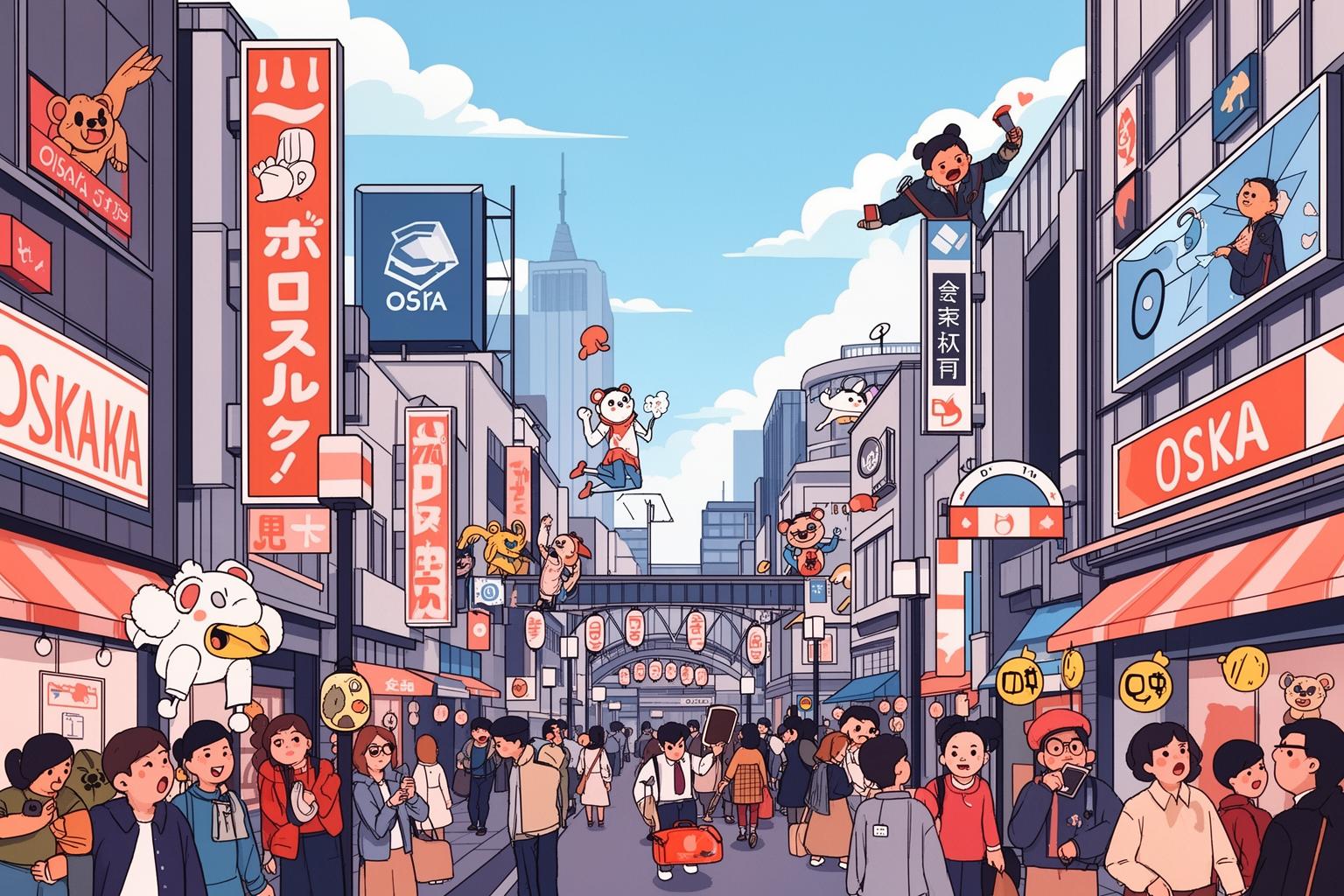
The combined impact of millions of these daily micro-interactions is what shapes Osaka’s distinctive character. This communicative style is more than just entertainment; it functions as a practical tool that fosters community, supports business, and strengthens personal bonds. It is intricately woven into the very fabric of the city’s social life.
The Merchant’s Banter: Commerce as Conversation
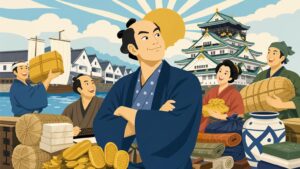
The spirit of tsukkomi is most vibrant in Osaka’s ‘shotengai,’ the covered shopping arcades that serve as the commercial and social centers of their neighborhoods. Historically, Osaka was Japan’s merchant capital, where success depended not only on the quality of goods but also on one’s ability to cultivate lasting relationships with customers. Quick wit, a sharp sense of humor, and the skill to haggle with a smile were essential attributes. This tradition continues today.
Shopping in an Osaka shotengai rarely involves silent, anonymous transactions. It is a performance. An ‘obachan’ (a colloquial term for an older woman) selling vegetables won’t just weigh your tomatoes; she’ll comment on them. “You’re buying so many tomatoes today! Are you opening a pasta restaurant?” (Boke). Your role is to respond in kind—perhaps with a tsukkomi: “No, I’m just trying to eat healthier than you, considering all the fried snacks you’re selling!” This is followed by shared laughter. The exchange may even extend to playful price negotiation, known as ‘makete,’ which is often less about the actual discount and more about enjoying the interaction itself. This banter transforms a simple commercial transaction into a moment of human connection. It explains why people stay loyal to local vendors for decades. They’re not just buying fish; they’re catching up with a friend who happens to sell fish.
The Workplace Rally: More Than Just Business
The typical image of a Japanese office is one of quiet diligence, hushed tones, and formal interactions. While this holds true in some industries and regions, an Osaka office often exudes a noticeably different energy. Among colleagues who share good rapport, the boke-tsukkomi dynamic acts as a crucial lubricant for the workday.
It is an effective tool for relieving tension. After a stressful meeting with a difficult client, a team member might say with a sigh, “Well, that went so well I think they’re going to make me CEO.” This obvious boke is promptly met with a tsukkomi from a colleague: “CEO of the mailroom, maybe. Now let’s figure out what we’re actually going to do.” The shared laughter breaks the tension and enables the team to move forward productively. Humor also offers a gentler way to provide feedback. Instead of a formal critique, a senior colleague might use a soft tsukkomi to point out an issue. For instance, seeing a cluttered PowerPoint slide, they might say, “Sato-kun, this slide has so much text, I think you’ve written a novel. Are you trying to win a literary prize or explain our sales figures?” This method softens criticism, making it easier to accept and act on without defensiveness. It cultivates an environment where ideas can be challenged and refined without the burden of formal confrontation, ultimately improving collaboration.
Family and Friendship: The Language of Affection
Within the intimate realms of family and friendship, the boke-tsukkomi rhythm is often at its most intense and affectionate. For many Osaka families, constant teasing is their primary love language. Compliments and direct expressions of affection can sometimes feel awkward or overly sentimental. A well-timed tsukkomi, however, is a clear expression of closeness and care.
A mother might see her son heading out and say, “Are you wearing that shirt again? The neighbors will think we can’t afford a washing machine.” This isn’t a real critique of his hygiene; it’s her way of saying, “I notice you, and I’m attentive to your life.” A husband might watch his wife struggle to open a jar and say, “Look at those powerful muscles. The jar doesn’t stand a chance.” This teasing is a shared joke, a way to acknowledge a small, relatable challenge and turn it into a moment of connection. Among friends, this banter forms the foundation of the relationship. It’s a continual test of wit and constant affirmation of their bond. The ability to tease and be teased without fear of offense is one of the clearest signs of deep and trusting friendship in Osaka.
The Tokyo-Osaka Cultural Divide, Explained Through a Single Retort
To truly grasp the distinctiveness of Osaka’s communication style, it helps to compare it with that of Tokyo. Often depicted as rivals, Japan’s two largest cities reveal their differences most clearly in the rhythm of their everyday conversations. This contrast isn’t about one being ‘better’ than the other, but rather about two distinct cultural systems designed for different purposes.
Efficiency vs. Entertainment: Two Capitals, Two Ways of Talking
Tokyo, as the political and corporate center, employs a communication style that emphasizes efficiency, precision, and social harmony through non-confrontation. Typical conversations aim to convey information with the least resistance. Ambiguity is avoided, and social balance is preserved by maintaining respectful distance. The objective is to move smoothly from point A to point B.
Osaka, known historically as the merchant capital, values a different form of currency: social connection. Communication is not solely about reaching the destination; it is about enjoying the interaction. Conversations serve as opportunities for entertainment, performance, and building rapport that may lead to future business or lasting friendships. The aim is to make the journey from point A to point B as memorable and engaging as possible.
Consider a simple example: two acquaintances meet on the street, and one has a new haircut.
Tokyo Interaction: “Ah, Tanaka-san, you’ve changed your hair. It looks nice.” “Thank you. I thought it was time for a change.” The exchange is polite, positive, and complete. It is smooth and effortless.
Osaka Interaction: “Whoa, Tanaka-han! What happened to your head? Did you get in a fight with a lawnmower?” (Boke/Tsukkomi hybrid). “Shut up! You’re just jealous because you don’t have enough hair left to try a style like this!” (Tsukkomi). The exchange is a performance—louder, more energetic, creating rapport through playful teasing. Both interactions acknowledge the haircut, but the Osaka version does so by creating a shared moment of amusement.
The Misunderstanding of Rudeness
This core difference in communication styles often causes misunderstandings. From a Tokyo viewpoint, the Osakan manner can seem blunt, intrusive, and unnecessarily confrontational. Why turn a simple observation into a verbal sparring match? The directness may be mistaken for rudeness.
From an Osaka perspective, meanwhile, Tokyo’s style can feel cold, distant, and overly formal. The absence of banter might be seen as disinterest or a weak social bond. If you don’t feel comfortable teasing someone, are you truly friends? For Osakans, Tokyo’s politeness can feel like a barrier, while Osaka’s playful tsukkomi is an open invitation. Politeness in Tokyo often respects personal space, whereas in Osaka it enthusiastically breaks that space to share a laugh. Understanding this difference is vital for any foreigner navigating life in Kansai. The person teasing you is likely not being rude—they’re trying to become your friend.
Living the Tsukkomi Life: Practical Observations for Residents
Integrating into Osaka’s distinctive social fabric is a process of observing, adapting, and eventually participating. It demands retraining your conversational instincts and learning to appreciate the humor underlying many interactions. This skill is best acquired not from textbooks, but through direct experience with the city itself.
Your First Encounter: Identifying the ‘Boke’ Setup
Your initial challenge is to become adept at spotting the ‘boke.’ Train your ear to catch the setup. An Osakan slipping a boke into conversation is like a fisherman casting a line, waiting for a bite. These setups are everywhere: the shopkeeper who sighs heavily and says, “Business is so slow today, I might as well pack up and move to Hawaii.” The colleague who looks at a simple task and declares, “This is so complicated it will take me ten years to finish.” The friend who shows you a photo of their very average-looking pet and says, “Isn’t he the most handsome cat in the whole world? He should be a movie star.”
These are all boke, not meant to be taken literally. The right response isn’t to offer a logical solution (“Here are some marketing strategies for your business”) or simple agreement (“Yes, he is a nice cat”). The proper reply is a tsukkomi that acknowledges the absurdity. Even if your Japanese isn’t perfect, a simple laugh, a playful eye-roll, and a phrase like “Mata mata” (“There you go again”) or “Akan wa” (“Oh, that won’t do”) can show you get the joke. By recognizing the boke, you demonstrate that you’re on the same wavelength.
The City’s Soundscape: Learning Through Listening
One of the best ways to learn is simply to listen. Turn your daily commute, coffee breaks, or supermarket trips into field studies of conversational dynamics. Don’t stare, but tune your ears to the conversations around you—high school students on the train, groups of ladies at a café, two men chatting at a standing bar.
Notice the rhythm. Observe how rarely one person speaks at length without being interrupted by a comment, question, or tsukkomi. Pay attention to tone—how a seemingly harsh phrase is delivered with a smile that strips it of real malice. Notice the body language—a light slap on the arm that often accompanies a sharp tsukkomi, reinforcing the playful intent. This passive immersion is invaluable. You’ll begin to internalize the flow and timing of the boke-tsukkomi exchange long before you feel comfortable trying it yourself. You’re learning the music of the city’s language.
The Reward of Engagement
The ultimate aim—and greatest reward—is participation. Once you successfully navigate your first few boke-tsukkomi exchanges, you’ll notice a real shift in your relationships. You’ll move from being a friendly outsider to an accepted insider. The shopkeeper will greet you with a joke instead of a formal “irasshaimase.” Your colleagues will include you in casual banter. Friendships will deepen, evolving from polite conversation to the relaxed, easy intimacy of shared laughter.
Understanding tsukkomi is the key that unlocks the city. It turns Osaka from a collection of buildings and streets into a living, breathing community you belong to. It’s the moment you stop feeling like you’re merely living in Osaka and start feeling at home.
This conversational dance is more than a cultural quirk; it’s a philosophy woven into the city’s DNA. It’s a worldview that suggests life—with all its minor absurdities and daily struggles—is best met not with stoic silence but with a quick retort and a shared laugh. The relentless energy that defines Osaka, the warmth so often praised by visitors, is not a passive trait. It’s actively created every day in countless tiny, brilliant flashes of wit. The true friendliness of Osaka isn’t found in a polite, reserved smile. It’s in the sharp, perfectly timed, and utterly affectionate “Nande ya nen!” that tells you, without a doubt, you have been seen, heard, and welcomed.