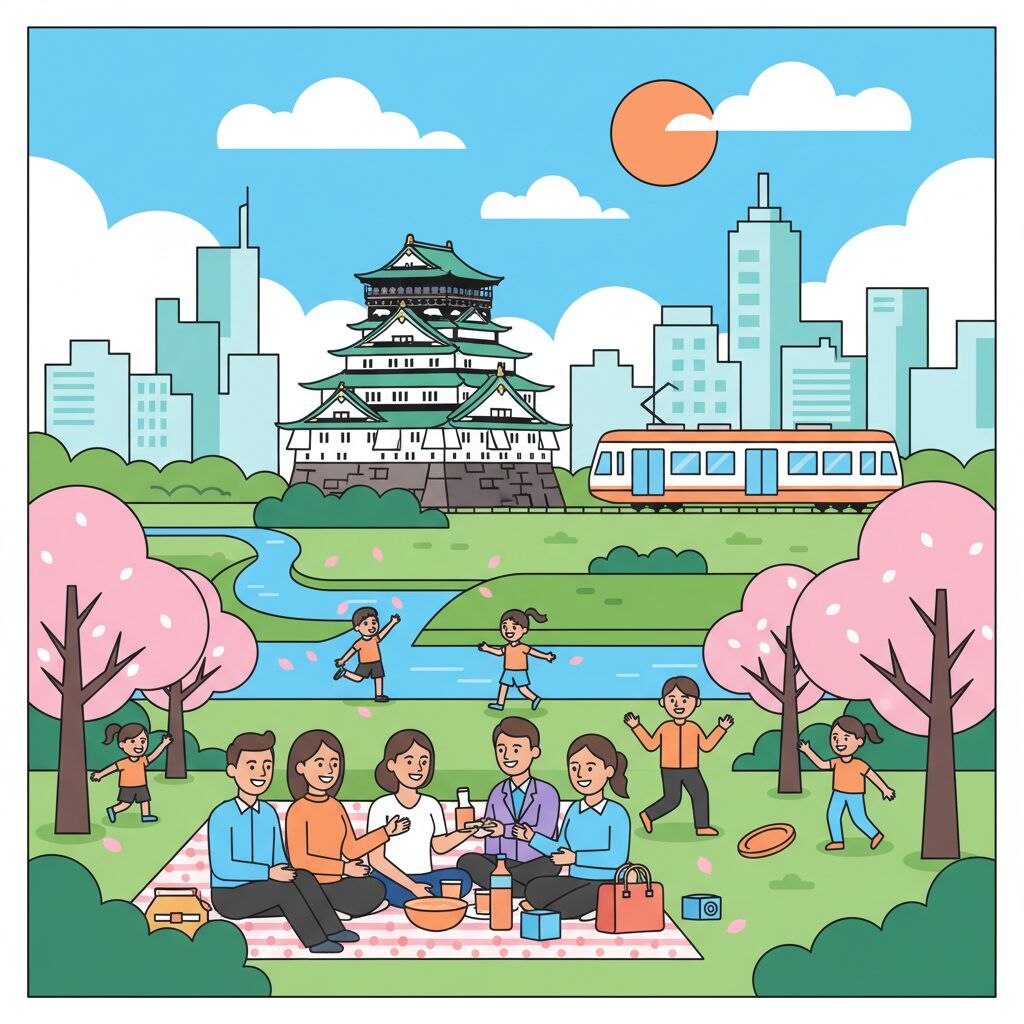
Walk through any residential neighborhood in Osaka, and you’ll find one. It’s probably not big. It might not even be particularly green. There’s a slide, maybe a couple of swings, a sandbox with a protective net slung over it, and a stark, concrete water fountain shaped like a mushroom or a dolphin. To the foreign eye, it can seem underwhelming, a forgotten patch of land. You might wonder, “What’s the point of this place?” But if you stop and watch, you’ll realize you’re not looking at a recreational facility. You’re looking at the neighborhood’s communal living room, its open-air community center, and the stage for a daily drama that reveals everything you need to know about the people of Osaka. These small, unassuming parks are the pulse of the city, beating with a distinct, predictable rhythm that tells a story of community, pragmatism, and a social code that’s written in gestures and glances, not on signs. In Tokyo, a park can feel like a destination, a grand, manicured escape like Shinjuku Gyoen or Yoyogi Park, where you go to do something. In Osaka, the neighborhood park is where you are. It’s an extension of the cramped apartments and tightly packed houses surrounding it, a shared backyard where the unvarnished, everyday life of the city unfolds, act by act, from sunrise to sunset.
To truly understand these unspoken social rhythms, you might also be interested in learning about Osaka’s standing bar etiquette, another key aspect of the city’s communal life.
The Morning Ritual: Radio Calisthenics and the Senior Social Club

The show begins at dawn. Just as the sky shifts from inky black to a pale, washed-out grey, the park’s earliest visitors arrive. They move with the slow, deliberate pace of the elderly, emerging from quiet alleyways dressed in tracksuits and comfortable walking shoes. By 6:30 AM, a small group has gathered. There’s a designated leader, usually a spry woman in her late seventies, who sets a portable radio on a bench. After a brief moment of silence and a crackle of static, it starts: the familiar, slightly tinny piano melody of rajio taiso, the national radio calisthenics program. For the next ten minutes, the group moves in practiced harmony, stretching arms, bending knees, and rotating torsos. It’s a scene common throughout Japan, a wholesome image of healthy aging. But in Osaka, this is much more than just a morning exercise. It’s the daily neighborhood roll call.
Here, the exercise itself feels almost secondary to the social ritual surrounding it. The movements are punctuated with commentary, muttered complaints about the humidity, and updates on neighborhood matters. It’s a casual check-in. If Mrs. Tanaka from down the street isn’t present today, someone will notice. Someone will ask. Someone might even call later to check on her. This isn’t nosiness; it’s a deeply ingrained system of communal care, a practical safety net woven from daily interactions. After the final stretch, the group doesn’t simply disperse. They linger. This is when the real business begins. Thermoses of tea come out, along with the ubiquitous ame-chan, the hard candies that Osaka grandmothers seem to conjure from their pockets by some magic. They gather on benches, voices rising as they trade gossip, analyze the Hanshin Tigers’ latest game with the seriousness of seasoned sports commentators, and share news about their grandchildren. It’s a social club, a support network, and an information exchange all rolled into one.
The Unspoken Rules of the Dawn Patrol
For an outsider, joining this scene can feel daunting, but the rules of engagement are simple and distinctly Osakan. First, acknowledgment is essential. You can’t just stand at the back and quietly mimic the exercises. A clear, cheerful “Ohayo gozaimasu!” (Good morning!) to the group is the price of admission. You’ll be noticed right away. Unlike Tokyo, where a newcomer might be politely ignored for a few days, in Osaka you’ll be gently grilled. “Where are you from?” “Do you live around here?” “Are you good at stretching?” The questions are direct, not rude. They quickly help assess who you are and weave you into the morning’s social fabric. Second, be ready to accept a candy. Refusing an ame-chan is like refusing a handshake. It’s a small gesture of goodwill, a sign of inclusion. Take it, say thank you, and you’re part of the group. Third, understand that this is a space for regulars. While newcomers are welcomed, the conversation flows around established relationships and shared histories. Listening is just as important as speaking. You’ll learn more about the neighborhood’s inner workings in twenty minutes of post-taiso chatter than from any official city guide.
The Midday Lull: Toddlers, Mothers, and the Park Debut
By 9 AM, the seniors have retreated, and the park undergoes a total transformation. The energy shifts from the calm, synchronized rhythm of calisthenics to the chaotic, high-pitched sounds of toddlers. This is the realm of young mothers. They arrive on mamachari—the sturdy “mom bikes” equipped with child seats at front and back—loaded with diaper bags, snacks, and a collection of sand toys. The park turns into an expansive daycare center, a safe haven where children can expend energy and mothers can enjoy a brief moment of sanity and adult conversation. It also serves as the setting for a uniquely Japanese social ritual called the kōen debyū, or “park debut.” This marks the first time a new mother in the neighborhood brings her child to the local park, a nerve-wracking occasion where she and her child are subtly assessed by the established group of mothers.
In many areas of Japan, the park debut is a delicate dance of social cues, where the right clothes and stroller brand can influence your standing in the hierarchy. In Osaka, however, the evaluation criteria differ. It’s less about labels and more about attitude and practicality. Osaka moms are sizing you up, but they seek different qualities. Are you resourceful? Are you straightforward? Can you laugh at the absurdity of chasing a two-year-old who just stuffed a fistful of sand into their mouth? They prioritize directness over reserve. A quiet, reserved mother might be mistaken for aloofness or snobbery. The icebreaker here isn’t a subtle compliment; it’s a practical question. “That’s a useful drink holder. Does it really work, or does it spill everywhere?” “My kid refuses to eat his vegetables. Any tips?” This is Osaka-style networking—centered on efficiency, value for money, and shared solutions to common challenges.
Navigating the Mommy Network
Decoding the park-mom society requires embracing Osaka’s direct communication style. The unspoken rule is to engage. Don’t wait to be approached—find a small opening and jump in. A classic tactic is offering snacks. Bringing out a box of baby-friendly rice crackers to a nearby child is a universally recognized peace offering that opens the door to conversation. Another rule is to manage expectations. These groups may seem cliquey—and they are—but not out of malice. They are close-knit support networks forged in the trenches of early parenthood. They exchange information on pediatricians, local supermarket sales, and which nursery schools have the best reputations. Accessing this valuable resource requires showing that you’re a team player. Complaining serves as a bonding tool. Sharing a story about a sleepless night or a dramatic tantrum demonstrates vulnerability and solidarity. Foreigners often misread this directness and practicality as blunt or unrefined, but it arises from a culture that values authenticity and efficiency over polite fiction. Here, being genuine matters more than being perfect.
The After-School Chaos: The Kingdom of Children
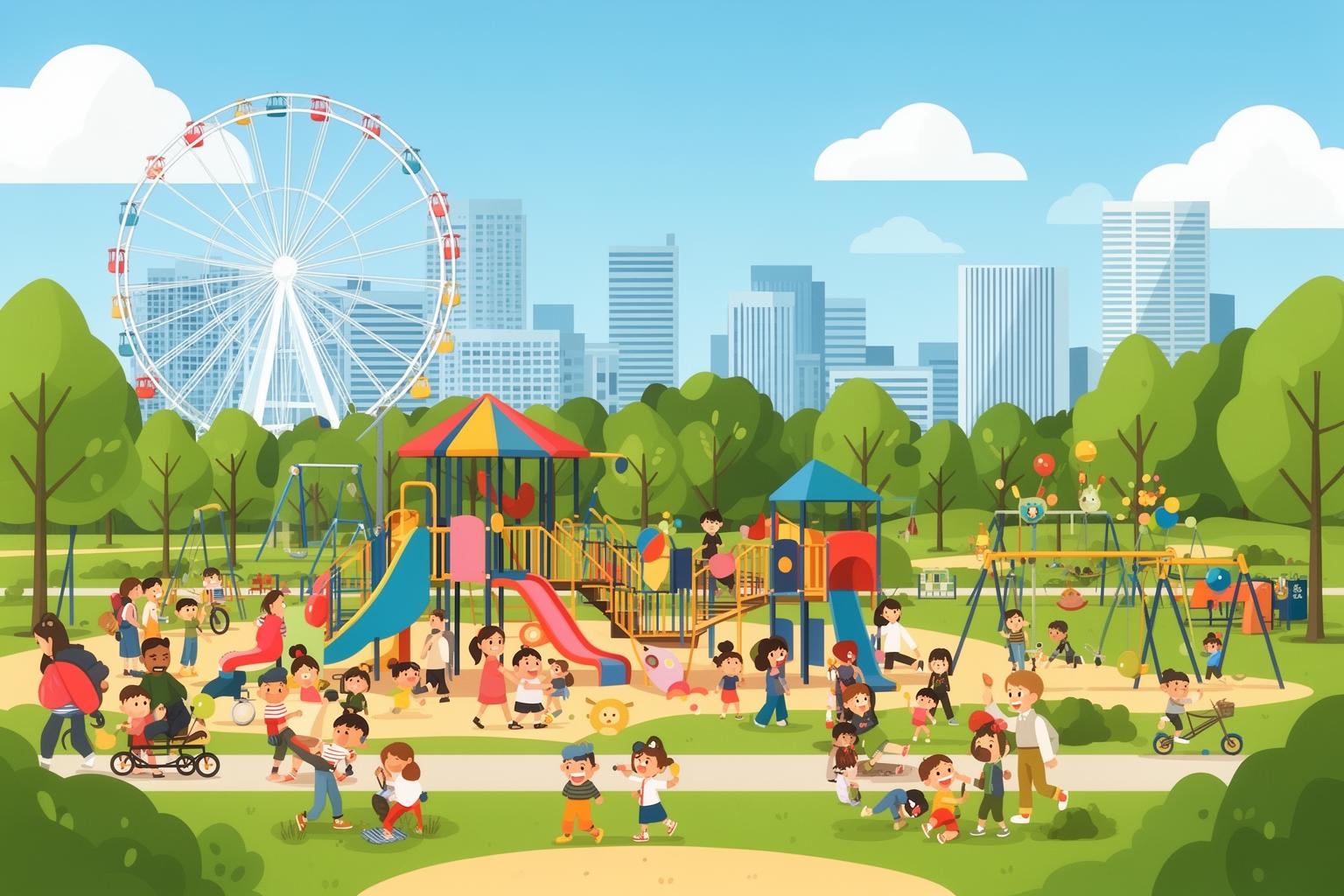
Just as the last toddlers are wheeled home for their afternoon naps, a distant siren sounds. It’s the 3 PM chime, marking the end of the school day. Within thirty minutes, the park is flooded. This is the third act, starring elementary school students aged seven to twelve. They arrive in a clamor of shouts, laughter, and the thud of school bags tossed onto the ground. The park shifts from a serene playground into a lively, self-governing children’s republic. The energy is kinetic, almost frantic. They aren’t just playing on the equipment; they’re reinventing it. The slide becomes a fortress, and the jungle gym, a pirate ship. Complex games with obscure rules are created on the spot, often blending tag, dodgeball, and elaborate role-playing.
Here, the unfiltered spirit of Osaka reveals itself in its purest form. The kids are loud, expressive, and unapologetically direct. Arguments flare quickly and end just as fast, often settled through an animated game of rock-paper-scissors or a boisterous collective negotiation. There is a raw, unpolished energy that contrasts with the more subdued atmosphere typical of Tokyo parks. It reflects a culture that values self-expression over quiet conformity. These children are learning fundamental Osaka social skills: how to haggle, stand your ground, read the room, and be part of a group without losing your individual voice. Supervision is distant, if present at all. Apartment windows nearby serve as watchful eyes, yet adults rarely intervene unless there’s a real risk of serious injury. A scraped knee is considered a normal part of the learning process. This is their domain, their time to navigate the messy, complex business of being human alongside peers.
The Law of the Playground
For adults, the main unspoken rule during this time is simple: stay out of the way. Sitting quietly on a bench reading a book is acceptable, but lingering without clear purpose can draw suspicious looks from the children. You are a visitor in their realm. Another rule, followed by the kids themselves, is a loose but effective age-based hierarchy. Older children lead the games, and younger ones follow, picking up the ropes. This system surprisingly maintains order amid the chaos. Sharing is encouraged but conditional: you can’t just take another’s ball. You must ask, negotiate, or offer a trade—perhaps your turn on the swing in exchange for five minutes with the soccer ball. It’s a microcosm of the merchant city’s essence, where everything is potentially a deal. Foreign parents are sometimes surprised by the minimal supervision, but this is a conscious cultural choice that fosters independence and resilience in ways helicopter parenting cannot.
The Evening Wind-Down: Dog Walkers and Quiet Contemplation
As the orange glow of sunset dims and the streetlights begin flickering on, a new sound fills the air: the chimes playing a gentle melody, signaling the city’s cue for children to head home for dinner. The chaotic energy slowly subsides, and the park settles into its final, peaceful phase. The space is now occupied by dog walkers, couples enjoying quiet moments, and salarymen decompressing on benches before continuing their journey home. The atmosphere grows calm and sociable in a more subdued manner. The social lubricant shifts from snacks or shared complaints about toddlers to the dogs themselves. Conversations flow easily between pet owners. “He’s so fluffy! What breed is he?” “How old is she?” The dogs sniff each other while their owners exchange pleasantries and advice. In Osaka, this interaction is notably more direct than elsewhere. People readily comment on your dog’s behavior, offer unsolicited training tips, or ask how much you paid for its fancy raincoat. This isn’t meant to be intrusive but serves as a way to connect and share experiences in a typically straightforward Osakan style.
This is also a time for solitude. A high school student might be practicing dance moves with headphones on, or an elderly man might be sitting on his favorite bench, quietly observing the world. The park becomes a space for individual reflection, a calm buffer between the public demands of work and the private realm of home. The vending machine at the park’s edge does steady business, dispensing cans of hot coffee and cold tea, glowing softly as a small beacon in the growing dusk. It’s a place of quiet transition, where the community collectively exhales after a long day.
The Etiquette of Twilight
The unspoken rules here emphasize mutual respect for personal space and shared responsibility. Cleaning up after your dog is essential. In a dense, close-knit neighborhood, word spreads quickly, and neglecting this practice will earn you the silent, lasting disapproval of your neighbors. Leash laws are generally observed. While rules may be relaxed during the day for children’s ball games, the evening is dedicated to calm, and maintaining peace is a shared priority. It’s a time for soft conversations, not loud phone calls. There’s a mutual understanding that this closing hour of the park’s daily life is a communal resource for unwinding, with everyone playing a role in preserving that tranquility. It marks the peaceful conclusion of the park’s daily rhythm, a quiet curtain call before the stage empties for the night.
The Rules You Don’t See on the Signs
Every park in Osaka features them: a list of prohibitions displayed on a weathered metal sign. “No Ball Games.” “No Fireworks.” “No Loud Noises.” “Take Your Trash Home.” To a newcomer, these rules appear absolute. But to a local, they are simply suggestions, the starting point for negotiating with reality. This highlights one of the most fundamental differences between the mindsets of Osaka and Tokyo. In Tokyo, a rule is generally a rule, and public compliance is essential to maintaining social harmony, or wa. In Osaka, there is a more pragmatic, situational approach. The real question is not “Is it against the rules?” but “Is it causing anyone a problem?” or meiwaku.
Consider the classic “No Ball Games” sign. In a small, crowded park, a group of teenagers playing hardball baseball is clearly meiwaku. They will be stopped, likely by a sharp word from a neighborhood elder. But a father and his young son tossing a soft rubber ball back and forth in an empty corner of the park? No one will bat an eye. The spirit of the rule—to prevent injury and disturbance—is honored, even if the letter of the rule is technically broken. This flexible interpretation of rules is quintessentially Osaka. It’s a city built by merchants who understood that rigid adherence to protocol mattered less than achieving a practical, beneficial outcome. This mindset can sometimes drive foreigners crazy. It may feel inconsistent and arbitrary. But it is grounded in a deeply rooted logic of context and common sense. The community itself is the ultimate judge of what is acceptable, not the sign.
Community Ownership and Shared Responsibility
This flexible enforcement works because the park is not regarded as an anonymous public utility; it is community property. This sense of ownership is reinforced by events like neighborhood clean-up day, often organized by the local chōnaikai (neighborhood association). On a designated Sunday morning, residents gather with brooms, gloves, and trash bags to weed, sweep, and generally tidy the park. Participation is not technically mandatory, but your absence will be noticed. Taking part signals that you are invested in the community. It’s a display of civic duty that strengthens social bonds. During these events, you truly see the community in action—working together, sharing tools, and, of course, trading gossip over mugs of barley tea. Neglecting this duty can mark you as an outsider, someone who uses shared resources without contributing. In Osaka, being a good neighbor is an active, not passive, role, and the local park is the primary stage where this role is enacted.
The Park as Osaka’s Living Room
The daily life cycle of a modest neighborhood park serves as a perfect metaphor for the city itself. It begins with the respectful, structured rituals of the elderly, shifts to the practical, nurturing world of mothers and children, bursts with the chaotic, expressive energy of youth, and finally settles into a calm, reflective evening. Each stage is guided by a set of unwritten rules, a social contract understood by all. The park is a deeply social space, yet it also offers moments of solitude. Official rules exist but are often collectively ignored in favor of a more practical, context-sensitive code of conduct. This reveals that in Osaka, community is not just an abstract idea; it is an active, everyday practice of checking in, sharing information, negotiating space, and taking shared responsibility. Visitors often come with clichés about Osaka—that it’s loud, that the people are friendly, that the food is excellent. While all of that is true, the city’s real character lies in these smaller, everyday moments. To truly understand Osaka, you don’t need to visit the castle or Dotonbori. You only need to sit on a park bench, watch the rhythm of the day unfold, and listen to the authentic, unfiltered heartbeat of the city.