So, you’ve decided on Osaka. You’ve heard the whispers, the legends of a city that moves to a different beat, a place where the people are louder, the food is bolder, and the rules of Japan seem just a little more flexible. You’re ready to trade the polished reserve of Tokyo for something with more grit, more soul. But then comes the first, most fundamental question every newcomer faces, a question that slices the city neatly in two: “Should I live in Kita, or should I live in Minami?” This isn’t just a matter of choosing a point on a map. In Osaka, this question defines everything. It dictates the rhythm of your morning commute, the price of your one-room apartment, the taste of your late-night ramen, and the very character of the people you’ll call your neighbors. The Kita-Minami divide is the city’s foundational narrative, a tale of two urban centers locked in a cultural dance of commerce and chaos, sophistication and soul. To understand this divide is to understand the heart of Osaka itself—a city perpetually at war with its own identity, and loving every minute of it.
To truly embrace the city’s unique character, consider how the Kuidaore philosophy influences daily life, from your neighborhood choice to finding value-for-money meals.
The Tale of Two Cities: Defining Kita and Minami
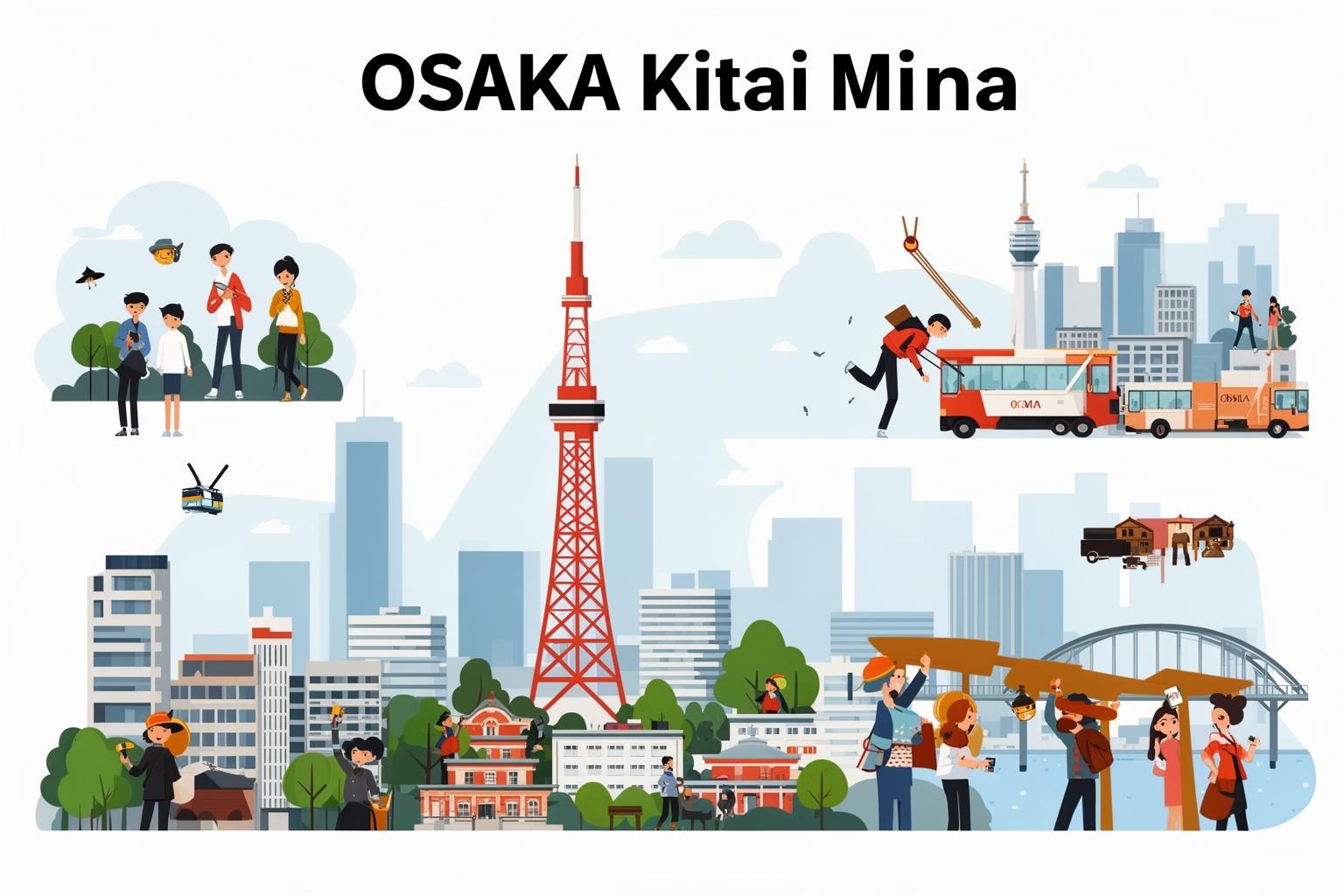
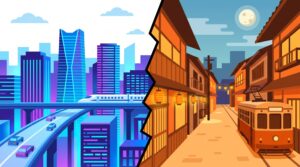
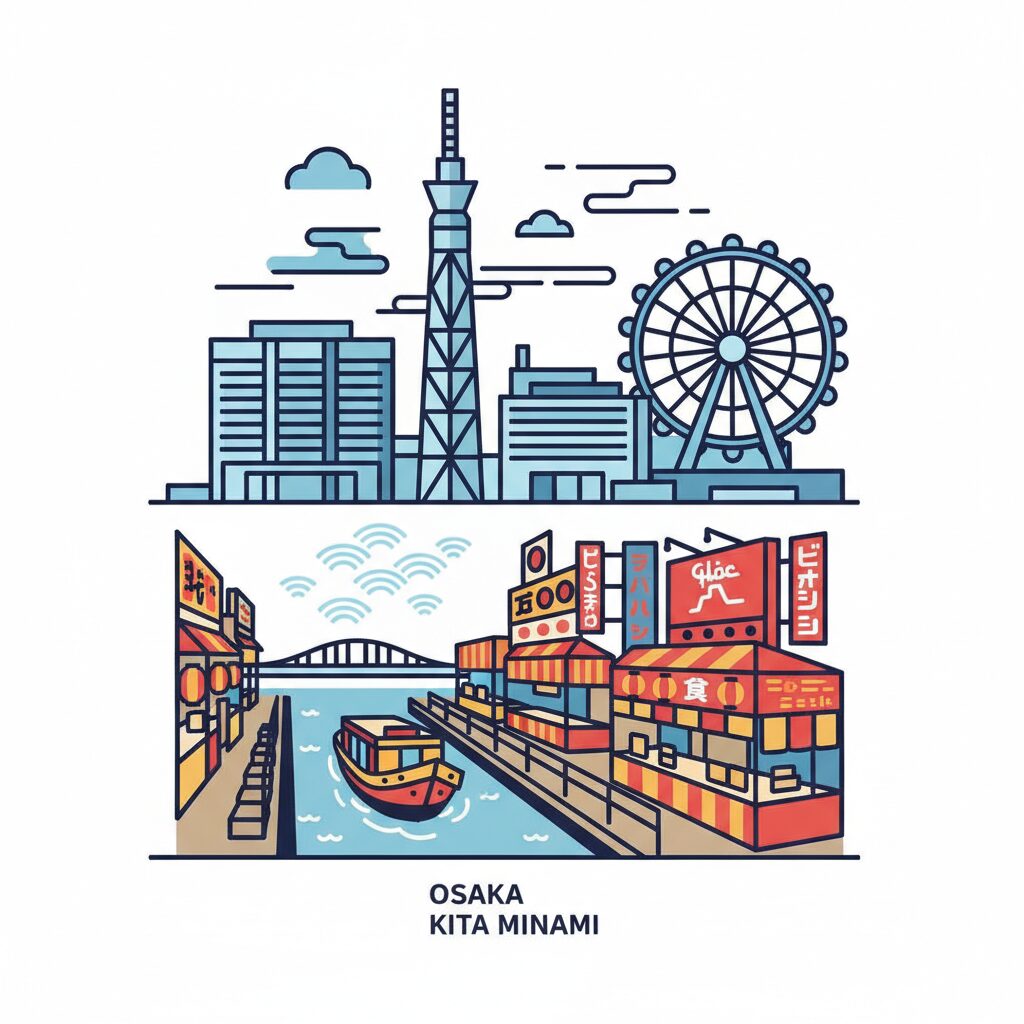
At first glance, the distinction appears quite straightforward. ‘Kita’ (キタ) means north, while ‘Minami’ (ミナミ) means south. Geographically, Kita is the expansive urban constellation surrounding Osaka-Umeda Station, whereas Minami is the lively, chaotic nebula centered on Namba Station. Yet these names signify more than just directions; they are cultural markers, shorthand for two completely different ways of experiencing life in a Japanese city. They embody the dual spirits of Osaka: the polished, forward-facing engine of commerce and the wild, vibrant heart of its traditional merchant culture.
Kita (キタ): The Polished Face of Modern Osaka
Stepping out from the maze-like corridors of Osaka-Umeda Station, you enter Kita. This is Osaka’s official facade, the image it presents to Japan and the world beyond. It’s a realm of gleaming glass skyscrapers, broad, pristine boulevards, and the quiet buzz of serious business. The atmosphere here feels more orderly, more deliberate. This is the territory of the salaryman, the corporate warrior moving between the headquarters of major firms and immaculate, multi-level department stores such as Hankyu, Hanshin, and Daimaru. Grand Front Osaka and LUCUA stand as tributes to modern consumerism, offering a curated, sophisticated shopping experience akin to that of any global metropolis.
Life in Kita is defined by convenience and prestige. It is impeccably connected, a hub of JR lines, private railways, and subways that efficiently ferry passengers to Kyoto, Kobe, or distant suburbs. For many foreigners, especially those relocated here for corporate positions, Kita feels familiar and even reassuring. It aligns neatly with the idealized image of Japan as a place of order, cleanliness, and polite professionalism. The nightlife mirrors this demeanor. In the upscale alleys of Kitashinchi, concealed behind modest doorways, exclusive clubs and restaurants host business deals sealed over expertly crafted kaiseki meals and fine whisky. It is refined, reserved, and runs with clockwork precision. Kita is Osaka dressed in a perfectly tailored suit.
Minami (ミナミ): The Vibrant, Beating Heart
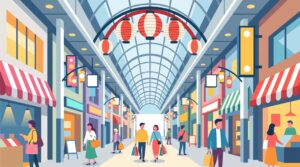
A short ride down the Midosuji subway line brings you to a wholly different world. Welcome to Minami. The moment the train doors slide open at Namba, the sterile corporate atmosphere gives way to the scent of grilled octopus and a symphony of competing noises: the clatter of pachinko parlors, the calls of merchants, the booming bass from hidden clubs, and the ceaseless chatter of crowds flowing through covered shopping arcades. This is the Osaka of popular imagination, the city of ‘kuidaore’—to eat oneself into ruin. Here, the sterile glass towers of Kita surrender to a riot of neon lights, crowned by the iconic Glico Running Man sign glowing over the Dotonbori Canal.
Minami is sensory overload by design. It’s a realm of raw, unfiltered vitality. The streets are narrower, buildings older, and the people express themselves more openly. This is the historical playground of the merchant class, a district created for entertainment rather than commerce. Shinsaibashi-suji Shopping Arcade is a river of humanity flowing past hundreds of shops, while nearby Amerikamura thrives as a center of youth culture, packed with vintage clothing outlets, eclectic cafes, and aspiring musicians. Life in Minami feels impulsive and unscripted. It rarely follows a 9-to-5 routine, pulsing with energy well into the early morning hours. Here is Osaka with its tie loosened, sleeves rolled up, and a drink in hand. It’s loud, a little chaotic, and unapologetically itself.
The Rent Divide: What Your Yen Gets You
For anyone considering living here, the most urgent concern is typically financial. How does this cultural divide impact the rental market? The common belief is that Kita, with its polished image, is uniformly more expensive. However, the reality, as with much in Osaka, is far more nuanced and depends largely on whether you define ‘living’ in an area as residing within its core or simply nearby.
Kita’s Real Estate Scene: Convenience Comes at a Cost
Having an address in the heart of the Umeda district means paying a substantial premium for prestige and convenience. A modern, compact one-room (1K) apartment in a newly built complex within a ten-minute walk of Osaka Station can easily fetch rent between ¥80,000 and ¥110,000 or more. This cost buys you the privilege of living at the very center of western Japan’s transportation hub. Yet most people who say they ‘live in Kita’ actually reside in the neighborhoods surrounding Umeda that share its cultural vibe.
Take Fukushima, just one JR station west. It has flourished into a culinary hotspot packed with outstanding restaurants and standing bars, while still maintaining a residential neighborhood atmosphere. Rents here are somewhat more affordable. Move north to Nakatsu or Tenjinbashisuji 6-chome, where older apartments mix with newer high-rises. In these districts, a decent 1K typically rents for ¥60,000 to ¥75,000. Here, you trade some of Umeda’s shine for more space and a stronger sense of community, exemplified by the Tenjinbashisuji shopping arcade, Japan’s longest. What you’re really paying for in Kita is access—not just to transportation but to a lifestyle characterized by modernity and order.
Minami’s Market: Affordability, Diversity, and Energy
Minami’s rental market presents a completely different picture. While an apartment overlooking the Dotonbori Canal would be exorbitantly priced and extremely noisy, the nearby neighborhoods offer some of the best value in central Osaka. The key is recognizing that Minami’s vibrancy is concentrated. Just a fifteen-minute walk from Namba’s neon lights brings you to surprisingly calm, residential streets.
Areas such as Sakuragawa, Horie, and those west of Yotsubashi provide an excellent balance. Horie, especially, has become a trendy district filled with independent boutiques, stylish cafés, and furniture stores, attracting a younger, creative demographic. Here, you can find a spacious, well-designed 1LDK (one bedroom plus living, dining, and kitchen) for the price of a small 1K in prime Umeda. Further south, near Daikokucho and toward Tennoji, the value increases. Older buildings, known as ‘apaato’, often constructed from wood or light steel, offer significant savings, although sometimes at the expense of insulation and soundproofing. In Minami, your rent buys you character and closeness to culture. While you might sacrifice the latest amenities, you gain immediate access to the city’s most dynamic cultural scenes.
Debunking the Myth: It’s More Than Just North vs. South
A vital point many newcomers overlook is that rent prices in Osaka aren’t determined solely by the Kita versus Minami divide. The real factor is the train line. The Midosuji subway line serves as the city’s main artery, and proximity to any of its stations—from Shin-Osaka in the north to Tennoji in the south—commands a premium. An apartment a three-minute walk from Nishi-Nakajima Minamigata station (just north of Umeda) will cost more than a similar unit a twelve-minute walk from a station on a less significant line. Your lifestyle and budget are shaped not by a simple north-south split, but by a complex network of railway accessibility. Often, the smartest move is to live somewhere between the two hubs, giving you the flexibility to choose your daily adventure.
Lifestyle and Daily Rhythms: How Your Neighborhood Shapes Your Day
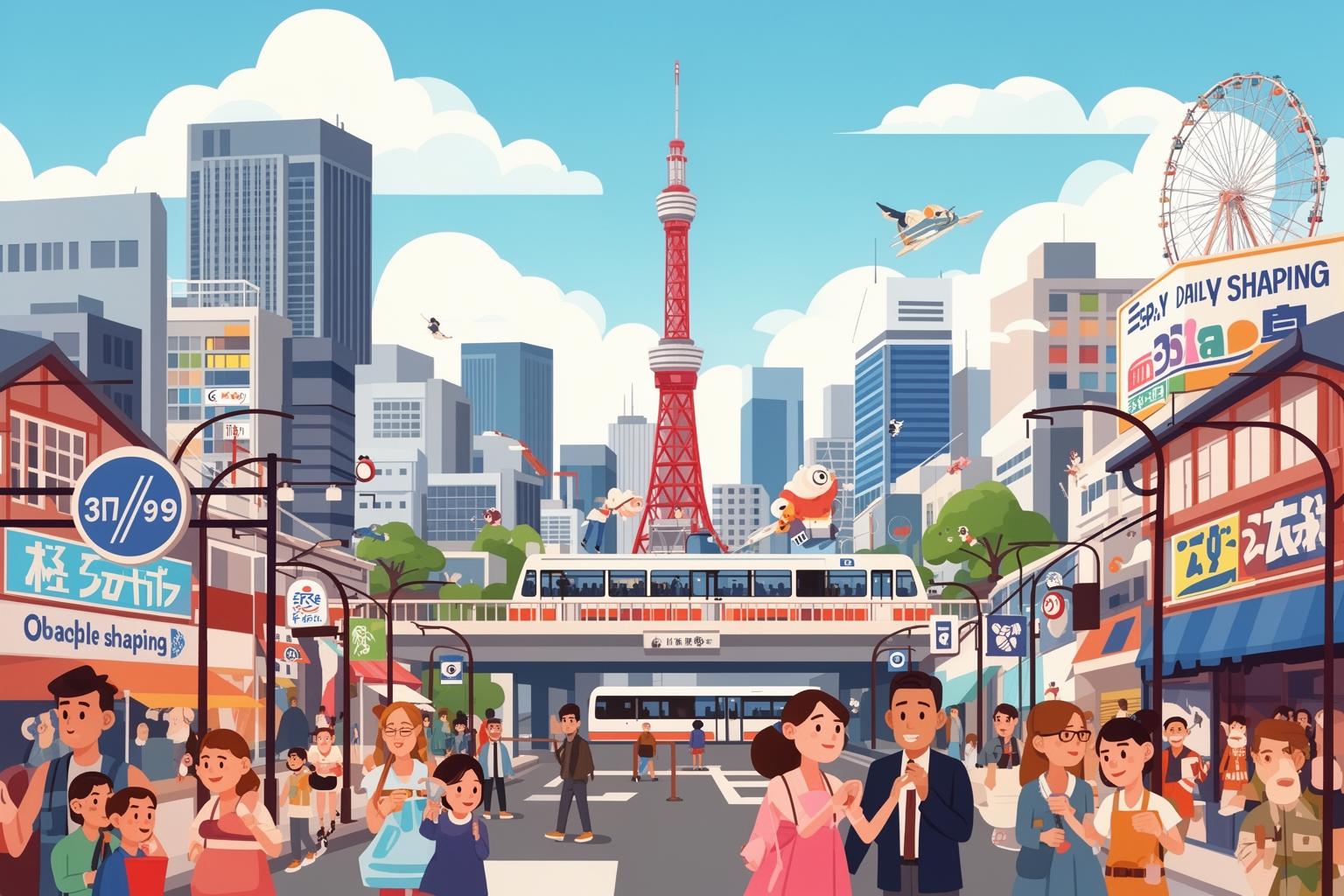
Where you rest your head each night fundamentally influences the texture of your daily life. Choosing between Kita and Minami means selecting between two distinct daily rhythms, two different ways of navigating the urban environment.
A Day in Kita: The Structured Commuter
A morning in a neighborhood near Kita begins with intention. The commute exemplifies efficiency, a quiet choreography of people moving through pristine underground passages connecting various train stations. Coffee is picked up from a sleek, minimalist café inside a shining office tower. The workday is spent in a high-rise, with sweeping views of the city below. Lunch is often a quick, set-menu meal in one of the hundreds of restaurants located in the basement floors of the Umeda Sky Building or Hankyu Sanbangai mall. There is a feeling of order, as if the city operates like a finely tuned machine.
The evening shifts this professional energy. Corporate crowds flow into izakayas around Higashi-Umeda for after-work drinks, their conversations serving as a release from daily stresses. Weekends are reserved for cultured activities: browsing the Kinokuniya bookstore, attending a performance at the Umeda Arts Theater, or enjoying an elegant dinner with a view. Life in Kita is convenient, predictable, and comfortable. It is a life insulated from the raw, unpredictable chaos that defines much of Osaka’s character. It’s a life built on schedules and systems.
A Day in Minami: The Spontaneous Urbanite
Minami wakes more slowly, with a collective groan. The morning rhythm is less about rushing to an office and more about the gradual awakening of countless small businesses. You might begin your day with a stroll to Kuromon Ichiba Market, not just for groceries, but for the sheer spectacle—the vendors’ calls, the sight of fresh tuna expertly carved. The day is less regimented. Many residents work in creative industries, hospitality, or retail—fields that follow a different clock.
An afternoon might be spent wandering the back alleys of Hozenji Yokocho, a stone-paved lane that feels like a relic of a bygone era, or browsing the niche shops in Doguyasuji, the kitchenware street serving the city’s restaurants. Evening is when Minami truly comes alive. Dinner isn’t a planned reservation; it’s a spontaneous choice to grab takoyaki from a street vendor, followed by a lively meal at a standing-only izakaya where you inevitably strike up a conversation with a stranger. The night may end at a tiny, hidden vinyl bar tucked inside a multi-tenant building or with an impromptu karaoke session. Life in Minami is a series of improvisations. It is lived publicly, a constant dance with the vibrant, chaotic, and deeply human energy of the city.
Beyond the Binary: Finding Your Osaka
The truth is, the Kita vs. Minami framework serves as an excellent starting point—a cultural compass to guide you. However, Osaka is far too complex and expansive to be defined by just these two poles. The city is a vibrant mosaic of neighborhoods, each with its own unique character, and many of the most rewarding places to live exist in the spaces between these two major areas.
The Midosuji Line: The Vital Artery Connecting Everything
As mentioned, the Midosuji Line acts as the crucial connector. Living along this important subway line is the ultimate advantage for anyone new to Osaka. Residents of Nishinakajima-Minamigata or Showacho have the entire city within easy reach. They can be in Umeda’s corporate center in ten minutes or in the bustling entertainment district of Namba in twenty. This enables a kind of lifestyle arbitrage, offering a quiet, residential home base with seamless access to both of the city’s main social and economic hubs. You can work in Kita, enjoy Minami, and return to a neighborhood that truly feels like home. Choosing an apartment near this line is likely the most practical advice for anyone relocating to the city.
Emerging Hubs and Neighborhood Niches
Beyond this central axis, other strong centers of attraction have emerged. Over the past decade, the Tennoji-Abeno area has developed into a significant third hub. Anchored by Abeno Harukas, Japan’s tallest skyscraper, it combines the upscale retail feel of Kita with a more relaxed, family-friendly vibe. With expansive Tennoji Park, the Osaka City Museum of Fine Arts, and the historic Shitennoji Temple, it offers a cultural richness distinct from both north and south.
To the east lies Kyobashi, a gritty, unassuming transit hub and a haven for fans of traditional, no-nonsense izakayas. This neighborhood remains a gathering spot for salarymen enjoying affordable beer and great food, resisting the gentrification seen in other parts of the city. To the west is the Bay Area near the port, which presents an entirely different atmosphere—open skies, sea breezes, and proximity to attractions like Universal Studios Japan and the Osaka Aquarium Kaiyukan, but with a quieter, almost suburban residential feel. Exploring these alternative centers reveals Osaka’s true depth and diversity, a city much richer than the simple north-south narrative suggests.
The Osakan Mindset: How the Divide Reflects the Culture
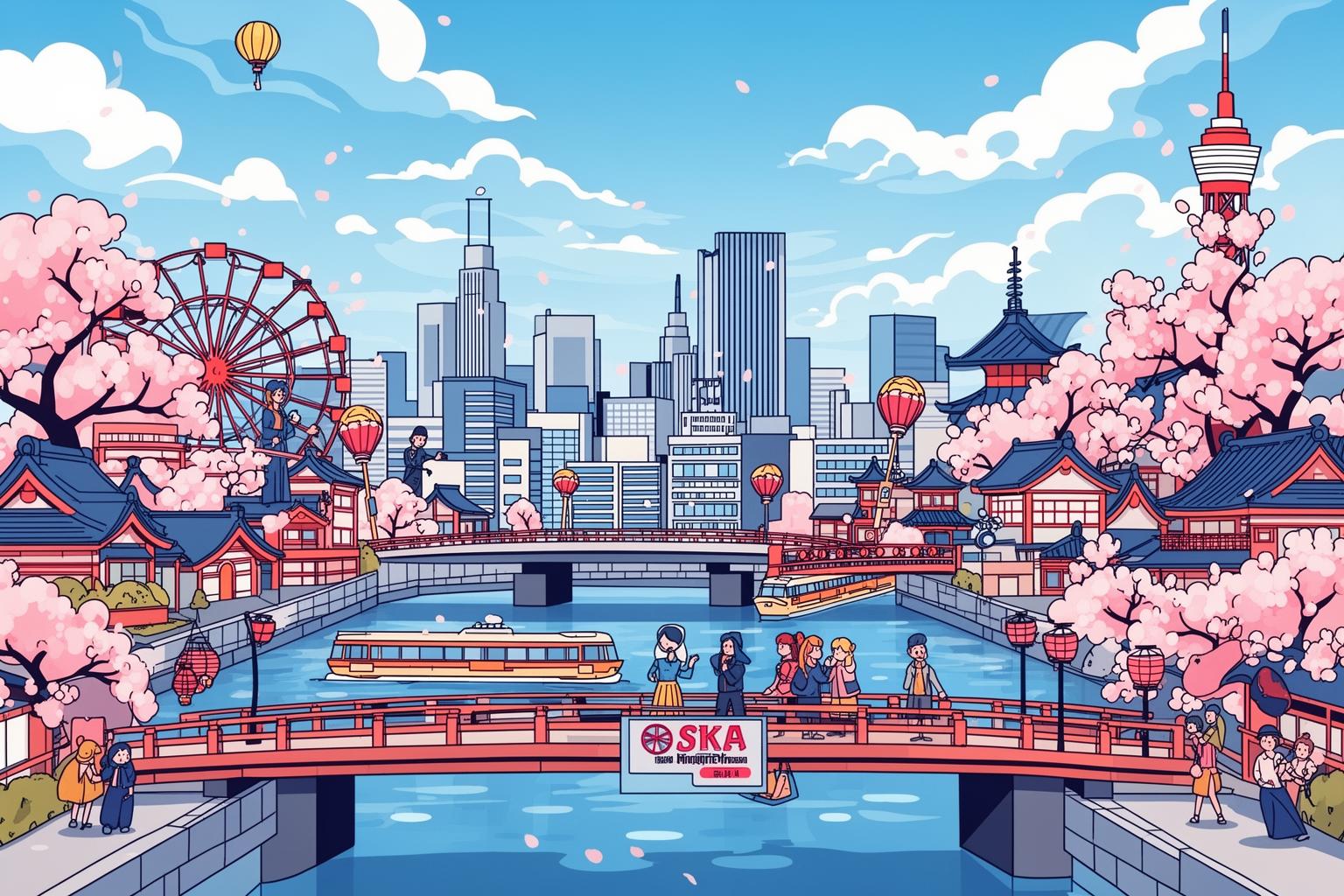
Ultimately, the divide between Kita and Minami goes beyond geography or architecture; it is a tangible reflection of the Osakan spirit. The city’s identity is founded on a core duality. On one side, Osaka serves as the economic powerhouse of western Japan, a hub of industry and logistics. This embodies the spirit of Kita—ambitious, professional, and globally connected. It is the Osaka that competes with Tokyo and maintains a polished, corporate image.
On the other side, Osaka’s soul was shaped by its history as ‘tenka no daidokoro’—the nation’s kitchen. It was a city of merchants, artisans, and entertainers, where practicality, humor, and the pursuit of pleasure were paramount. This is the essence of Minami—direct, unpretentious, hedonistic, and profoundly communal. Unlike Tokyo, where public conduct is often guided by a strict code of polite restraint, the Osakan mindset fosters open, honest expression. This is the culture of ‘tsukkomi’ and ‘boke’—the sharp, witty banter that characterizes Japanese comedy and colors everyday interactions.
This duality helps explain behaviors that can sometimes perplex outsiders. An Osakan coworker might be highly formal and diligent at work in Umeda—their ‘Kita face’. Yet, invite them for drinks in Namba, and an entirely different persona might appear—loud, curious, and refreshingly candid. This isn’t hypocrisy; it is code-switching, skillfully navigating between the city’s two dominant cultural modes. To truly live in and understand Osaka, one must embrace both. Recognize the ambition that erected Kita’s towers alongside the spirit of commerce and community thriving in Minami’s alleys. The city is neither wholly one nor the other; it is the dynamic, often contradictory tension between the two.
The choice, then, is not which area is better. There is no ‘superior’ or ‘inferior’. It’s about which side of Osaka’s character you want to greet each morning. Do you flourish amid structure, efficiency, and a sleek, modern environment? Or are you drawn to spontaneity, rich sensory experiences, and a life lived with lively chaos? Spend a Tuesday afternoon in a café at Grand Front Osaka. Then spend a Friday night in an izakaya tucked away in Namba’s backstreets. Don’t just observe—immerse yourself. Feel the pace, absorb the ambient sounds, watch how people engage. The city itself will reveal where you belong. Choosing between Kita and Minami is the first step in your Osaka journey, the decision that frames all that follows. Choose thoughtfully, but remember, in a city this vibrant, there truly is no wrong choice.