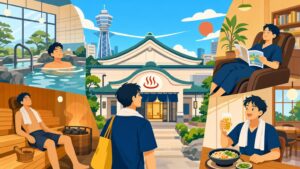
When you first move to Japan, you build a mental map of the country, often drawn from polished images. Tokyo is the shimmering, high-tech metropolis, a sea of polite efficiency. Kyoto is the serene, timeless custodian of tradition, all graceful temples and silent gardens. And Osaka? Osaka is often painted with a broad brush: loud, fun, a city of fantastic food and even better jokes. While that’s not wrong, it’s a surface-level sketch that misses the intricate, deeply human texture of the city. To really understand Osaka, you have to look past the neon glow of Dotonbori and the towering heights of Umeda Sky Building. You have to find the places where life happens, unscripted and unfiltered. For me, a Tokyo native used to a certain urban rhythm, the key to unlocking Osaka wasn’t in a famous restaurant or a historic castle. It was in the steam-filled, tile-lined rooms of its neighborhood sento, the local public bathhouses.
From the outside, they can seem unassuming, tucked away in quiet residential shotengai shopping arcades or down narrow side streets. A simple noren curtain, perhaps with the character ゆ (yu, for hot water), is often the only sign. But push past that curtain, and you step into a world that operates on a different set of social rules, a world that is perhaps the most potent, concentrated expression of Osaka’s unique identity. These are not just places to get clean; they are the living rooms of the community, the stages where the daily drama of neighborhood life unfolds. They are where you see the city with its guard down, stripped of pretense and status, literally and figuratively. In these humble bathhouses, you can decode the complex social DNA of Osaka—its pragmatism, its intrusive warmth, its fierce loyalty, and its unshakeable sense of community. This is where you learn the real language of the city, a language spoken not just in words, but in shared space, unspoken rules, and the simple, profound act of bathing together.
This pragmatic warmth, a form of social glue often called osekkai, is a cornerstone of the community spirit you’ll find in these sento.
The Sento as a Social Stage: Where Walls Come Down
Step into an Osaka sento, pay your few hundred yen, and pass through the second set of curtains into the changing room. The first thing you notice isn’t the heat or humidity; it’s the sound. In a Tokyo sento, there’s a certain hushed reverence. People might chat softly, but there’s an ambient hum of polite restraint. In Osaka, the sound hits you like a wave. It’s a boisterous symphony of life. A group of obachan (aunties) laugh loudly about the price of cabbage, their voices echoing off the tiled walls. A father is energetically instructing his young son on how to wash properly. Two middle-aged men are having a heated yet friendly debate about the Hanshin Tigers’ latest game. There’s no pretense here, no social armor. The idea of ‘hadaka no tsukiai,’ or ‘naked communion,’ exists throughout Japan, but in Osaka, it’s embraced with distinctive enthusiasm. The radical notion is that once your clothes are off, so too are your job title, wealth, and social standing. You’re just another body in a warm room, and that makes everyone equal.
No Pretense, Just People
This immediate leveling is central to the Osaka mindset. The city has historically been a merchant town, where practicality and results mattered more than lineage or status. That spirit continues in the sento. The company president might be soaking next to the construction worker, the student beside the shop owner. And they will talk. A conversation might begin from a simple comment about the weather or a compliment on a shampoo brand. This is often where foreigners misunderstand Osaka’s famed ‘friendliness.’ It’s not the gentle, accommodating friendliness found in a service setting. It’s a proactive, sometimes intrusive friendliness rooted in genuine curiosity and the belief that everyone’s in this together. In Tokyo, striking up a conversation with a stranger in such a vulnerable setting would be a major breach of social protocol. Here, it’s the norm. The social distance that shapes much of life in other Japanese cities evaporates in the steam. You’re not an anonymous face in the crowd; you’re a neighbor, and to some extent, your business is everyone’s business.
The Unspoken Language of the Bath
Beneath the loud chatter lies a strict, unspoken code of conduct. This is where the practical side of Osaka comes forward. The sento is a shared space, and its smooth operation depends on everyone following the rules. First, you take a small stool and a bucket to a washing station. You must thoroughly wash and rinse your entire body before even thinking about entering the tubs. This isn’t merely a suggestion; it’s a cardinal rule. The tubs are for soaking and relaxing, not for cleaning. Second, your small modesty towel should never touch the bath water. You can place it on your head or set it aside, but it doesn’t go in the tub. Third, when moving between the washing area and the baths, be careful not to splash others. These rules are about hygiene and respect for the shared space. What’s uniquely Osaka is how these rules are enforced. You won’t receive a cold stare or a passive-aggressive sigh like you might in Kyoto. Instead, you’ll get direct, verbal correction. An old man might tap you on the shoulder and say, “Anchan, karada aratte kara ya de” (Hey buddy, wash up first). It’s not meant to be harsh. It’s a form of social upkeep, a practical way to ensure the system works for everyone. They’re teaching you the ropes, initiating you into the community. To take offense would be to miss the point. The goal is communal harmony through direct communication, not quiet conformity.
The Architecture of Community: Reading a Neighborhood Through its Bathhouse
Not all sento are the same, and the physical characteristics of a bathhouse can reveal much about the neighborhood it serves. They act as architectural fingerprints reflecting the local community’s history, values, and aspirations. The layout, tile style, water temperature, and even the amenities all provide clues to the identity of the nearby streets. Spending an hour in a sento can teach you more about a district than a week of wandering around. The bathhouse mirrors its people—a structure made not only of wood and tile but also of shared identity and collective memory.
Each Sento, A Different Kingdom
Let’s explore a few examples. In older, working-class neighborhoods in southern Osaka, such as Nishinari, sento often serve as living museums of the Showa era. They frequently feature magnificent ‘miya-zukuri’ architecture with grand, temple-like curved gables. Inside, walls might display beautiful, though somewhat faded, tile murals of Mount Fuji or vibrant koi fish. The water here tends to be fiercely and unapologetically hot, a point of pride symbolizing the endurance and grit of the local community. These sento don’t aim to be trendy; they stand as bastions of tradition, offering consistent and reliable comfort to a population that has experienced decades of change. They are cherished institutions, fiercely guarded by regular patrons.
In contrast, a sento in a more affluent, family-oriented suburb is likely to be a ‘super sento.’ These are larger, more modern facilities focusing less on tradition and more on variety and entertainment. You’ll find numerous types of baths: jet baths, herbal infusions, carbonated baths, cold plunges, and sometimes even an outdoor ‘rotenburo.’ Many have attached restaurants, massage services, and relaxation lounges with manga libraries. These venues serve as weekend destinations where families can spend an entire afternoon. The community aspect is more diffuse—patrons are customers enjoying a service rather than members of a local club. This reflects a lifestyle that prioritizes convenience, choice, and family-centered leisure.
Then there are the new wave of sento in gentrifying neighborhoods like Nakazakicho or the backstreets of Fukushima. Often older bathhouses renovated and reimagined by a younger generation, their design may be minimalist and stylish. Traditional tile murals might be replaced with modern art. Instead of just vending machines offering milk and sports drinks, you might find craft beer on tap and artisanal coffee in the lobby. These sento may host events such as live music or collaborations with local artists. They bridge past and future, maintaining the communal role of the bathhouse while adapting it to the tastes of a new creative class. They act as social hubs for a community built around shared aesthetics and contemporary culture.
The Bandai and the Gatekeeper
At the heart of any sento, regardless of style, is the person stationed at the front desk or on the traditional elevated platform called a ‘bandai.’ This vantage point offers a view of both the men’s and women’s changing rooms. The attendant, often an older man or woman from a family that has run the bathhouse for generations, is much more than a cashier. They serve as the neighborhood’s gatekeeper, its memory bank, and the central hub of communication. In Tokyo, the interaction might be a polite but impersonal exchange for a locker key. In Osaka, the person at the bandai knows everyone personally. They’ll inquire about your mother’s health, remark if you’re late from work, or hold spare keys for regulars prone to losing them. This embodies the heart of Osaka’s ‘osekkai’ culture, often translated as ‘nosy’ or ‘meddlesome,’ but more accurately described as proactive community care. They function as an unofficial neighborhood watch, noticing when an elderly regular hasn’t appeared for a few days and sending someone to check on them. They are a source of local gossip, a living social network operating entirely offline. This deep, personal engagement with their patrons’ lives contrasts sharply with the professional distance valued in many other parts of Japan.
Sento Economics: More Than Just Yen for Hot Water
The economics of a neighborhood sento are intriguing because they follow a logic that goes beyond mere profit. The price for a standard adult entry is set by the prefectural government, ensuring it remains affordable and accessible to everyone, regardless of income. This fixed price, currently below 500 yen, acts as a social contract. It transforms the sento from a luxury into a utility—just as essential as water or electricity, but for the soul. What you pay for isn’t just access to hot water and a place to wash; you are essentially paying a subscription to your community. It’s an investment in a clean, safe, and warm third space that is neither home nor work, where you can simply be among your neighbors without any expectations or demands.
The Price of Community
In a time of growing urban isolation, where people dwell in concrete boxes stacked high and may never speak to their neighbors, the sento offers a powerful remedy. For the cost of a cup of coffee, you receive a few hours of social connection, relaxation, and a genuine sense of belonging. For elderly individuals living alone, it serves as a crucial daily check-in. For young families in cramped apartments, it’s a place where children can splash around freely without worrying about disturbing downstairs neighbors. For students and young workers new to the city, it provides an immediate entry into the local community. The economic model doesn’t aim to maximize revenue per customer but to sustain an essential piece of social infrastructure. This reflects a distinctly Osaka mindset: pragmatic, community-oriented, and deeply human. The value isn’t measured in yen but in the strength of the social bonds it nurtures.
The Post-Bath Ritual: The Second Act
The sento experience doesn’t end upon leaving the bath. The second act, equally important, happens in the changing room or lobby. This is the cooldown period, both physically and socially. Dressed in a yukata or simply shorts, people linger. They sit on benches, rehydrating with classic post-bath beverages from vending machines—a cold bottle of fruit-flavored milk, a fizzy Ramune, or an Asahi Super Dry for the adults. The television is almost always on, tuned to one of two programs: a lively manzai comedy show or a Hanshin Tigers baseball game. Collective groans when the Tigers concede a run or shared laughter at a punchline create a transient but powerful bond. This space functions as the neighborhood’s living room, where information is exchanged, plans are made, and the day’s events are discussed. The pace is slow and unhurried. In Tokyo, there can be an efficiency even in leisure—you get in, get clean, and leave. In Osaka, lingering is essential. Rushing this part misses the point altogether. It’s a social space that values presence over productivity, a rare and precious thing in modern urban life.
What Foreigners Get Wrong: Navigating the Steam and the Social Codes
For someone not from Japan, a local sento can feel like an intimidating place. The mix of nudity, unfamiliar customs, and a language barrier can be overwhelming. However, many of the worries and misunderstandings arise from trying to apply the social rules of the outside world to this distinct setting. The key to enjoying an Osaka sento is to leave your preconceived notions in the locker with your clothes and embrace the local way of thinking. It’s a world that functions by its own rules, and understanding them is essential.
The ‘Friendliness’ Trap
The most frequent error is misreading Osaka’s style of communication. If you are accustomed to the indirect, non-confrontational manner common in much of Japan, Osaka’s directness can be startling, especially within a sento. As noted, if you break a rule, you will likely be told about it openly. A stranger might suddenly strike up a very personal conversation with you. An obachan might touch your arm and offer unsolicited skincare advice. It’s important to recognize this is not aggression or rudeness; it’s a form of inclusion. By correcting or engaging with you, they treat you like one of their own—a community member expected to know and follow the local customs. The true cold shoulder would be complete ignoring. Silence and distance signal exclusion. The noise, questions, and well-intentioned advice are signs of acceptance. Lean into this. A smile and a simple ‘arigato’ will go a long way. Don’t shrink into a shell of politeness; respond to their energy with your own openness.
Tattoos, Noise, and Nakedness
Three particular things often unsettle foreigners: tattoos, noise, and the fact of being naked. Let’s consider them from an Osaka viewpoint. While many larger, corporate onsen and fitness clubs in Japan strictly ban tattoos due to their yakuza associations, local neighborhood sento in Osaka tend to be more pragmatic and tolerant. You’ll often see people with tattoos, from small fashion pieces to elaborate full-back designs. The general attitude is: as long as you’re not causing trouble, nobody minds. This ‘live and let live’ approach is very much part of the city’s character. Of course, policies vary by place, but a total ban is much rarer in these local establishments.
As for noise, a sento isn’t a library or meditation space. It is a lively place. Children splash and shout. Adults talk and laugh loudly. The tile and high ceilings amplify every sound. Trying to find quiet contemplation here misunderstands its purpose. The aim is communal energy, not tranquil escape. Embrace the spirited atmosphere as part of the genuine experience.
Lastly, nudity. It’s natural to feel self-conscious initially, but you’ll quickly realize no one is staring. People are there to relax, chat with friends, and enjoy the hot water. There is no pretense or judgment about bodies. Everyone—young or old, fit or not—is equally vulnerable. This shared vulnerability creates a striking sense of ease. It’s a practical, unromanticized view of the human body that is refreshing and truly egalitarian. After a few visits, any self-consciousness fades, replaced by the simple comfort of being part of the warm, steamy, human ecosystem that is the Osaka sento.