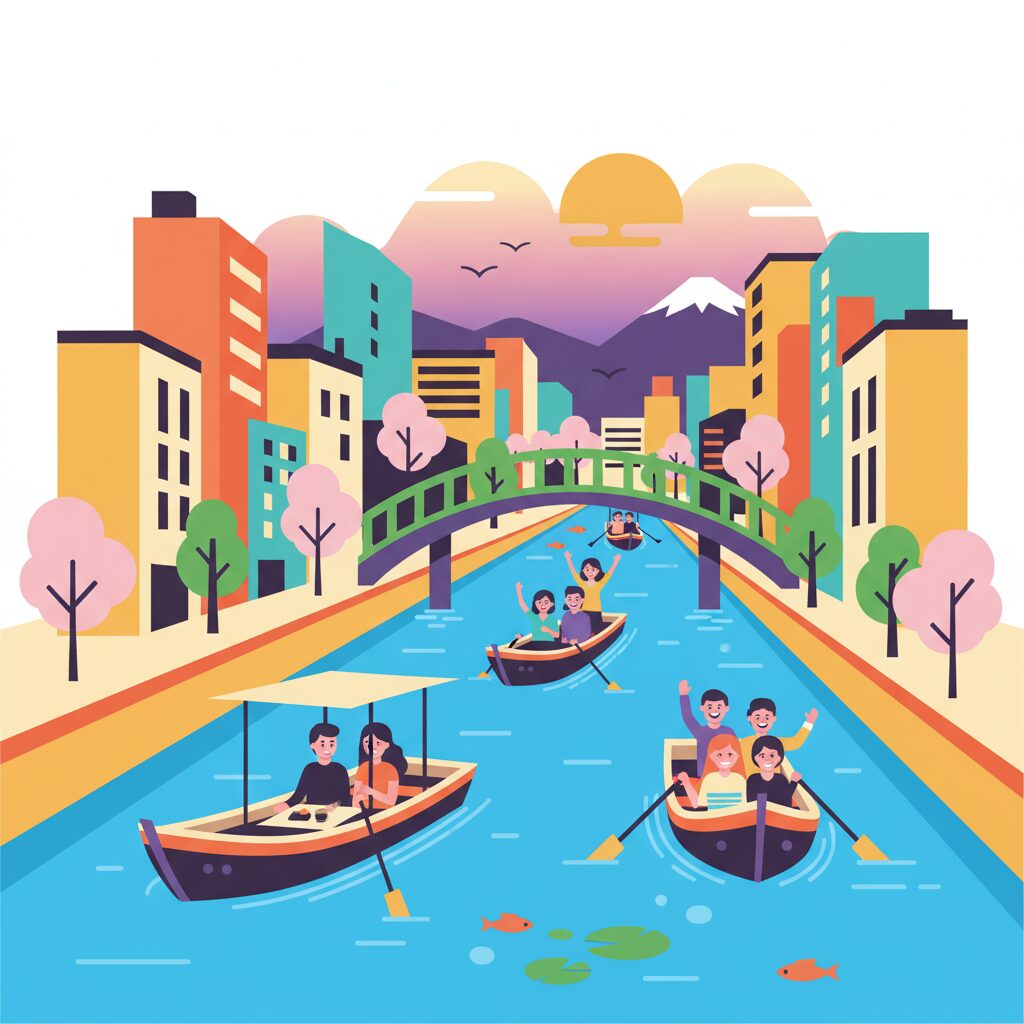
You’ve seen the pictures. You might have even been there. The Glico Running Man, a symbol of endless energy, posing high above a canal bursting with neon. Giant mechanical crabs and pufferfish cling to buildings, their colors reflecting in the dark water below. Wooden tour boats packed with visitors float by, creating a chaotic, vibrant, almost surreal spectacle. This is Dotonbori. And for most of the world, this single, electrifying canal is Osaka’s relationship with water. It’s loud, it’s commercial, it’s a sensory overload. It’s an unforgettable experience. But it’s also a mask, a brilliant disguise that hides a much deeper, more fundamental truth about this city.
What if I told you that Dotonbori is just the flashy, tourist-facing opening act? What if the real story of Osaka and its water is quieter, more expansive, and woven into the very fabric of daily life in a way you’d never guess from that one crowded canal? Osaka’s official nickname is the “Suito,” the City of Water. This isn’t some dusty historical label dug up for tourism brochures. It’s the city’s operating system. It’s the blueprint that dictates the flow of people, the location of parks, the rhythm of leisure, and even the mindset of its residents. While Tokyo famously paved over its canals and rivers to make way for expressways, choosing concrete efficiency over natural arteries, Osaka kept its waterways at its heart. They are not just scenic backdrops; they are the city’s lungs, its central park, its main highway for community and recreation. To truly understand what it feels like to live in Osaka, to get a handle on the local psyche, you have to look past the neon glow of Minami. You need to turn your attention to the broad, shimmering surfaces of the Okawa, the Dojima, and the Tosabori rivers, and to the neighborhoods that treat these waters as their front yard. Places like Nakanoshima and Temmabashi are where you’ll find the real Suito, the living, breathing heart of waterborne Osaka.
To discover a different, more tranquil side of Osaka’s character, explore the city’s true heart beyond the neon in a Minamikawachi farmhouse.
The Unspoken Blueprint: Why Water is Osaka’s Foundation
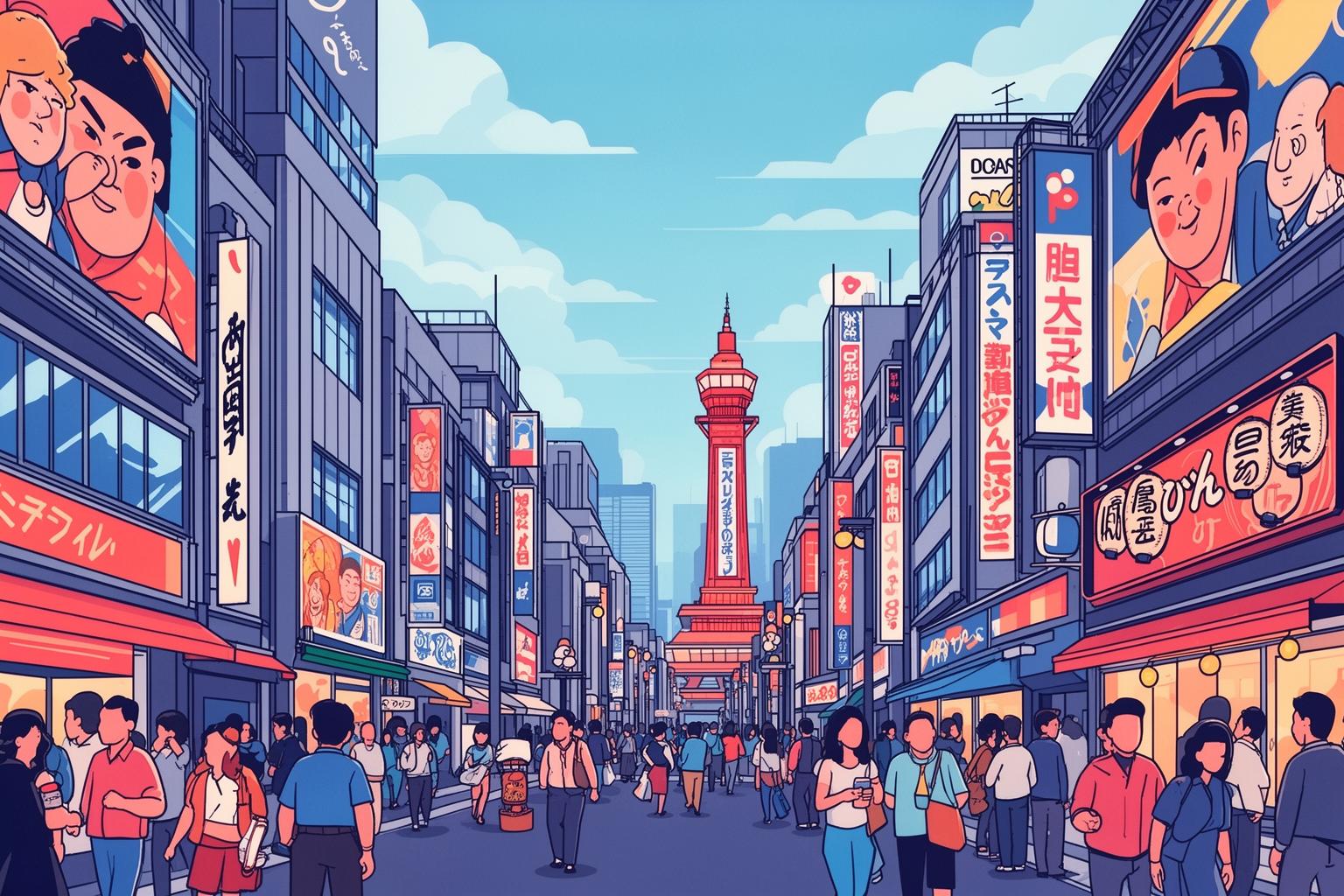
To understand Osaka, you need to grasp that the city wasn’t built next to water; it was built from it. The entire landscape is shaped by the Yodo River delta, a flat stretch of marshes and estuaries that were gradually controlled, channeled, and developed. This geography is not just a historical detail—it’s the foundation of everything. The grid-like street layout, the location of key business districts, and the city’s very character as a commercial hub—all stem from the presence of the water.
A Brief Look into History (Without the Dry Lecture)
During the Edo Period, when Tokyo (then Edo) was the shogun’s seat of power, Osaka stood as Japan’s uncontested economic powerhouse. It earned the nickname “Tenka no Daidokoro,” or the Nation’s Kitchen. Why? Because feudal lords from all over sent surplus rice and other goods to Osaka for storage and trade. And how did these goods arrive? By boat, navigating a complex system of rivers and canals to enormous warehouses called kurayashiki lining the waterfront. Nakanoshima, an island now home to parks and museums, was once filled with these warehouses—a bustling center of commerce and finance.
This history is ingrained in the spirit of the modern Osakan. The city’s identity was created not by samurai or political maneuvering, but by merchants, traders, and artisans. Their world was centered around the practical, essential movement of goods along waterways. This cultivated a mindset known for being straightforward, pragmatic, and results-driven. There was less tolerance for the elaborate ceremony and strict hierarchy found in the capital; what mattered were the deals, the quality of goods, and dependable transport. The rivers served as highways, stock exchanges, and lifelines. This fundamentally practical, commerce-focused attitude continues to define the city today. It explains the directness in conversation and the emphasis on value that can sometimes catch newcomers off guard.
Tokyo Paves, Osaka Plays: A Tale of Two Cities
This historical backdrop led to a marked contrast in urban development, especially after World War II. During Japan’s rapid rebuilding and modernization, Tokyo made a decisive choice. To accommodate a surge in cars and create an efficient, modern metropolis, it filled in many canals and constructed massive expressways over its rivers. The Nihonbashi bridge, once the proud origin of Japan’s major roads, now lies overshadowed by a towering elevated highway. In Tokyo, water was often viewed as an obstacle to be overcome, a relic to be concealed beneath layers of concrete progress.
Osaka followed a different route. While it modernized and built expressways, it never fully abandoned its main rivers. The Okawa, Dojima, and Tosabori rivers were too wide, central, and vital to the city’s identity to be covered over. Rather than becoming dark, forgotten underpasses, they stayed open to the sky. This choice, whether intentional or circumstantial, greatly enhanced the livability of the city center. Strolling through the business districts of Umeda or Yodoyabashi, you’re never more than a few minutes from expansive views of water, sky, and bridges. This creates a feeling of openness and airiness rarely found in the dense urban canyons of central Tokyo. It’s a physical openness that fosters a psychological one. The city doesn’t feel as cramped or claustrophobic. The rivers serve as natural pressure-release valves, offering a horizontal getaway from the vertical skyline. This fundamental difference in urban design remains one of the most powerful—and often unspoken—distinctions between Japan’s two largest cities.
Nakanoshima: The City’s Elegant Green Lung
Nestled between the Dojima and Tosabori rivers, Nakanoshima is a long, narrow island that perfectly captures Osaka’s contemporary connection with its waterways. Stretching about three kilometers, it serves as the city’s cultural and administrative hub while also acting as a shared public space that effortlessly combines work, art, and leisure. It stands as a prime example of how the rivers shape a distinctive urban experience that resists easy classification.
More Than a Park: An Outdoor Office and Living Room
Visit Nakanoshima Park on a Tuesday afternoon, and you’ll witness a serene reflection of the healthy work-life balance the rivers enable. Office workers in crisp shirts, with ties loosened, sit on the tiered steps by the water, enjoying bentos from nearby convenience stores. They aren’t hurrying back to their desks; instead, they’re genuinely taking a break—watching water taxis glide past and feeling the river’s breeze. Small groups of colleagues hold walking meetings along the paved paths, using the open air to think and converse away from the confines of traditional conference rooms. The island naturally extends the office towers lining its southern bank, serving as an informal meeting spot, a decompression zone, and an outdoor cafeteria.
The vibe is refined without being pretentious. The backdrop is undeniably impressive—at one end, the stately red-brick neo-renaissance Osaka Central Public Hall and the classical columns of the prefectural library. Moving westward, bold modern designs like the National Museum of Art and the Science Museum stand out. Yet these aren’t just tourist attractions. For locals who work and live here, they form a familiar part of the everyday landscape, providing a sense of place and history that transforms a simple lunch break into something more meaningful. The park is not a destination you have to plan a visit for; it is woven into the daily flow of thousands of people’s lives.
Weekend Shift: From Briefcases to Picnic Blankets
On weekends, Nakanoshima experiences a delightful transformation. Business suits and briefcases give way to picnic blankets, strollers, and colorful pop-up tents. The steady hum of weekday commerce yields to children’s laughter, badminton birdies thwacking, and gentle guitar strumming. The island turns into Osaka’s communal living room and backyard.
As someone who spends a great deal of time outdoors, what impresses me most about Nakanoshima is how naturally and effectively Osakans use this green space. There’s an unspoken etiquette allowing diverse activities to coexist harmoniously. Families with young children set up near the playgrounds, while groups of young people claim large lawns for frisbee games. Couples find quieter benches overlooking the rose garden, which bursts into a fragrant blaze of color in spring and autumn. This isn’t a prim, rule-heavy park; it’s a lively, adaptable space people shape to fit their needs. This reflects a broader Osakan characteristic: a practical, unpretentious knack for making the most of what’s available. The space exists, it’s beautiful, and it’s free—so why not use it? This straightforward, compelling logic shapes Nakanoshima’s weekend atmosphere.
Temmabashi and the Okawa River: The Community’s Backyard
If Nakanoshima is the city’s elegant, meticulously maintained front parlor, then the area around Temmabashi and the expansive Okawa riverbank serves as its relaxed, sprawling backyard. Here, grand architecture gives way to a more grounded, community-oriented atmosphere. The Okawa, a major tributary of the old Yodo River, is wider and feels more integrated with the city’s residential neighborhoods. This riverfront isn’t merely a destination; for thousands of Osakans, it forms an indispensable part of their everyday lives.
The Runner’s Paradise and the Commuter’s Shortcut
Extending north from Temmabashi, Kema Sakuranomiya Park stretches like a long, green ribbon along the eastern bank of the Okawa for more than four kilometers. Undoubtedly, this is the city’s premier outdoor gym. From dawn till late at night, the paths buzz with activity. Serious runners training for marathons, elderly couples on daily walks, cyclists in full gear, and office workers squeezing in a jog after work all share this space. It’s a living tapestry of Osaka life.
A comfortable, unspoken rhythm governs the sharing of this space. Faster runners and cyclists typically keep to the river side of the path, while walkers and those moving at a gentler pace stay to the inside. People instinctively make room for each other. This isn’t mandated by signs or enforcement; it’s a self-regulating system born from practicality and mutual respect, hallmarks of the local culture. Running or walking here feels uniquely Osakan. Overhead, the elevated JR Loop Line trains rumble across the bridge, a constant echo of urban life. Sleek Aqua-Liner tourist boats glide down the center of the river, creating gentle ripples. In the distance, the iconic green-roofed keep of Osaka Castle watches over it all. It’s a seamless blend of nature, infrastructure, and history—an urban landscape unlike any other.
Sakura Season and Beyond: More Than Just Cherry Blossoms
In late March and early April, this stretch of the Okawa transforms into Osaka’s prime cherry blossom viewing spot. Thousands of sakura trees lining the banks erupt in waves of pale pink, crafting a breathtaking spectacle. But to understand it from the local viewpoint, it’s more than just a beautiful sight. The sakura season marks the official, joyful, and slightly chaotic beginning of the warm months. It signals the city to come out and celebrate.
Hanami (flower viewing) parties here are quintessentially Osaka. They aren’t quiet, serene affairs; rather, they are loud, lively, and communal. From early morning, groups spread massive blue tarps to claim space. Portable grills, coolers packed with beer and chu-hai, and mountains of food sourced from department store basements appear as if by magic. The air fills with the aroma of grilled meat, laughter, and slightly off-key karaoke singing nearby. It’s a festival of the people, for the people—unpretentious, a bit messy, and tremendously fun. The river sets the grandest stage for this annual outpouring of community spirit.
But the river’s cultural role doesn’t end when the blossoms fade. In July, the Okawa hosts the main events of the Tenjin Matsuri, one of Japan’s three greatest festivals. Its climax is a procession of over a hundred elaborately decorated boats floating down the river at dusk, illuminated by fires and lanterns. The festival finishes with a massive fireworks display launched from barges on the water. Here, the river is not merely a backdrop; it is the festival. It serves as the sacred path and grandstand, clearly demonstrating how deeply intertwined the waterways are with the city’s cultural and spiritual life.
The Hachikenyahama Port: Where Old Meets New
Adjacent to Temmabashi Station lies a small but meaningful place: Hachikenyahama Port. Historically, it was a landing spot for pilgrims journeying to Shitennoji Temple and Kumano. Today, it functions as a modern, well-designed hub for the city’s water buses. This little port epitomizes Osaka’s relationship with its waters—respecting tradition while embracing modern uses.
Sit for a while on the wide, amphitheater-like steps and simply observe. You’ll see commuters stepping off a water taxi—a scenic, relaxed alternative to a crowded subway. Couples on dates share takeaway coffee as the city lights begin to shimmer on the water’s surface after sunset. Fishermen try their luck nearby. This place serves both as transit and pause, a functional port that doubles as a tranquil public space. The recent emergence of trendy cafes and Italian restaurants with terraces overlooking the port reveals how Osaka continues to find new ways to engage with its waterfront. This relationship is not static or merely historical but an evolving one, continuously reimagined by each new generation.
The “Suito” Mindset: What the Water Teaches You About Osaka People
The constant presence of these rivers not only shapes the physical city but also permeates the collective consciousness, influencing the way people think, interact, and view their world. Living in the City of Water fosters a distinct mindset, a collection of unspoken attitudes that help explain the character of its inhabitants.
A Sense of Flow and Practicality
Rivers flow, following the path of least resistance to reach their destination. They possess a directness and unstoppable momentum that reflects the renowned Osaka pragmatism. The city’s history as a merchant hub, where goods and money circulated as steadily as the tides, nurtured a culture that values efficiency and practical results over rigid formality. An Osakan is more likely to ask “why” and seek a straightforward solution, which can sometimes be perceived as impatience or bluntness by those used to Japan’s more nuanced, indirect communication styles. Like the rivers that built their city, Osakans naturally prefer to keep things moving.
This practicality also stems from the water’s dual nature. Rivers bring life and commerce but can also cause floods and destruction. Osaka has spent centuries learning to manage, control, and respect the power of water. This enduring relationship has fostered a realistic, no-nonsense approach to life: you address the situation at hand, build what’s necessary, and avoid wasting time on unnecessary frills. This mindset underpins Osaka’s reputation for being down-to-earth.
Public Space as Shared Space
Perhaps the greatest impact of the waterways is the creation of expansive, accessible, and largely democratic public spaces. The riverbanks are open to all, never gated or exclusive. This encourages a culture of casual, relaxed sharing that is central to Osaka life. On the wide paths of Kema Sakuranomiya Park or the green lawns of Nakanoshima, diverse groups mingle and coexist effortlessly. There is an unspoken understanding that this space is for everyone, and people behave accordingly.
This setting helps explain the “friendliness” often attributed to Osakans. It’s not necessarily that they are inherently more outgoing, but rather that the city’s physical environment promotes and encourages casual interactions. The open, linear riverbanks act as social lubricants. It’s far easier to nod or greet a jogger or dog walker in this spacious environment than on a crowded, impersonal city street. The rivers create neutral, shared ground where barriers between strangers naturally lower. They serve as great equalizers, where a company president and a student can enjoy the same view, for free.
A Different Kind of Status Symbol
In many world-class cities, status is vertical—the penthouse apartment with panoramic views from the 50th floor. While this exists in Osaka, the rivers offer a compelling horizontal alternative. For many residents, a high quality of life is defined not by elevation, but by proximity to the water. Being able to step out of one’s apartment and onto a running path within minutes, having a balcony overlooking the changing seasons on the river, or simply walking a dog along the waterfront every evening represents a highly valued and genuine form of urban luxury.
This reflects a different set of priorities. It’s a status less about exclusivity and more about well-being and access to nature within the city center. This preference for quality of life over pure prestige is a subtle but essential aspect of the Osaka mindset. It serves as a reminder that the city’s finest pleasures—a cool breeze off the water on a hot day, cherry blossoms mirrored on the river’s surface, a breathtaking sunset over the bridges—are available to all, regardless of where they live.
Living the Riverside Life: Practical Tips and Realities
If you’re thinking about making Osaka your home, truly appreciating and embracing its water culture is essential to fully enjoying the city. It goes beyond sightseeing; it’s about weaving the rivers into your everyday life.
Finding Your Spot
When searching for a place to live, don’t just focus on how close it is to the nearest subway station. Check the map to see how near you are to the Okawa or other surrounding rivers. Neighborhoods like Temmabashi in Chuo-ku, or the areas along the river in Miyakojima-ku and Kita-ku, offer wonderful lifestyle advantages. Imagine starting your mornings with a run alongside the water instead of a crowded train commute. Naturally, there are some downsides. Riverside areas can feel more humid during the hot summer months, and you might encounter more insects. During major events like Tenjin Matsuri or hanami season, your typically quiet neighborhood could turn into a lively festival space. But to many, these are small prices to pay for the daily pleasure of open space and natural beauty.
Embracing the Rhythm
My advice to newcomers is simple: don’t just look at the rivers—make them part of your routine. You don’t need to be a marathon runner. Try walking across a different bridge on your way home. Grab an affordable coffee and pastry and enjoy breakfast on the steps at Hachikenyahama. Pack a book and a blanket and spend a Sunday afternoon in Nakanoshima Park. Rent a bicycle and follow the river path as far as you can go. Through these simple, repeated activities, you’ll begin to sense the city’s true rhythm. You’ll start recognizing familiar faces, noticing the subtle seasonal shifts, and develop a connection to the place that extends beyond your apartment.
Don’t hesitate to explore. Take the Aqua-Liner water bus from Osaka Castle to Yodoyabashi. Though often seen as a tourist attraction, it offers a completely different view of the city’s architecture and layout. Follow some of the smaller canals, like the one winding through Kitahama, and discover the charming cafes and shops tucked along their banks. The more you explore the waterways, the more the city’s map will come alive for you.
To truly understand Osaka, you need to move beyond the image of Dotonbori. That single canal is a dazzling spectacle and a perfect symbol of the city’s vibrant commercial energy and theatrical flair. But it’s not the whole picture—just the cover of a much longer, more fascinating story.
The real story of this city is told along the broad, flowing pages of the Okawa, Dojima, and Tosabori rivers. It’s found in the daily lives of its people—the morning joggers, lunchtime dreamers, weekend picnickers. It’s embedded in the city’s layout, a testament to a history rooted in trade and a future that values open spaces. The water offers breathing room, a stage for community life, and a quiet source of a practical, resilient, and profoundly human urban culture. So next time you’re here, by all means, see the giant crab and the running man. But after that, do yourself a favor. Walk north. Find a bench by the Okawa, watch the evening light dance on the water, and listen. You’ll begin to hear the steady, genuine heartbeat of the City of Water.