You feel it before you see it. The first hint isn’t the faded plastic cherry blossoms strung across the ceiling or the dizzying array of signs hanging like laundry out to dry. It’s the sound. A low, rhythmic hum of human activity—the clatter of a shopkeeper’s abacus, the sizzle of oil hitting a hot pan, the gravelly call of a vendor hawking pickled radishes, and layered over it all, the murmur of a thousand conversations. This is the symphony of the shotengai, Osaka’s covered shopping arcades. Step inside one, and you’re not just in a marketplace; you’re in the city’s living room, its kitchen, and its central nervous system all at once.
For anyone moving from Tokyo, or any other major global city for that matter, the shotengai can be a system shock. You’ve been trained to navigate the silent, polished corridors of department stores, to interact with cashiers through a pane of plexiglass, to treat commerce as a sterile, efficient transaction. You’re used to bright, clean, and anonymous. Osaka’s shotengai are none of these things. They are cluttered, chaotic, and intensely, unapologetically personal. And if you want to understand what makes an Osakan tick—their pragmatism, their fierce independence, their unique brand of warmth—you have to understand that these bustling, sometimes gritty, arcades are not a nostalgic throwback. They are the living, breathing heart of Osaka’s economy and its soul.
This isn’t about finding the best takoyaki or a quirky souvenir. This is about decoding the city’s operating system. While Tokyo built its modern identity around monolithic corporations and gleaming commercial towers, Osaka held fast to its merchant roots, nurturing a street-level economy where relationships are the real currency. To live in Osaka is to learn the language of the shotengai, a language of practicality, community, and direct human connection that feels a world away from the buttoned-up formality of the capital. Forget the tourist maps for a moment. The real map of Osaka is etched in the worn tiles of these arcades, each one a testament to a way of life that values people over polish and a good deal over a big brand name.
Embracing the intimate urban rhythm further, visitors can also delve into Osaka’s after-work drinking culture that mirrors the lively, community-driven essence of these shotengai.
The Pulse of Commerce: A Tale of Two Cities
Step into a major department store in Ginza or Shinjuku. The air is cool and still, infused with the scent of expensive perfume. Staff, pristine in their uniforms, bow with exact precision. Every product is perfectly illuminated, showcased with the reverence of a museum artifact. It’s a temple of consumerism, crafted to feel aspirational, exclusive, and quiet. The experience is seamless, predictable, and entirely impersonal. Whether in Tokyo, New York, or London, the choreography of high-end retail speaks a global language.
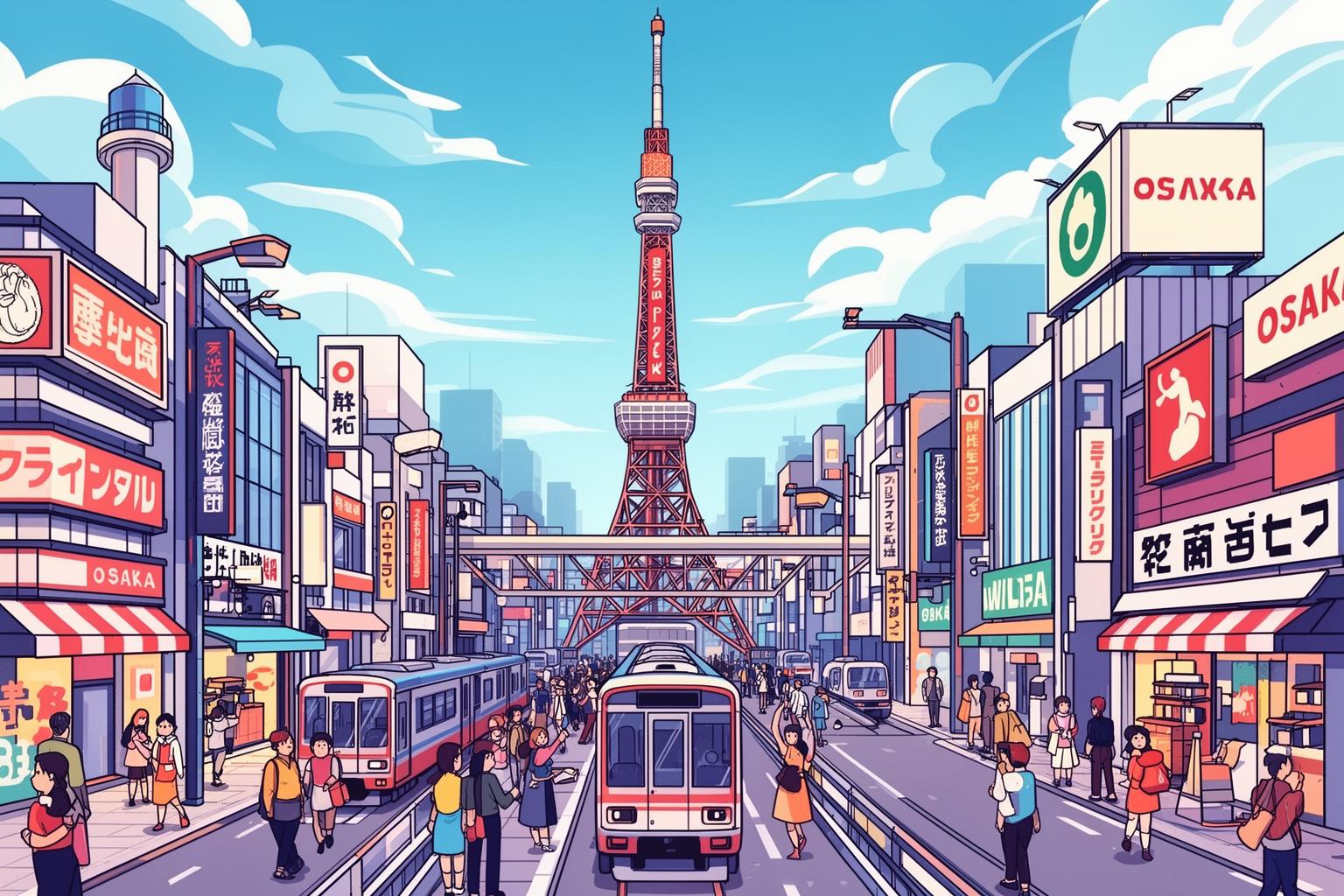
Now, enter Tenjinbashisuji, Japan’s longest shotengai, stretching over 2.6 kilometers in Osaka. The air is thick with the aromas of grilled eel, simmering dashi, and freshly ground coffee. It’s noisy. Shop owners don’t wait silently for customers; they call out, promoting their daily specials with theatrical flair. An elderly woman at a fruit stand might shout, “Anata, kono mikan meccha amai de!” (“Hey you, these tangerines are ridiculously sweet!”). The butcher is more than just a butcher; he’s Tanaka-san, who knows you’re making curry tonight and will suggest a cheaper cut of beef perfect for it. The interaction is not a transaction; it’s a conversation.
This highlights the fundamental divide between the economic models of Tokyo and Osaka. Tokyo’s economy is largely built on a top-down, corporate structure. Big names, big brands, and large buildings dominate the skyline. Commerce is centralized in vast train station complexes and department stores owned by powerful conglomerates. It’s efficient, clean, and scalable. Osaka’s economy, in contrast, feels firmly bottom-up. It’s a city of small business owners, independent entrepreneurs, people who have run the same tiny tofu shop or fish market stall for three generations. The shotengai physically embodies this spirit. It’s a decentralized network of specialists, each a master of their small domain. Instead of going to one giant supermarket for everything, you go to the vegetable vendor, the fishmonger, the tofu maker, the tea merchant. Each visit is a point of contact, a micro-interaction that strengthens the social and economic fabric of the neighborhood.
This model encourages a different kind of consumer mindset. In Tokyo, you buy a brand. In Osaka, you buy from a person. Trust is built not through slick marketing campaigns but through years of daily interactions, receiving reliable quality and a fair price from someone whose face you recognize. This street-level capitalism, this preference for the tangible and personal over the abstract and corporate, forms the foundation of life in Osaka.
The Merchant’s Code: Understanding the Osaka Mindset
To truly understand why the shotengai holds such a vital place in Osaka, you need to grasp the philosophy that fuels it. This goes beyond mere commerce; it’s a lifestyle guided by a unique set of unwritten principles, all rooted in the city’s history as Japan’s merchant capital.
Jitsuri: The Gospel of Practical Value
The key term to know in Osaka is jitsuri (実利). While it roughly means “practical benefit” or “tangible profit,” it functions more like a secular creed. It reflects a profound commitment to obtaining genuine, measurable value for your money, time, and effort. This mindset dismisses fluff, pretense, and paying for a name alone. In a Tokyo boutique, you might shell out extra for elegant packaging and brand prestige. In an Osaka shotengai, that’s viewed as wasteful. Why pay for ornate wrapping when it will just be discarded?
This attitude appears in countless small ways. You’ll find stores with hand-written signs explaining their wake-ari (訳あり) products—meaning there’s a reason for the discount such as slight deformities, nearing expiration dates, or excess stock. There’s no shame here; it’s a celebration of straightforward practicality. The shopkeeper clears inventory, and the buyer scores a bargain. Everyone benefits. This is jitsuri in practice. It’s an honest, transparent style of commerce. The emphasis is on the inherent quality of the item itself, not on the surrounding image. This outlook extends beyond shopping. Osakans are known for their blunt, down-to-earth manner because they prize the jitsuri of clear communication over the subtle, often cryptic social formalities common elsewhere in Japan.
Shobai and the Dance of the Deal
If jitsuri is the philosophy, then shobai (商売), or business, is the performance. In Osaka, business isn’t a dry, mechanical operation; it’s a lively, human interaction. A major part of that interaction is the negotiation over price. Foreigners often assume you can bargain in Osaka, and while that holds some truth, it’s a mistake to see it as mere haggling.
The playful negotiation called neuchi (値打ち) is a form of dialogue. It’s a way of forging rapport. When you ask the obachan at the fabric stall for a small discount (chotto makete kureru?), you’re not offending her. You’re inviting her into the dance of shobai. She might laugh, explain her slim margins, but then gift you an extra half meter. The exchange isn’t about saving a few hundred yen; it’s about the connection, the mutual acknowledgment that both parties are savvy and appreciate value. It’s a display of wit and charm. Attempting this in a high-end Tokyo shop would be met with stunned silence, but in an Osaka shotengai, it signals your understanding of local culture.
This exchange demands a particular communication style. Osaka shopkeepers are known for being chatty, humorous, and sometimes bluntly honest. They speak in the warm, informal Kansai dialect, addressing customers as anata (you) or even anta familiarly—a directness considered too forward in Tokyo. They might comment on the weather, ask about your children, or crack a joke. This isn’t just friendliness; it’s a strategic business tactic. By tearing down formal barriers between seller and customer, they cultivate a relationship. And in Osaka, relationships—not brand names—are the key to loyalty.
More Than a Market: The Shotengai as a Social Engine
To view the shotengai solely as an economic entity is to overlook its most essential role. In a nation facing an aging population and social isolation, Osaka’s shotengai function as vibrant, organic community centers. They act as the social safety nets of their neighborhoods, held together by daily greetings and casual conversations beneath their protective canvas awnings.
Your Neighborhood’s Front Porch
The shotengai is where neighborhood life unfolds publicly. It’s where elderly residents carry out daily shopping, not just for groceries but for the human connection it offers. Their presence is acknowledged. The tofu maker knows that Mrs. Sato purchases her block of kinu-dofu every morning around 10 AM. If she skips a few days, someone will notice. Someone might even check on her. This culture of kao-najimi (familiar faces) establishes an informal watch system that cares for the community’s most vulnerable. It’s a level of social cohesion that large, impersonal supermarkets or online delivery services cannot replicate.
For families, it provides a safe, familiar environment. Children are sent on their first errands to the shotengai, trusted to navigate the short walk to the butcher or bakery. Shopkeepers look out for them, and they grow up being greeted by name by adults in their neighborhood. It cultivates a sense of belonging and rootedness that is increasingly rare in modern urban settings. The arcade is more than a passageway; it’s a destination, a place to linger, chat with neighbors, and feel connected to the rhythm of your small part of the city.
An Enduring Symbol of Osakan Resilience
Throughout Japan, traditional shotengai are fading, undermined by massive suburban malls and the convenience of online shopping. While Osaka is not exempt from these trends, its shotengai have shown remarkable resilience. Why? Because they are deeply tied to the city’s identity.
Osaka has always defined itself in contrast to Tokyo. Where Tokyo symbolizes centralized power and government, Osaka has historically been home to merchants, rice brokers, and entrepreneurs. It’s a city that has long trusted local networks over distant authorities. The shotengai embodies that independence. It functions as a self-contained, self-regulating ecosystem governed by its own rules and a unique currency of trust and reputation. In an increasingly globalized and homogenized world, the shotengai remains a fiercely local institution. Supporting it is more than convenience; it’s a quiet act of civic pride and a way to preserve the city’s distinct character.
Living the Shotengai Life: A Practical Guide for Residents
For someone who doesn’t live in Japan, the shotengai can initially feel intimidating. It’s noisy, crowded, and the social customs aren’t immediately clear. It’s easy to treat it like a tourist spot—snapping photos of vibrant displays without truly engaging in the experience.
Beyond the Tourist Path
The first step is recognizing the difference between various types of shotengai. Popular places like Kuromon Ichiba in Namba have become tourist staples. Prices there are higher, vendors are used to one-time shoppers, and goods are tailored for visitors (think perfectly skewered strawberries and grilled scallops). While enjoyable to visit, this doesn’t represent the authentic shotengai experience.
The true charm is found in neighborhood shotengai, such as those in Tenma, Karahori, and many others off the beaten path. These are the spots where locals live and shop. Prices are more reasonable, the focus is on everyday essentials, and the interactions feel genuine. Living near one of these markets is one of the pleasures of life in Osaka. It offers access to fresh, high-quality ingredients and a community of vendors who quickly become familiar faces.
Learning the Local Language
Becoming part of the shotengai life means learning its social etiquette. Don’t just be a passive shopper. Make eye contact. Greet the shopkeepers. In Osaka, a simple “Maido!” (a traditional merchant greeting meaning “thanks for your patronage”) goes a long way. Use basic phrases. Point to what you want and say “kore kudasai” (this one, please). Ask for suggestions: “Kyou no osusume wa?” (What do you recommend today?). Not only will you get the best items, but you’ll also start conversations.
Embrace the cash culture. Many small shops don’t accept credit cards, and fumbling with one can mark you as an outsider. Carrying cash is part of keeping pace with the shotengai’s quick, smooth rhythm. Most importantly, be curious. If you don’t recognize a vegetable, ask about it. Vendors are often happy to explain what it is and how to prepare it. These small exchanges transform you from an anonymous customer into a familiar neighborhood face. This is how you build your own network of kao-najimi.
In the end, the shotengai is a microcosm of Osaka itself. It can feel a bit rough, somewhat chaotic, and refreshingly straightforward. It’s not polished or perfect. But beneath the noisy, cluttered surface lies a deeply human system founded on practicality, resilience, and a strong sense of community. Choosing to live in Osaka means more than picking a location on a map. It means embracing this way of life, opting for the lively, imperfect, face-to-face world of the shotengai over the sterile convenience of online shopping. It’s a decision to engage with a city that, despite its vast size, still operates on a human scale—one friendly greeting and one good bargain at a time.