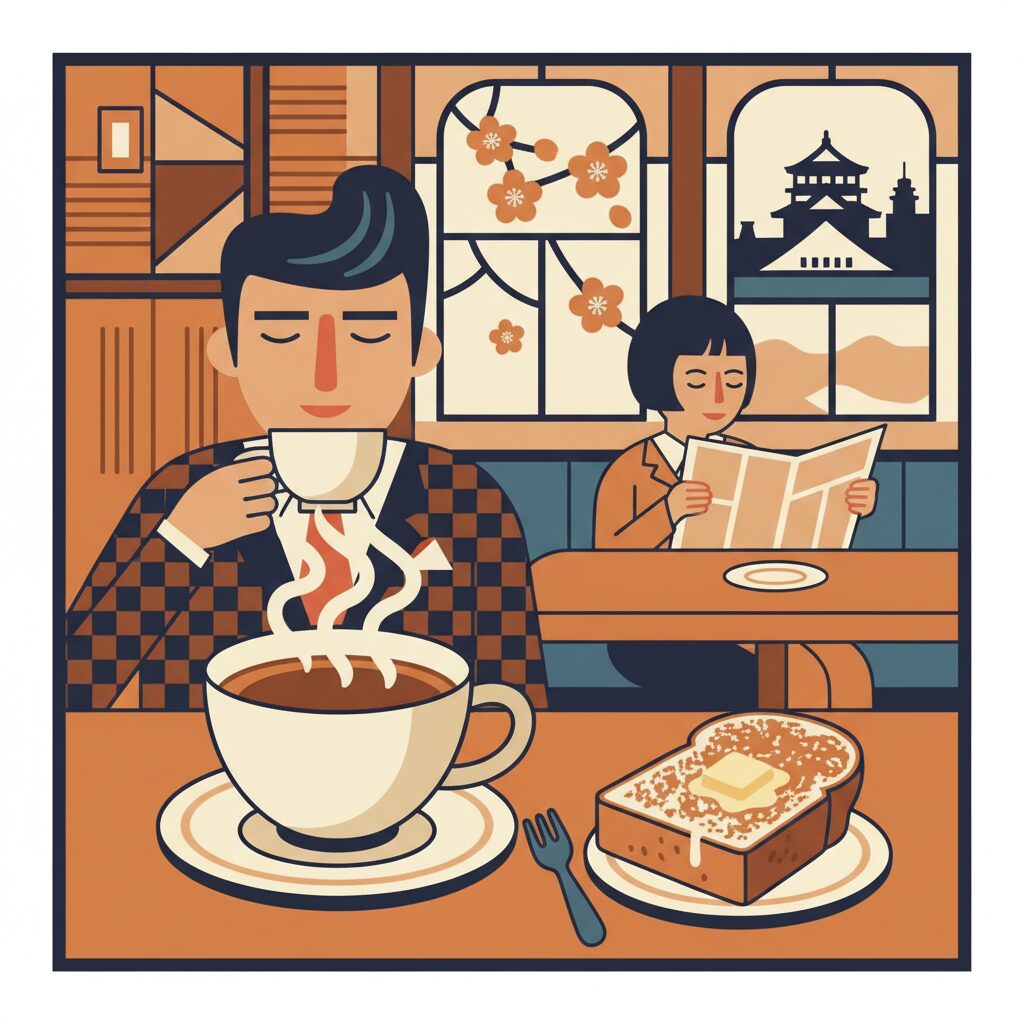
The air is thick. Not with tension, but with history. It’s a mix of dark-roast coffee, the buttery ghost of a million slices of toast, and the faint, sweet smell of newsprint. You push open a heavy door with a little bell that jingles your arrival, and the low hum of conversation washes over you. This isn’t the sterile efficiency of a global coffee chain. There are no students with laptops, no frantic freelancers hammering out code. Instead, you see a collection of familiar faces, a cast of neighborhood characters bathed in the warm glow of amber lamps. They’re talking, laughing, reading sports papers, and sipping coffee from thick ceramic cups. They all seem to know each other. They all seem to belong. Welcome to the neighborhood kissaten, Osaka’s unofficial morning living room. For a newcomer, the scene can feel like a private club you’ve accidentally stumbled into. What are the rules here? Is it just a cafe, or something more? The truth is, this daily morning ritual is one of the clearest windows into the soul of Osaka. It’s where the city’s social DNA is on full display, a place built on routine, relationships, and a rhythm that’s completely different from the beat of Tokyo. Understanding this space isn’t about finding the best coffee; it’s about understanding the city itself.
This daily ritual invites you not only to savor familiar comforts but also to explore another dimension of the city, as a spiritual weekend trip to Mount Kōya reveals deeper layers of Osaka’s cultural tapestry.
The Unspoken Membership: More Than Just a Customer
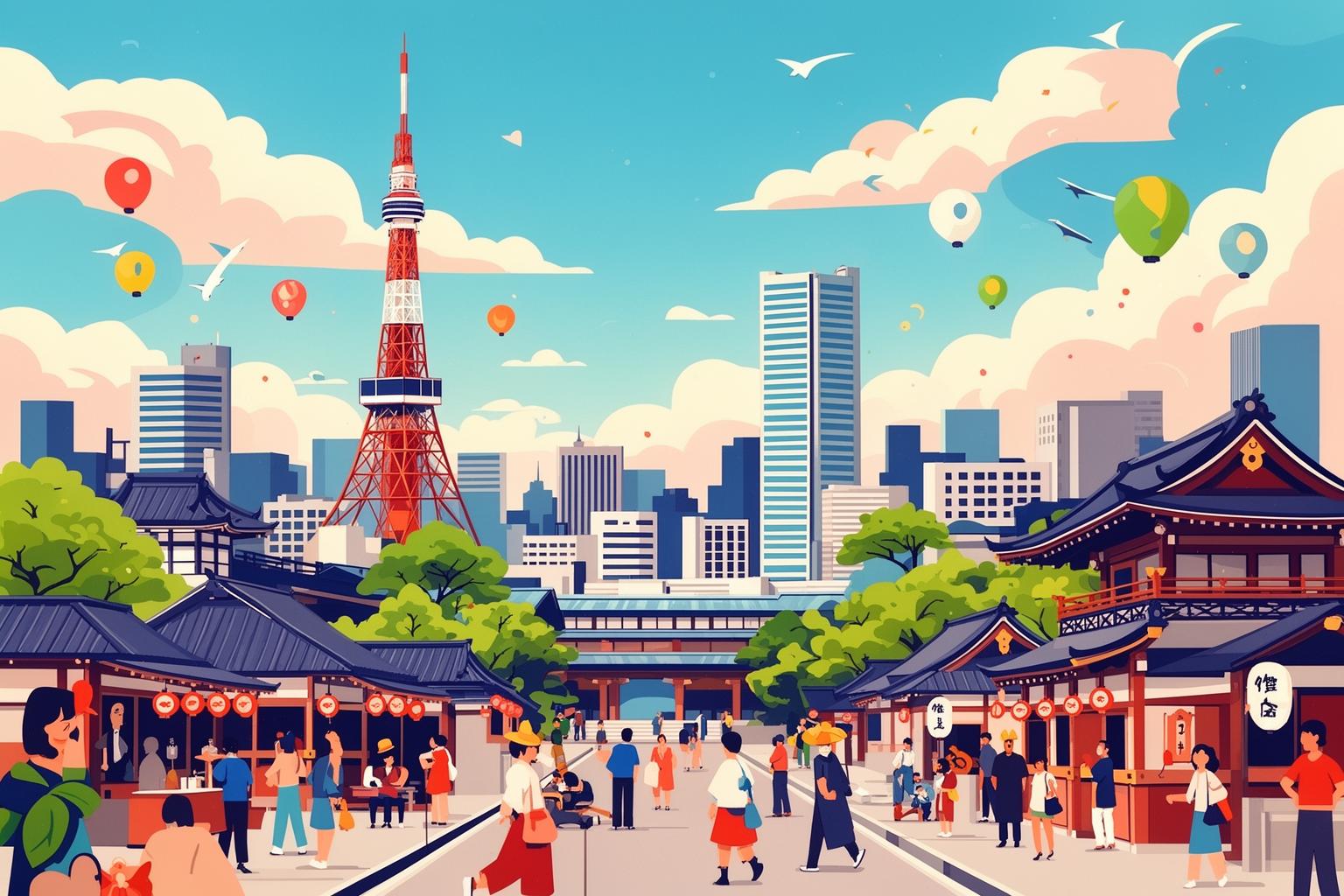
Step into a typical shotengai, one of Osaka’s covered shopping arcades, and you’ll find these kissaten nestled between the butcher and the fishmonger. These establishments are institutions, often run by the same family for decades. The key thing to understand is that the people inside aren’t merely customers in a transactional sense—they are members. Not formally, with fees or applications, but in a deeper, more organic way. They’ve earned their place simply by showing up, day after day, year after year.
The “Morning Set” as a Social Contract
Your introduction to this world is the “Morning Service,” or simply “Morning.” For the price of a single cup of coffee, typically around 400 or 500 yen, you receive a complete breakfast. It’s a ritual offering: a cup of coffee, a slice of impossibly thick, pillowy toast with butter and jam, and a hard-boiled egg, sometimes accompanied by a tiny shaker of salt. From a purely economic perspective, it makes no sense. The value is incredibly generous. But that’s because you’re not just paying for food. You’re buying into a social contract. The low price isn’t a discount; it’s a statement of mutual support. It tells the regulars, “We’re here for you, every day.” Meanwhile, their steady patronage tells the owner, the “Master,” “We’re here for you, too.” This isn’t about grabbing a quick bite; it’s about taking part in a stable, predictable, and comforting routine that anchors the start of the day. It’s a rhythm, not a transaction. Regulars don’t need a menu. They walk in, give a nod to the Master, and their usual order begins making its way from the kitchen to their regular table.
Reading the Room: The Seating Chart of the Soul
Spend a few minutes observing, and you’ll notice it: an invisible seating chart. The prime spots at the counter belong to those who enjoy a running commentary with the Master. That corner booth is reserved for a group of retired shop owners hashing out local gossip and complaining about the Hanshin Tigers. The small table by the window belongs to an elderly woman who reads her newspaper from cover to cover, a silent but constant presence. These are not formal reservations but territories established by habit. As a foreigner or any newcomer, walking in and sitting down in “Yamamoto-san’s seat” won’t get you thrown out. This is Osaka, not a gangster movie scene. But it will cause a subtle shift in the room’s energy. You might catch a few curious glances and a brief pause in conversation. It’s a gentle sign that you’ve disrupted a pattern—not hostile, but a clear indication that this space operates on unspoken rules grounded in familiarity. The best approach for a first-timer is to pause briefly at the door, letting the Master guide you to a neutral, unclaimed spot. This simple gesture signals that you understand you’re a guest in their home.
The Osaka Dialogue: Banter, Business, and a Bit of Gossip
The sound of an Osaka kissaten is a language unto itself. It’s not the quiet, focused hush typical of a Tokyo cafe. Instead, it’s a lively yet cozy hum of conversation, interspersed with laughter and the clinking of ceramic on saucers. The dialogues filling this space reveal much about the city’s character: its pragmatism, its humor, and its profound dedication to community and commerce.
“Mo-kari makka?”: The Language of Connection
A regular walks in. Rather than saying “Ohayou gozaimasu,” he nods to a friend and smiles, “Mo-kari makka?” which literally means “Are you making a profit?” His friend responds instantly, “Bochi bochi denna,” a delightfully ambiguous phrase meaning roughly “So-so” or “Getting by.” This is not a serious question about one’s finances. It’s the quintessential Osaka greeting—a verbal handshake that skips formality and gets straight to the heart of things, framed in the merchant-class vernacular that shaped this city. Asking if someone is doing well is really asking if their business is doing well. It’s a practical, unsentimental, yet genuinely caring way to check in. It recognizes the significance of work and money in daily life without any of the pretenses found elsewhere. This kind of candid, playful exchange is the lifeblood of the kissaten. It’s how relationships are maintained, moods assessed, and the social fabric woven, strand by daily strand.
The Master: Bartender, Therapist, and Information Broker
At the center of this microcosm is the Master—much more than just the owner. The Master serves as the nucleus of the neighborhood’s social network. They are the keeper of confidences, the catalyst for introductions, and the silent witness to the community’s rhythms. They know whose daughter just had a baby, which nearby shop is struggling, and who needs a dependable plumber. They listen to complaints about aches and pains, offer discreet advice on family matters, and provide a sounding board for new business ventures. Their role blends bartender, therapist, and information broker. They wipe down the counter, refill water glasses, and effortlessly connect two people who might help one another. “Ah, Tanaka-san, you were looking for someone to fix your roof? Sato-san’s nephew just started his own company.” This is how things get done in Osaka’s neighborhoods—not through an app, but by trusted human connections built over years of morning coffee.
The Information Exchange
The regulars themselves fuel this flow of information. They don’t just passively read the newspapers provided by the kissaten; in a sense, they are the newspaper. They embody the local news section, sports commentary, and classified ads all in one. They debate the mayor’s latest policy, share tips on where to find the freshest daikon, and collectively celebrate or commiserate over the newest baseball score. This exchange is organic, immediate, and deeply local. It’s a living, breathing analog social network that predates the internet, and for many of its members, remains far more vital and trustworthy.
Decoding the Kissaten: What Foreigners Often Miss
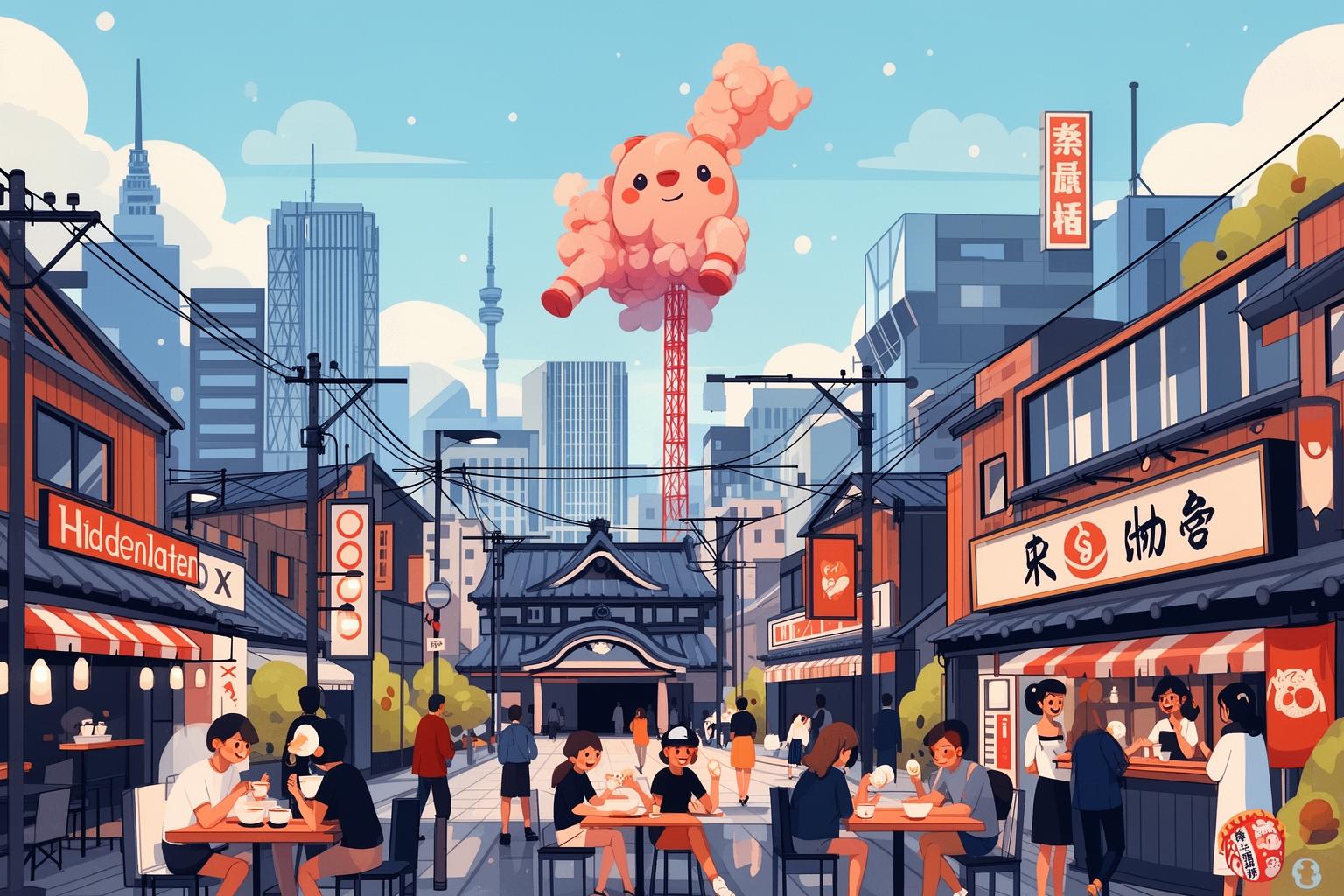
For someone familiar with modern cafe culture, the traditional kissaten can present a maze of cultural misunderstandings. Certain behaviors that feel perfectly normal at a Starbucks can seem strikingly out of place here. The key is understanding that you’re entering a social environment, not merely a service-oriented one.
It’s Not a Co-Working Space
This is likely the biggest error a newcomer can make. You enter, find a table, and immediately set up your laptop while putting on noise-canceling headphones. This would be routine in much of the world. In an Osaka kissaten, however, it’s a major cultural misstep. It sends a loud message: “I am here to disconnect. Leave me alone.” You’re essentially building a digital barrier in a space meant for connection. You aren’t just renting a table with Wi-Fi; you’re occupying a seat within a delicate social ecosystem. The purpose of being there is to be present and open to interaction, even if it’s just a shared glance or nod. Spending hours typing away ignores the ethos of the place. It’s not that the Master will ask you to leave, but you will have fundamentally misunderstood your role as a guest in their environment.
The “Friendliness” Isn’t Random, It’s Earned
You’ve probably heard the cliché that “Osaka people are friendly.” This is true, but it’s not the casual, surface-level friendliness you might expect. In the kissaten, warmth and banter reflect acceptance—an acceptance earned gradually. On your first visit, you’ll receive polite, professional service. You are a guest, an outsider. The Master will be courteous, but the regulars might ignore you entirely. Don’t take it personally. They’re simply respecting your space and theirs. But if you keep returning, a subtle change takes place. By the third visit, the Master might ask where you’re from. By the tenth, the old man at the next table might slide the sports section of his newspaper over to you with a grunt and a nod. A few visits later, he could ask your thoughts on the new American player on the Orix Buffaloes. This is when you’ve begun to cross the line from customer to participant. The teasing, the slightly personal questions, the unsolicited advice—they’re not nosiness; they’re signs of affection. They welcome you into the fold, Osaka-style.
The Kissaten vs. Tokyo’s Third Wave: A Tale of Two Cities
The contrast between a neighborhood kissaten in Osaka and a trendy, third-wave coffee shop in a Tokyo area like Kiyosumi-Shirakawa or Omotesando is striking. It perfectly illustrates the differing values of Japan’s two largest cities. One focuses on community, while the other emphasizes commodity.
Community vs. Commodity
In a sleek Tokyo coffee shop, the focal point is the coffee bean. The barista will eagerly share details about its Ethiopian origin, flavor notes of jasmine and citrus, and the exact temperature used in the pour-over method. The atmosphere tends to be quiet, reverent, and individualistic. Patrons come to admire the artistry of the coffee. The space serves as a temple dedicated to the product. In contrast, at an Osaka kissaten, the coffee simply is coffee. Typically, it’s a dark, robust blend brewed in the same siphon or flannel drip pot for decades. It’s good, but it’s not the centerpiece. Rather, it’s the means to an end. The true focus is the community that gathers there. The coffee’s role is to encourage conversation and provide a reason to sit together for an hour. No one debates acidity or mouthfeel—they discuss grandchildren and the price of gas. It’s coffee as social glue, not as a crafted commodity.
The Aesthetics of a Lived-In Life
This philosophical difference extends to the design of the spaces themselves. The modern Tokyo café embraces minimalist aesthetics: polished concrete floors, light wood, clean lines, and abundant natural light. It’s created to be photographed and look perfect on Instagram. Conversely, an Osaka kissaten is built to be lived in. Its aesthetic reflects accumulated comfort: dark wood paneling, plush velvet chairs slightly worn at the edges, ornate stained-glass lamps, and a counter smoothed by decades of elbows. There might be a faint, lingering scent of stale tobacco smoke—a practical heads-up for non-smokers, as many of these older venues still allow smoking. Yellowed business cards pinned to a corkboard and dusty trophies from local golf tournaments aren’t clutter; they’re artifacts. They stand as tangible evidence of a long, shared history. The space isn’t aiming to be trendy; it simply strives to be itself—a cozy, dependable backdrop for the lives of its regular patrons.
How to Become a Regular (or at Least Not an Intruder)
So, you’re living in Osaka and want to experience this for yourself. You’re looking to discover your own neighborhood spot. It’s not about uncovering a secret password or performing a special handshake. It’s about patience, observation, and a willingness to adjust to a different pace.
The Art of Consistency
The first and most crucial step is consistency. Try to visit at roughly the same time, even if it’s just once or twice a week. The Master and the regulars follow patterns. Becoming part of that pattern is the first step to being recognized. Order something simple, like the morning set or a cup of coffee. Avoid asking for a decaf soy latte with caramel drizzle. Keep it classic.
Engage, Don’t Intrude
Initially, your role is to be a quiet observer. Read the atmosphere. If it’s subdued, don’t attempt to start a loud conversation. If there’s lively banter, enjoy it from a distance. Greet the Master with a nod and a quiet “ohayou” when you enter, and always say “gochisousama deshita” (a polite way to say “thank you for the meal”) when you leave. These small respectful gestures matter a lot. Don’t try to force your way into conversations. But if someone speaks to you—perhaps asking where you’re from or commenting on the weather—be open and friendly. This is your invitation. Respond simply, with a smile. That’s all it takes.
Ditch the Tech
This bears repeating. Leave your laptop in your bag. Put your phone on silent and keep it out of sight as much as possible. If you need to check something, do so discreetly. The best thing to bring is a physical book or a newspaper. Or even better, bring nothing at all. Just sit. Watch. Listen. Let the atmosphere of the place wash over you. In our hyper-connected world, simply being present is a radical act. In an Osaka kissaten, it’s the price of admission. It’s how you show you’re there for the right reasons: to find a small moment of peace and human connection before the day truly begins.