Osaka in August feels like living inside a hot, damp towel. The air gets thick, the cicadas scream with a desperate, electric buzz, and the energy of the city, usually so vibrant, can start to feel oppressive. The concrete radiates heat long after the sun has set, and you find yourself dreaming of a breeze that doesn’t feel like it’s coming from a hair dryer. It’s in these moments you start asking questions. You look at the map of the prefecture, a long, thin crescent cupping the bay, and wonder where the city truly ends. Beyond the endless grid of Umeda, past the neon canals of Namba, further than the suburban sprawl that bleeds into Sakai, what is Osaka? Is it all just this magnificent, chaotic, hilarious urban machine? Or is there another rhythm, another pulse, somewhere down the line? We wanted to find out. We wanted a genuine escape, not to a polished tourist town, but to a place that felt like an exhale. That’s how we found ourselves heading to Misaki, the southernmost point of Osaka Prefecture, a working port town that promised fresh fish, salty air, and maybe, a different perspective on the place we call home.
For those seeking a reprieve from the urban intensity, consider extending your journey to experience the castle town charm that unveils a softer, coastal face of Osaka.
The Slow Train South

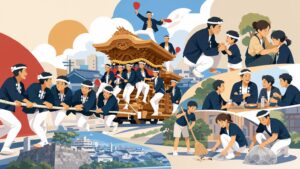
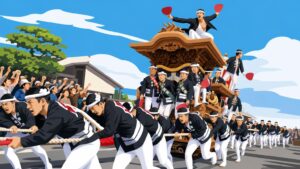
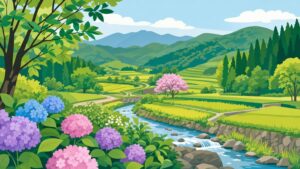
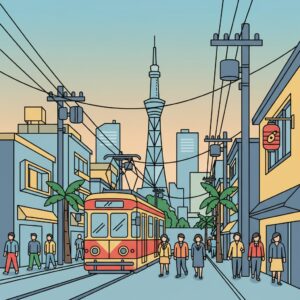
Reaching Misaki is an education in itself. You don’t board a sleek, silent Shinkansen that whisks you away to another world. Instead, you take the Nankai Main Line from Namba, a reliable workhorse train serving the southern half of the prefecture. Initially, the view is unmistakably Osaka: a dense mosaic of low-rise buildings, tangled overhead wires, and the occasional glimpse of a grand temple roof or towering apartment block. The train stops every few minutes, with station names—Tengachaya, Sumiyoshitaisha, Sakai—acting as familiar markers of the urban landscape. But after passing Kishiwada, famous for its wild Danjiri festival, something changes. The spaces between buildings widen. You begin to see patches of green—not manicured park lawns, but genuine vegetable patches and rice fields. The atmosphere inside the carriage shifts too, from the frantic energy of commuters heading to office jobs to a more relaxed vibe among those heading home or, like us, heading out.
The final stretch on the Misaki Line branch feels like a journey back in time. The train shortens, the pace slows. The scenery opens up completely until finally, you see it: the water. Not the murky, industrial gray of Osaka Port, but a sparkling, expansive blue. The train follows the coastline, revealing glimpses of small beaches and rocky outcrops. It’s a profound transformation. In Tokyo, escaping the city often means a lengthy trip to the mountains of Hakone or the polished seaside towns of the Izu Peninsula—places that feel like designated resorts, carefully curated for city dwellers. This felt different. It felt like traveling to Osaka’s backyard, a part of the same whole, just breathing at a more leisurely pace. It serves as a reminder that Osaka isn’t a monolith; it’s a complex region with a working coastline that has sustained it for centuries.
A Port That Works for a Living
Stepping off the train at Misaki-kō Station, the first thing that strikes you is the smell—a heady blend of salt, seaweed, and the faint, not unpleasant scent of diesel from the fishing boats. This isn’t a quaint, picture-perfect harbor made for watercolor paintings. Misaki Port is a working place. The boats are practical, laden with gear, nets, and marked by the wear and tear of daily labor. There are no charming cafes with striped awnings along the waterfront. Instead, you find processing plants, ice houses, and piles of fishing baskets. It’s raw, authentic, and entirely unpretentious—quintessentially Osakan. The city’s hallmark, often mistaken for mere noise and brashness, is a profound pragmatism. It values substance over style, function over form. A tool is meant to be used; a boat, to catch fish; and a port, to land them. Misaki perfectly embodies this mindset. The beauty here isn’t in decoration but in the honest, unfiltered reality of a community built around the sea. It stands in stark contrast to the staged perfection found in other parts of Japan. Here, life isn’t performed for an audience; it’s simply lived.
The Heartbeat of the Coast: The Aozora Fish Market
A short walk from the main port leads you to Misaki’s true heart: the Aozora Ichiba, or “Blue Sky Market.” This semi-open-air market buzzes with a raw energy that is pure Osaka. It’s loud, a bit chaotic, and utterly fantastic. Unlike the quiet, reverent atmosphere of a Kyoto market, where products are displayed like museum pieces, this is a lively bazaar where commerce is full-contact, carried out with a playful wink and a gruff laugh. The vendors—mostly older men and women with sun- and sea-weathered faces—call out their daily specials in a thick, almost incomprehensible dialect called Senshu-ben, a more direct and clipped version of Osaka-ben. Their calls are more than noise; they are the market’s heartbeat, a rhythmic chant declaring the day’s catch.
This is where Osaka’s famous kuidaore—“eat until you drop”—culture begins. Not in Dotonbori’s flashy restaurants, but right here at the source. Osaka’s obsession with food isn’t just about fine dining; it’s an intense appreciation for freshness and quality. The crowd browsing the stalls includes local restaurant owners, sharp-eyed grandmothers who can judge a fish’s freshness from twenty paces, and families like ours searching for something special for a weekend barbecue. They prod, peer, and ask blunt questions: “When did this arrive?” “Is this good for sashimi?” Vendors reply just as directly, lifting a glistening fish, pointing to its clear eyes and bright red gills as proof of its freshness. There’s no flowery talk—just a shared understanding built on deep respect for the product. This is a transaction rooted in trust and expertise, a world apart from the anonymous, plastic-wrapped goods of city supermarkets.
More Than Just Tuna: A Guide to the Day’s Catch
What’s truly captivating is the variety. While tuna and other well-known fish are present, the real stars are local specialties that define southern Osaka’s cuisine. Massive tubs of shimmering shirasu (whitebait), often sold fresh and raw, are a local delicacy enjoyed with soy sauce and ginger over rice. Trays of anago (sea eel), plumper and sweeter than their freshwater counterparts, are destined for grilling. Beautiful tai (sea bream), Japan’s celebratory fish, looks so fresh it almost seems to pulse with life. Yet there are also unfamiliar items: strange shellfish, varieties of octopus, and glistening schools of horse mackerel. The vendors are guardians of this knowledge—not just sellers but educators. Point to something unknown, and they won’t just give you the price; they’ll explain how to prepare it—grill it, simmer it in soy, deep-fry it—and describe its flavor. One woman, noticing my children’s curiosity, grabbed a live prawn from a tank, expertly shelled it, and offered it to them. The taste was electric: sweet, salty, and vividly alive. This direct connection to food, this pride in the local catch, forms the heart of Osaka’s culinary identity. It’s not about elaborate techniques; it’s about starting with an ingredient so perfect that the best thing you can do is simply let it shine.
The Culture of the Cast Line

Beyond the market, another defining characteristic of Misaki is the omnipresent crowd of anglers. They gather along the seawalls, jetties, and any available concrete patch with water access. This isn’t the exclusive, gear-intensive sport of fly-fishing you might picture. Instead, fishing here is a democratic, everyday pastime. You see entire families, from toddlers to grandparents, clustered around a set of rods. You see solitary elderly men sitting quietly on coolers, watching their lines with Zen-like patience. You see groups of teenagers laughing and joking as they cast their lines with more enthusiasm than skill. The scene offers a perfect cross-section of the local community and reveals another facet of Osaka’s character. While the city is known for its fast pace and “hustle” culture, there is also a deep appreciation for simple, accessible leisure. Fishing here is less about the excitement of the catch and more about the ritual of the process. It’s a way to spend time with family, enjoy the sea air, and disconnect from the pressures of work and school. Among the anglers there is an unspoken etiquette: people give each other space, offer a quiet nod, and might exchange a few words about whether the fish are biting. It’s a form of quiet community—a shared experience that requires no grand organization. It’s a social club with open membership, and the only fee is a bit of patience.
Patience, Pragmatism, and a Plastic Cooler
Watching the anglers, you see the same Osakan pragmatism in action. The equipment is rarely top-of-the-line; rather, it’s functional, well-used, and effective. The aim is simple: to maybe catch something for dinner. It’s a hobby with a practical outcome. This mindset stands in stark contrast to what you might find in Tokyo, where hobbies can sometimes seem like another form of competition, complete with the latest gear and fashionable attire. In Misaki, a man in his work clothes and a simple bucket fits into the scene just as naturally as a family with a full set of new rods. The result matters more than the performance. There’s a quiet dignity in this approach. It’s about engaging with nature on one’s own terms, free from pretense. We watched a man patiently help his young son untangle a line—not with frustration, but with the calm repetition of a lesson taught many times before. This wasn’t a grand father-son bonding moment for a movie; it was a small, genuine piece of life, a transfer of practical knowledge and love for a simple pleasure. It’s in these small moments that the true fabric of the culture emerges, far removed from famous landmarks and tourist slogans.
From Market to Grill: The DIY Dining Scene
Perhaps the most joyful and revealing part of Misaki is what happens after you’ve bought your fish. Next to the market, there are large, covered barbecue areas. The system is brilliantly simple and distinctly Osakan. You pay a small fee for a grilling spot, purchase your charcoal, and cook the seafood you just bought from the market stalls. The air is thick with the mouthwatering smoke of grilling fish, scallops sizzling in their shells with a knob of butter and a splash of soy sauce, and prawns turning a vibrant pink over the hot coals. The atmosphere is loud, communal, and wonderfully chaotic. Families spread out their catches, friends crack open cans of beer, and everyone shares the common goal of enjoying the freshest possible meal. This is `kuidaore` in its purest form. It’s not about a famous chef or an elegant setting. It’s about taking control of your meal, the direct, unmediated joy of cooking and eating seafood that was in the sea just hours earlier. This DIY spirit is visible throughout Osaka culture. There’s less focus on formality and more emphasis on participation and fun. Why pay a restaurant to grill your fish when you can do it yourself, right here, right now, amid the lively energy of the port? It’s a meal, a community event, and a cultural statement all at once.
Misaki’s Unspoken Language: A Different Osaka Accent

Spending time in Misaki, you begin to notice subtle differences in communication. While the people are just as direct and straightforward as those in the city, their speech follows a different rhythm. The rapid, back-and-forth banter of Namba, often compared to the comedic `manzai` style, is replaced by a more laconic, measured manner of speaking. The fishermen and market vendors use fewer words, but each is chosen for maximum efficiency. There is no `tatemae`, the polite public facade common in other parts of Japan. When you ask a question, you receive a straightforward answer. There is warmth, but it is not effusive; it is a quiet confidence born from a life of hard work and deep expertise. This is a valuable lesson for any foreigner living in Osaka. The city’s “friendliness” is not about sugary politeness; it is about a readiness to engage directly and honestly, without the layers of formality that can create distance. Misaki reveals a quieter, more rustic expression of this same fundamental principle. The accent may differ, but the underlying nature is unchanged.
Why This Isn’t a Tourist Trap
A trip to Misaki reshapes your perception of Osaka. It serves as the perfect counter to the stereotype of a city that is merely a concrete jungle. It demonstrates that the prefecture is strikingly diverse, deeply connected to the sea, a bond that has influenced both its history and its cuisine. More importantly, it offers insight into a community that isn’t performing for tourists. Unlike a visit to Kyoto, where centuries of refined culture are carefully preserved and showcased, a day in Misaki feels like stepping into the middle of an ongoing story, not starting at the beginning of a curated narrative. The port isn’t there for you. The market isn’t there for you. The anglers aren’t there for you. They exist for themselves, for their community, for their livelihood. And that is exactly what makes the experience so meaningful. You become an observer of an authentic, functioning piece of Osaka life. You leave not with a collection of souvenirs, but with a deeper appreciation for the values that sustain this complex, pragmatic, and food-obsessed region. As you return to the city, boarding the Nankai line with the faint scent of salt and charcoal on your clothes, you see the urban sprawl not as a suffocating force but as one part of a much larger, more compelling story. You now understand Osaka people much better. You realize that their energy isn’t just about noise and commerce; it’s about a passion for life’s real, tangible pleasures, from a perfectly fresh piece of fish to a quiet afternoon spent waiting for a bite.