Your first encounter with Super Tamade is an assault on the senses. It’s a riot of canary yellow and fire-engine red, a chaotic symphony of flashing neon lights that would feel more at home outside a pachinko parlor than a grocery store. The signage, rendered in a chunky, almost frantic typeface, screams prices and promises. There’s no subtlety here, no minimalist Zen aesthetic that many associate with Japan. It feels loud, unapologetic, and frankly, a little bit mad. For a newcomer, especially one arriving from the curated elegance of Tokyo, the immediate question isn’t just “What is this place?” but “Why is this place?” Why does a supermarket need to look and feel like a perpetual, low-budget carnival? The answer to that question cuts to the very heart of what makes Osaka tick, revealing a culture of pragmatism, performance, and a deep-seated philosophy of value that sets it apart from the rest of Japan. This isn’t just a place to buy groceries; it’s a living, breathing expression of the city’s merchant spirit.
The eclectic vibrancy of Osaka’s streets finds a culinary echo in the city’s creative flair, inviting curious food enthusiasts to delve into savory negiyaki and ikayaki for a taste of its unbridled spirit.
The Architecture of a Bargain
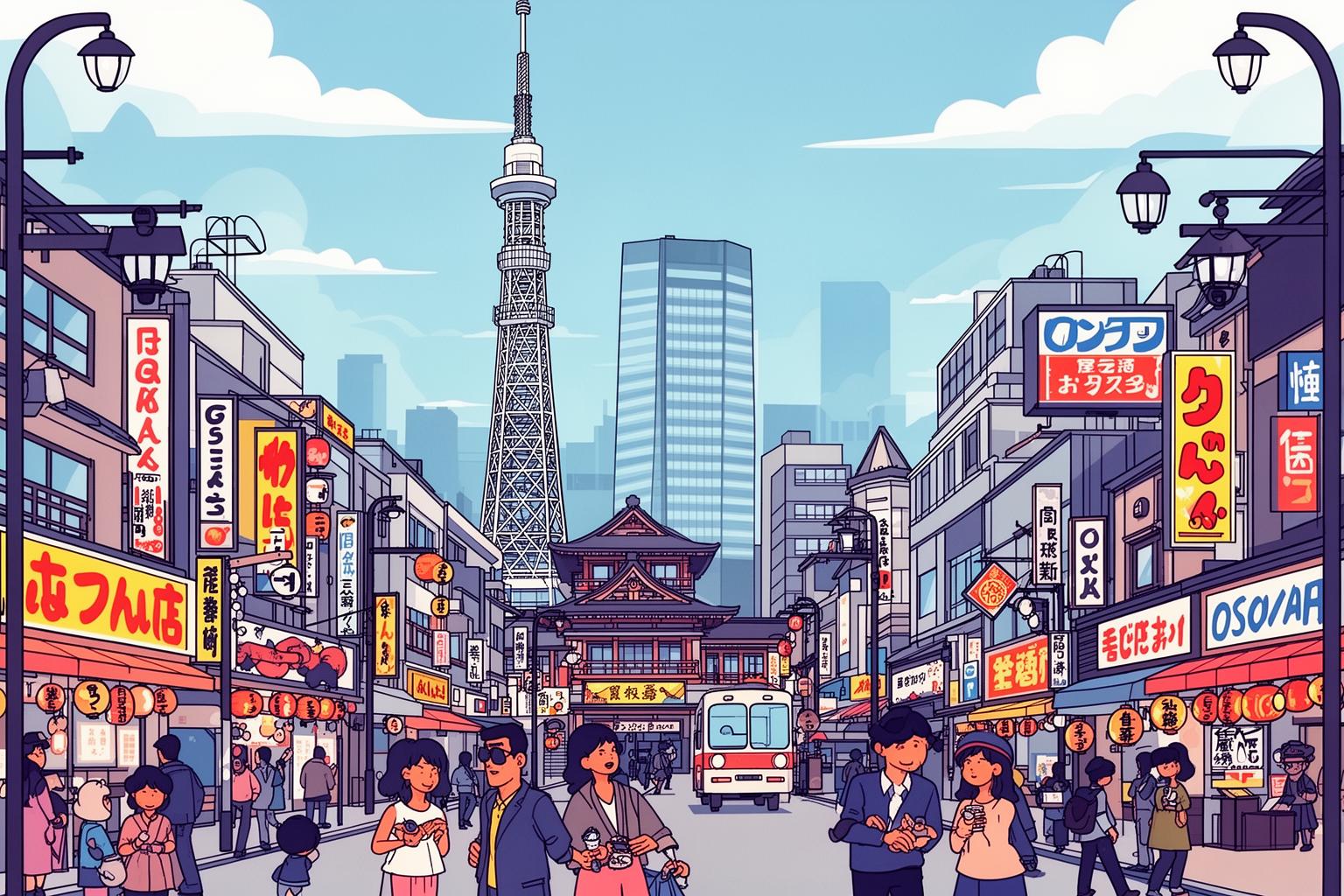
To understand Tamade, you must first discard the idea that its appearance is accidental or a sign of poor taste. It is, in reality, a carefully designed strategy—a form of architectural communication that speaks directly to the Osakan mindset. In Tokyo, upscale supermarkets like Kinokuniya or Seijo Ishii express quality through subtle design, warm lighting, and artfully arranged displays. Their message is one of aspiration and lifestyle; you pay as much for the experience as for the product. Tamade completely rejects this concept. Its visual language is not about aspiration; it’s about aggression. The relentless neon acts as a beacon, a lighthouse cutting through the urban haze with one clear, unmistakable message: “We are cheap.”
This philosophy carries through to the interior. Once inside, the sensory overload continues, but in a different tone. Floors are often bare, worn concrete. Lighting is harsh, industrial fluorescent. Products aren’t so much ‘displayed’ as they are ‘stacked.’ Boxes pile high in the aisles, creating a warehouse-like feel. Handwritten signs, scribbled in thick marker, shout daily specials with an urgency that printed signs can’t match. There’s no background music, only the hum of refrigerators, the clatter of shopping carts, and sharp announcements over the PA system. Nothing is squandered on aesthetics. Every yen saved on interior design, fancy shelving, or ambient music is a yen cut from the price of tofu or eggs. This isn’t a flaw—it’s the core. An Osakan shopper doesn’t see a chaotic, messy store; they see efficiency. They see a business that respects their intelligence enough not to waste their money on unnecessary décor. This is the physical embodiment of the local ethos: kechi ya nai, kensetsu-teki na setsuyaku ya—it’s not stinginess, it’s constructive saving. The store’s very design is a pact with the customer: no frills, just the lowest possible prices.
The Ritual of the One-Yen Sale
Nowhere is the psychology of Osaka more skillfully exploited than in Tamade’s famous one-yen sales. This isn’t just a simple discount; it’s a form of retail theater, a daily ritual that turns grocery shopping into a sport. The concept is straightforward: for every 1,000 yen spent, you earn the right to buy a designated item of the day for just one yen. It might be a carton of eggs, a bottle of soy sauce, or a loaf of bread—an everyday essential made nearly free.
To outsiders, this might appear as a basic, if somewhat gimmicky, promotion. But seeing it that way misses the entire point. The one-yen sale is a masterclass in capturing the Osakan passion for a good bargain, the thrill of etoko-dori (getting the best deal). It’s not about saving a hundred or two hundred yen. It’s about the triumph. It unleashes a primal hunter-gatherer instinct, a feeling of outwitting the system. Watch the shoppers and the strategy becomes clear. People don’t just load their carts randomly; they strategize. They carefully track their totals, perhaps adding an extra jar of pickles or a can of coffee to push past the 1,000-yen mark. Reaching that number isn’t merely a purchase; it’s unlocking an achievement. The final act of snatching the one-yen item from the special display is the victorious climax of this micro-game.
This small daily drama reveals a key contrast between Osaka and Tokyo. In Tokyo, shopping is often smooth, seamless, and somewhat impersonal. The aim is efficiency and politeness. At Tamade, shopping is an interactive event. There’s a shared, unspoken understanding among customers that everyone is a player in this game. You notice the focused expressions, the quick peeks at each other’s baskets, the subtle nods of mutual recognition. It creates a sense of community, a lighthearted competition that adds excitement to the ordinary chore of grocery shopping. It’s a performance, and everyone knows their role. The store sets the stage, and the shoppers, with their clever calculations, are the stars.
A Culinary Map of Real Life
The products on Tamade’s shelves offer a candid depiction of everyday life in the city’s working-class neighborhoods, a reality far removed from the idealized images of Japanese cuisine. The most crucial area in any Tamade store is the prepared foods section, known as sozai. Here, you’ll encounter a remarkable variety of bento boxes, some priced as low as 250 yen. These are not delicate, artisanal dishes. They are calorie-packed survival kits: a base of rice, a piece of fried fish or a hamburger patty, some brown pickled vegetables, and a slice of rolled omelet. This is the nourishment that sustains the city’s laborers, students, and elderly residents on fixed incomes.
Next to the bento, there are heaps of fried foods, the agemono. Croquettes, tempura, fried chicken, cutlets—all shining under the fluorescent lights. The sushi is similarly practical. The fish cuts may not always be top quality, the rice might be slightly dense, but a pack of eight pieces can cost less than a cup of coffee at a fashionable café. This is not celebratory food; it is food meant for sustenance. It serves as an essential social service, ensuring that even those with the tightest budgets can enjoy a hot, satisfying meal. It directly reflects Osaka’s historic role as tenka no daidokoro, the nation’s kitchen. However, this is not the kitchen of samurai lords; it is the kitchen of common people, valuing full stomachs over refined tastes.
Look further, and you’ll find items rarely seen in mainstream supermarkets. Uncommon meat cuts, various offal, and fish heads or collars meant for making broth. This reflects a deep-rooted “waste not, want not” ethos, a culinary pragmatism that utilizes every part of an animal. This represents B-Grade Gourmet (B-kyū gurume) in its purest form—unpretentious, hearty, and resourceful. As evening falls, the entire system comes to life with another tradition: the addition of discount stickers. A 20% off sticker appears around 6 PM, followed by 30% or even 50% off stickers closer to closing time. This triggers a fresh wave of savvy shopping, as people time their visits to score the best deals on items nearing expiration. It’s an open, dynamic pricing system that once again turns shopping into a game of timing and strategy.
The Faces in the Aisles
To truly grasp Tamade, you need to understand its customers. This is not the realm of the fashionable or affluent. It represents a cross-section of authentic, unfiltered Osaka. The undisputed queen of the Tamade aisle is the obachan, the middle-aged or elderly woman. She maneuvers through the store with the precision of a general, her shopping cart her chariot. She knows the layout inside out, remembers which day offers the best vegetable deals, and can spot a discount sticker from across the room. Her presence exemplifies the city’s matriarchal strength, the keepers of the household budget who can stretch a thousand-yen bill farther than anyone might expect. They embody the practical wisdom, the kanshoku, that sustains the city’s households.
Then there are the students and young, single workers, often recognizable by their tired expressions and baskets filled with little more than instant noodles, a cheap bento, and a can of chūhai. For them, Tamade is not a choice but a necessity—a lifeline in a city where wages can be tight and the cost of living is always a concern. Many of the city’s immigrant families, coming from Southeast Asia and other parts of the world, also shop here. They find not only affordable food but a shopping environment free from pretense. Tamade acts as a great equalizer; in the pursuit of a bargain, everyone stands on equal footing.
The interactions here differ as well. It’s common to see strangers exchanging tips on which brand of miso offers the best value, or an obachan loudly urging a younger shopper to buy the daikon radish today because it’s a good price. There’s a directness and communal spirit often missing from the more restrained atmosphere of a Tokyo store. The staff, too, are part of this ecosystem. They are not the deferential, perfectly polite clerks of a department store. They’re busy, straightforward, and efficient. They shout the daily specials with enthusiasm, their voices cutting through the din. It’s a relationship based not on servitude but on a shared understanding of getting the job done.
Function Over Form: The Osaka Doctrine
In the end, Super Tamade stands as a potent symbol of the fundamental philosophical divide between Osaka and Tokyo. Tokyo, in many respects, is a city that values form above all else. Presentation, packaging, and propriety take precedence. A piece of fruit in a Tokyo depachika (department store food hall) is not merely fruit; it is an object of beauty—perfectly shaped, flawlessly colored, and displayed in a manner that justifies its steep price. The experience is carefully crafted to evoke quiet luxury and aesthetic delight.
Osaka, embodied by Tamade, prioritizes function above everything else. What is the purpose of a grocery store? To offer food at the best possible price. Everything else comes second. The gaudy neon lights are more practical than elegant lighting because they attract customers. The handwritten signs are more functional than professionally printed ones because they can be changed instantly to showcase a new bargain. The inexpensive bento is more useful than a beautifully arranged meal because it delivers necessary calories at a price people can afford. This is not a rejection of aesthetics but a refusal to put aesthetics first. In the Osakan perspective, the beauty lies not in the presentation but in the price tag. It is the raw, unvarnished reality of the deal.
This mentality reaches far beyond shopping. It is evident in the straightforward, no-nonsense communication style of Osaka-ben, the local dialect, which forgoes the layered politeness of Tokyo speech for something more direct and expressive. It is apparent in the city’s pragmatic approach to business, where making a profit and providing value are celebrated openly. While a Tokyoite might feel subtly embarrassed by overt bargain-hunting, an Osakan views it as a mark of intelligence and skill. Winning at the grocery store by snagging a one-yen deal is cause for pride and a story to share. Super Tamade is more than just a shopping spot for Osakans. It reflects who they are: pragmatic, resilient, community-focused, and deeply appreciative of the art of a good, honest bargain. To overlook its neon chaos is to miss one of the most striking and revealing truths about Japan’s most vibrantly and unapologetically human city.