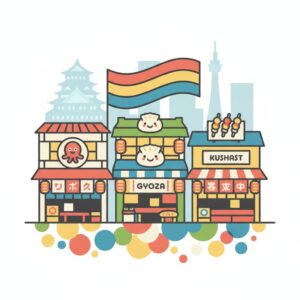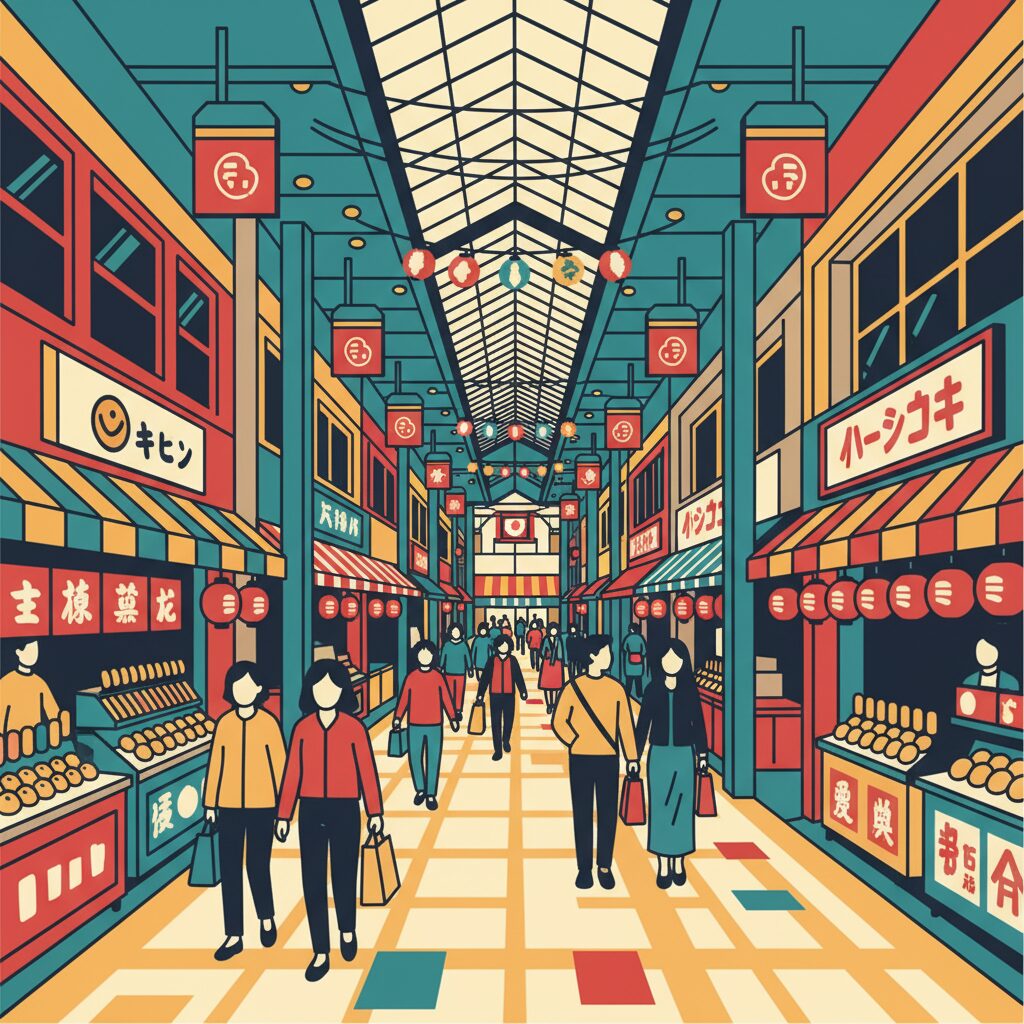
Step off the main thoroughfare, away from the gleam of glass towers and the hushed efficiency of the subway, and you’ll find it. A covered arcade, a river of humanity flowing under a canopy of plastic and steel. This is the Shotengai, the shopping arcade, and it’s more than a place to buy groceries. It’s the city’s vascular system, the raw, beating heart of neighborhood life in Osaka. The air is thick with the scent of grilling fish, sweet soy sauce, and roasting tea. The soundtrack is a collage of vendor calls—’Irasshai, irasshai, yasukattende!’—the rumble of delivery carts, the chime of a bicycle bell, and the constant, overlapping chatter of neighbors catching up over a pile of daikon radishes. It’s a full-body sensory immersion, a world away from the curated silence of a Tokyo department store. For anyone looking to truly live in Osaka, not just reside here, the Shotengai is the ultimate litmus test. It will reveal, with brutal honesty, whether your soul is in sync with this city’s frenetic, fiercely human rhythm. Are you the type to thrive in this beautiful chaos, or will you find yourself retreating, overwhelmed by the sheer, unfiltered humanity of it all? Your answer to that question is your answer to whether Osaka is truly the place for you.
Dive deeper into this mesmerizing urban tapestry by exploring our insights on Osaka’s living heart, which reveal the hidden rhythms defining the shotengai experience.
The Symphony of Sensory Overload: Decoding the Shotengai Vibe
Before you can determine whether you belong, you first need to understand the environment. A Shotengai is not meant for quiet reflection. It is designed for life, in all its chaotic, vibrant splendor. The experience hits the senses relentlessly, evoking feelings that can be either exhilarating or overwhelming, depending on your inner temperament.
The Soundscape of Commerce and Community
The silence common in many Japanese commercial spaces is unfamiliar here. The atmosphere is alive with sound. Each shop has its own auditory identity. The butcher’s rhythmic cleaver striking bone serves as the percussion. The fruit vendor’s loud, melodic calls announcing the day’s specials—’Kyabetsu hyaku-en, do ya!’—act as the lead vocals. The sizzle of takoyaki batter hitting a hot griddle provides a steady, comforting hiss. Scattered throughout are greetings: ‘Maido!’ and ‘Ookini!’ exchanged not only between shopkeepers and customers, but among the shopkeepers themselves along the busy aisle. This isn’t mere background noise; it’s the audible proof of a community in continual, dynamic motion. It’s the sound of relationships being nurtured, commerce functioning as conversation rather than just a transaction.
A Visual Feast of Organized Clutter
Visually, the Shotengai rejects minimalism. Instead, it embraces a ‘more is more’ philosophy. Boxes of produce overflow into the walkway, creating colorful, edible mountain ranges. Signs are seldom sleek or corporate; more often, they’re hand-written with prices marked boldly in thick black marker, punctuated with exclamation points for emphasis. Faded plastic cherry blossoms may hang from the ceiling year-round, a lasting tribute to a season of fleeting beauty. Above the shops, the reality of residential life is visible: laundry hanging from balconies, futons draped over railings to air out. This visual density might seem overwhelming to those used to clean lines and uncluttered spaces. It’s not neglect; it’s a mark of utility and history. Every worn banner, every quirky hand-drawn mascot, every stack of stock tells the story of a business that has endured, adapted, and served its community for decades. It’s a living museum of commerce, where the exhibits remain on sale.
The Aroma of Daily Life
Close your eyes, and you can still find your way through a Shotengai. Your nose becomes your guide. You move through distinct aromatic zones. One moment, you’re enveloped by the savory, smoky scent of an unagi vendor grilling eel over charcoal. A few steps on, the deep, earthy aroma of a tea shop where houjicha is roasted on-site strikes you. Then comes the sweet, comforting smell of a bakery pulling fresh melon-pan from the oven, followed by the sharp, briny air around the fishmonger’s stall, a testament to the freshness of the day’s catch. These aren’t artificial fragrances; they are the smells of food, sustenance, and the neighborhood’s shared kitchen. It’s the most primal and sincere form of advertising—a direct appeal to both stomach and soul.
The Social Currency: Are You Built for the Banter?
The real difference between thriving and just getting by in a Shotengai isn’t about how much noise or clutter you can tolerate. It’s about your skill in human interaction, Osaka-style. Shopping here is a social experience, and if you’re not ready to engage, you’ll miss the whole point.
The Art of the ‘Maido Ookini’: More Than a Simple Transaction
In a supermarket, your main contact might be with a self-checkout machine. In a Shotengai, the transaction serves as a reason to connect. When the tofu maker says ‘Maido!’ (‘Thanks, as always!’), he’s not merely being polite. He’s recognizing your continued support and reinforcing a bond. He recalls you bought firm tofu last week and might ask how your stir-fry turned out. The woman at the vegetable stand might notice you looking at the bamboo shoots and, without prompting, launch into a detailed explanation of the best way to cook them. This is also where the famous ‘omake’ culture thrives. Buy three tomatoes, and she might slip a fourth into your bag with a wink and a ‘Kore, omake!’ (‘This one’s a bonus!’). This isn’t a calculated sales strategy; it’s a gesture of goodwill, a way to strengthen the relationship. It’s a system based on mutual recognition and loyalty, sharply contrasting the anonymous efficiency of modern retail.
The Unspoken Rules of Engagement
Osaka communication is famously straightforward, and the Shotengai is its prime venue. A shopkeeper might frankly tell you that the melon you picked isn’t as good as another. An oba-chan standing behind you might comment on how much beer you’re buying. This isn’t meant to be intrusive; it’s a form of social grooming, a way to break down barriers between strangers and acknowledge a shared reality. Engagement is expected. A quiet nod won’t suffice. You’re expected to respond, with a quip or a ‘tsukkomi.’ If the fishmonger jokes that you’re buying enough tuna to feed an army, the right response is to laugh and say you’re preparing for battle. This playful banter is the social lubricant of Osaka. If you can jump in and participate, you’ll be welcomed as one of their own. If you shy away, you’ll always remain an outsider looking in.
The Thriver’s Profile: Embracing the Human Element

So, who thrives in this environment? Who steps into a Shotengai and finds their energy rising instead of fading? It’s a particular personality type, one that delights in the vibrant chaos of humanity.
You Prioritize Community Over Convenience
The thriver recognizes that efficiency isn’t the highest aim. You’d rather stop by three different family-run stalls—the tofu vendor, the fishmonger, the pickle specialist—than get everything under one roof. Why? Because each visit offers a chance for genuine human connection. You’re not just filling your pantry; you’re catching up with your neighbors. You’re creating a circle of familiar faces who know your name and preferences. The extra ten minutes spent chatting aren’t wasted; they’re the very reason for the errand.
You Are a Story-Seeker, Not Just a Shopper
When you see a cramped, dimly lit tea shop operated by the same family for three generations, you don’t view it as an outdated business model; you see a narrative. You value the aged charm of the wooden shelves, the worn abacus by the register. For you, the experience is deepened by this sense of history and continuity. You’re the person who asks questions, who wants to uncover the shop’s story, who finds profound beauty in the enduring spirit of these small, specialized businesses.
You Can Handle (and Maybe Even Enjoy) Some Grit
You aren’t easily rattled. The narrow, crowded aisles, the occasional puddle from the fishmonger’s ice, the somewhat chaotic layout—none of it bothers you. In fact, it invigorates you. You see it as authentic, a refreshing contrast to the sterile, overly polished spaces of contemporary life. You understand that life can be messy, and you appreciate a place unafraid to reveal that.
You Recognize Value Beyond the Price Tag
You get it. You realize that the butcher’s free cooking advice is worth more than the few yen saved at a corporate chain. You know the ‘omake’ cucumber represents a relationship, not just a complimentary vegetable. You treasure the social capital built with each visit, the sense of belonging, of being a ‘joren’ (a regular). This intangible value is, to you, as significant as the quality of the products themselves.
The Overwhelmed Soul: When the Chaos Becomes Clutter
Naturally, this environment isn’t suited for everyone. For some, the Shotengai isn’t a delightful harmony but rather a stressful noise. It’s important to honestly acknowledge which group you belong to, as it reveals much about your potential for lasting happiness in Osaka.
You Prioritize Efficiency and Order
If your main aim while shopping is to quickly get what you need and leave with minimal hassle, the Shotengai will likely be a constant source of irritation. Its slow pace, obligatory small talk, and crowded navigation all seem like unnecessary barriers. You favor clear aisles, fixed prices, and the predictable, streamlined experience found in large supermarkets.
You Value Personal Space and Anonymity
The straightforwardness of Osaka’s communication style feels harsh to you. Unsolicited remarks from strangers, however well-meaning, come across as invasions of your privacy. You dislike the assumption of instant familiarity, preferring the polite and respectful distance common in many other areas of Japan. The thought of engaging in social banter just to buy some carrots is exhausting.
You Find Sensory Input Draining
You may be sensitive to noise and crowds. For you, the Shotengai isn’t invigorating; it’s sensory overload. The persistent noise, the pressing crowd, and the mix of competing smells merge to create anxiety. After visiting the Shotengai, you feel drained and need to withdraw to a quiet spot to recover.
You Prefer Modern Aesthetics and Polish
You appreciate clean design, minimalism, and curated environments. When you look at the Shotengai, you don’t see charm but clutter. The hand-written signs appear messy rather than quaint, and the overflowing boxes seem disorderly instead of plentiful. You are attracted to the polished floors and perfect lighting of modern malls, and the raw, unrefined nature of the Shotengai feels unpleasantly chaotic.
The Shotengai as a Microcosm of Osaka
Ultimately, your personal response to the Shotengai serves as a powerful diagnostic tool. This goes beyond a mere shopping preference. The Shotengai represents the purest essence of Osaka’s character. It is pragmatic, valuing function and human connection over appearance and pretense. It is loud, unapologetically so. It is fueled by a culture of savvy, friendly commerce where a good deal hinges as much on the relationship as on the price. The direct, humorous, and sometimes teasing communication style found in these arcades is the same one you’ll experience in a restaurant, office, or bar in the city.
Tokyo may build its identity around polish, form, and elegant restraint, while Osaka is shaped by the raw, unfiltered energy of human interaction. If walking through a Shotengai gives you a sense of homecoming amidst the chaos, if the sound of a shopkeeper’s hearty laugh brings a smile to your face, then you’ve likely found your tribe. But if you instinctively reach for noise-canceling headphones and crave the quiet anonymity of a convenience store, it might be a sign that the fundamental frequency of this city isn’t one your heart is meant to dance to. There is no right or wrong, only the honest truth of where you feel you belong.