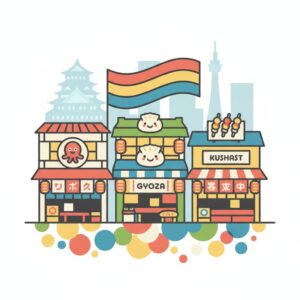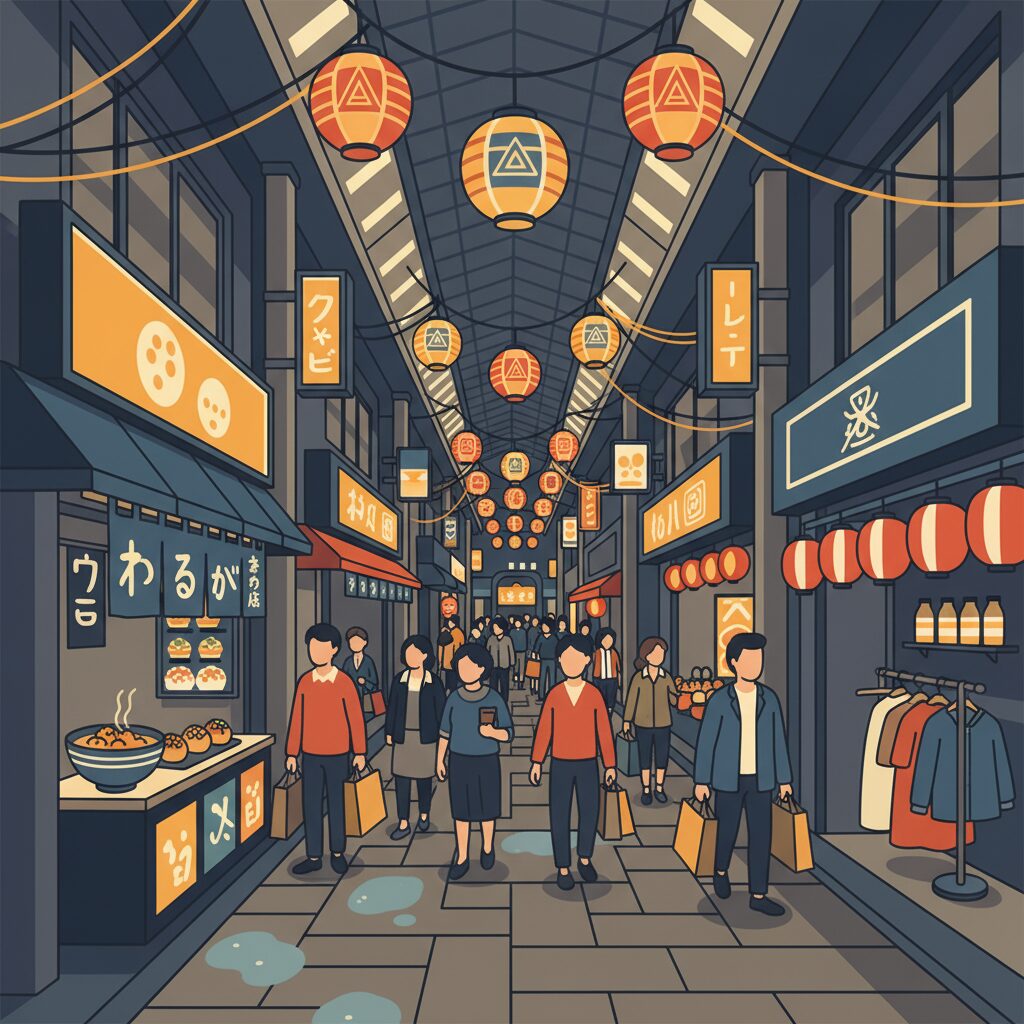
Walk out of any major train station in Osaka, and you’re hit with a wall of sound and light. It’s a city that wears its energy on its sleeve, a glorious, chaotic tangle of concrete, steel, and glowing signs. Your instinct, especially if you’re coming from the curated calm of Tokyo, might be to find the nearest gleaming department store or the clean, air-conditioned aisles of a national supermarket chain. It feels safe. It feels familiar. But if you do that, you’re missing the point of Osaka entirely. You’re looking at the city’s face but ignoring its heart, which beats loudest under the long, covered roofs of its countless shotengai—the shopping arcades.
These are not just streets with shops. In Tokyo, a shopping street is often a brand statement, a carefully planned commercial experience. In Osaka, a shotengai is a living room, a kitchen, and a public square rolled into one. It’s a sprawling, noisy, sometimes gritty ecosystem that operates on a different set of rules, a different currency. It’s where the city’s famous spirit—its directness, its pragmatism, its deep-seated love for a good deal and a good laugh—is forged every single day. For a foreigner trying to build a life here, learning to navigate the shotengai is more than a practical skill for buying groceries. It is your crash course in becoming, if not an Osakan, then at least someone who truly gets it. It’s the single best way to move from being an observer of this city to being a participant in its daily rhythm. This is your guide to plugging in.
Experience the next layer of Osaka’s vibrant energy by exploring the intricacies of its merchant soul, which reveal how local businesses shape the shotengai experience.
The Shotengai Isn’t a Mall, It’s an Organism
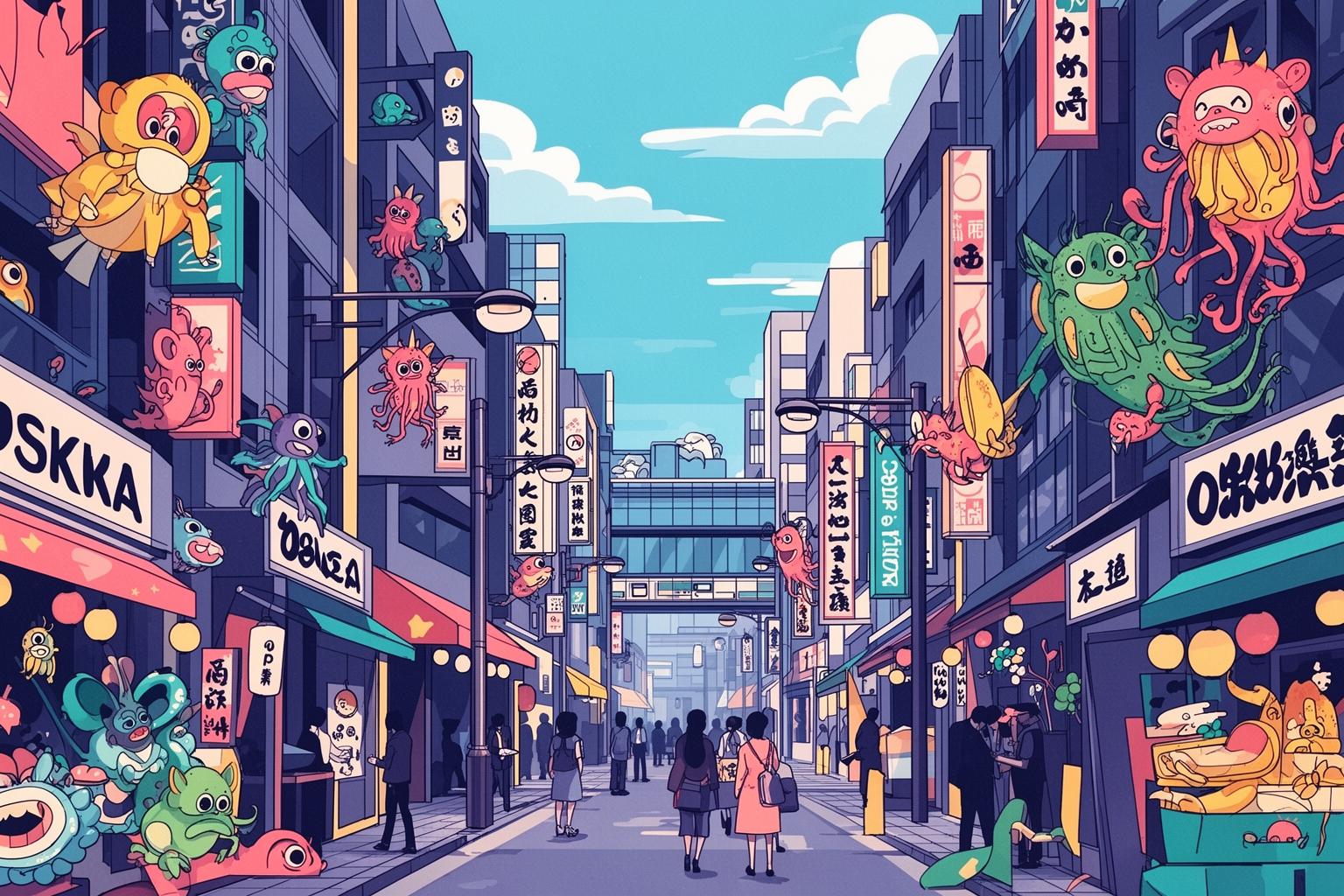
First, let’s reset your expectations. A shotengai is not a mall. A mall is a planned environment, a top-down creation designed for maximum consumer comfort and predictable flow. Every store is vetted, the lighting is perfect, the temperature is controlled. It’s sterile. A shotengai is the complete opposite. It’s a bottom-up organism that has developed over decades, a chaotic collection of independent businesses crammed side-by-side, each with its own history, its own personality, its own unusual hours. One shop might be a sleek, modern pharmacy, and right next to it a tiny stall selling handmade tsukemono (pickles) run by a 90-year-old woman who has occupied that exact spot since the 1950s. It’s a beautiful, messy democracy of commerce.
Think of it as an ecosystem. Each shop is a species filling a specific niche. You don’t go to one place for everything. That’s the supermarket mindset, the Tokyo mindset of hyper-efficiency. The Osaka shotengai mindset is about specialization and relationships. You go to the yaoya for vegetables. You go to the nikuya for meat. You go to the sakanaya for fish. You go to the tiny, steaming shop with the perpetually foggy windows for fresh tofu made that morning. Why? Because the man at the butcher shop has been cutting meat his entire life. He knows exactly which cut of pork will be best for your tonkatsu, and he’ll tell you so, loudly, while trimming the fat with a flick of his wrist. The woman at the fruit stand knows which melons are at their absolute peak sweetness today, not tomorrow, and she’ll tap them with a knowing thud to prove it. This isn’t just a transaction; it’s a consultation with an expert. You’re not buying a product; you’re buying decades of accumulated knowledge, and you’re building a connection with the person providing it.
The energy is different, too. It’s a full-sensory experience. The air is thick with competing smells of grilled eel from one shop, sweet soy from another, and the fresh, briny scent of the fishmonger’s ice table. You’ll hear the rhythmic clang of a knife on a wooden block, the sizzle of tempura hitting hot oil, the gravelly shouts of vendors advertising their daily specials—“Yasui yo! Oishii yo!” (It’s cheap! It’s delicious!). It’s a performance, a daily theater of commerce, and the vendors are the stars. This isn’t the hushed reverence of a Tokyo department store food hall. This is loud, it’s alive, and it’s unapologetically focused on the business of feeding a city.
Your Wallet vs. Your Face: The Unspoken Currency of Osaka
In Tokyo, your main currency is money, and interactions are characterized by a sharp, professional, and ultimately anonymous politeness. You pay, receive your goods, get a polite bow, and then disappear back into the crowd. Anonymity provides a form of comfort there. In an Osaka shotengai, while your money remains important, your face is your true currency. Becoming a kao-najimi, a familiar face, is the ultimate aim. This is the most significant cultural shift you need to embrace.
During your first few visits, you’re just another customer. But if you start visiting the same vegetable stand every few days, something changes. The owner begins to recognize you. Their greeting shifts from a generic “Irasshaimase!” (Welcome!) to a much more personal “Maido!” (a uniquely Osakan greeting roughly meaning “Thanks for your continued business!”) or even “Nii-chan, kyou wa nani surun?” (Hey, kid, what are you making today?). This isn’t just casual small talk. It marks the start of a relationship. It shows you’ve been registered in their mental list of regulars. Once this happens, the experience transforms entirely.
Suddenly, an extra potato might appear in your bag. The fishmonger will share tips on grilling your mackerel perfectly. The deli lady might offer you a taste of a new simmered dish while you wait. This isn’t a deliberate marketing strategy; it’s the natural result of a community-based economy. They aren’t simply serving an anonymous customer; they’re looking out for a neighbor. They invest in you because they expect you’ll return next week. Your loyalty is rewarded not with a point card but with genuine human connection and the occasional free spring onion. This is often what people mean when they say “Osaka people are friendly.” It’s not just a vague warmth; it’s a practical, reciprocal friendliness rooted in the close-knit, repeat business culture of the shotengai.
This can be surprising for foreigners and even for Tokyoites. The questions might feel personal. “You’re buying a lot of cabbage, making okonomiyaki again?” It’s not intended to be intrusive. It’s a conversational bridge, a way to nurture the relationship, and offer assistance. Embracing this, even with imperfect Japanese, is how you become part of the community. Smile, nod, show them what you bought from other shops. They see you’re committing to the ecosystem, and they’ll gladly welcome you in.
A Practical Guide to Your First Foray
Theory is one thing, but stepping into the controlled chaos of a place like Kuromon Market or the seemingly endless Tenjinbashisuji Shotengai can be daunting. So, let’s break it down into a manageable task.
Step One: Skip the Big Supermarket (Just for a Day)
Your first challenge is to deliberately buy all the ingredients for one complete meal entirely within a shotengai. No sneaking off to Life or Aeon for that one forgotten item. This encourages you to engage with the specialized shops. Choose a simple dish—say, ginger pork stir-fry (shogayaki), rice, and miso soup with tofu and wakame. That gives you a clear shopping list: pork, ginger, onion, soy sauce, mirin, tofu, wakame, miso paste. Your mission is to find each item from a different vendor if necessary. This isn’t about efficiency; it’s about discovery. It’s a scavenger hunt that helps you learn the layout and logic of the arcade.
Step Two: Master the Laneway Lingo
You don’t need to be fluent, but a few key phrases will greatly enhance your experience. Go beyond “Konnichiwa” and “Arigatou.”
- Maido!: The all-purpose Osaka greeting for regular customers. Use it when entering a shop you’ve visited before. It shows you’re in the know.
- Kore,なんぼ? (Kore, nanbo?): “How much is this?” The word nanbo is pure Kansai-ben (local dialect) and often earns a smile. It’s more casual than the standard Japanese “Ikura desu ka?”
- 兄ちゃん/姉ちゃん (Nii-chan/Nee-chan): “Big brother/big sister.” A friendly, casual way to get the attention of younger shop staff. It’s warmer than the formal “Sumimasen.”
- おすすめはどれ? (Osusume wa dore?): “Which one do you recommend?” This is the magic phrase. You’re handing over control to the expert, showing trust and respect for their knowledge. Nine times out of ten, they’ll give you an excellent, honest recommendation because their reputation depends on it.
- まけてーな (Makete-na): “Give me a discount.” USE WITH EXTREME CAUTION. This isn’t a Southeast Asian night market. Haggling isn’t standard for daily groceries. It’s an advanced move, a playful part of communication with a vendor you have a strong relationship with—usually when buying in bulk. Using it as a stranger will just mark you as rude. Earn the right by becoming a regular first.
Step Three: The Anatomy of a Shopping Trip
Let’s walk through your shogayaki mission. You enter the shotengai and take a deep breath. First, the vegetables. You find a yaoya, a shop overflowing with wooden crates of produce. Don’t just grab the first onion you see. Check the handwritten signs; they’ll tell you where the vegetables come from. Ask the old man in the apron, “Shogayaki tsukuritai nen kedo, dono tamanegi ga ee?” (I want to make shogayaki; which onion is good?). He might direct you to a specific type, sweeter or sharper, that he prefers. Buy your ginger there, too.
Next, the butcher, the nikuya. You’ll see trays of pink and red meat under a bright light. Often there’s a deep fryer in the corner, and the smell of freshly fried korokke (croquettes) is irresistible. Don’t hesitate. Tell the butcher, “Shogayaki-you no butaniku kudasai.” (Pork for shogayaki, please). He’ll ask how many people you’re cooking for and slice it fresh for you, often from a large block. The pre-packaged meat at supermarkets has often been sitting for who knows how long. This is cut to order. It’s a superior product.
Now for the tofu. You’ll find a shop, often steamy and humid, with big tubs of water holding blocks of pristine white tofu. This is nothing like the vacuum-sealed stuff. It’s delicate, creamy, and has a much richer soybean flavor. Ask for “kinu” for a silky texture for your miso soup. They’ll scoop it out of the water and wrap it carefully. It will probably fall apart if handled roughly, a sure sign of its freshness. The rest of your ingredients—soy sauce, mirin, miso—can likely be found at a small general grocery store or a specialty shop within the arcade dealing in dry goods and seasonings. In one trip, you’ve not only bought your dinner but also enjoyed four or five distinct human interactions.
Common Misunderstandings and How to Avoid Them
Navigating this new culture comes with its challenges. Foreign residents often fall into several common misconceptions about what a shotengai truly is.
“It’s All Just Cheap and Low-Quality”
This is probably the biggest misunderstanding. While shotengai are known for being budget-friendly, equating “cheap” with “low-quality” is a major error. Prices are often lower because you’re cutting out multiple layers of distribution, logistics, and marketing that large supermarkets have to cover. You’re purchasing much closer to the source. Additionally, many shops are highly specialized and take pride in a level of quality that chain stores can’t match. You’ll find stores that sell only kombu, artisanal roasted tea, or fish cakes made from secret family recipes. They thrive for generations not by being the cheapest, but by being the absolute best at their particular specialty. Look beyond the worn storefronts and focus on the products. You’ll discover incredible quality hidden in plain sight.
“Osaka People are Aggressive”
What Tokyoites or foreigners might interpret as aggressive, Osakans see as efficient and straightforward. The communication style is very direct, with less of the delicate, roundabout phrasing common in other parts of Japan. A vendor might shout across the aisle to get your attention, or look at your selection and say, “No, no, not that one. This one is better today.” They aren’t trying to be rude, but rather aiming to offer you the best product and build trust. Silence and hesitation can be misread as disinterest or suspicion. The loud, lively energy reflects a healthy, functioning marketplace. It’s a form of conversation. Embrace the noise. Join the banter. It’s a sign that you’re welcome.
“I’m a Foreigner, They Won’t Understand Me”
This common fear often keeps many from fully engaging. However, shotengai merchants are among the most patient and skilled communicators in the country. They’ve interacted with people from every background throughout their careers and are experts at reading non-verbal cues. A smile, a point, or a questioning look—these are universal languages. Your imperfect Japanese is not an annoyance; it’s a sign of effort, which is greatly appreciated. They’d much rather engage with a foreigner who is genuinely trying than with a local who quietly grabs their goods and leaves. Don’t let the language barrier become a wall. Instead, let it be the beginning of a new and interesting kind of conversation. You’ll be amazed at how much you can communicate with just a few key words and plenty of goodwill.
The Shotengai as Your Third Place
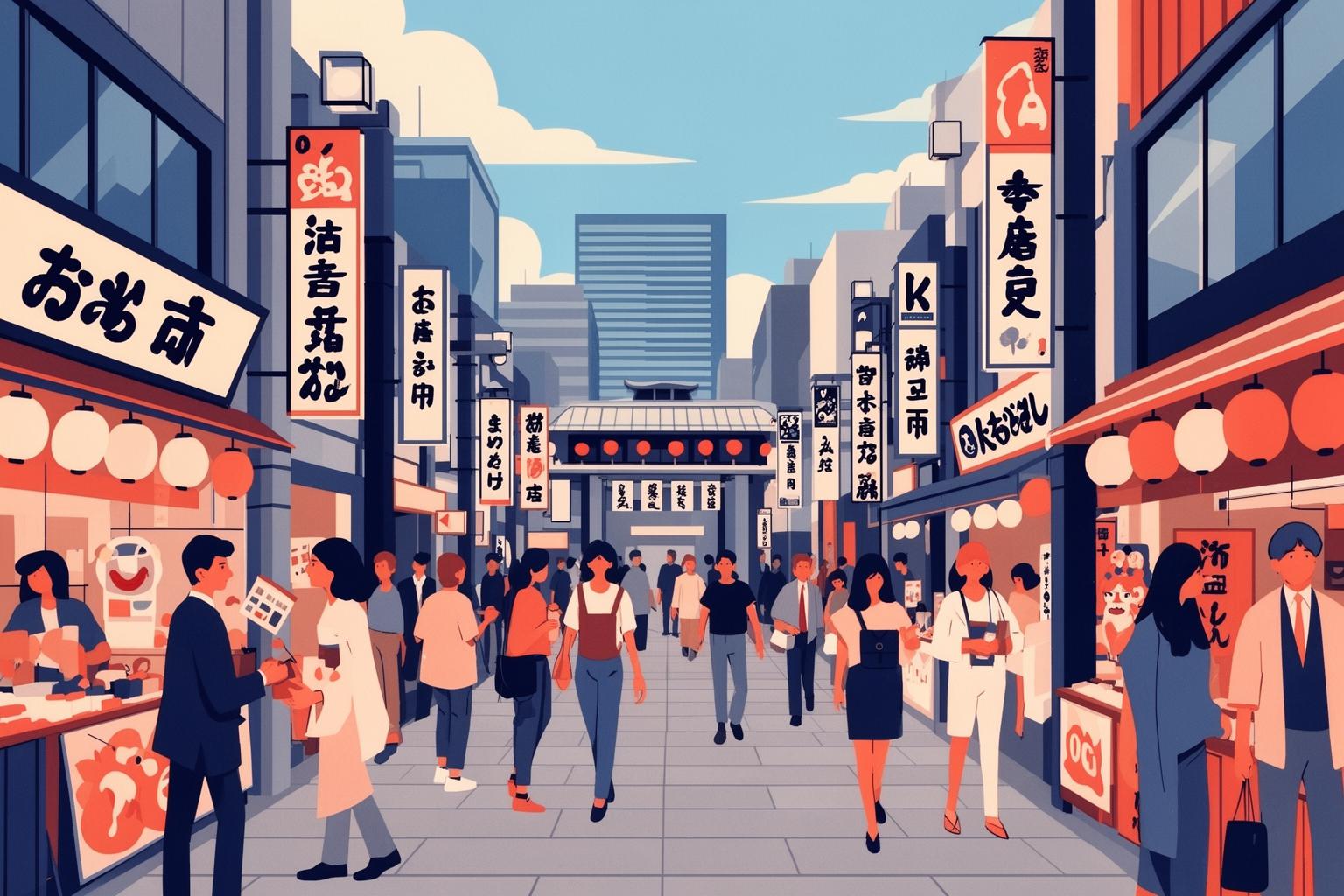
In urban planning, there is the idea of the “third place”—a space that is neither your home (first place) nor your workplace (second place). It’s a spot where you can unwind, build community, and experience a sense of belonging. In many Western cultures, this might be a pub, a cafe, or a public park. In Osaka, the shotengai represents the ultimate third place. It’s far more than just a shopping area; it serves as the neighborhood’s social hub.
You’ll find elderly people sitting on benches, sharing the latest gossip. Kids chase each other down the long corridors after school, pausing to buy a 100-yen fried snack. Hidden in the side alleys branching off from the main arcade, there are tiny, ten-seat kissaten (old-style coffee shops) where the owner knows everyone’s usual order. There are also standing-only bars, or tachinomi, where workers gather for a quick beer and a bite on their way home from the station. The shotengai is where the community comes together.
By making the shotengai a part of your daily or weekly routine, you are essentially weaving yourself into the social fabric of your neighborhood. You move from being the anonymous foreigner in the apartment building on the corner to becoming “the person who always buys the firm tofu on Tuesdays.” This shift from unknown to recognized is the key step in making a foreign city feel like a true home. It’s the difference between merely living in Osaka and genuinely belonging to it. So next time you need to buy milk, skip the convenience store. Take a walk beneath the arcade roof. See what’s fresh, strike up a conversation, and start putting your face out there. It will reward you a thousand times over.