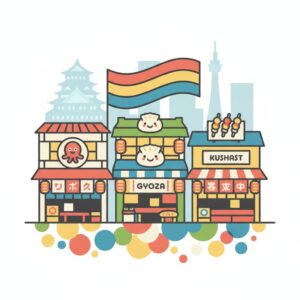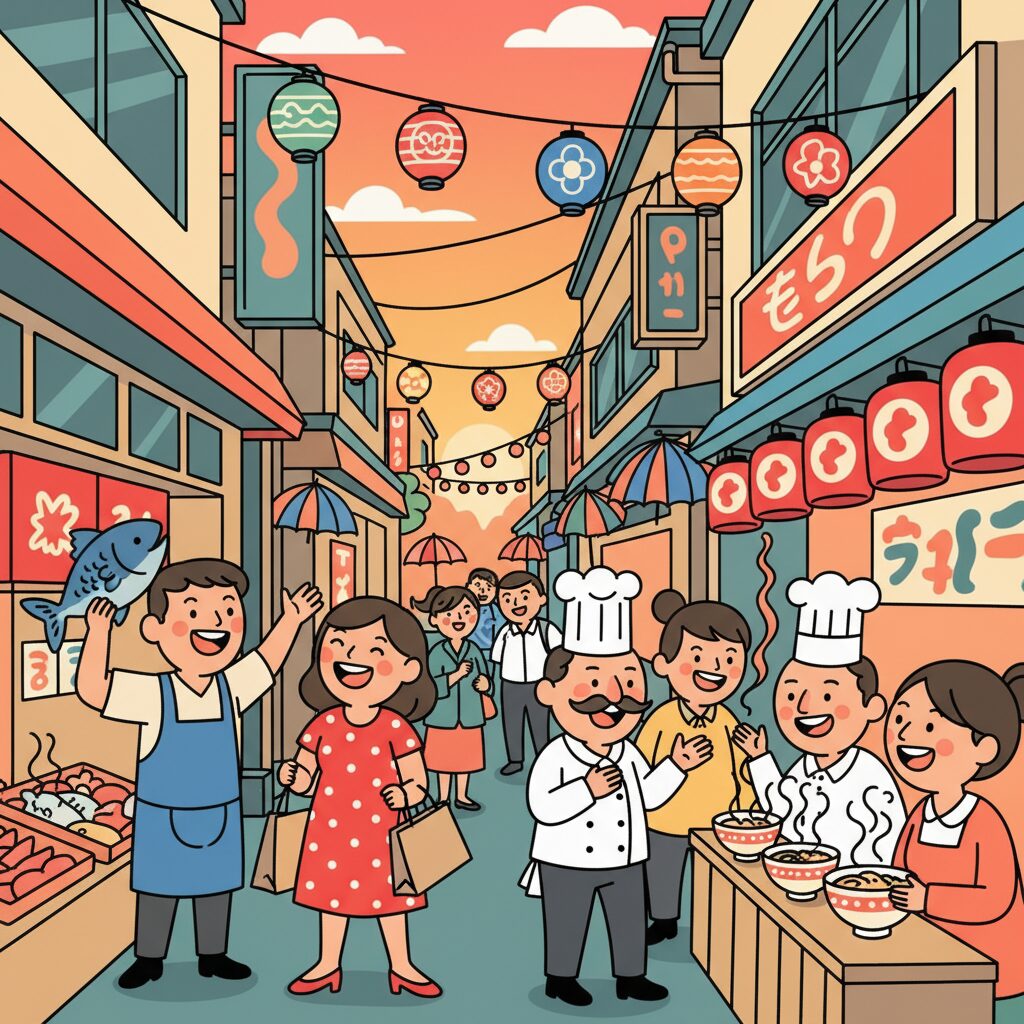
Step into any of Osaka’s sprawling, covered shopping arcades—the shotengai—and the first thing that hits you isn’t the smell of grilled eel or the sight of glistening takoyaki. It’s the noise. Not just the clatter of bicycles and the chatter of shoppers, but a specific kind of human sound. It’s a rapid-fire, high-energy, and deeply personal style of communication that flies from the mouths of the shopkeepers. To the uninitiated, especially those accustomed to the serene, formal service of Tokyo, it can feel like walking onto the set of a live comedy show where you’ve been cast in a role without a script. A gruff “Maido!” instead of a polite “Irasshaimase.” A pointed “An-chan, where ya headed in such a hurry?” instead of a silent nod. This isn’t the Japan you read about in guidebooks. This is Osaka. And for anyone trying to build a life here, figuring out this local dialect of human interaction is more crucial than mastering the train map.
The common cliché is that “Osaka people are friendly.” It’s true, but it’s a lazy truth. It doesn’t explain the texture of that friendliness. It doesn’t prepare you for the fruit stand lady who teases you about your fashion choices, the butcher who asks if you’re married yet, or the fishmonger who sounds like he’s yelling at you when he’s actually giving you a compliment. This isn’t just friendliness; it’s a transactional culture built on a foundation of relentless, affectionate, and sometimes abrasive banter. It’s a world away from the frictionless, anonymous efficiency that defines so much of modern Japanese service. Here, the friction is the point. The relationship is the transaction. For foreigners, this can be the single biggest source of confusion and, eventually, the deepest source of connection to the city. Understanding how to navigate the shotengai isn’t just about shopping; it’s about learning to speak the true language of Osaka.
Diving into Osaka’s lively shotengai not only means deciphering the spirited banter but also savoring local flavors like Kasu Udon, which offers a delicious glimpse into the city’s unique cultural pulse.
The Opening Salvo: More Than Just “Welcome”
In Tokyo, when you enter a shop, you’re greeted with a chorus of “Irasshaimase!” It’s a clean, crisp, and beautifully uniform welcome that signals the space is ready for business. Polite, professional, and completely impersonal, it sets the tone. In an Osaka shotengai, the typical greeting is “Maido!” which literally means “every time” or “always.” This clipped, guttural phrase carries centuries of merchant tradition in just two syllables. It’s more than a simple “Welcome.” It conveys “Thanks for your ongoing support,” “Good to see you again,” and “I’m here, you’re here, let’s do business,” all at once. It immediately builds a relationship rooted in mutual benefit and repetition. You aren’t just a random customer; you are part of a continuous cycle of commerce and community.
But often, it doesn’t end there. The next line frequently catches people off guard. You might hear “Nani shitenno?” (What’re you up to?) or “Doko ikun?” (Where ya goin’?). A foreigner’s mind, trained to translate literally, races. Why do they want to know? Should I share my entire itinerary? Is this an interrogation? The truth is, these questions don’t require factual answers. They serve as conversational hooks. They’re the Osaka equivalent of a bartender wiping down the counter and asking, “So, what’ll it be?” The proper reply isn’t a detailed narrative. It’s a simple, casual return volley. “Chotto kaimono ni” (Just doing a little shopping). “Sono hen made” (Just around here). The point isn’t the actual information exchanged; it’s the exchange itself. It’s a verbal handshake that breaks down the formal barrier between shopkeeper and customer before a single yen is spent. This is the key difference: In Tokyo, the transaction starts with a formal greeting that keeps a respectful distance, while in Osaka, the human connection begins with a casual inquiry meant to erase that distance completely.
The Rhythm of Commerce: Haggling, Gifts, and the Unspoken Dance
Osaka’s distinctive commercial spirit is most evident in the negotiation over prices. Throughout much of Japan, the price on the tag is fixed and absolute. Questioning it would be considered a breach of etiquette, implying the seller’s judgment is mistaken. However, in the small, independent stalls of an Osaka shotengai, the price often serves as a starting point for a dialogue. The phrase “Chotto makete kureru?” (Can you give me a little discount?) is never an offense. It’s an invitation to interact—a test of the relationship and a playful element of the exchange.
When you ask, what follows resembles a performance. The shopkeeper might draw air sharply through their teeth, gaze skyward as if calculating intricate celestial data, and sigh, “Shoganai naa…” (It can’t be helped, I suppose…). Then, with theatrical flourish, they’ll either reduce the price by 50 yen or, more commonly, offer omake. Omake means “a little extra,” a bonus. Purchase three tomatoes, and a fourth is thrown in. Buy a bag of potatoes, and you receive a handful of green onions. This isn’t a planned “buy one, get one free” tactic. It’s a spontaneous act of generosity, a tangible expression of the shopkeeper’s gratitude. It’s their way of saying, “Thanks for joining in the game with me. Thanks for being a person, not just a wallet.”
Once, I attempted to buy a handful of tempura from an elderly woman in the Kuromon Market. I asked for four pieces. She packaged them, and just as I was about to pay, she added a fifth—a perfectly fried shrimp. “Kore wa omake,” she said with a smile. “This one’s a bonus.” Being new and overly polite, I tried to decline, saying four was enough. Her expression dropped, and for a moment, she looked genuinely hurt. Her husband, cooking in the back, shouted, “Just take it! She likes you!” I quickly realized that refusing the omake was like rejecting a handshake. It wasn’t about the extra tempura; it was about turning down the connection she was extending. From then on, I learned to accept with an enthusiastic, “Ee, honma ni!? Ureshii!” (Wow, really? I’m so happy!). That completes the circle. The transaction isn’t just about exchanging goods for money; it’s about both parties leaving feeling they received something extra—a warmth that remains long after the food is gone.
“So, Where You From?”: The Personal Becomes Public
One of the most striking experiences for Westerners in an Osaka shotengai is the bluntness of the personal questions. Within minutes of meeting you, a shopkeeper might ask where you’re from, what you do for a living, if you’re married, whether you have children, and why on earth you chose to live in this particular neighborhood. In many cultures, these questions from a stranger would be seen as intrusive, nosy, or even rude. But here, the intention is completely different. It’s not about prying; it’s about understanding. They are trying to create a mental map of who you are.
Think of it this way: to them, the shotengai is an ecosystem, and you’ve just entered it. They want to grasp your context. Are you a student at the nearby university? An English teacher at the local school? The new resident in the apartment above the barbershop? This information isn’t for gossip. It’s for connection. The questions serve as a shortcut to familiarity. When the butcher knows you’re the American guy who works from home, he’s no longer just selling you meat. He’s looking out for a neighbor. The next time you see him, the conversation begins from a place of knowing. “Still tapping away on that computer all day? You should get out more!” he might shout with a laugh. He remembers you.
This sharply contrasts with the Kanto region‘s much stricter observance of the uchi-soto (inside/outside) social dynamic. In Tokyo, a shopkeeper is firmly soto (an outsider). To ask a customer personal questions would be to breach a sacred social boundary. Your private life is yours alone, and the transaction remains purely public. In Osaka, that boundary is remarkably porous. By stepping into their shop, you’ve entered their uchi—their inside world, their turf. And on their turf, the rules of polite distance are set aside in favor of the messier, warmer rules of community. They’re not just serving a customer; they’re assessing a potential new regular, a new face in the neighborhood family. Responding to their questions, even vaguely, signals your willingness to be part of that family.
The Love Language of the Naniwa Merchant: Teasing and Tough Talk
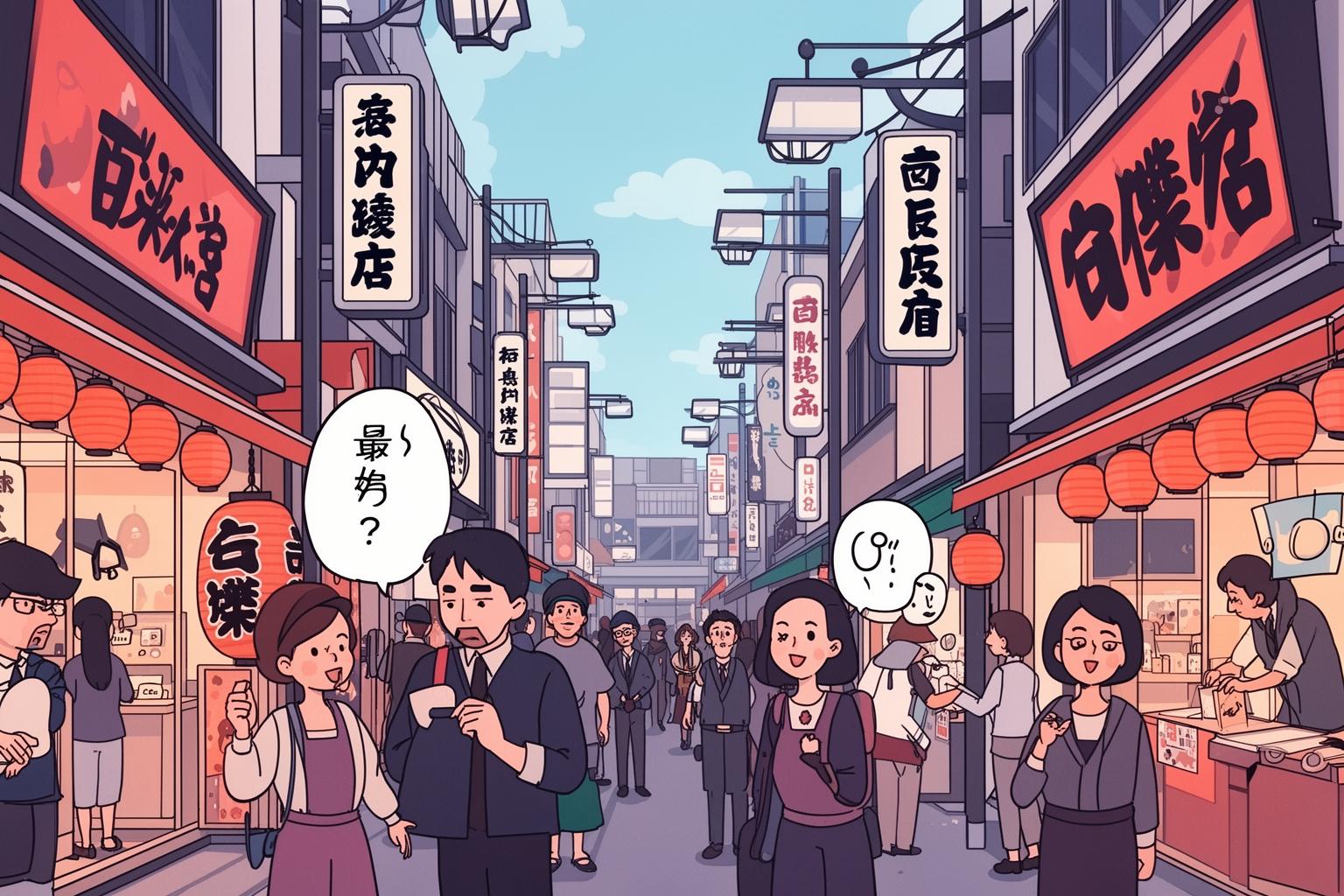
Perhaps the most sophisticated level of shotengai communication is learning to understand what seems like criticism as a form of affection. Osaka’s communication style is heavily shaped by manzai, a traditional stand-up comedy style featuring a boke (the funny fool) and a tsukkomi (the sharp straight man). This interplay of playful teasing and quick comebacks is embedded in everyday interactions. When a shopkeeper begins to tease you, it signals that you have been accepted. Indifference means polite silence. Engagement means a gentle ribbing.
You might be browsing in a clothing store when the oba-chan who runs it approaches, looks at the shirt you’re holding, and says, “Sonna iro, an-chan ni niawan de!” (A color like that won’t suit you at all!). This isn’t a critique of your taste. It’s her shedding her professional “salesperson” persona and speaking to you with the blunt honesty she would use with her own nephew. She isn’t just trying to sell you something; she wants to make sure you don’t leave looking foolish. The underlying message is, “I care enough about you to be truthful.”
A fishmonger might spot you walking by with a bag from a rival supermarket and shout, “Nani koutan ya! Annan yori uchi no sakana no hou ga zettai umai de!” (What did you buy? My fish is definitely better than that!). He’s not genuinely upset. He’s putting on a performance. He’s playing the role of the spurned yet superior craftsman, inviting you to join in the act. This blunt, direct feedback is a kind of intimacy currency. In a culture that often prioritizes harmony above all, Osakans’ readiness to skip formalities is a bold gesture of inclusion. It means they notice you. They remember you. And they feel at ease enough with you to treat you like one of their own.
Your Lines in the Script: How to Join the Conversation
So, how can you respond without feeling awkward or overwhelmed? You don’t have to become a comedic genius overnight. The key is to demonstrate that you understand the game and are happy to join in. Your involvement is what completes the interaction.
First, get the basics down. A smile, a laugh, and a nod go a long way. Even if you don’t catch every word of a shopkeeper’s rapid-fire teasing, reacting with amusement shows you recognize their friendly intent. Your positive body language signals that you’re not offended and encourages them to continue the banter next time.
Next, learn a few simple tsukkomi phrases. When the fruit seller tells you that you eat too many sweets, a simple “Nande ya nen!” (loosely meaning “Why the heck!” or “Says who!”) delivered with a grin is the perfect reply. It’s the classic Osaka phrase for lighthearted disagreement. Other good choices include “Honma ka?” (Really now?) or a drawn-out “Uso ya~” (No way~). You’re not starting a fight; you’re just bouncing the conversational tennis ball back to them.
Finally, embrace a bit of self-deprecation. If the butcher teases you for buying cheap cuts again, you can laugh and say, “Okane nai nen!” (I have no money!). This shows humility and a sense of humor. You’re taking the boke role, letting them play the witty tsukkomi. By showing you don’t take yourself too seriously, you prove you understand the unwritten rules of Osaka communication. They’re not making fun of you; they’re having fun with you. The effort to engage, even if your Japanese is imperfect, is valued far more than silent, perfectly polite grammar.
The Soul of the City: Why This Communication Style Endures
This entire style of communication—the casual greetings, the bargaining, the personal inquiries, the teasing—is more than just a set of peculiarities. It directly reflects Osaka’s spirit as a city built by merchants, the akindo no machi. For centuries, while Tokyo (then Edo) served as the seat of the austere samurai government, Osaka was the nation’s kitchen, a vibrant hub of commerce where success relied not on one’s lineage, but on wit, charm, and the skill to forge relationships.
In such a fiercely competitive world, customer loyalty was crucial. You didn’t simply sell a product; you sold yourself. Each exchange was an opportunity to cultivate a connection, transforming a one-time customer into a loyal regular. Business was personal, performative, and profoundly human. The modern shotengai stands as a living testament to this philosophy. It serves as a loud, proud defiance against the cold, impersonal efficiency of convenience stores and online shopping carts.
Living in Osaka while shopping only at supermarkets misses the city’s essence entirely. It’s like attending a concert with earplugs in. The shotengai is where the city’s heart resonates most loudly. Learning to interpret its friendly banter, to match its tone, and to recognize the warmth behind a gruff remark is the key to discovering what truly makes this place special. It’s how you move from being a foreigner merely residing in Osaka to becoming an Osakan with roots elsewhere. You’ll know you’ve arrived when the vegetable lady shouts at you across the street—not to sell, but just to say hello. In that moment, the transaction is complete. You belong.