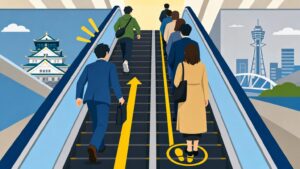
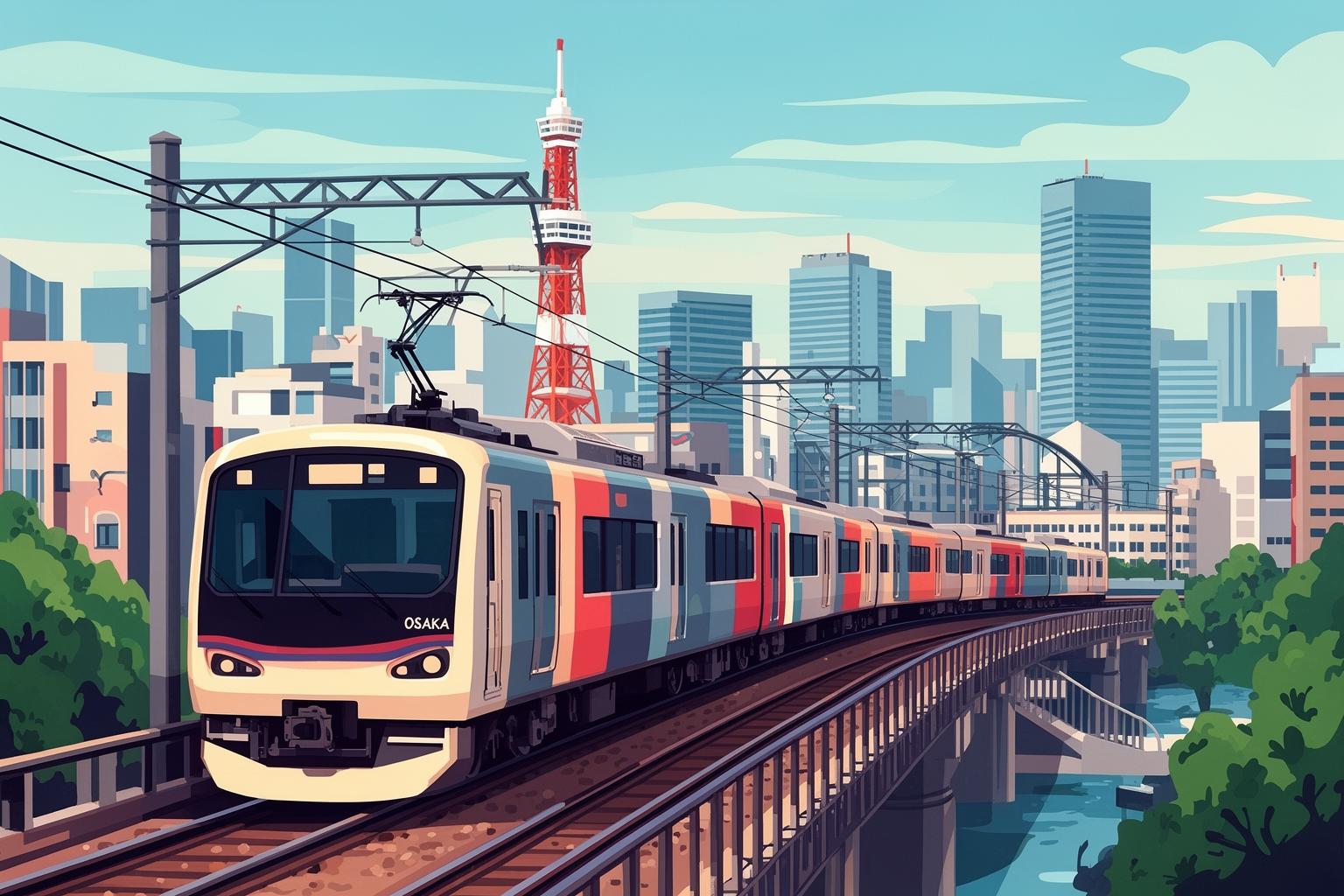
When you tell someone you live in Japan, and specifically Osaka, a certain image flashes in their mind. It’s a riot of neon, a chaotic symphony of sizzling street food stalls, of people talking a little too loud and laughing a little too freely. It’s the Glico Running Man, forever sprinting over the Dotonbori canal, a symbol of tireless commercial energy. Tokyo is the polished, punctual heart of Japan; Osaka, the boisterous, beating gut. This is the story we’re told, the caricature that’s easy to digest. But it’s a story that leaves out the quiet, sprawling back half of the book. It’s a narrative that completely ignores the places where the concrete gives way to cryptomeria forests and the roar of the JR loop line is replaced by the gentle clatter of a two-car train climbing into the hills. Many foreigners, and even many Japanese people from other regions, imagine Osaka Prefecture as a solid, unbroken expanse of urbanity. But that’s a failure of imagination. Just a short ride from the relentless pace of Umeda lies a version of Osaka that feels like stepping into a different decade, a different mindset. This is the world of ‘satoyama’, the traditional landscape of foothills and farmland that borders the mountains, and it’s accessed by one of the most charmingly anachronistic train lines in Kansai: the Nose Electric Railway, or ‘Nose Dentetsu’. Taking this train isn’t just a trip to the countryside; it’s a journey into the soul of a more grounded, pragmatic Osaka, an Osaka that values community and soil as much as it values a good deal. It’s a place that fundamentally challenges what you think you know about Japan’s second city. Forget the tourist maps for a day. This journey is about understanding the texture of daily life on the fringe, where the city’s pulse fades into the rhythm of the seasons.
Exploring the quieter side of Osaka reveals a grounded local spirit, as seen in community morning exercises that bring neighbors together to start their day.
The Slow Train to a Different Osaka
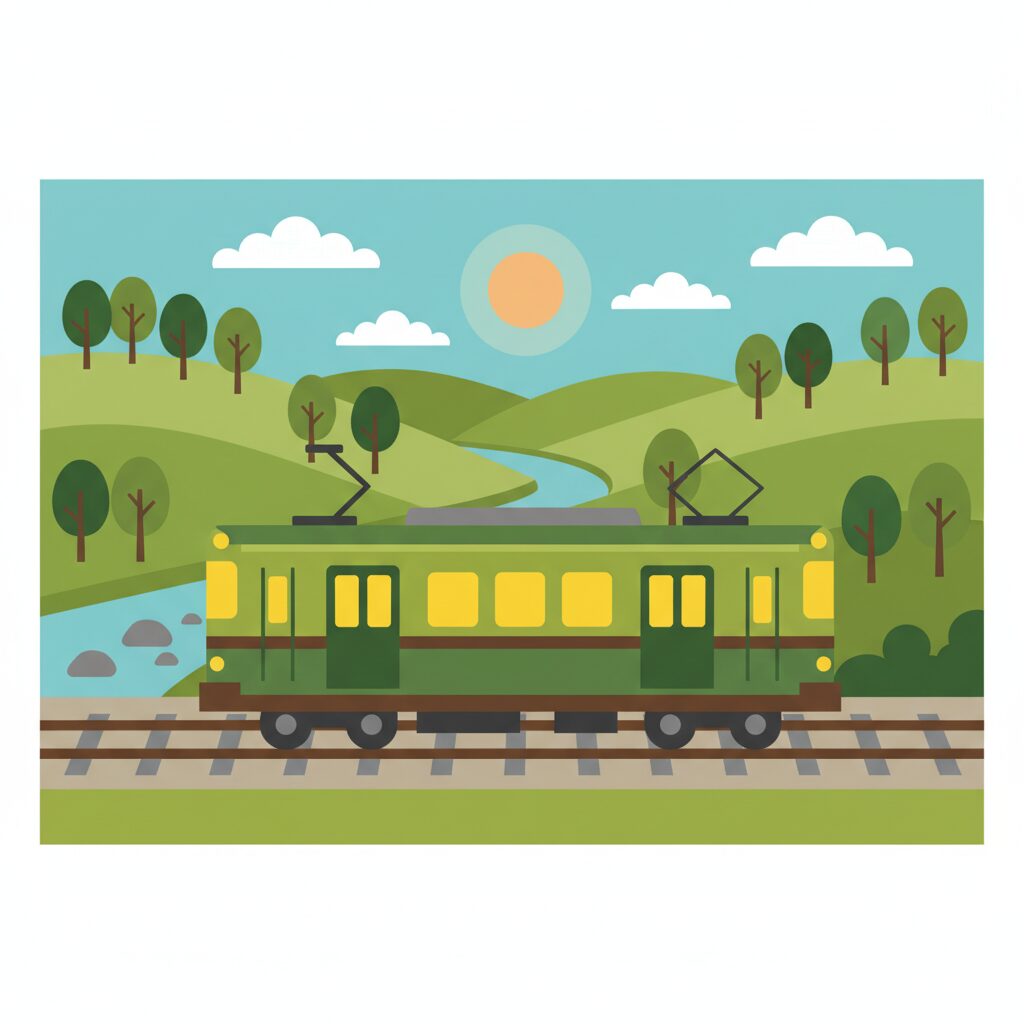
The journey doesn’t start aboard a sleek Shinkansen but with a transfer at Kawanishi-Noseguchi Station, just across the border in Hyogo Prefecture. Here, you leave behind the polished efficiency of the Hankyu line and step onto the Nose Dentetsu platform. The difference is immediate. The trains are often older models, carefully maintained, their gentle rocking sharply contrasting with the sharp acceleration of city trains. They are shorter, simpler, and painted in nostalgic maroon or vibrant green. The atmosphere inside is where the true change happens. The impersonal silence of a Tokyo Yamanote Line car, where everyone is absorbed in their own digital world, fades away. Here, the air feels softer. Elderly women with shopping carts chat across the aisle. Schoolchildren, liberated from the strict city decorum, are a bit more boisterous. Hikers with walking sticks and brightly colored backpacks appear, their faces relaxed and eager. The train isn’t just a sterile tube to get from A to B quickly; it’s a moving community space. The conductor might give a nod to a regular passenger. People gaze out the windows. This slower pace reflects a different set of values. In central Osaka, time means money, efficiency rules, and every minute must be optimized. This drives Osaka’s famed merchant culture. But on the Nose Dentetsu, time expands. The journey itself becomes part of the experience. This reveals a duality in Osaka’s mindset often overlooked. The same culture that bred shrewd, fast-talking merchants also values this unhurried connection to place. It reflects a different kind of pragmatism: the understanding that some things—like community and well-being—cannot be rushed. A Tokyoite might view this relaxed pace as inefficient. But an Osakan from this region sees it as ‘chanto shiteru’—doing things properly, with care and attention to the human element, not just the timetable.
The View from the Window
As the train departs the station, the changing landscape tells a story. First, you travel through dense, tiled rooftops typical of Japanese suburbia. Soon, the gaps between houses widen. Small, meticulously tended vegetable gardens appear, nestled into unexpected corners. Then come the rice paddies, radiant green in early summer, golden ochre in autumn. The train begins to climb, winding through valleys shaped by small rivers. Buildings thin out, replaced by bamboo groves and dark, dense cedar forests blanketing the hills. Each station feels like a small island of civilization amid a sea of green: Hirano, Ichinotorii, Uneno. The names themselves evoke earthiness and age. This visual journey is vital for understanding Osaka’s geography and, by extension, its psychology. Foreigners often see Japanese cities as having sharp, abrupt edges where city ends and countryside begins, but the Nose line reveals a more gradual, interwoven reality. Urban and rural merge together. This closeness to productive land runs deep in Osaka’s DNA. The city once known as ‘Japan’s Kitchen’ wasn’t just a trade hub; it was nourished by the fertile plains and hills on its doorstep. The people boarding and disembarking at these small stations are not detached from Osaka’s urban engine; they are part of its fabric. They might commute into the city for work, but their lives are rooted in this landscape. This challenges the common misconception that living in rural Japan means complete isolation. In the Nose area, you are both apart from and connected to the metropolis, enjoying a lifestyle that blends elements of both worlds.
Satoyama: More Than Just Countryside
To truly understand the essence of the Nose region, you need to grasp the concept of ‘satoyama’. It’s a term without a direct English equivalent. It doesn’t mean ‘wilderness’ or ‘nature’ as in the Western idea of untouched land. Satoyama describes the border zone—a landscape shaped and managed by human hands over centuries. It’s a mosaic of rice paddies, irrigation channels, reservoirs, managed woodlands, and small settlements nestled between mountains and flat, arable plains. This isn’t a place to escape humanity; it’s where the deep, symbiotic relationship between people and their environment is visible. The forests weren’t just scenic backgrounds; they provided firewood, charcoal, and foraged vegetables. The rice paddies weren’t just for growing food; their complex water systems helped prevent flooding and supported rich biodiversity. This idea is fundamental to the local mindset, embodying an inherent pragmatism. Nature isn’t something to conquer or idealize from afar; it’s a partner in the business of living. This practicality is a key Osakan trait, expressed differently here than in the city. In Namba, it shows as a relentless pursuit of value and the best, cheapest takoyaki. In Nose, it’s the knowledge of when to plant rice, how to manage bamboo groves, and how to use every part of a harvested vegetable. It’s the philosophy of ‘mottainai’ (aversion to waste) at its purest. Outsiders might romanticize this as simple, idyllic living, but that’s a misconception. Satoyama life involves hard work, ongoing maintenance, and deep, unsentimental knowledge passed down through generations. It’s a life ruled by weather and the seasons, a world apart from the climate-controlled department stores of Umeda.
A Landscape of Interdependence
Wandering through villages near stations like Myokenguchi, the final stop on the line, you can see this philosophy reflected in the land’s very layout. Houses cluster together, not scattered in isolated plots, reflecting a history of community cooperation essential for tasks like rice planting and maintaining irrigation ditches. You’ll find small, unmanned roadside stalls selling freshly picked vegetables, with a simple box for payment—a system founded on mutual trust that’s hard to imagine in an anonymous urban environment. This is the fabric of local society. It stands in stark contrast to Tokyo’s individualism, where neighborhood ties tend to be polite but distant. Here, your business is your neighbor’s business, for better or worse. This creates a strong social safety net, but also applies pressure to conform to community norms. An Osakan from the city might find this interdependence stifling, preferring the freedom of anonymity. But for the locals, it’s simply the way things are done. This social ecosystem is as carefully balanced as the agricultural one. Understanding this sheds light on the different ‘flavors’ of Osakan personality. The city’s well-known friendliness is often outgoing, performative, and commerce-driven. In the satoyama, friendliness is quieter, more reserved, and rooted in long-term relationships and shared responsibilities. It’s less about making a sale and more about preserving the community’s harmony.
The Unspoken Rules of Rural Kansai
Interacting with people in the Nose area requires a slight adjustment of your expectations, especially if your only experience has been with the lively chatter of downtown Osaka. A foreigner entering a small, family-run restaurant here might not be greeted with a loud ‘Irasshaimase!’ but rather a quiet nod from the elderly woman behind the counter. The service may seem slow, and the conversation minimal. It’s easy to misinterpret this as coldness or unfriendliness, which starkly contrasts with Osaka’s reputation. However, this reflects a fundamental misunderstanding of the communication style. In a small community, trust develops over time, not through brief interactions. The warmth is present, but subtle. It might be shown through an extra scoop of rice with your meal, a complimentary dish of pickled vegetables from the owner’s garden, or a simple question about your destination just as you’re about to leave. This is hospitality expressed through actions, not words. It’s a deeply rooted cultural trait in rural Kansai. The people are direct and unpretentious, true to the Osaka spirit, but they don’t feel obliged to perform constant friendliness like urban service industries do. They assume you are there for a good meal, focusing on providing it rather than putting on a show. This sharply contrasts with the Tokyo service model, often marked by extreme politeness and strict adherence to a manual—a ‘tatemae’ facade that can feel impersonal. The Nose approach is more ‘honne’—honest and direct, even if it can seem blunt. It values substance over style, a core trait shared by both urban and rural Osakans.
Where Tokyo Logic Doesn’t Apply
If you were to take a similar train trip departing from Tokyo, such as on the Chuo Line heading toward the Okutama mountains, the experience feels distinctly different. The transition resembles more of an escape. You leave behind the vast, all-encompassing entity of Tokyo and enter a separate world—a resort or recreational area that relates to the city but feels culturally distinct. The Nose Dentetsu trip, however, doesn’t give the same sensation of escape. It feels more like moving into another room within the same house. The people, their humor, their pragmatism—all feel connected to the heart of Osaka. The Kansai dialect is constant, albeit with a softer, more local tone. A conversation with a shopkeeper or farmer retains that characteristic directness and lack of ceremony, which might be surprising to a Tokyoite. Ask for directions, and you won’t receive a sterile, efficient explanation referencing north and south. Instead, you’re more likely to hear a story: ‘Ah, you go past the big zelkova tree, turn right where Suzuki-san’s old barn used to be—they tore it down last year, you know—and it’s just over the little bridge.’ The directions are woven into a shared local history and a network of social relationships. This isn’t inefficiency; it’s a different form of efficiency that emphasizes human connection and context over abstract data. This marks a key distinction between the two cities. Tokyo’s logic is often systematic, scalable, and anonymous, while Osaka’s approach—even in its rural areas—is personal, contextual, and deeply human. Foreigners often struggle with this, attempting to apply a systematic, Tokyo-style mindset to a culture that functions on a more organic, relationship-based OS. To thrive in Osaka, wherever you are, you need to learn to read the human landscape as much as the physical one.
The Modern Satoyama and Osaka’s Future
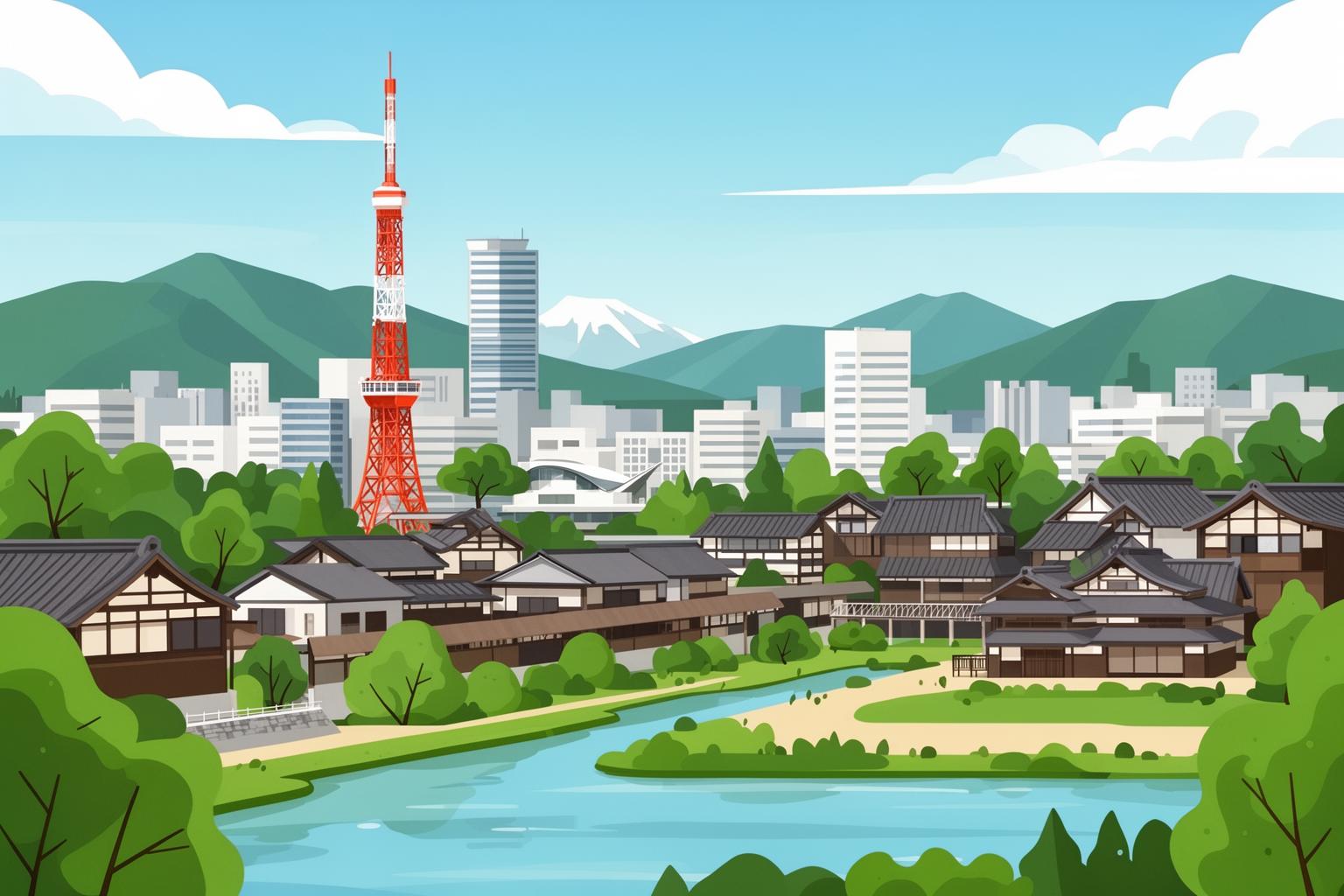
It would be a mistake to depict the satoyama of Nose as a perfectly preserved museum of a bygone era. Like much of rural Japan, it faces challenges. The population is aging, and many young people are attracted to the convenience and opportunities of the city. Old farmhouses stand empty, their fields gradually being reclaimed by nature. But that’s not the whole picture. In recent years, the satoyama has become a new frontier for a different kind of pioneer. Young families, artists, chefs, and entrepreneurs are leaving the city, drawn by the clean air, the sense of community, and the opportunity to create a different way of life. You’ll find stylish cafes in renovated farmhouses, organic bakeries using locally grown flour, and small-scale artisans crafting everything from wooden furniture to ceramics. This isn’t simply urbanites “playing farmer.” It’s a sincere search for a more sustainable and meaningful existence. The Osakan spirit of pragmatism and openness makes this possible. While traditional, local communities are often more welcoming to these newcomers than expected. There’s a “yatteminahare” (give it a shot) attitude that is distinctly Osaka. If you have a good idea and are willing to work hard and contribute to the community, acceptance is likely. This blend of old and new is creating a dynamic, evolving version of the satoyama. It reflects Osaka’s capacity for adaptation, its ability to fuse tradition with innovation. For anyone considering life in Osaka, this is an essential insight. The prefecture offers a surprising variety of lifestyles. You are not confined to a single mold. You can choose the 24/7 energy of the city center, the convenient comfort of the northern suburbs, or a quiet, community-focused life surrounded by nature. This range of options, this flexibility, is perhaps one of Osaka’s greatest and most misunderstood strengths compared to the more uniform pressures of life in Tokyo.
This journey on a slow, rattling train reveals an Osaka far richer and more complex than its popular image suggests. It peels back the neon glare to reveal a foundation built on earth, water, and community. The Nose Dentetsu is more than just a railway; it’s a lifeline to a different rhythm of life, one where efficiency is measured in seasons, not seconds, and wealth is counted in relationships, not yen. It shows that the boisterous, commercial heart of Osaka is sustained by quiet, steady hands tending to the land just beyond the city’s edge. To understand Osaka, you must understand both. You need to ride the packed subway beneath the city streets, but also the slow train into the hills. The true character of the city isn’t found in one or the other, but in the space between—knowing that a world-class metropolis and a timeless satoyama landscape can coexist, not only in the same prefecture but in the same cultural soul.